
Cookeville CPR training courses—Cookeville AED training classes—BLS healthcare CPR
At InPulse CPR we take pride in our quality of teaching. we make every class an interactive learning experience to ensure that you are ready to save a life. we strive to make your CPR class memorable and educational, leaving you feeling confident and ready to save a life.
Click image for CPR classes in Cookeville: https://inpulsecpr.com/tennessee
This Cookeville CPR class location is accessible to those living or working in Algood, Baxter, Monterey, Crossville, Silver point, Lancaster, Rickman, Sparta, Bloomington springs, Pleasant hill, Gainesboro, and Livingston.
This Cookeville Location is nearby to many colleges, medical centers and Businesses such as Fast pace Health Urgent care, The Health Petal, Mercy Clinic, Premier medical park, Joyce Healthcare, Cookeville Regional Medical Center, Cookeville Medical Clinic, Cookeville family medicine and urgent care, Tennessee health and wellness, ascension medical group, saint Thomas Cookeville primary care, Tennessee Bible College, Fortis institute in Cookeville, genesis Career college Cookeville, Tennessee Tech University, volunteer state college or VOL, as well as many others
Recent reviews from Real people
If you have recently attended a CPR class in Cookeville, we would love to hear from you!
You can learn a lot from a CPR dummy

From his first steps, Nick Knapp demonstrated an unwavering passion for sports. His athletic journey started with a dynamic mix of sports: springtime on the baseball diamond, winter grappling on the wrestling mat, summer splashes off the diving board, and boxing in the ring whenever the opportunity arose.
At just eight years old, young Nick found his passion and purpose on the basketball court, showcasing skills to set the stage for an exciting journey ahead. It was written in the stars, with his father, Terry Knapp, already carving out a legacy as a standout basketball coach.
Growing to an impressive 6-foot-5, Nick transformed into one of the nation’s top three-point shooting guards, showcasing his skills on the court with the intensity of a true competitor. His skills extended beyond the court, as he consistently achieved straight A’s in his classes, positioning himself as a highly sought-after recruit for college programs nationwide. By his sophomore year, Nick decided to commit to Northwestern University, drawn in by its impressive academic standing and close ties to home within the competitive Big Ten conference.
But destiny had a different game in mind, challenging Nick’s determination and underscoring the critical role of CPR training and swift emergency action.
It all happened one afternoon early in Nick’s senior year. The atmosphere was electric as Nick, his younger brother, and a few teammates took to the court for an intense pickup game in the school gym.
The energy was palpable, setting the stage for some thrilling action. After securing the rebound, Nick executed a textbook pass down the court, demonstrating his fundamental skills. He made a few strides forward, but in a shocking turn of events, he fell to his knees and went down hard.
In a stunning twist of fate, Terry Knapp and another trainer hit the gym at the right time. Their regular walking route faced an unexpected obstacle, compelling them to pivot and take this alternate path instead. Fortunately, the second coach doubled as an emergency medical technician!
As Terry sprinted to his son’s side, he anticipated encountering a common sports-related injury, maybe a sprained ankle or a damaged knee. His son was unresponsive, struggling for breath, and his skin was turning a worrying shade of blue.
Terry’s experience as a science teacher and certified CPR trainer had taken on a new significance, elevating his professional credentials to a new level. Despite having trained numerous students in the lifesaving techniques, he had yet to face the pressure of executing his training in a genuine emergency. The training surged into play in a high-stakes moment, with his son’s life hanging in the balance.
In a dramatic turn of events, one player hurriedly dialed 911, while Terry and his coaching partner promptly began administering CPR.
Their swift action kept Nick alive as the Peoria Fire Department raced to the scene with an automated external defibrillator (AED) in hand. After three intense shocks, Nick’s heart finally found its beat, resuming a sustainable rhythm that made everyone nervous during the intense event.
“You cannot underestimate the significance of on-site CPR training,” says Troy Bowman, CFO of In-Pulse CPR, a leader in community and workplace CPR education.
Troy adds, “Although online certifications are rising, they cannot match the invaluable hands-on experience and muscle memory from in-person training. In those critical moments when every second matters, you must let your instincts kick in from the practical on-site training you receive.”
At the hospital, doctors placed Nick in a medically induced coma to allow his oxygen-starved brain time to heal. When he regained consciousness days later, he experienced some short-term memory loss but gradually recovered all his physical and mental capabilities.
The medical mystery deepened when doctors could find no apparent cause for the cardiac arrest. Despite extensive testing, Nick’s heart appeared structurally sound. As a precaution, doctors installed an implantable cardioverter defibrillator (ICD) designed to detect and correct dangerous heart rhythms through electric shocks.
The year was 1994, and the medical consensus was clear and crushing: patients with ICDs were advised against strenuous exercise. “Your son will never be able to play basketball or even drive a car,” one doctor told Terry.
Terry’s immediate response was characteristic of his unwavering support: “That’s crazy. There’s nothing wrong with him.” He turned to Nick and asked if he wanted to continue playing. Nick’s answer was an unequivocal yes, though the experience had shaken his younger brother to the point that he never returned to basketball.
Refusing to accept the initial prognosis, Terry sought opinions from the nation’s top cardiologists, especially those doctors experienced with elite athletes. Their consensus offered hope: Nick could return to basketball, though they recommended sitting out his senior season. Northwestern University stood by its scholarship offer, agreeing with the medical advice to wait until college to resume play.
Nick approached this setback with characteristic determination. He said he believed it was a challenge he would conquer—that he could still serve as an inspiration for others facing similar circumstances. However, upon arriving at Northwestern, he faced another devastating blow: team physicians declared him ineligible to play.
The situation became even more challenging when Nick learned that he would have to attend practices and watch games from the sidelines to maintain his scholarship, a constant reminder of what he couldn’t do.
This requirement led to a legal battle that would become a landmark case in sports medicine and disability rights. “Knapp vs. Northwestern University” garnered significant attention in legal circles. However, the court ultimately overturned Nick’s initial victory on appeal.
Undeterred, Nick transferred to Northeastern Illinois University in 1997, making history as the first Division 1 basketball player with an ICD. However, this triumph proved short-lived when the school discontinued its NCAA basketball program due to funding issues after one season.
Still pursuing his dream, Nick moved to Ashland University in Ohio to continue playing. When his athletic eligibility finally expired, he shifted his focus from professional basketball aspirations to education, earning a master’s degree in educational administration.
In 2001, Nick’s defibrillator was removed due to repeated malfunctions. In an unexpected twist, doctors determined a replacement wasn’t necessary. Since then, he has experienced no cardiac issues and requires no medication. Now 47, Nick has built a successful life in East Peoria as co-owner of a large financial services firm.
While competitive basketball is behind him, Nick maintains an active lifestyle. His weekly routine includes regular gym workouts, cycling, golf, tennis, and pickleball. The experience has left him with a profound appreciation for life and an understanding of the importance of emergency preparedness.
Nick shows appreciation to the Peoria Fire Department by distributing an especially created T-shirt—giving thanks to the firefighters for saving his life. Watch the video regarding his latest visit.

Nick’s profound narrative highlights the significance of CPR training and the urgency of immediate response, highlighting a pivotal moment that has the potential to transform everything. In-Pulse CPR, a top CPR training provider with CPR classes in Tennessee cities like Manchester, Murfreesboro, and Crossville is making headlines by highlighting the ongoing need for proper training.
Troy Bowman is proud of In-Pulse’s onsite CPR training. He says, “Our on-site programs bring top-notch instructors directly to communities and workplaces, ensuring that participants gain hands-on experience with the appropriate techniques and equipment. It significantly transforms the process of skill development!”
He adds, “When an athlete goes down like Nick did, the urgency is palpable. The impact of in-person, professional training is undeniable. Our instructors are prepared to tackle specific questions, provide precise form corrections, and assist individuals in overcoming common hesitations that often accompany CPR. The level of preparation achieved here is unmatched, far beyond what you can get from merely watching videos or enrolling in online courses.”
Nick’s insights into his journey showcase a blend of wisdom and gratitude. Growing up, Nick never wanted to be defined by basketball, and he doesn’t like his heart issue to define him either.
His journey strongly reminds him of key life lessons: the unwavering spirit of perseverance when challenges arise, the significance of effective emergency response training, and the remarkable influence that well-prepared individuals can have during a crisis.
In a remarkable turn of events, a potential tragedy was transformed into a story of triumph and inspiration, thanks to a father’s quick thinking and CPR training, along with the swift response of emergency services. This incredible sequence of actions highlights the power of preparedness and teamwork during adversity.
The message is unmistakable: CPR training is indeed a game-changer. Therefore, hands-on instruction guarantees that individuals are primed— ready to act when the clock is ticking in emergencies. Nick Knapp’s journey highlights the impact skilled individuals can have during a cardiac event and underscores the critical need for readiness when facing these unforeseen hurdles.
In the bustling streets of New York, 35-year-old Shawn was rushing to catch the subway when he suddenly collapsed. Bystanders watched helplessly as this seemingly healthy young professional lie motionless on the platform. What they witnessed was a chilling example of a silent killer. It can strike anytime, anywhere and can affect anybody, regardless of their background or age.

Sudden cardiac arrest (SCA) is a medical emergency that happens without warning, causing the heart to stop beating abruptly. Again, it’s a condition that doesn’t discriminate, affecting people of all ages and lifestyles.
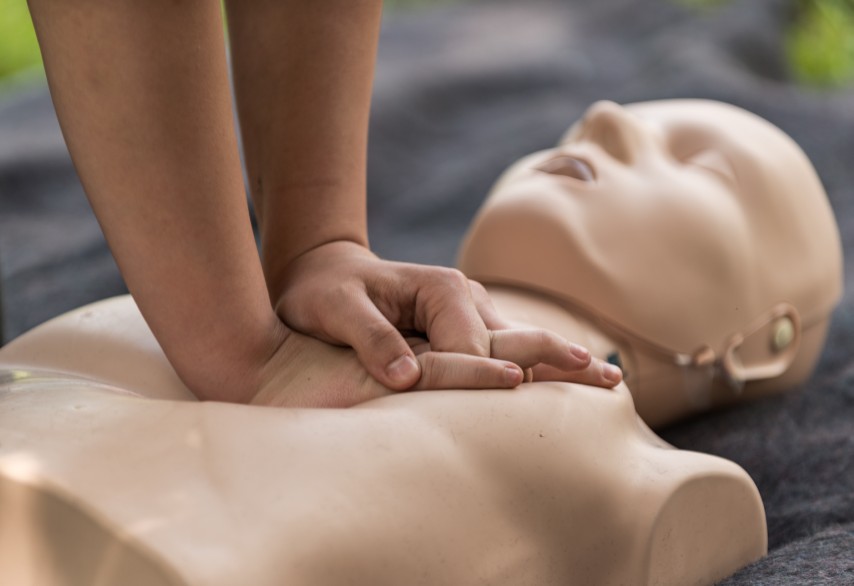
CPR classes are now available in Cookeville Tennessee taught by non other than our own TCC Mollie Bowman.
Also, some people have a genetic predisposition to coronary artery disease or CAD. For example, some people’s blood vessels are narrower, which, when combined with diabetes or a more sedentary or stressful lifestyle, creates the perfect storm for a heart-related problem.
Cardiac arrest happens when rapid and abnormal impulses override the heart’s natural rhythm. This is distinguished from a heart attack, which occurs when a clogged blood vessel disrupts blood circulation to the heart. Therefore, a heart attack is a health condition that leads up to or triggers a cardiac arrest.
To explain things further – an SCA is more like an electrical issue, where the power is cut off, while a heart attack can be compared to a plumbing problem, where a pipe is damaged, preventing adequate circulation.
The silent progression of heart disease makes it all the more important for individuals to be aware of the early signs of a sudden cardiac arrest or SCA.
Recognizing the signs of a possible SCA can mean the difference between life and death. Take the case of Laura, a 28-year-old software engineer from Pittsburgh. For weeks, she had been experiencing occasional chest pains and shortness of breath.
She dismissed her symptoms as the result of stress. It wasn’t until she fainted during a team meeting that her colleagues realized something was seriously wrong. Fortunately, quick action and immediate medical attention saved Laura’s life. Her team had been trained in on-site CPR, so Laura recovered successfully.
Her story serves as a reminder of the importance of listening to our bodies, and, also, why it’s important for people to receive on-site CPR training, such as the training In-Pulse CPR features and provides.
So, what exactly happens during a sudden cardiac arrest?
Imagine the heart as a precisely coordinated orchestra performance. Sudden cardiac arrest happens when the conductor suddenly abandons the podium, throwing the entire performance into a chaotic melody of confusion and noise.
The heart’s electrical system goes haywire, causing arrhythmia – irregular heartbeats that are too fast or too erratic to pump the blood effectively. Within minutes, the heart stops altogether, cutting off blood flow to the rest of the body
The window for applying CPR is terrifyingly small. Brain damage can begin within just 4 to 6 minutes after an SCA event. This is why immediate cardiopulmonary resuscitation (CPR) is imperative. It’s the thin line drawn between a tragedy and a second chance at life.
That’s why In-Pulse CPR offers on-site and in-person training. Taking a CPR training course online is not the best way to get the information you need to handle an SCA emergency.
But how can we recognize the warning signs before it’s too late? While sudden cardiac arrest can indeed be sudden, there are often subtle indicators that something isn’t right. Here are the key signs to watch out for:
Chest pain is perhaps the most well-known symptom, but it’s often misunderstood. It’s not always the dramatic, clutching-your-chest moment portrayed in the movies. Sometimes, it’s a persistent discomfort or pressure that doesn’t go away, even when you’re at rest. If you find yourself wincing from chest pain while watching TV or reading a book, it’s time to see a doctor.
Unexplained fainting or near-fainting spells are another red flag. These moments of lost consciousness might be brushed off as mere dizzy spells. However, they may indicate dangerous fluctuations in your heart rhythm. Don’t wait for it to happen again – seek medical attention immediately.
Shortness of breath is tricky because it’s normal to feel winded after exercise or in high-stress situations. However, if you find yourself gasping for air while doing routine tasks like climbing a short flight of stairs or carrying groceries, your heart might be struggling. It may be trying to keep up with your body’s oxygen supply and demands.
A fluttering or pounding sensation in your chest is indeed unsettling. While occasional palpitations might be harmless, frequent or severe episodes can signal an underlying heart condition – a problem that increases the risk of sudden cardiac arrest.
Lastly, persistent weakness and dizziness shouldn’t be ignored. These symptoms might seem vague, but when combined with other warning signs, they could indicate that your heart isn’t pumping blood efficiently.
It’s critical to remember that these symptoms don’t always mean you’re on the brink of sudden cardiac arrest. However, they do warrant a thorough check-up, especially if you have other risk factors – like a family history of heart disease, a stressful job, high blood pressure, diabetes, or a sedentary lifestyle.
High blood pressure or hypertension is a major risk factor for cardiovascular disease. High blood pressure causes the heart muscles to thicken, damages the blood vessels and increases the risk of a heart attack or arrhythmia, both of which can trigger an SCA.
For those who have already experienced a sudden cardiac arrest, the road to recovery can be long and challenging. Treatment often involves the implantation of an Implantable Cardioverter-Defibrillator (ICD), a device that constantly monitors the heart’s rhythm. The device delivers a life-saving shock if it detects a dangerous arrhythmia. In more severe cases, procedures like angioplasty or bypass surgery might be required to improve blood flow to the heart.
But what about prevention? Is it possible to safeguard ourselves against this silent threat? The good news is that many risk factors for sudden cardiac arrest are modifiable. Simple lifestyle changes can significantly reduce your risk and improve your heart health and overall wellbeing.
A diet rich in whole grains, legumes, fruits, and vegetables, is heart-healthy and nutritional. It’s the modern additions – excessive sugar, refined carbohydrates, and unhealthy fats – that pose a problem. Embrace the wisdom of your ancestors and return to a balanced, plant-based diet. Add a rainbow of fruits and vegetables to your plate, choose whole grains over refined ones, and limit your intake of processed foods.
Physical activity is non-negotiable when it comes to heart health. But don’t worry – you don’t need to run marathons or spend hours in the gym. Even 15 to 20 minutes of moderate exercise daily can make a world of difference. Walk briskly in your neighborhood park, practice yoga, or dance to your favorite tunes. The key is to find an activity you enjoy and make it a part of your daily routine.
Stress management is another important aspect of heart health that’s often overlooked. In our fast-paced world, stress has become an unwelcome constant. However, chronic stress can wreak havoc on the heart muscle. Incorporate stress-reduction techniques into your life – try meditation, deep breathing exercises, or simply spend time in nature. Remember, taking care of your mental health is just as important as physical exercise.
If you’re carrying extra weight, losing even a small amount of weight can significantly reduce the additional strain on the heart. Approach weight loss with compassion and patience. Crash diets and extreme measures often backfire. Instead, focus on making sustainable changes to your eating habits and activity levels over time.
It’s also time to review any tobacco or alcohol use. Both habits can dramatically increase your risk of heart disease and the possibility of a sudden cardiac arrest. If you smoke, quitting is the single best thing you can do for your heart. If you drink alcohol, do so in moderation – no more than one drink per day for women and two drinks for men.
Lastly, don’t underestimate the power of regular medical check-ups. Even if you feel fine, an annual visit to your doctor can catch potential issues before they become serious problems. This is especially important if you have a family history of heart disease or other risk factors.
So, listen to your heart – both figuratively and literally. Pay attention to its whispers before they become alarms that you can’t ignore. This also means taking CPR training. You can make a big difference by rescuing someone from a sudden cardiac death. Make every second count by signing up for a CPR class with In-Pulse CPR today.