

2025 AHA Guidelines Emphasize Faster Cardiac Arrest Recognition and Early Defibrillation
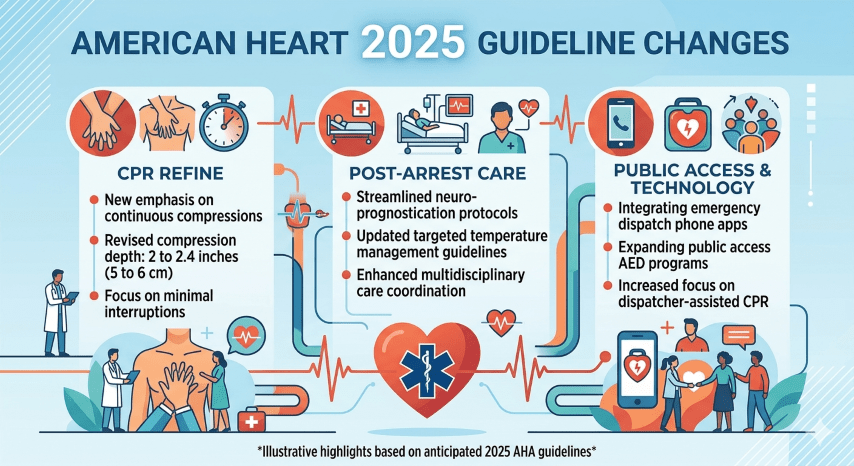
The 2025 American Heart Association guidelines continue to stress a simple truth: the faster cardiac arrest is recognized, the faster lifesaving care can begin. Early recognition, immediate high-quality CPR, and prompt defibrillation remain some of the most important steps in improving survival.
The guidelines also reinforce the importance of using an AED as soon as it is available. In a cardiac arrest with a shockable rhythm, every minute of delay can reduce the chance of survival, which is why CPR training now puts strong emphasis on quick action, fast pad placement, and minimizing hesitation.
One related issue the AHA specifically addresses is hesitation in helping women during cardiac arrest. The 2025 guidelines recommend educational training and public awareness efforts to reduce barriers to performing lay rescuer CPR on females, since women are less likely to receive bystander CPR in public places.
Important note: I could verify the AHA’s guidance on reducing hesitation in responding to female victims, but I did not find an official 2025 AHA statement specifically saying there is a new guideline focused on faster AED pad application for female victims. That part is safer to frame as a broader training goal rather than a direct guideline quote.
References
American Heart Association. Highlights of the 2025 AHA Guidelines for CPR and ECC.
American Heart Association. Part 7: Adult Basic Life Support.
American Heart Association. Part 1: Executive Summary.
American Heart Association. Cardiac Emergency Response Plan and Protocol.