

A Miracle on a Sunday Morning: How a Chain of Heroes Saved Shawn Martin’s Life
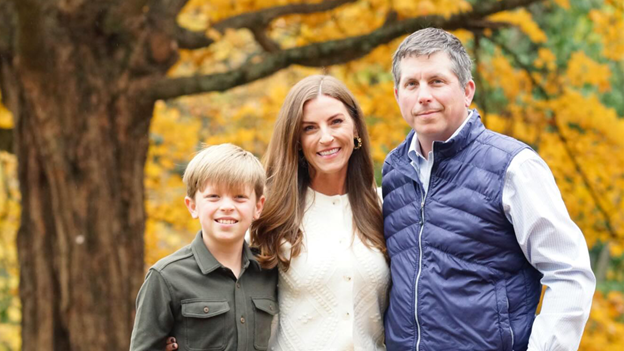
Shawn Martin and his family
First Reported, January 26, 2026, St. Elizabeth Hospital – When Shawn Martin suddenly collapsed from cardiac arrest during a morning walk, his wife, Emily, immediately triggered a remarkable sequence of events that saved his life. Just three days later, Shawn walked out of the hospital, an extraordinary recovery that defied the odds in cardiac care.
The Critical First Moments
The day began like any other quiet Sunday walk for Shawn and Emily Martin near their Southgate, Kentucky home. The peace of the morning was shattered in an instant when, without any warning, Shawn clutched his chest and fell to the ground. It was a sudden, devastating cardiac arrest.
Emily’s immediate response, born of instinct and perhaps prior training, was significant and life-saving. She immediately called 911, clearly communicating their location and the severity of the emergency. Without hesitating, she then began chest compressions, keeping vital, oxygenated blood flowing to Shawn’s brain and organs; an essential action in the critical minutes before professional help could arrive.
An unexpected ally bolstered this essential initial action. A retired firefighter, living nearby, heard Emily’s frantic calls for help and the distinctive cadence of an emergency unfolding. Without a second thought, he sprinted across the road and through the woods, arriving at the scene to find Emily administering CPR. He immediately took over, bringing his years of professional training and strength to bear, maintaining continuous, high-quality compressions until the arrival of the local fire department and EMTs.
This seamless “chain of survival,” started by Emily and maintained by the retired firefighter, was the critical foundation upon which Shawn Martin’s miracle rested. Rapid Response and Defibrillation
The Southgate Fire Department’s EMS crew arrived approximately ten minutes after the collapse. They quickly transported life-saving equipment 200 yards down the path to Shawn. Paramedics identified his condition as ventricular fibrillation (V-fib), a life-threatening, chaotic heart rhythm. They immediately applied a defibrillator, delivering an electric shock that successfully restored a normal heartbeat and circulation.
Thanks to the combined efforts of early bystander CPR and rapid defibrillation, Shawn’s pulse returned. He was quickly stabilized and rushed to St. Elizabeth Hospital in Edgewood, Kentucky, for advanced care.
A Race Against Time: Battling the “Widow-Maker”
The EMS team alerted the hospital, allowing the medical staff to prepare for Shawn’s emergency arrival. He was taken straight to the Cardiac Catheterization Lab. There, Interventional Cardiologist Dr. Stephen Schutzman diagnosed a 90% blockage in Shawn’s left anterior descending artery, a notoriously dangerous condition often called the “widow-maker.” Dr. Schutzman acted swiftly, placing a stent to reestablish blood flow to Shawn’s heart.
“In cardiology, we often talk about seconds and millimeters, how small margins can mean the difference between life and loss,” noted Dr. Schutzman. “Shawn’s case was a vivid reminder of that. Every moment mattered, and every person involved, from his wife to the cath lab team, played a role in giving him a second chance.”
Following the procedure, Shawn was transferred to the Cardiac Intensive Care Unit (CICU) for continuous monitoring and recovery.
Defying the Odds: A Lightning-Fast Recovery
The speed and completeness of Shawn Martin’s recovery were astounding, defying established medical expectations and astonishing even the most seasoned clinicians. Despite the grim prognosis associated with an estimated twelve minutes of cardiac arrest, a period during which his brain was starved of oxygen, Shawn was awake, alert, and communicating with his family within twenty-four hours of the life-saving intervention.
While he initially presented with minor, short-term memory lapses, his cognitive function rapidly and remarkably improved. Most critically, advanced diagnostic imaging and neurological exams revealed no signs of major, permanent neurological damage, a common and devastating complication for survivors of prolonged cardiac arrest. This rapid improvement allowed for an unprecedented early release.
Just seventy-two hours, or three days, after the near-fatal cardiac event, Shawn’s condition stabilized so profoundly that Dr. Schutzman, confident in his patient’s remarkable trajectory, authorized his discharge home to continue his recovery.
Dr. Schutzman, reflecting on the case, was deeply moved by the outcome. “Shawn’s recovery was nothing short of extraordinary, a genuine medical miracle,” he stated. “It was one of those rare and profound moments where every element of the chain of survival came together flawlessly: the immediate courage and presence of mind shown by his wife, the quick instinct and effective intervention performed by a knowledgeable neighbor who started CPR, the precision and swiftness of the arriving EMS team, and finally, the specialized expertise and dedicated care provided by our hospital team.”
The doctor added, “Stories like this one do more than just validate our long hours and hard work; they powerfully remind us why we do this work and, more importantly, they renew our collective purpose and faith in the potential for life-saving collaboration.”
Why Shawn’s Story is Essential
National data show that most survivors of out-of-hospital cardiac arrest require one to two weeks, or more, of hospitalization. Shawn’s three-day discharge is indeed a rare outcome, achieved through a combination of rapid intervention, expert care, and community support.
His story powerfully illustrates the critical nature of the “Chain of Survival”:
| Link | Action | Shawn’s Outcome |
| 1 | Early recognition and 911 activation | Emily’s immediate call |
| 2 | Immediate CPR by a bystander | Emily and the retired firefighter |
| 3 | Rapid defibrillation by EMS | Southgate Fire Department restoring heart rhythm |
| 4 | Advanced hospital care | St. Elizabeth’s cath lab and Dr. Schutzman’s stent placement |
| 5 | Post-arrest recovery and rehabilitation | Discharged in only three days |
Every link in Shawn’s chain was strong, saving a life and keeping a family whole. His survival is a stark reminder that you do not need to be a doctor or first responder to be the critical first link in someone’s survival story.
