

Looking for Phlebotomy Classes Near Me? Don’t Forget Your BLS Certification
If you’re searching for phlebotomy classes near me, you’re probably getting ready to begin a new healthcare career.
While In-Pulse CPR does not offer phlebotomy training, we regularly provide another certification that many phlebotomy students and working phlebotomists need:
American Heart Association BLS Certification – Cost somewhere between $70-90
Some phlebotomy training programs require students to obtain Basic Life Support (BLS) certification before beginning clinical training, and employers may also require or prefer current BLS certification.
The U.S. Bureau of Labor Statistics notes that phlebotomists may need Basic Life Support certification depending on the employer or position.
So while you’re comparing phlebotomy programs, this is a good time to check whether BLS CPR certification is also on your requirement list.
Do Phlebotomists Need CPR Certification?
There isn’t one nationwide CPR requirement that applies to every phlebotomist.
Requirements can depend on:
- Your phlebotomy school or training program
- Your clinical site
- Your employer
- The state where you work
- The type of healthcare facility
Some training programs specifically require a current healthcare-provider CPR or BLS certification before students participate in clinical training.
Before registering for CPR, check your school’s requirements carefully.
If they ask for:
American Heart Association BLS Provider
then that’s the course you should select.
What Is BLS Certification?
BLS stands for Basic Life Support.
The American Heart Association BLS Provider course is designed for healthcare professionals and students entering healthcare environments.
Training includes:
- Adult CPR
- Child CPR
- Infant CPR
- AED use
- Rescue breathing
- Choking response
- Two-rescuer CPR
- Team-based resuscitation skills
In-Pulse CPR offers instructor-led, hands-on American Heart Association BLS Provider classes.
Why Would a Phlebotomist Need BLS?
Phlebotomists work directly with patients in medical environments.
A patient could experience a medical emergency in a:
- Hospital
- Clinic
- Laboratory
- Blood donation center
- Physician’s office
- Long-term care facility
- Outpatient medical center
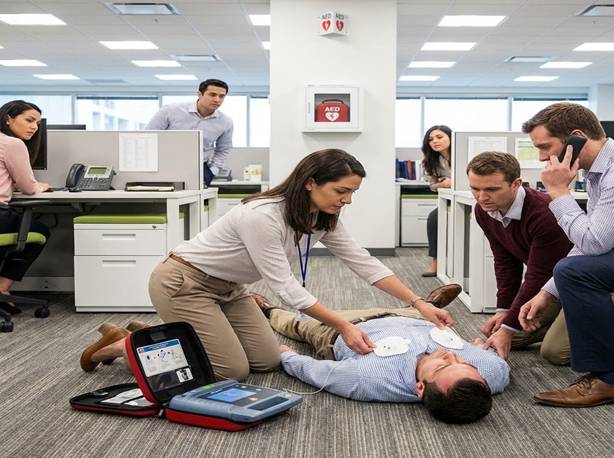
BLS training prepares healthcare workers to recognize cardiac arrest, perform high-quality CPR, use an AED, and work with other rescuers during an emergency.
Even when BLS is not specifically required by your state, your school, clinical facility, or employer may require it.
Looking for Phlebotomy School?
If your original search was for phlebotomy classes near you, you’ll still need to find a school or training provider that actually teaches phlebotomy.
When comparing programs, ask:
- Is the program accepted by employers in my area?
- Does it prepare me for a national phlebotomy certification exam?
- Does it include hands-on venipuncture practice?
- Does it include or require clinical experience?
- Does the program require CPR or BLS certification?
- If CPR is required, does it need to be American Heart Association BLS Provider?
That last question can save you from taking the wrong CPR course.
Already Enrolled in Phlebotomy Training?
If your phlebotomy school told you to obtain AHA BLS certification, In-Pulse CPR can help.
We offer American Heart Association BLS Provider classes at convenient locations in:
Classes include hands-on instruction and an American Heart Association BLS Provider eCard after successful completion.
Find an Upcoming BLS CPR Class Near You
Choose your state, location, and class date to register.
BLS for Phlebotomy Students
Phlebotomy may be your career goal, but CPR and emergency-response skills are an important part of working around patients.
If your school or employer requires American Heart Association BLS Provider certification, make sure you select the correct healthcare-level CPR class.