

Intro. to CPR Training: Saving SCA Survivors Fast
Someone collapses.
It does not look dramatic at first. Sometimes it is. Sometimes it is weirdly quiet—a chair tips. A body slides down a wall. People freeze because the brain wants a reason that is less scary than what it might be.
And if what just happened is sudden cardiac arrest, SCA, then time does this awful thing where it speeds up and slows down at the same time.
This is the part nobody wants to hear, but it matters.
In SCA, the heart is not pumping blood effectively. The brain starts running out of oxygen in minutes. Not hours. Minutes. Which means the difference between life and death is often decided before the ambulance even turns onto the street.
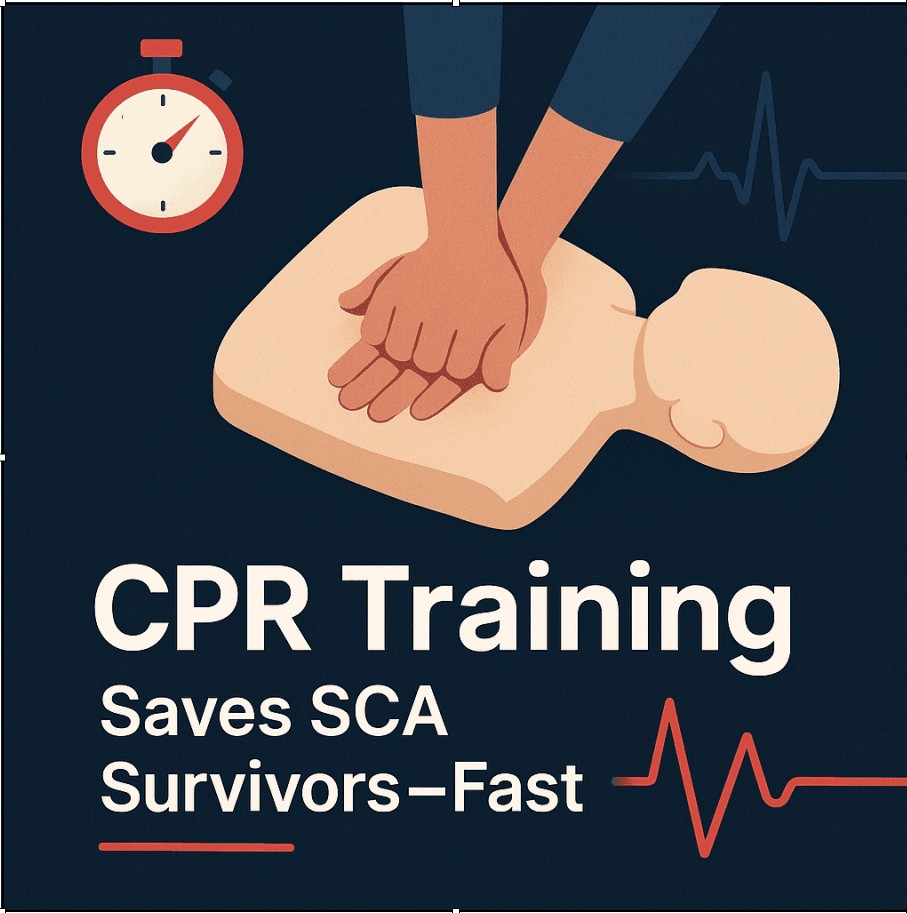
CPR training, real CPR training that people can actually use under stress, is one of the few things that consistently moves the odds in the right direction. Fast.
This article is about that kind of training. The kind that makes people act.
Not the kind that leaves you with a card in your wallet and a vague memory of plastic ribs.
What SCA actually is (and why people get it wrong)
A lot of people mix up “heart attack” and “cardiac arrest.” It is understandable. TV has not helped.
A heart attack is usually a circulatory problem—a blockage. The heart is still beating, at least at first.
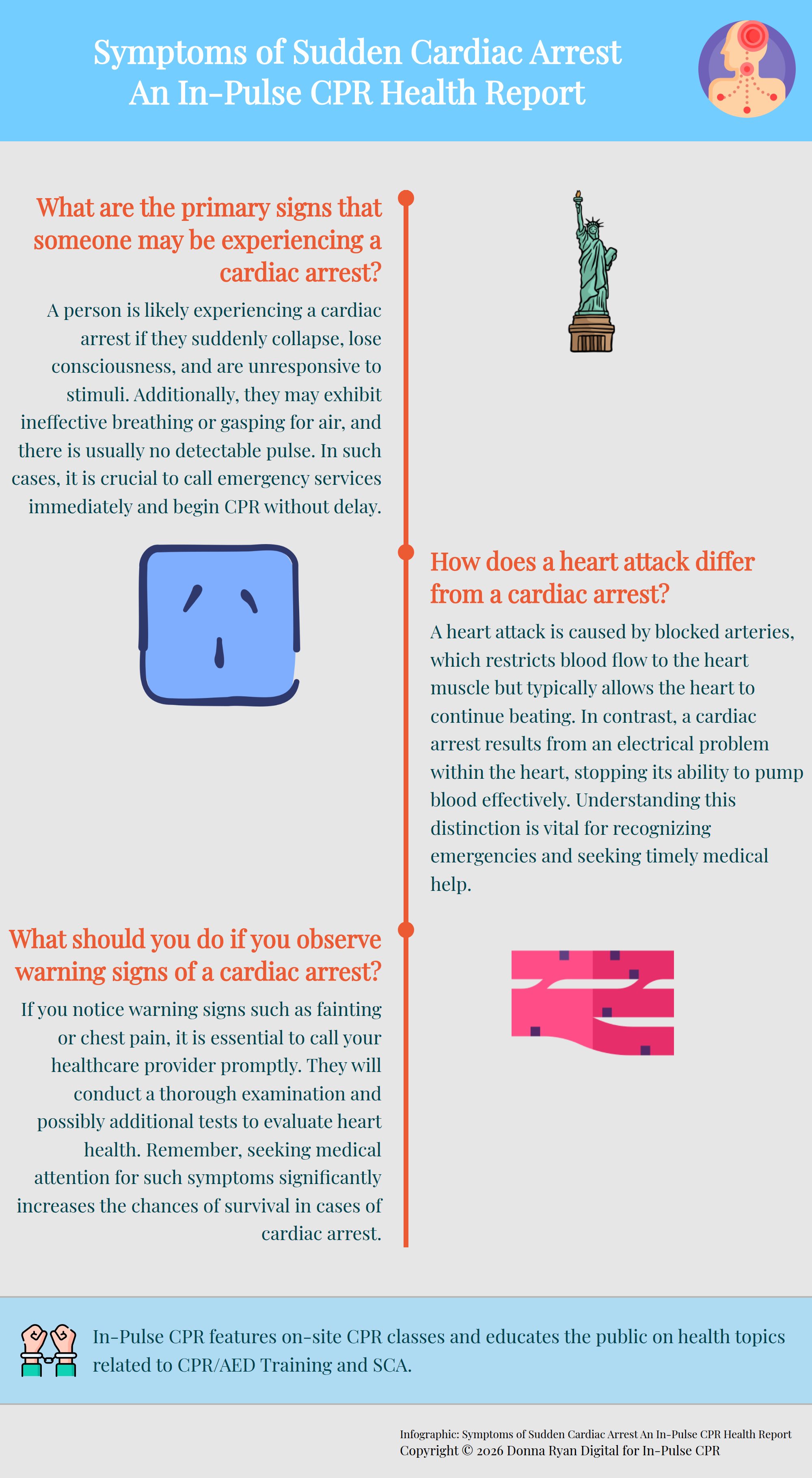
Sudden cardiac arrest is an electrical problem. The heart may quiver, stop, or go into a rhythm that fails to pump blood. The person can be unresponsive, not breathing normally, and they can lose consciousness quickly.
And here is the brutal part.
When SCA happens outside a hospital, the chances of survival drop rapidly with every minute that passes without CPR and defibrillation. That is why bystander action is such a big deal. It is not a nice bonus. It is the bridge.
Ambulances are essential, obviously. But they are rarely there in the first minute or two. You are.
Or your coworker. Or the guy in line behind you.
“Fast” is not just speed. It involves fewer decision points
When people say “act fast,” it sounds like sprinting.
In real emergencies, acting fast usually means you do not waste time deciding what to do. You do not negotiate with yourself. You do not stand there hoping someone else will take over.
Good CPR training reduces the number of thoughts you have to have.
It turns this:
Is this a seizure?
Is he breathing?
What if I hurt them?
I do not want to do it wrong.
What if I get sued?
Where is my phone?
Should I look for a pulse?
Into something like this:
Check responsiveness and breathing.
Call 911, put it on speaker.
Start compressions.
Get an AED.
Follow the AED prompts.
That is the whole game. Less thinking. More doing.
The one skill that matters most: high-quality chest compressions
If you take nothing else from CPR training, take this.
Chest compressions are the engine.
Not gentle compressions. Not “I do not want to break anything” compressions.
Not “I’m tired, so I’ll slow down” compressions.
High-quality compressions.
That usually means:
Push hard and fast in the center of the chest.
Rate: about 100-120 compressions per minute. Not 60. Not 160.
Depth: about 2 inches (5 cm) in adults.
Full recoil: let the chest come back up each time.
Minimize pauses: stopping and starting is costly.
CPR is basically manual circulation. You are moving oxygenated blood to the brain and heart. You are buying time until an AED can reset the rhythm, or until advanced care arrives.
And yes, you can crack ribs. It happens. People worry about that a lot. In a real cardiac arrest, ribs are not the main problem. Oxygen is.
Mouth-to-mouth is not the barrier people think it is
A lot of folks avoid CPR because they think it requires rescue breaths, and that feels intimate, scary, and messy.
Here is the good news.
For adult sudden collapses, hands-only CPR is recommended for untrained bystanders in many guidelines: continuous chest compressions, no breaths.
Especially in the first few minutes, that can be lifesaving.
That does not mean rescue breaths are useless. For drowning, overdose, children, or when the arrest is from respiratory causes, breaths matter more.
But training that saves SCA survivors fast focuses on what most bystanders can do immediately without hesitation.
Chest compressions. Call. AED.
That is why modern CPR training should teach both, but it should also normalize hands-only CPR as a legitimate, effective response for adult SCA.
Because if the choice is perfect CPR vs no CPR, the real choice in public is usually imperfect CPR vs no CPR.
Imperfect CPR wins.
AEDs: the thing that makes CPR work better, sooner
If CPR is the bridge, an AED is often the exit ramp.
An AED, automated external defibrillator, analyzes heart rhythm and tells you if a shock is needed. It literally talks you through what to do. You do not have to interpret rhythms. You do not have to be a clinician. You follow prompts.
The reason AEDs are so powerful is that many SCAs are caused by shockable rhythms early in the course. The sooner a shock occurs when needed, the better the chance of restoring a rhythm that can actually pump blood.
But.
AEDs do not replace CPR. CPR keeps oxygen moving while you get the AED, while the AED analyzes, between shocks, and until help arrives.
A CPR course that saves SCA survivors fast does not treat AEDs as an “extra.” It trains people to:
Send someone to get the AED immediately.
Turn it on fast.
Apply pads correctly.
Clear the victim before analysis and shock.
Resume compressions immediately after shock, no long pause.
That last point, the pause thing, matters more than most people realize. People stop compressions and then… linger. Watching. Waiting. Hoping.
Training should hammer this.
Shock delivered. Hands back on chest.
Why most CPR training fails in the real world
This part might sting a little, but it is true.
A lot of CPR classes are built to “cover content,” not build action under pressure.
People pass, they leave, and then six months later, they are not sure they could do it. Or they are sure they cannot.
So what goes wrong?
1. Too much talk, not enough reps
CPR is physical. It needs practice. You do not learn compressions by watching slides.
A good class has you on the manikin early and often. You should leave feeling the pace in your body.
2. No stress inoculation
Real cardiac arrest does not feel like class. It is loud. People cry. Someone says, “Do something.” The victim’s skin looks different. Breathing might be weird, like agonal gasps, and that confuses people.
Training should include scenarios. Noise. Role assignment. Someone is calling 911 on speaker. Someone is retrieving an AED. Someone is switching compressors.
Not to be theatrical. Just to be closer to reality.
3. People are not taught to recognize agonal breathing
This is a big one.
Agonal breathing can sound like gasping, snorting, or gurgling. It is not normal breathing. It can happen in cardiac arrest. Bystanders see it and think, ” Oh, he’s breathing, we should wait.
No. That can be cardiac arrest. Start CPR.
CPR training that saves lives fast makes this clear, with audio examples if possible. Because in the moment, that sound is a trap.
4. No clear permission to act
Some people need to hear, explicitly, that it is okay to take charge. That you might be the leader by default.
Training should include phrases like:
“I’m starting CPR.”
“You, call 911 and tell them we have an unresponsive adult, possible cardiac arrest.”
“You, get the AED. Now.”
“I need someone to time two-minute cycles.”
It sounds bossy. It is not. It is clarity.
What “fast” CPR training looks like (the pieces that matter)
If you are choosing a course for yourself, your workplace, a school, a gym, a church, whatever, here is what I would look for.
Skills-based, not lecture-based
You want hands-on practice, with feedback.
Many programs use manikins that click at the right depth or devices that show rate and recoil. Those tools are not gimmicks. They create muscle memory.
Simple algorithm, repeated until automatic
The core loop should be drilled until it is boring:
Check responsiveness.
Check breathing (and recognize abnormal breathing).
Call 911 on speaker.
Start compressions.
Get an AED.
Follow prompts.
Keep going until EMS takes over.
If your class adds a bunch of optional “well, you could also” branches before you have the basics, it is doing it backward.
Practice switching compressors
Most people get tired quickly, even fit people. Compressions get shallow without the person realizing it.
Training should teach switching every 2 minutes, with minimal interruption. Like, 5 seconds or less.
AED practice that is not awkward
People get weird around AEDs. They treat it like a medical device that requires permission.
No. It is a tool for laypeople.
Your training should include actually turning one on, placing pads, and responding to prompts with the manikin, and not just pointing at a picture.
A focus on barriers: fear, germs, legal worries
People do not fail CPR because they do not know the steps. They fail because of emotion.
So address it head-on:
Hands-only CPR reduces hesitation.
Good Samaritan laws generally protect people acting in good faith (still, check your local laws).
You can use a barrier device if available, but do not delay compressions while searching for one.
Doing something is better than doing nothing.
The “chain” is real, but it starts with you
You will hear this phrase in CPR education: the chain of survival.
It usually includes early recognition, early CPR, rapid defibrillation, advanced care, and post-arrest care.
That is not abstract. It is literally a timeline.
If the first links do not happen immediately, the rest of the chain can be perfect, and the outcome still gets worse.
Bystander CPR increases the likelihood that the brain remains viable when the heart is restarted. That is the whole point. Survival is not just “alive.” It is a function. It is the ability to go home, to speak, to remember your family.
CPR buys that chance.
How to build a CPR-ready workplace or community (without making it a big production)
Many organizations hold one training day and check the box. Then three years go by.
If you want CPR that saves SCA survivors fast, you need a little system. Nothing fancy. Just intentional.
Put AEDs where people can actually reach them
Not locked in an office. Not behind a counter. Not in a closet.
Visible. Marked. Maintained. With pads that are not expired.
If you have a large building, conduct a timed walk-through. How long does it take to reach an AED and get back? If it is more than a couple of minutes, add another.
Do short refreshers, not just big classes
Skills decay fast. A 10-minute hands-only CPR refresher every few months can be more useful than a one-time long class.
You can do:
Compression-only practice.
AED turn on and pad placement drill.
Scenario walk-through.
Assign roles before an emergency happens.
This sounds dramatic, but it works.
In a gym, the front desk calls 911. Trainer starts compressions. The manager grabs the AED.
In an office, the closest person starts CPR. Reception calls. Facilities bring an AED.
You do not have to script it perfectly. Just decide who tends to be where.
Teach people to call 911 on speaker.
Dispatchers can coach CPR. But only if they can hear you and you can keep your hands on your chest.
Speakerphone is underrated.
Make it culturally normal to act.
Post the steps near AEDs. Run a short drill. Talk about it once in a while. The goal is to make CPR feel like something people do, not something people “should” do.
A quick, practical response guide (what I’d want you to remember)
If an adult collapses and is unresponsive:
Tap and shout. “Are you okay?”
Check breathing. If not breathing normally or only gasping, treat as cardiac arrest.
Call 911. Put it on speaker. Say: “Unresponsive adult, not breathing normally, starting CPR.”
Start compressions. Center of chest, hard and fast, 100-120 per minute.
Send someone for the AED. If alone, get it if it is very close. Otherwise, start CPR first.
Use the AED. Turn it on. Follow prompts. Clear for analysis and shock.
Resume compressions immediately. Keep going until EMS takes over or the person clearly recovers.
That is it. That is the spine of it.
Everything else is detail. Useful detail, sure. But the spine is what saves a life quickly.
The part nobody says out loud
If you ever do CPR on a real person, it can feel intense afterward.
You might shake. You might cry. You might replay it for weeks. You might be fine one moment and not fine the next.
That is normal. It does not mean you did it wrong.
And if the person does not survive, that also does not mean you failed. SCA is a severe event. CPR is a chance, not a guarantee.
But the only way that chance exists is if someone starts.
Let’s wrap this up
CPR training that saves SCA survivors fast is not about memorizing a textbook. It is about building a reflex.
Recognize collapse. Call. Compress. AED. Keep going.
If you are picking a CPR course, pick one that gets you on the manikin, makes you practice under a little pressure, teaches you hands-only CPR clearly, and treats AED use like the normal thing it is.
Because in the moment, you will not rise to the level of your good intentions.
You will fall to the level of your training.
And for someone in sudden cardiac arrest, that training can be the difference between “we did everything we could” and “he’s awake, he’s talking, he’s going to be okay.”
FAQs (Frequently Asked Questions)
What is sudden cardiac arrest (SCA), and how is it different from a heart attack?
Sudden cardiac arrest (SCA) is an electrical problem where the heart quivers, stops, or goes into a rhythm that does not move blood effectively, causing the person to become unresponsive and lose consciousness quickly. This differs from a heart attack, which is usually a circulation problem caused by a blockage, where the heart is still beating initially.
Why is immediate action important during sudden cardiac arrest?
In SCA, the heart stops pumping blood effectively, leading to the brain running out of oxygen within minutes. Survival chances drop rapidly with every minute that passes without CPR and defibrillation. Immediate bystander action, such as performing CPR and using an AED, can be the critical bridge between life and death before emergency services arrive.
What does effective CPR training focus on to help people act fast in emergencies?
Effective CPR training reduces decision points and simplifies actions, enabling people to act quickly without hesitation. It teaches checking responsiveness and breathing, calling 911, starting chest compressions immediately, getting an AED, and following its prompts—minimizing overthinking and maximizing prompt response.
What are the key components of high-quality chest compressions during CPR?
High-quality chest compressions involve pushing hard and fast in the center of the chest at a rate of about 100 to 120 compressions per minute, with a depth of approximately 2 inches (5 cm) in adults. It’s important to allow full chest recoil after each compression and minimize pauses to maintain effective manual circulation of oxygenated blood.
Is mouth-to-mouth rescue breathing necessary for all adult sudden cardiac arrest cases?
For adult sudden collapses, hands-only CPR—continuous chest compressions without rescue breaths—is recommended for untrained bystanders in many guidelines. While rescue breaths are important for cases like drowning or overdose, hands-only CPR is a legitimate and effective immediate response that can save lives without hesitation.
How do automated external defibrillators (AEDs) improve survival during sudden cardiac arrest?
AEDs analyze the heart’s rhythm and provide voice prompts to guide users through delivering shocks if needed. Many SCAs are caused by shockable rhythms early on, so timely defibrillation significantly increases the chances of restoring a normal heartbeat. However, AEDs complement but do not replace CPR; continuous chest compressions keep oxygen moving until advanced care arrives.
