

For Lone Adult Rescuers, Call First, Then Start CPR
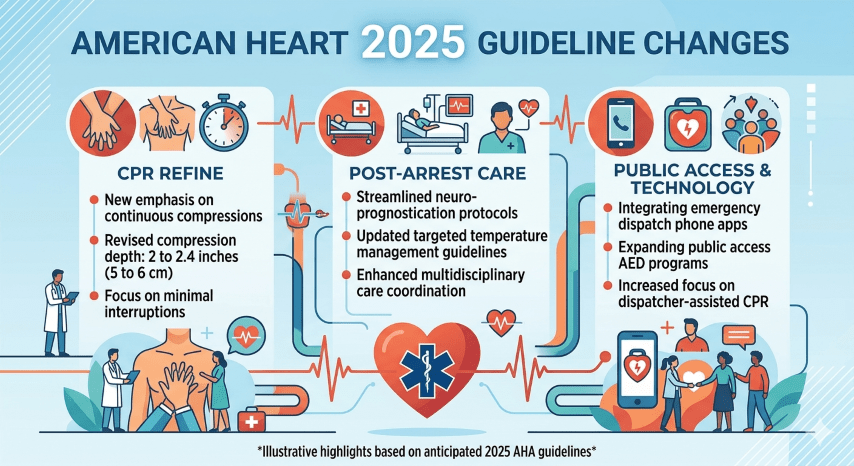
The 2025 AHA adult BLS take-home messages say that once a lone rescuer identifies an adult in cardiac arrest, that rescuer should activate the emergency response system first and then immediately begin CPR. This reinforces the need to get EMS moving and bring an AED into the chain as early as possible.
That sequence is especially important in adult sudden cardiac arrest because defibrillation can be the difference-maker. Calling first helps trigger the full response while still keeping the delay to CPR as short as possible.
References
American Heart Association. Part 7: Adult Basic Life Support.