

Explaining the Chain of Survival to Your Team
Image, Donna Ryan Digital
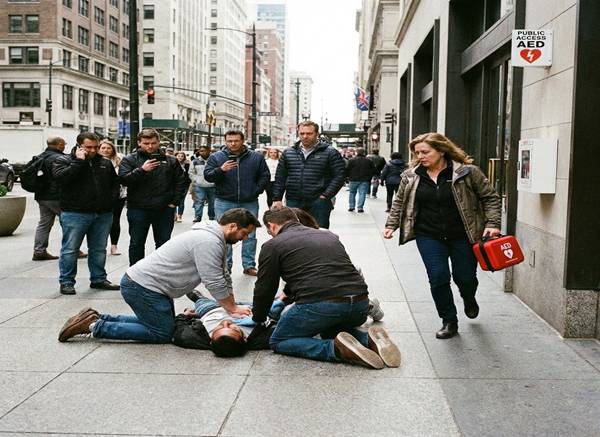
The “chain of survival” is a simple way to explain how multiple time‑critical actions work together to improve outcomes after sudden cardiac arrest. For organizations that host on‑site training, teaching this chain helps staff understand why their role—whether recognizing the emergency, starting compressions, or grabbing an AED—directly affects whether a colleague or visitor survives.
Each Link Leads to Higher Survival Rates
In adult out‑of‑hospital cardiac arrest, the chain typically includes early recognition and activation of emergency response, early CPR, rapid defibrillation, effective advanced life support, and integrated post‑cardiac arrest care. Each link contributes to higher survival and better neurologic outcomes.
For example, national data suggest that when bystander CPR is provided, survival to hospital discharge and neurologically intact survival both increase meaningfully compared with cases where no CPR is given. When an AED is applied quickly and delivers a shock for a shockable rhythm, survival can triple or quadruple relative to scenarios without defibrillation before EMS arrival.
Early Recognition: Why It’s Important
Early recognition is often the most overlooked step. Staff should be trained to treat sudden collapse, unresponsiveness, and abnormal or absent breathing as a likely cardiac arrest and to call 911 immediately.
Dispatcher‑assisted CPR, where the emergency telecommunicator coaches the caller through compressions, has been associated with higher rates of bystander CPR and better outcomes in several studies. On‑site training can include realistic scenarios where participants practice clear communication with dispatchers while another rescuer begins compressions.
The second link, early CPR, buys time by manually circulating blood until defibrillation and advanced care can occur. Evidence shows that starting CPR promptly, ideally within 2 to 5 minutes, significantly improves survival and neurological outcomes.
Keep Everything Simple
Simplified, hands‑only CPR for adults has been widely promoted, and research indicates that simplifying guidelines has helped increase bystander CPR rates over the past two decades. In-Pulse CPR classes can reinforce these streamlined steps and teach staff how to continue compressions with minimal interruptions.
Rapid defibrillation with an AED is the next critical link. Public access defibrillation programs, which place AEDs in offices, malls, airports, and other high‑traffic areas, have been shown to raise survival rates when devices are used within a few minutes of collapse.
One review reported survival as high as 70% when an AED was used within two minutes in witnessed cardiac arrest. On‑site courses should not only teach how to operate an AED but also include site‑specific drills so staff know exactly where the nearest device is located and who is responsible for retrieving it.
Knowledge is Power
Finally, advanced life support and post‑arrest care, provided by EMS and hospitals, build on the early actions taken in the field. While these latter links are outside an employer’s direct control, organizations can dramatically influence the first three links through training, policies, and equipment.
For In-Pulse CPR and its clients, the goal is to help every participant see themselves as a vital part of this chain and to give them the skills and confidence to act without hesitation.
Key Takeaways
- “Chain of survival” sounds clinical, but it’s really a simple idea: several fast actions, done in the right order, dramatically improve survival after cardiac arrest. For your workplace, the first three links are where your team makes the biggest difference.
- First is recognition and calling 911. If someone suddenly collapses and isn’t breathing normally, staff should treat it as cardiac arrest and activate emergency services immediately. Waiting to be “certain” wastes precious time.
- Second is early CPR. Strong, steady chest compressions keep blood moving to the brain and heart until a shock or advanced care is available. Training teaches employees where to place their hands, how deep to compress, and how to keep interruptions to a minimum.
- Third is rapid defibrillation. An AED analyzes the heart rhythm and, if needed, delivers a shock to reset it. AEDs are designed for laypeople, but only if staff know where they are and feel comfortable using them. Practice with trainer devices in your actual building makes that possible.
- The last links, advanced life support and hospital care, are out of your hands. But if your team executes the first three, you give EMS and hospital staff a patient who still has a fighting chance.
Contact In-Pulse CPR to Schedule Training
Help your staff become a strong link in the chain of survival. Schedule on‑site CPR/AED training with In‑Pulse CPR so your team is ready long before EMS arrives.
Hands‑Only CPR: Making the Action Simple for Lay Responders
Image, Donna Ryan Digital
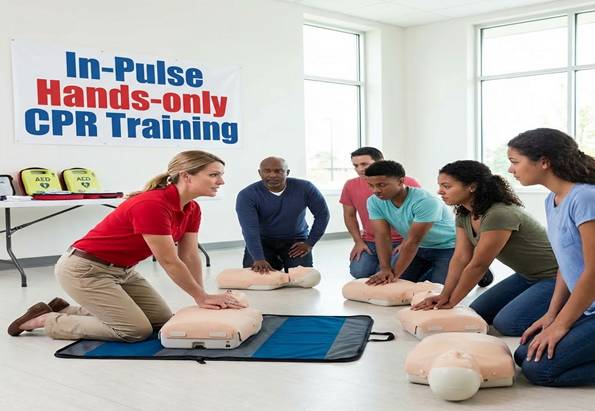
Hands‑only CPR was developed to lower the psychological barrier to action for lay rescuers who witness an adult suddenly collapse. Instead of worrying about rescue breaths, bystanders are instructed to focus on hard, fast chest compressions in the center of the chest at a rate of 100–120 compressions per minute, allowing full recoil between compressions.
For many workplaces and community groups, emphasizing hands‑only CPR in training is the fastest way to empower more people to respond.
A Technique that Leads to Better Results
Data from the American Heart Association indicate that bystander CPR improves survival and neurologic outcomes, but many people still hesitate to help.
Surveys show that only about half of Americans report they would perform bystander CPR, often because they fear doing it incorrectly, worry about disease transmission from rescue breaths, or are concerned about legal consequences.
Hands‑only CPR directly addresses these concerns by simplifying the skill set and removing the need for mouth‑to‑mouth ventilation in most adult sudden cardiac arrest situations.
Getting the Training Onsite: Getting the Training Right
Research suggests that simplifying CPR guidance can increase bystander participation. Analyses of trends over time have shown that bystander CPR rates rose from roughly 40–41% in the early 2000s to around 65–70% in more recent years, largely driven by increased use of chest‑compression‑only CPR by lay rescuers.
Simultaneously, survival from out‑of‑hospital cardiac arrest has inched upward, though it still averages around 10% nationwide, which underscores the importance of further improving bystander response. The combination of clear public messaging and structured hands‑on training is key.
What to Expect in Training
Hands‑only CPR is most appropriate for teens and adults who suddenly collapse and are unresponsive and not breathing normally, or who are producng agonal respiration.
In-Pulse CPR instructors can walk participants through recognizing agonal gasps, checking responsiveness, and starting compressions while another coworker calls 911 and retrieves an AED. Role‑play with dispatcher‑assisted CPR scenarios helps participants practice staying on the phone, following prompts, and counting compressions out loud, reinforcing the correct rate and minimizing delays.
Compression-only CPR: When It Works the Best
Even without rescue breaths, high‑quality chest compressions maintain some blood flow to vital organs until a shock or advanced care can be delivered. Several observational studies and meta‑analyses have found that compression‑only CPR can produce survival and neurological outcomes comparable to or better than traditional CPR with breaths in adult cardiac arrest, especially when initiated quickly.
CPR with Breaths
That said, full CPR with breaths remains important for certain populations, including infants and children, and in situations like drowning or overdose, which is why comprehensive training still covers both methods and when each is appropriate.
For organizations considering on‑site training, promoting hands‑only CPR as the “minimum standard” for any adult collapse can help reduce hesitation.
When staff know that simply pushing hard and fast in the center of the chest while emergency services are on the way can double or triple a person’s chance of survival, they are more likely to act. In-Pulse CPR classes can position hands‑only CPR as an accessible, lifesaving skill that every employee can master in a single session.
Key Takeaways
- One reason people hesitate to start CPR is the belief they need to perform mouth‑to‑mouth breaths perfectly. For most adult sudden cardiac arrests, that’s no longer true. Hands‑only CPR focuses on hard, fast chest compressions, and it’s proven to save lives.
- Hands‑only CPR has just two steps: call 911, then push hard and fast in the center of the chest—about 100 to 120 times per minute—until help or an AED arrives. This simplified approach has been shown to increase the number of bystanders willing to step in. It also makes CPR easier to teach across an entire workforce, regardless of prior medical background.
- In a crisis, simple is powerful. Employees who know they can “just push” are less likely to freeze. With practice on manikins, they learn the correct depth, rhythm, and body mechanics, so they can maintain quality compressions long enough for responders to take over.
- For adults who suddenly collapse at work, hands‑only CPR is often the fastest way to act. It won’t replace full CPR in every situation—such as pediatric cases or drowning, but it gives every employee a lifesaving baseline skill.
Rely on In-Pulse CPR for Getting the Training You Need
Give your team a simple, proven way to save a life. Book a hands‑only CPR session with In‑Pulse CPR and train your employees to act confidently in an emergency.
How AED Programs Transform Workplace Safety
Image, Donna Ryan Digital
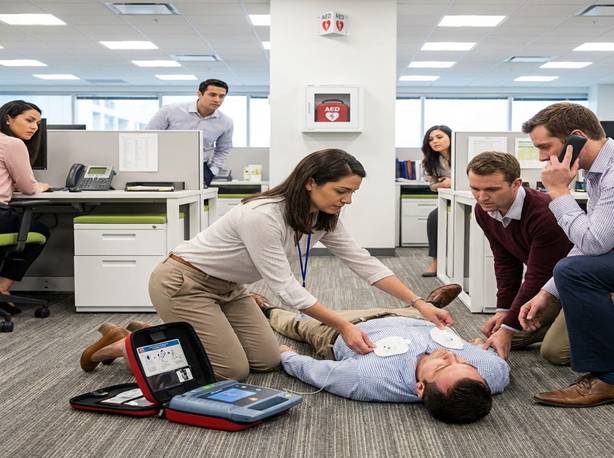
An automated external defibrillator (AED) is a portable device that analyzes heart rhythms and delivers a shock when needed to treat sudden cardiac arrest caused by arrhythmias, such as ventricular fibrillation.
In the workplace, AEDs are an essential complement to CPR because they can restore a viable rhythm when compressions alone are not enough. Public access defibrillation (PAD) programs that place AEDs in offices and public venues have been repeatedly shown to improve survival and neurological outcomes.
Studies from various countries and settings report that when AEDs are used by bystanders before EMS arrival, survival to hospital discharge can be two to four times higher than in similar cardiac arrests without early defibrillation.
One U.S. study found that survival rates were as high as 70% when an AED was used within two minutes of collapse in witnessed cardiac arrests.
- Why CPR Training is a Must for the Workplace April 18, 2025Donna Ryan
- The Importance of On-Site CPR Training for Emergency Preparedness in the Workplace August 2, 2024Donna RyanIn any given moment, a sudden cardiac arrest (SCA) can strike without warning, turning a routine day into a life-threatening emergency. As one of the leading causes of death worldwide, sudden cardiac arrest is a critical health issue that requires immediate attention. Cardiopulmonary resuscitation (CPR) has been widely acknowledged as an essential lifesaving technique that can …
- Don’t Learn CPR Online: On-Site CPR Training is a Better Alternative May 30, 2024Donna RyanCardiopulmonary resuscitation (CPR) is an essential, life-saving procedure. When executed correctly, it can mean the difference between life and death for anyone experiencing a cardiac arrest. In recent years, online CPR programs have gained popularity due to their convenience and accessibility. However, when assessing the true value and effectiveness of the training, you need to take …
Survival Success
A large observational analysis reported survival to hospital admission around 33% among patients treated through PAD programs, higher than many historic benchmarks. These figures highlight the value of not just owning an AED, but ensuring it can be located and used quickly.
Time to first shock is the critical factor. Research shows that when a defibrillation shock is delivered within three minutes of collapse, survival can exceed 70%, while each additional minute of delay reduces the chance of survival by 7–10%.
That reality should shape how organizations plan their AED programs. Devices should be placed so they can be retrieved and applied within a 3‑minute round trip from any point in the building, with clear signage and unobstructed access.
Get the right Training and Equipment
In-Pulse CPR can help employers map traffic patterns and identify optimal AED locations during on‑site training or safety consultations.
Training is just as important as equipment. Although AEDs are designed to be intuitive, with voice prompts, diagrams, and automatic rhythm analysis, studies show that people are more likely to use them correctly and promptly if they have practiced in advance on trainer devices.
On‑site AED training can include practice opening the cabinet, attaching pads to a manikin, following prompts, and ensuring that no one is touching the victim during shock delivery. Regular drills reinforce muscle memory and reveal gaps, such as cabinets blocked by furniture or staff who are unaware of device locations.
An effective AED program also includes maintenance and oversight. Manufacturers and guidelines recommend regular checks of battery status, pad expiration dates, and device self‑test indicators.
AED Support from In-Pulse CPR
Assigning responsibility for monthly checks, documenting inspections, and integrating AED status into broader safety audits help ensure the device will function correctly when needed. In-Pulse CPR can support clients by educating a designated “AED coordinator” or safety team during classes.
By integrating AED deployment with CPR training, organizations create a comprehensive response system rather than a collection of standalone devices.
Employees learn that their goal is to recognize cardiac arrest, start compressions, deploy the nearest AED, and continue care until EMS arrives. This coordinated approach dramatically improves the chances that a sudden collapse at work will be met with confident, effective action instead of confusion.
CPR Quality: What “High‑Quality” Really Means in Class and in the Field
Image, Donna Ryan Digital
High‑quality CPR is not just a slogan; it describes specific technical standards that correlate with better survival and neurological outcomes after cardiac arrest.
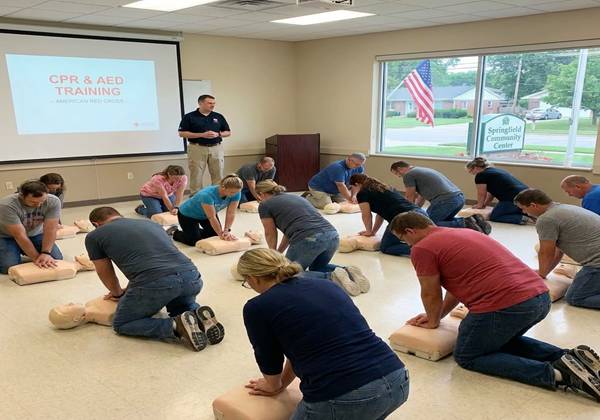
For In-Pulse CPR, teaching these standards and providing participants with feedback during practice are essential to preparing them for real‑world emergencies. Even modest improvements in compression depth, rate, and consistency can translate into more patients leaving the hospital with intact brain function.
- Crossing the Real Finish Line: Bystander CPR Saves a Runner
- Hiking Preparedness: What to Bring and How to Stay Safe on the Trail
- Father and Daughter Saved From Lake Michigan: CPR After Drowning
- Firefighters Use CPR to Save St. Petersburg Man After House Fire
- An Intersection of Need and Know-How: CPR Helps Save a Toddler
Effective Compressions
Effective chest compressions require adequate depth to generate meaningful blood flow. Current adult guidelines recommend compressing at least 2 inches (5 cm) deep but not more than 2.4 inches (6 cm), at a rate of 100–120 compressions per minute. Studies examining bystander CPR and EMS‑provided CPR have found that when compressions are too shallow or too slow, survival decreases.
In one notable study, patients who received “effective” bystander CPR, defined by parameters such as adequate depth and rate, had survival rates several times higher than those whose CPR did not meet these benchmarks.
Minimizing interruptions is another key element of high‑quality CPR. Every pause in compressions reduces blood flow to the heart and brain, and it takes several compressions to restore adequate pressure after each stop.
Team Coordination is Significant
Guidelines emphasize limiting interruptions to fewer than 10 seconds, even during tasks such as switching rescuers or delivering shocks. In the workplace, that means training teams to coordinate their actions—one person performing compressions, another preparing the AED, and a third communicating with EMS, so compressions continue almost continuously.
Full chest recoil between compressions is equally important. Allowing the chest to come back to its normal position between compressions lets the heart refill with blood; incomplete recoil reduces the effectiveness of each compression.
Many lay rescuers, especially those who are anxious or fatigued, tend to lean on the chest, which can compromise recoil. Manikin‑based training with real‑time feedback devices can help participants learn what proper recoil feels like and how to maintain it even when tired.
Feedback Tools Onsite
In-Pulse CPR classes can incorporate objective feedback tools, such as manikins with indicators or electronic sensors, to measure compression depth and rate. Evidence shows that real‑time feedback improves CPR performance during training and can carry over into clinical settings.
Scenario‑based practice, including timed drills where participants perform compressions for 2–3 minutes before switching, also prepares them for the physical demands of sustained CPR.
Finally, the emotional and environmental aspects of real‑world CPR should be addressed. Performing compressions on a colleague, client, or family member is inherently stressful. Training that simulates noisy environments, crowds, and the presence of family members can help participants learn to maintain focus on the technical aspects of high‑quality CPR despite distractions.
Reinforcing a simple checklist, push hard, push fast, allow recoil, minimize pauses, and use an AED as soon as it arrives, gives rescuers a clear mental framework to lean on under pressure.
Why In‑Person, On‑Site CPR Training Beats Online‑Only Courses
Image, Donna Ryan Digital
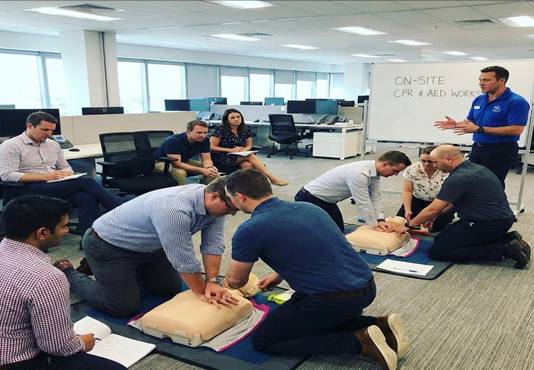
Online CPR modules can introduce concepts, but there is strong rationale for offering in‑person, on‑site training where participants can practice skills under instructor supervision.
Hands-on Experience
Studies of CPR performance show that hands‑on practice and feedback are critical for achieving correct compression depth, rate, and hand placement. For organizations, bringing an experienced instructor to the workplace ensures that staff not only know the steps but can physically perform them.
Several investigations have demonstrated that people who practice on manikins with instructor or device feedback are more likely to deliver effective CPR later, compared with those who only watched videos or read materials.
Correct Errors More Easily On-Site
On‑site training allows instructors from In-Pulse CPR to correct common errors in real time, such as compressions that are too shallow, leaning on the chest between compressions, or hands placed too low or too high on the sternum. This immediate correction accelerates skill acquisition and boosts confidence.
Developing Realistic Scenarios
On‑site classes also allow customization to the workplace environment. Instructors can walk employees through realistic scenarios: a collapse in a conference room, in a warehouse aisle, or in a break area.
Participants can practice navigating actual obstacles, moving furniture, and deciding who will call 911 and who will retrieve the AED. These contextual drills reveal practical issues—like locked AED cabinets or blocked access routes—that generic online courses cannot address.
Emergency Preparedness Equals a Safer Work Environment
Another advantage of in‑person training is the opportunity for team‑building and culture change. When staff learn together, they see that leadership values emergency preparedness and expects them to act as a coordinated response team, not as isolated individuals.
Group courses encourage questions, discussion of fears, and sharing of personal experiences with emergencies, all of which help break down barriers that might otherwise prevent someone from starting CPR in a crisis.
Take Part in Refresher Training
Retention of CPR skills declines over time, and refresher training is important regardless of format. However, evidence suggests that people who received high‑quality, hands‑on instruction retain better performance for longer and can regain proficiency more quickly with brief refreshers.
Schedule On-Site CPR/AED Classes
For employers, scheduling regular on‑site recertification sessions with In-Pulse CPR ensures that staff stay current on guidelines and maintain the muscle memory needed to deliver high‑quality CPR and operate AEDs confidently. Schedule on-site CPR training now.
Dispatcher‑Assisted CPR: Why Training Still Matters When 911 Is on the Line
Image, Donna Ryan Digital
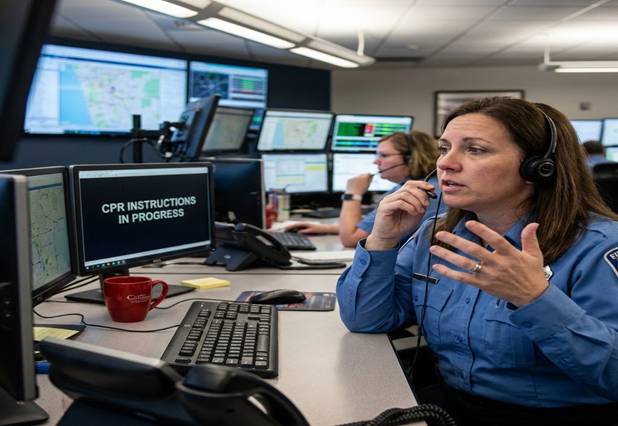
Modern emergency dispatch centers increasingly provide telephone CPR instructions to callers who report a possible cardiac arrest. Dispatcher‑assisted CPR (DA‑CPR) has been associated with increased rates of bystander CPR and improved survival compared with situations where no CPR is performed.
However, relying solely on dispatcher guidance is not a substitute for training; instead, on‑site classes prepare employees to use that guidance more effectively.
The Value of Dispatcher Guidance
Research has shown that DA‑CPR can boost the proportion of cardiac arrest victims who receive some form of bystander CPR. In one analysis, dispatcher coaching increased survival to hospital discharge compared with cases where no bystander CPR occurred at all.
Another study found that compression‑only CPR guided by dispatchers was associated with better neurological outcomes and survival to discharge than scenarios without such guidance. These findings underscore the value of dispatchers as part of the chain of survival.
Limitations of Phone-Only Instructions
Yet DA‑CPR has limitations. Time is lost while the dispatcher recognizes that the caller is dealing with a cardiac arrest, asks key questions, and begins instructions. One study reported that each 30‑second delay in recognizing the cardiac arrest and starting CPR instructions was associated with a 3% reduction in the likelihood of a good neurological outcome.
Callers who are already familiar with CPR concepts and confident in recognizing unresponsiveness and abnormal breathing are better positioned to shorten this interval and start compressions quickly.
Practice Makes the Call Smoother
In‑person training helps employees understand what to expect when they call 911. In-Pulse CPR instructors can simulate dispatcher‑assisted CPR scenarios, teaching participants how to describe the emergency, follow instructions, and perform compressions simultaneously.
Practicing these interactions in a calm environment means that, in a real emergency, staff are less likely to be overwhelmed by stress or confusion on the phone.
Training Reinforces Quality
Training also reinforces the technical aspects that dispatchers cannot fully assess remotely. While a dispatcher can tell a caller where to place hands and how fast to push, they cannot feel whether compressions are deep enough or whether the rescuer is allowing full chest recoil.
Participants who have practiced under supervision will be more capable of delivering high‑quality compressions even when receiving only audio guidance.
Final Thoughts
Ultimately, DA‑CPR and on‑site training should be viewed as complementary. Dispatcher instructions can guide an untrained bystander through basic steps, but employees who have completed an In-Pulse CPR course will start sooner, compress more effectively, and coordinate better with coworkers retrieving AEDs.
This synergy maximizes the chances that a victim will survive with good brain function, turning a potentially tragic event into a success story.
__________________________________________________________________________
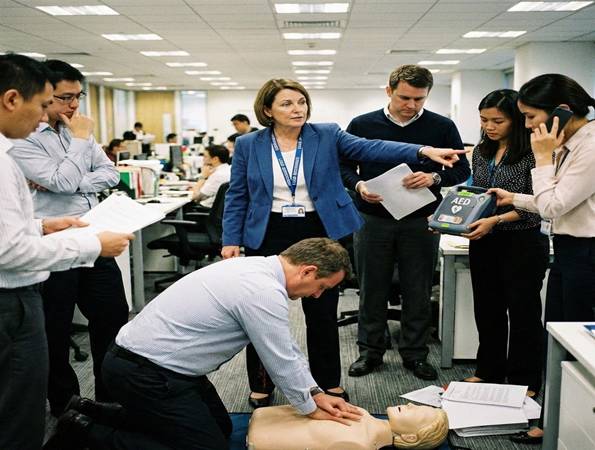
CPR and AED Readiness for Office and Corporate Environments
Image, Donna Ryan Digital
Office environments may seem low risk compared with industrial workplaces, but sudden cardiac arrest can occur anywhere adults gather.
Given that many employees spend a large portion of their day at work, corporate settings are important targets for CPR and AED preparedness efforts. In-Pulse CPR’s on‑site programs can help companies turn their offices into safer environments for staff and visitors.
High Stakes in Corporate Settings
Data from national cardiac arrest registries indicate that a substantial proportion of out‑of‑hospital arrests occur in non‑residential, non‑healthcare locations, including offices, retail sites, and public buildings.
Bystander CPR and rapid defibrillation in these settings significantly improve survival compared with cases where no immediate help is provided. For employers, this means that investing in training and equipment is not just a compliance measure, it is a critical component of employee health and safety.
Developing an Office-Specific Plan
Developing an office‑specific emergency response plan starts with mapping the physical space. During on‑site training, In-Pulse CPR instructors can walk through the layout, identify optimal AED locations, and help determine how long it would take someone to retrieve a device from any point in the building.
The goal is that an AED can be accessed and applied within 3 minutes of a suspected cardiac arrest, which aligns with evidence that early shocks dramatically increase survival.
The Role of Corporate Culture
Corporate culture also plays a significant role. When leadership visibly supports CPR and AED initiatives by allocating time for training during work hours, recognizing trained employees, and including cardiac arrest response in safety communications—staff are more likely to take the skills seriously and volunteer as emergency responders.
On‑site group classes allow teams to practice together, assign roles, and rehearse communication during mock events.
Maintenance and Refreshers
Ongoing readiness requires maintenance and refreshers. AED batteries and pads have expiration dates, and devices may issue alerts if they fail self‑checks; someone must be responsible for responding to those alerts.
In-Pulse CPR can help identify or train an in‑house coordinator to oversee AED checks and to schedule periodic refresher courses, ensuring that the workforce retains skills and remains aware of equipment locations.
Summary
A well‑designed CPR and AED program turns the office from a passive environment into an active link in the community chain of survival.
_________________________________________________________________________
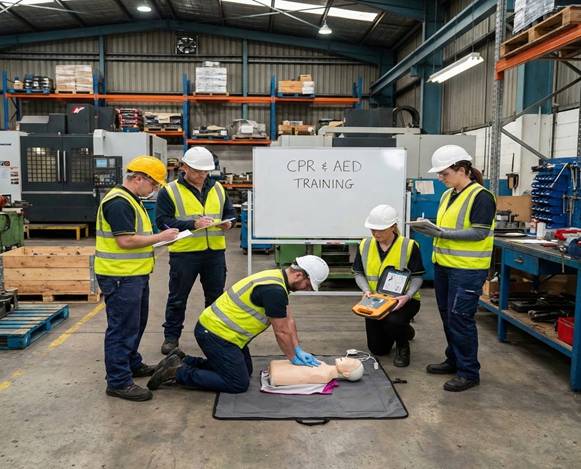
CPR and AED Preparedness in Industrial and Warehouse Settings
Image, Donna Ryan Digital
These factors make on‑site CPR and AED readiness especially critical. In-Pulse CPR can tailor training and planning to the realities of manufacturing floors, distribution centers, and similar environments.
Leveraging a Safety Culture
Out‑of‑hospital cardiac arrests in industrial settings may be witnessed by coworkers who are already accustomed to safety protocols. This culture of safety can be leveraged to incorporate medical emergency response alongside procedures for fire, spills, or equipment incidents.
Evidence shows that when bystanders initiate CPR and apply an AED before EMS arrival, survival to hospital discharge and neurologic outcomes improve compared with delayed or absent interventions.
Addressing the Distance Challenge
One challenge in industrial environments is distance. AEDs must be strategically placed so that they can be reached and returned to a victim within a few minutes. Large warehouses may require multiple devices, positioned near high‑traffic areas or at intersections of work zones.
During on‑site training, instructors can conduct timed drills for AED retrieval and practice CPR scenarios in realistic locations, such as between pallet racks or near machinery, helping identify bottlenecks.
Training for Logistical Challenges
Noise and physical obstacles can complicate communication in an emergency. Training should include strategies for gaining attention, stopping equipment safely, and assigning roles quickly.
For example, one worker might stop nearby machinery and clear space, another calls 911 and meets EMS at the entrance, while a trained responder begins compressions and a designated person retrieves the AED. Practicing these sequences under instructor guidance ensures that responders are prepared for the logistical realities of the site.
Ensuring Coverage Across Shifts
Industrial workplaces may also have rotating shifts and high employee turnover, making regular training and refreshers essential.
In-Pulse CPR can work with management to develop a training schedule that ensures each shift has enough trained responders on site at all times. Incorporating CPR and AED topics into safety meetings and orientation sessions further reinforces their importance.
Conclusion
By integrating CPR and AED preparedness into existing safety frameworks, industrial and warehouse employers can significantly improve their readiness to manage cardiac arrest events on site.
The presence of trained responders and accessible AEDs means that, even in large and complex facilities, a sudden collapse can be met with a swift, coordinated response that maximizes the chance of survival.
____________________________________________________________________
Home and Community Benefits of Workplace CPR Training
Image, Donna Ryan Digital
While employers focus on protecting staff at work, the benefits of CPR training extend well beyond the workplace. Because roughly 70–75% of out‑of‑hospital cardiac arrests occur in homes or residences, many lives saved by CPR and AED use happen in living rooms, kitchens, and driveways rather than offices or public places. When employees receive high‑quality training at work through organizations like In-Pulse CPR, they carry those skills back to their families and communities.
Closing the Home Intervention Gap
Statistics from national registries show that bystander CPR in the home is less common than in public settings, and survival rates are typically lower. This is partly because arrests at home are more likely to be unwitnessed and because fewer people in the household may be trained in CPR.
However, when family members are present and ready to act, the same survival benefits seen in public settings apply: early recognition, prompt CPR, and, when available, rapid defibrillation increase the chance that a loved one will survive with a good neurological outcome.
Equipping the Community
Workplace training can help close this gap by equipping more adults with both knowledge and confidence. Employees who complete In-Pulse CPR courses often report that they feel better prepared not only to help coworkers but also to respond at home, at children’s sporting events, in faith communities, and in other social settings. Each trained individual effectively becomes a mobile link in the community’s chain of survival.
Supporting Home AED Use
Some families choose to purchase home AEDs when a household member is at elevated risk for cardiac arrest, such as those with certain heart conditions or a history of arrhythmias. In such cases, workplace CPR and AED training provide critical skills for operating the device correctly and integrating it into an emergency plan.
Even for families without a home AED, training teaches them to quickly call 911, start compressions, and consider whether a nearby public AED might be available, such as in an apartment complex gym or clubhouse.
Training as a Public Health Intervention
Community organizations—schools, sports leagues, and faith institutions—also benefit indirectly when more people are trained at work. Parents and volunteers who have completed employer‑sponsored CPR courses may spearhead efforts to obtain AEDs, organize drills, or advocate for broader training in those settings. In this way, corporate investment in on‑site CPR training seeds preparedness across the broader community.
Schedule Training with In-Pulse CPR Now
For In-Pulse CPR, emphasizing these home and community benefits can help motivate employers and participants alike. The skills learned in a conference room today may save the life of a spouse, child, or neighbor tomorrow, making workplace training a powerful public health intervention as well as a safety initiative.
____________________________________________________________________________
Addressing Fear and Hesitation: How CPR Training Helps People Step Up
Image, Donna Ryan Digital
Despite strong evidence that bystander CPR improves survival, many people hesitate to act when confronted with a real cardiac arrest. Common concerns include fear of doing something wrong, fear of harming the victim, worries about disease transmission, and uncertainty about legal protection.
On‑site CPR courses give organizations like In-Pulse CPR an opportunity to address these barriers directly and build a culture where taking action is encouraged and supported.
Understanding the Barriers
Surveys cited by the American Heart Association show that only about half of adults say they would be willing to perform CPR on a stranger, even though most acknowledge its importance.
At the same time, studies of real cardiac arrest events demonstrate that when bystanders do provide CPR, victims are significantly more likely to survive to hospital discharge and to do so with good neurological function. Bridging this gap between perceived and actual risk requires education and realistic practice.
Training Reduces Perceived Risk
Training helps participants understand that the risks of attempting CPR are low compared with the risks of doing nothing. Cardiac arrest is essentially fatal without intervention, and broken ribs or soreness—while possible—are acceptable trade‑offs for saving a life. Instructors can explain that hands‑only CPR reduces concerns about disease transmission because it does not require mouth‑to‑mouth contact in most adult cases.
Discussing Good Samaritan principles in plain language reassures participants that, in general, people who act in good faith to help are legally protected in many jurisdictions, though specific laws vary.
Building Confidence Through Practice
Hands‑on practice is crucial for overcoming hesitation. When participants feel the resistance of a manikin’s chest and learn to maintain compressions at the correct depth and rate, they are more likely to trust their ability in a real emergency.
Role‑playing scenarios, such as responding to a collapse in a meeting, a lobby, or a parking lot, helps normalize the idea of stepping forward and taking charge. In a group setting, employees see peers and leaders practicing the same skills, which reinforces social norms that support intervention.
Supportive Workplace Policies
In-Pulse CPR can also help organizations develop supportive policies. For example, employers can publicly recognize staff who volunteer for an emergency response team, provide debriefing resources after an incident, and communicate a clear expectation that employees should call 911 and start CPR when they suspect cardiac arrest. Knowing that their employer backs them reduces anxiety about potential repercussions.
Conclusion
Ultimately, the combination of information, practical skill‑building, and visible organizational support changes how people respond in critical moments. Instead of freezing, trained individuals are more likely to call for help, start compressions, and deploy an AED, dramatically improving the odds that someone in their workplace or community will survive.
__________________________________________________________________________
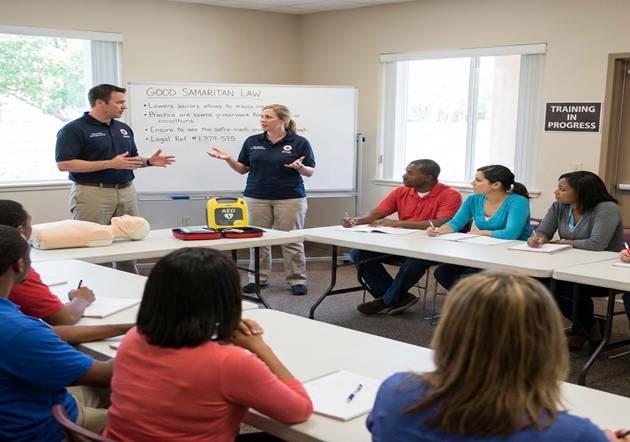
Good Samaritan Concepts: Reassuring Employees About Helping in Emergencies
Image, Donna Ryan Digital
Legal concerns are a common reason people hesitate to perform CPR or use an AED. Many worry that if they make a mistake or the person does not survive, they could face lawsuits or other consequences.
While In-Pulse CPR does not provide legal advice, on‑site training can introduce Good Samaritan concepts that help participants understand, in general terms, how many jurisdictions encourage bystander assistance.
Legal Protection for Bystanders
In the United States and numerous other countries, Good Samaritan principles are designed to protect individuals who provide reasonable assistance in emergencies from civil liability, as long as they act in good faith and without gross negligence.
These protections typically apply when people voluntarily help someone in distress without expectation of compensation. While specific statutes vary by state or country, the underlying policy goal is to remove legal barriers that might discourage lifesaving action.
Emphasizing the Stakes
During training, instructors can explain that, in practice, lawsuits against lay rescuers for performing CPR or using an AED are extremely rare and that courts and laws often favor those who attempt to help.
At the same time, they can emphasize that the risk of not acting, given the low survival rates for untreated cardiac arrest, is far greater than the risk of legal repercussions for attempting CPR. Reinforcing this message helps shift participants’ focus from fear of liability to their potential to save a life.
Integrating with Internal Policy
Organizations can also support employees by establishing clear internal policies that encourage emergency response and outline expected steps: call 911, start CPR, use the nearest AED, and notify designated supervisors.
Communicating that the company values and supports reasonable efforts to assist in medical emergencies further reduces anxiety. In-Pulse CPR trainers can work with safety officers or HR to integrate these messages into training sessions, without venturing into jurisdiction‑specific legal interpretation.
Summary
Employees should be encouraged to seek legal guidance from appropriate professionals if they have detailed questions about their jurisdiction’s laws, particularly in regulated environments.
However, the key training message is that most legal frameworks and organizational policies are designed to support, not punish, good‑faith efforts to help someone in cardiac arrest. When combined with solid CPR and AED skills, this reassurance increases the likelihood that bystanders will act quickly when seconds matter.
________________________________________________________________________
CPR and AED Training for Schools and Youth‑Focused Organizations
Image, Donna Ryan Digital
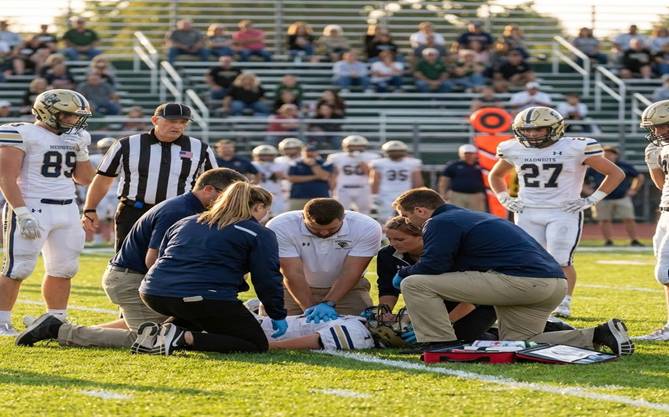
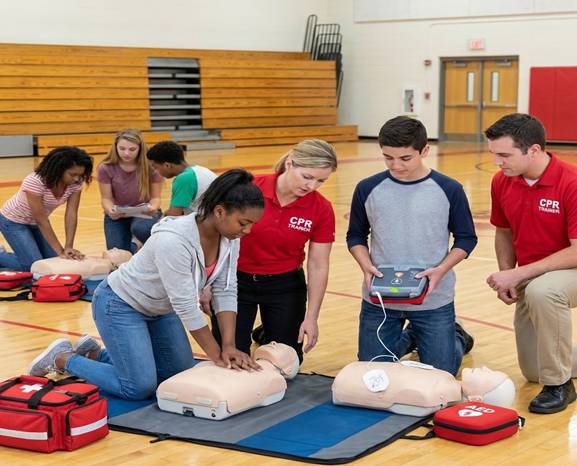
Schools, sports clubs, and youth programs are important settings for CPR and AED readiness because they bring together large numbers of students, staff, and families. Although sudden cardiac arrest is less common in children and adolescents than in adults, it does occur, often in athletic contexts or among youth with underlying heart conditions. Training adults in these environments to recognize and respond to cardiac arrest can be lifesaving.
Training Staff and Students
Public health initiatives increasingly encourage or require CPR education in schools, both for staff and sometimes for students. Evidence suggests that when more people in a community are trained, bystander CPR rates increase and survival improves across age groups.
On‑site courses provided by organizations like In-Pulse CPR allow schools and youth programs to train teachers, coaches, and volunteers in a coordinated fashion, ensuring that multiple adults are prepared to respond at practices, games, and events.
AEDs in Youth Settings
AED availability is particularly important in athletic and school settings. Studies of public access defibrillation programs have documented higher survival rates when AEDs are applied quickly in public locations, including sports facilities and campuses.
For young athletes who experience sudden collapse due to arrhythmias or structural heart disease, rapid defibrillation can mean the difference between complete recovery and permanent harm or death.
On‑site training can include drills that simulate a collapse on a playing field or in a gym, with assigned roles for calling 911, starting CPR, and retrieving the AED.
Pediatric-Specific Training
Pediatric CPR has specific considerations that differ from adult CPR, particularly regarding compression depth, technique, and integration of rescue breaths.
In-Pulse CPR courses can cover these differences in age‑appropriate modules, ensuring that staff understand when to use one‑handed compressions, how to perform rescue breaths for small children, and how to use pediatric AED pads or settings when available. This knowledge is especially important in settings such as daycare centers and elementary schools.
Schedule Onsite CPR/AED Training with In-Pulse CPR Today
In this way, investing in on‑site CPR and AED training for youth‑centered environments helps strengthen the entire community’s chain of survival.
__________________________________________________________________________
Public Access Defibrillation: How Businesses Can Support Community Survival
Image, Donna Ryan Digital
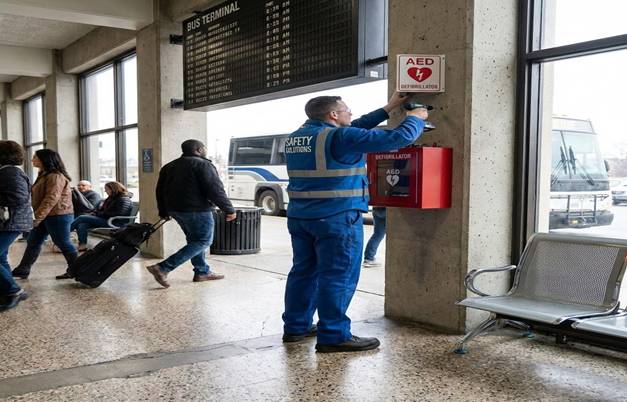
Public access defibrillation (PAD) programs aim to place AEDs in locations where cardiac arrests are likely to occur and where bystanders can reach and use them quickly.
Businesses that host large numbers of employees, customers, or visitors—such as malls, theaters, fitness centers, hotels, and transportation hubs—are key partners in these programs. In-Pulse CPR can help such organizations align their internal AED strategies with broader community goals.
The Impact of PAD Programs
Multiple studies have shown that PAD programs significantly improve survival from out‑of‑hospital cardiac arrest, particularly when an AED is used within a few minutes of collapse. A review of real‑world PAD use reported survival to hospital admission in roughly one‑third of cases, higher than many previous estimates in settings without widespread AED availability.
Another report noted survival rates as high as 70% when AEDs were used within 2 minutes of collapse. These results underscore the value of making AEDs visible, accessible, and integrated into emergency plans.
Optimal Placement and Registration
Effective PAD implementation requires more than simply purchasing devices. Site assessments should identify high‑traffic areas, locations where physical exertion is common, and spots with potential delays for EMS access.
AEDs should be mounted in unlocked or easily accessible cabinets, clearly marked with signage, and registered with local emergency services when possible, so dispatchers can direct callers to the nearest device. On‑site training sessions can introduce employees to these site‑specific placements and practice retrieval routes.
Overcoming Awareness Gaps
Awareness remains a major challenge. Surveys reported in medical journals and public health studies have found that relatively few people know where the nearest AED is located in common environments such as workplaces, transit areas, or neighborhoods.
On‑site CPR and AED training addresses this gap by physically walking participants to each device, discussing when and how to use it, and reinforcing the message that AEDs are designed to be safe for lay use.
Learn More From In-Pulse CPR
Businesses that actively support PAD efforts contribute to improved outcomes not only within their walls but also in the surrounding community.
When employees are trained and AEDs are readily available, bystanders are more likely to intervene in cardiac arrests that occur in parking lots, nearby sidewalks, or adjacent venues. In-Pulse CPR can partner with organizations to develop PAD‑aligned policies and training that turn commercial spaces into robust links in the community chain of survival.
___________________________________________________________________________
CPR and AED Training for High‑Risk Populations and Caregivers
Image, Donna Ryan Digital
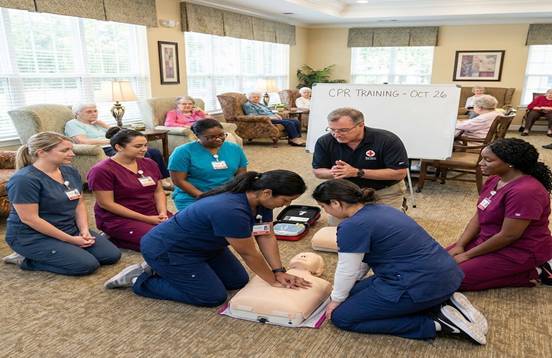
Certain individuals face a higher risk for sudden cardiac arrest, including those with known heart disease, prior cardiac arrest, inherited arrhythmia syndromes, or severe cardiomyopathy. For these patients, having trained family members, caregivers, and nearby coworkers can be especially important. I
n-Pulse CPR’s on‑site training programs offer a convenient way for organizations that serve high‑risk groups—such as cardiac rehab facilities, senior living communities, and specialty clinics—to equip staff and caregivers with critical skills.
Caregivers as First Responders
Because most cardiac arrests occur at home, caregivers often serve as first responders for high‑risk patients. Studies show that when bystanders initiate CPR promptly and use an AED when available, these patients have better survival and neurological outcomes than when no immediate intervention is provided.
For families and caregivers, training provides the knowledge and confidence needed to recognize arrest quickly, start compressions, and operate a home or onsite AED.
Home AED Readiness
Home AEDs may be recommended for some high‑risk individuals, though decisions depend on clinical evaluation. When AEDs are present in the home or in residential care settings, training must address device familiarity: where the AED is stored, how to activate it, how to place pads correctly, and how to follow voice prompts.
On‑site training can simulate nighttime or bathroom scenarios, where access may be more challenging, to ensure that caregivers can respond under realistic conditions.
Standardized Training for Care Staff
Organizations that employ caregivers—such as home health agencies, assisted living facilities, and adult day programs—benefit from standardized CPR and AED training for staff.
Ensuring Increased Success
By focusing on high‑risk populations and their caregivers, CPR and AED training amplifies its impact. A relatively small group of trained individuals can significantly improve outcomes for patients who are most likely to experience cardiac arrest, both in healthcare‑adjacent settings and in private residences.
___________________________________________________________________________
Tracking and Improving CPR and AED Readiness Over Time
Image, Donna Ryan Digital
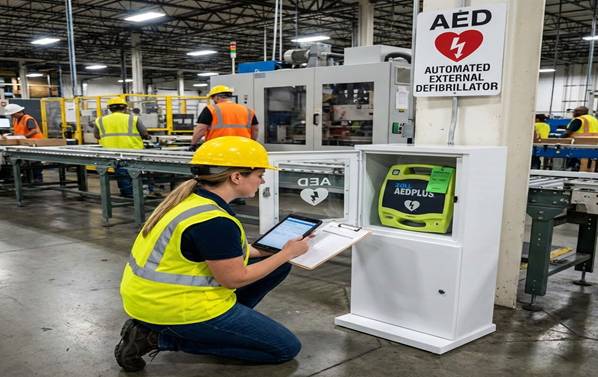
Implementing CPR and AED training is an important first step, but maintaining readiness requires ongoing assessment and improvement. Organizations that partner with In-Pulse CPR can treat resuscitation preparedness as a continuous quality initiative rather than a one‑time project, mirroring approaches used in healthcare systems.
Key Performance Indicators (KPIs)
Key performance indicators might include the number and distribution of trained employees, AED coverage and accessibility, completion rates for initial and refresher training, and results of periodic drills.
For example, timed drills can measure how long it takes responders to recognize a simulated collapse, call 911, start compressions, and apply an AED. Comparing these times to evidence‑based targets (such as delivering the first shock within 3–5 minutes) provides objective goals for improvement.
Learning from Feedback and Drills
Organizations can also track qualitative feedback from participants and observers after drills or real events. Staff may identify confusing aspects of the emergency plan, obstacles to reaching AEDs, or emotional barriers to initiating CPR. In-Pulse CPR instructors can use this feedback to tailor future training sessions, address misconceptions, and refine scenarios to reflect actual challenges.
Essential Equipment Audits
Regular equipment audits are essential to ensure that AEDs remain operational. Checklists should confirm battery status, pad expiration dates, device self‑test indicators, and cabinet accessibility.
Documenting these audits and assigning clear responsibility help prevent lapses in readiness. Integrating AED checks into broader safety or facility inspection routines can make the process more efficient.
CPR/AED Best Practices – Partner with In-Pulse CPR
Over time, organizations can compare their internal performance against public health benchmarks, such as national goals to increase the percentage of out‑of‑hospital cardiac arrests receiving bystander CPR.
While individual workplaces may not have access to detailed outcome data, they can strive to ensure that every feasible step—training, equipment, drills, and culture—is aligned with best practices that have been shown to improve survival on a population level.
Partner with In-Pulse CPR Today
By adopting a continuous improvement mindset, employers and community organizations transform CPR and AED readiness from a compliance checkbox into a dynamic, life‑saving capability.
In-Pulse CPR can act as an ongoing partner in this process, providing updated training, helping interpret guideline changes, and supporting periodic evaluations.
________________________________________________________________________
Myth‑Busting: Common Misconceptions About CPR and AEDs
Image, Donna Ryan Digital
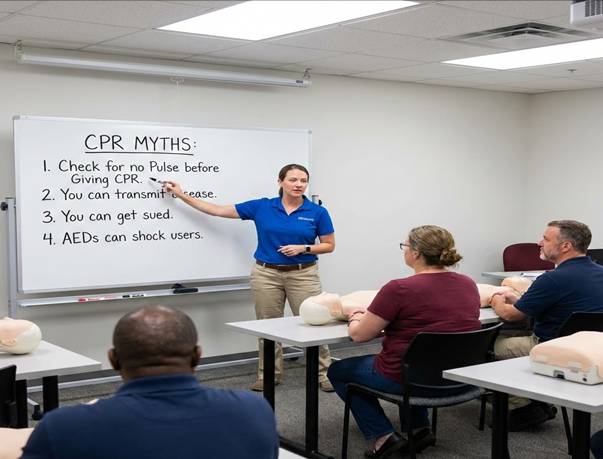
Myths and misconceptions about CPR and AEDs can discourage people from acting in emergencies. Addressing these myths head‑on during on‑site training helps participants make informed decisions and focus on what truly matters: starting CPR quickly and using an AED when available.
Myth: Waiting for a Pulse Check
One frequent myth is that CPR is only needed if the person has “no pulse,” which lay rescuers often cannot reliably assess. Current guidance emphasizes that if someone is unresponsive and not breathing normally—or is only gasping—bystanders should assume cardiac arrest, call 911, and begin CPR. Waiting for certainty wastes precious minutes and reduces the chances of survival and good neurological outcome.
Myth: Causing Harm
Another misconception is that performing CPR or using an AED is likely to cause serious harm if the person is not in cardiac arrest. In reality, AEDs are designed to analyze the heart rhythm and will not deliver a shock unless a shockable arrhythmia is detected. While CPR may cause discomfort or potential rib fractures, these risks are minor compared with the consequences of untreated cardiac arrest, which is almost always fatal without intervention.
Myth: Disease Transmission
Concerns about disease transmission often revolve around mouth‑to‑mouth ventilation. Hands‑only CPR for adults eliminates this barrier by focusing solely on chest compressions, while still providing significant survival benefits.
Training can clarify when rescue breaths are recommended (such as for infants, children, or drowning victims) and how to perform them safely, but the core message is that chest compressions alone are strongly encouraged for adult sudden cardiac arrest of presumed cardiac cause.
Myth: Legal Liability
Fear of legal liability is another persistent myth. As discussed earlier, Good Samaritan principles in many jurisdictions are designed to protect reasonable, good‑faith efforts to help someone in an emergency.
While specific laws vary, the legal risk to lay rescuers is generally low, especially when compared with the high stakes of cardiac arrest and the clear evidence that bystander intervention improves survival.
Debunk the Myths: Sign Up for In-Pulse Onsite CPR Training Now
By systematically debunking these myths with clear explanations and evidence, In-Pulse CPR’s on‑site courses help participants replace anxiety with knowledge and actionable skills. When misconceptions no longer stand in the way, more bystanders are willing to step forward, perform compressions, and use an AED, actions consistently shown to save lives.

