

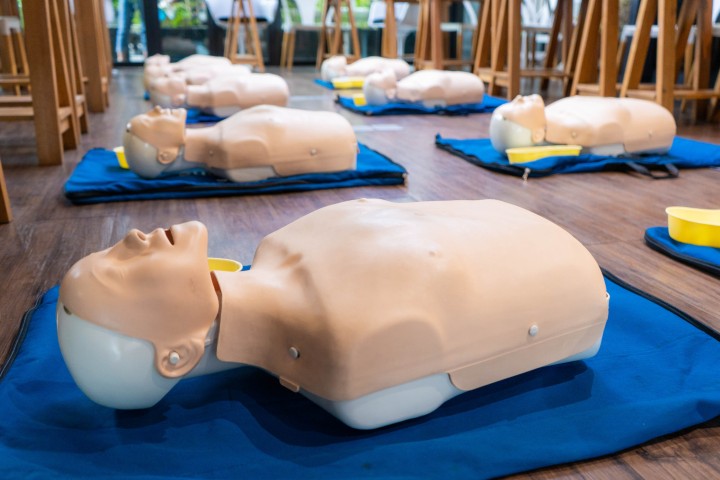
Inside a CPR Class: The Equipment That Teaches Lifesaving Skills
CPR Training Equipment and the 2025 AHA Guidelines
Since 2009, In-Pulse CPR has trained more than 150,000 students in lifesaving CPR skills. One of the biggest reasons our classes are effective is the equipment we use to teach those skills.
The American Heart Association’s 2025 CPR and Emergency Cardiovascular Care (ECC) Guidelines reflect the latest science and real-world data on resuscitation. These updates emphasize something instructors have long known: hands-on training with accurate feedback is essential for learning high-quality CPR.
The updated guidelines are expected to be fully implemented by March 1, 2026, and they reinforce the importance of modern CPR training equipment.
Why CPR Training Equipment Matters
CPR is not just a theory-based skill. It requires physical practice to develop the muscle memory needed to perform compressions correctly during a real emergency.
High-quality training equipment allows students to practice:
- Correct hand placement
- Compression depth
- Compression speed (100–120 compressions per minute)
- Full chest recoil
- Rescue breathing technique
- Team-based resuscitation
Practicing these skills with feedback helps ensure rescuers perform CPR effectively when seconds matter.
Key Equipment Updates Referenced in the 2025 AHA Guidelines
The 2025 guidelines reinforce the importance of feedback-driven CPR training. Several important training principles are highlighted.
1. CPR Feedback Devices (Class 1 – Strong Recommendation)
The AHA strongly recommends using feedback devices during CPR training for both healthcare providers and lay rescuers.
Feedback systems help measure:
- Compression depth
- Compression rate
- Chest recoil
- Ventilation performance
Many modern CPR manikins include visual lights or audible indicators that guide students to perform compressions at the correct speed and depth.
This type of feedback helps learners quickly adjust their technique and build confidence.
2. Updated Infant Compression Techniques
The 2025 guidelines reinforce updated techniques for infant resuscitation. The two-thumb encircling hands technique or the heel-of-one-hand method is recommended to improve compression depth and consistency.
Training equipment must allow students to practice these techniques realistically.
3. Gender Representation in CPR Training
Research has shown that disparities exist in CPR response rates between men and women.
Training programs are increasingly incorporating female CPR manikins and inclusive training equipment to help address these disparities and ensure rescuers feel comfortable providing care to all patients.
4. CPR Training for Younger Students
The new guidelines also encourage introducing CPR education to children younger than 12 years old.
Community training programs and school-based CPR education help build future generations of confident lay rescuers.
Compact training manikins designed for group instruction make it easier to deliver CPR education in classrooms and community settings.
5. Opioid Overdose Response Training
The opioid crisis has led to expanded recommendations for naloxone (NARCAN) training for lay rescuers.
CPR training programs increasingly incorporate overdose response education so students understand how to respond quickly during an opioid emergency.
6. Ventilation Feedback
The 2025 guidelines reinforce the importance of delivering effective ventilations that produce visible chest rise.
Modern training manikins can now measure ventilation volume and provide feedback to ensure breaths are delivered properly.
7. Chest Compression Fraction Reporting
The guidelines also highlight the importance of measuring Chest Compression Fraction (CCF), which represents the percentage of time compressions are actively performed during resuscitation.
This metric is now required to be reported on some advanced life support training documentation.
How Modern CPR Equipment Improves Training
Advanced CPR training equipment helps instructors measure and reinforce high-quality CPR performance.
Examples of commonly used CPR training tools include:
- Adult, child, and infant CPR manikins
- AED training devices
- Compression feedback sensors
- Ventilation monitoring systems
- Opioid overdose response training tools
These tools allow students to practice in realistic scenarios while receiving immediate feedback.
Why Hands-On CPR Training Is Essential
Many employers, hospitals, and nursing programs require in-person CPR training because it provides real hands-on experience.
Students learn far more effectively when they practice compressions and ventilations under the guidance of certified instructors using professional equipment.
Hands-on training builds the confidence needed to respond during a real emergency.
Training with Modern CPR Equipment
At In-Pulse CPR, we use professional training equipment aligned with current American Heart Association standards.
Since 2009, we have trained more than 150,000 students including healthcare providers, workplace safety teams, teachers, and community members.
Our CPR classes include:
- Hands-on CPR practice using feedback manikins
- AED training
- Ventilation and airway management skills
- Instructor-guided performance feedback
Students leave class confident in their ability to respond during cardiac arrest and other medical emergencies.
Find CPR Classes Near You
In-Pulse CPR offers American Heart Association CPR, BLS, and First Aid certification classes across several regions including:
- Minneapolis and St. Paul Minnesota
- Tampa Bay and Central Florida
- Pennsylvania training regions
- Tennessee CPR training locations
All classes are 100% in-person and hands-on, with certification cards issued the same day.
View upcoming classes:
https://inpulsecpr.com
More on AHA guideline updates here
Where to Buy CPR Manikins in the United States
When purchasing CPR manikins in the United States, you generally have two options: buying directly from a manufacturer (the brands themselves) or purchasing through a national distributor that carries multiple brands.
For most instructors, schools, and organizations, national distributors are the preferred option because they allow you to compare prices, purchase accessories, and choose from multiple brands in one place.
Below are the top companies to purchase CPR manikins in the U.S., based on industry reputation, AHA compliance, and product variety.
Top National CPR Equipment Distributors
| Company | Best Known For | Key Advantages |
|---|---|---|
| WorldPoint | Largest CPR training distributor | Carries Laerdal, PRESTAN, Simulaids and their own inclusive CPR Taylor and Baby Tyler manikins. |
| AED Superstore | Large inventory and selection tools | Excellent buying guides and comparison tools for schools and first-time buyers. |
| CPR Savers & First Aid Supply | Competitive pricing | Often offers some of the lowest prices on PRESTAN and Laerdal equipment. |
| American Red Cross Store | Red Cross instructor equipment | Offers the BigRed training manikin line featuring LED blood flow indicators. |
| School Health Corporation | Education sector | Popular with K-12 schools and universities for CPR training programs. |
| GTSimulators | Advanced medical simulation | Leader in high-fidelity patient simulators used in medical schools and EMS programs. |
Top CPR Manikin Manufacturers
| Manufacturer | Key Feature | Why Instructors Choose Them |
|---|---|---|
| PRESTAN Products | Made in the USA | Lightweight, durable manikins with built-in compression clicker and visual feedback lights. |
| Laerdal Medical | Industry gold standard | Famous for Little Anne and Resusci Anne with advanced QCPR feedback and Bluetooth monitoring. |
| Nasco Healthcare (Simulaids / Life-form) | Specialized training models | Known for Basic Buddy and Sani-Man budget models plus specialty training manikins. |
| Innosonian (Brayden) | Visual learning system | LED lighting displays simulated blood flow to show how compressions circulate oxygen. |
Quick Buying Guide
| Buyer Type | Recommended Equipment | Where to Buy |
|---|---|---|
| Independent CPR Instructors | PRESTAN Professional Manikin 4-packs | WorldPoint or CPR Savers |
| Healthcare Training Programs | Laerdal Resusci Anne QCPR | WorldPoint or GTSimulators |
| Budget or Mass Training | Basic Buddy or PRESTAN Ultralite | AED Superstore |

COMMENT (1)
porntude / April 23, 2026
So dive in, have fun
Comments are closed.