

Family of Teen Athlete Calls for Greater CPR Training and AED Access

Family of Teen Athlete Calls for Greater CPR Training and AED Access
Sudden cardiac arrest is something most people associate with older adults. It can be especially difficult to recognize when the person who collapses is a healthy, active teenager.
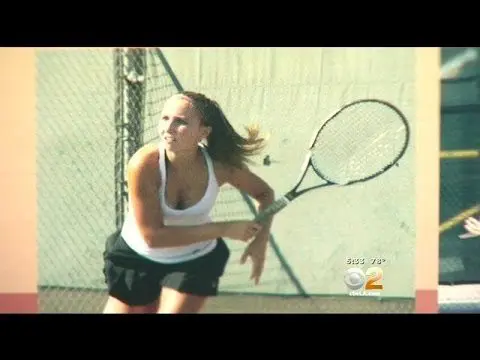
That was the tragedy faced by the family of Morgan Wilson, a 17-year-old student-athlete from Anaheim, California.
In July 2014, Morgan had finished running laps at Boysen Park near the Anaheim Tennis Center and was preparing to do sprints when she suddenly collapsed. She had gone into cardiac arrest.
Morgan was a well-conditioned athlete. She was captain of the girls’ tennis team at Esperanza High School and also participated in running and track events. According to news reports at the time, she regularly ran four or five miles a day. There had been little reason for her family to expect a life-threatening cardiac emergency.
Paramedics responded and were able to restore her heartbeat, but Morgan had already suffered serious brain damage. She was taken to UC Irvine Medical Center and placed in a medically induced coma.
Eight days after her collapse, Morgan died.
She was only 17.
Her family’s question: What if help had started sooner?
In the days following Morgan’s death, her family began focusing attention on what happened during the first few minutes after she collapsed.
According to the Anaheim Fire Department, paramedics arrived approximately five minutes and 40 seconds after the 911 call. Officials said they did not believe CPR or defibrillation had been attempted before paramedics arrived.
For Morgan’s parents, that raised painful questions.
What if someone nearby had immediately recognized cardiac arrest and started CPR? What if an AED had been available at the tennis facility? Could those first few minutes have changed the outcome?
No one can say for certain what would have happened in Morgan’s particular case. But her family wanted other parents, coaches and athletic organizations to understand how important those first minutes can be.
They began advocating for more automated external defibrillators, or AEDs, at athletic facilities and established a memorial fund to help pay for CPR training.
Sudden cardiac arrest can happen to young athletes
Morgan’s story is difficult partly because she didn’t fit the picture many people have of someone at risk for cardiac arrest.
She was young, athletic and active.
While sudden cardiac arrest in young people is uncommon compared with cardiac arrest in older adults, it does happen. Certain underlying heart conditions may exist without obvious symptoms, and strenuous activity can sometimes be when a previously undetected problem first becomes apparent.
A person in cardiac arrest suddenly becomes unresponsive and is not breathing normally. The heart is no longer effectively pumping blood to the brain and other organs.
This is different from a heart attack. A heart attack usually involves a blockage that reduces blood flow to part of the heart muscle. A person experiencing a heart attack may remain awake and responsive. Cardiac arrest is an immediate loss of effective heart function.
A heart attack can sometimes lead to cardiac arrest, but they are not the same emergency.
What should happen when an athlete suddenly collapses?
When an athlete suddenly collapses and is unresponsive and not breathing normally, people nearby should act immediately.
Call 911. Begin CPR. Send someone to retrieve the nearest AED.
An AED analyzes the person’s heart rhythm and determines whether an electrical shock is appropriate. The person using the AED does not have to determine this themselves. The device provides instructions and will only advise a shock when it detects a shockable rhythm.
CPR and AED use work together. CPR helps keep some blood moving to the brain and other vital organs while an AED may be able to correct certain dangerous heart rhythms.
Current American Heart Association CPR guidance continues to emphasize rapid recognition of cardiac arrest, immediate CPR and early defibrillation as key parts of the emergency response.
Having an AED somewhere in the building isn’t enough
An AED can only help if someone can get to it quickly.
For schools, gyms, athletic fields and recreation centers, that means thinking about more than simply purchasing a defibrillator and putting it in a cabinet.
Imagine a soccer player collapsing on a practice field several hundred yards from the school building. Or a basketball player collapsing in an auxiliary gym while the nearest AED is locked inside the main office.
Technically, the facility has an AED. Practically, it may be too far away when seconds count.
Athletic programs should know where their AEDs are located, make sure they are accessible during practices and games, and periodically check batteries and electrode pads.
Staff members should also know who will retrieve the AED if an emergency happens.
Coaches and staff should practice the response
CPR training is important, but emergency preparation can go one step further.
Schools and athletic programs can establish a cardiac emergency response or emergency action plan that answers basic questions before an emergency ever occurs:
Who calls 911? Who begins CPR? Who gets the AED? Which entrance should emergency responders use? Who meets the ambulance and directs paramedics to the patient?
Those details can easily become confusing when dozens of students, parents and spectators are standing around during an actual emergency.
Across the country, there has been growing emphasis on cardiac emergency response plans, accessible AEDs at athletic venues and CPR/AED training for coaches and school personnel. Some states have adopted laws requiring combinations of these measures in schools and athletic programs.
An emergency plan doesn’t need to be complicated. It needs to be practiced and understood.
Parents can ask a few simple questions
Morgan’s family encouraged parents to ask whether the people caring for their children know CPR and whether schools and athletic facilities have AEDs available.
Those remain good questions today.
If your child participates in school sports, a recreation league, travel sports or private athletic training, ask where the nearest AED is located. Ask whether coaches are trained in CPR. Ask whether the organization has an emergency action plan.
These aren’t unreasonable questions, and they don’t suggest that youth sports are unsafe.
They are the same kind of preparation we expect for fires, severe weather and other emergencies that we hope never happen.
Morgan continued helping others
There is another part of Morgan’s story that her family wanted people to remember.
Without her parents knowing, Morgan had registered as an organ donor when she received her driver’s license.
After her death, her kidneys and liver were donated, saving three lives, according to the organ recovery organization OneLegacy. Her family also hoped the CPR memorial fund established in her name would help save additional lives by providing training to others.
Morgan’s mother described her daughter as someone who constantly pushed herself and refused to be limited. Her family eventually turned an unimaginable loss into a very practical message for other families.
Know CPR.
Know where the AED is.
And don’t assume that because someone is young and athletic, a cardiac emergency can’t happen.
Most coaches, teachers and parents will never have to perform CPR or use an AED on a young athlete. That’s exactly what everyone hopes for.
But if that day ever comes, knowing what to do before the ambulance arrives can matter enormously.
updated 2026 for content
