CPR Chest Compression Technique: How to Push Hard, Push Fast, and Help Save a Life
Estimated reading time: 12 minutes
Sudden cardiac arrest does not usually give people much time to think.
The tragedy that just happens…
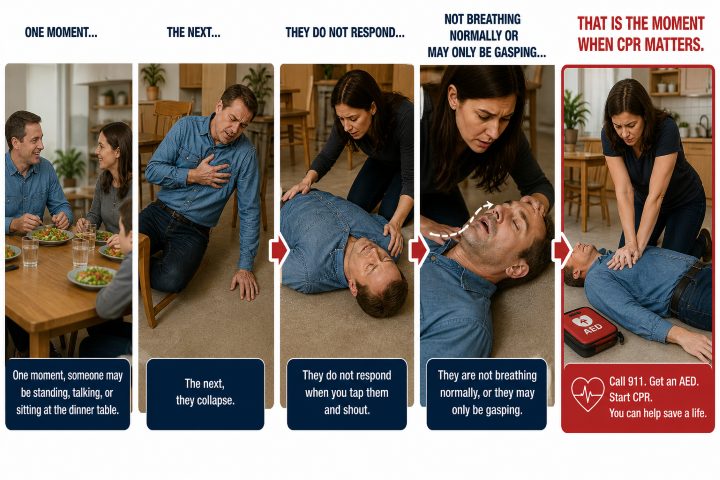
One moment, someone may be standing, talking, or sitting at the dinner table. The next, they collapse. They do not respond when you tap them and shout. They are not breathing normally, or they may only be gasping.
That is the moment when CPR matters.
Chest compressions are one of the most important parts of CPR because they help move blood through the body when the heart is no longer pumping effectively. They help send blood to the brain, heart, and other vital organs until emergency medical services arrive or an AED can be used.
The technique is simple, but it needs to be done well. Good CPR is not gentle. It is not slow. It is not something you do for a few seconds and then stop to see if it worked. High-quality CPR means pushing hard enough, fast enough, allowing the chest to come back up, and keeping pauses as short as possible.
What Chest Compressions Actually Do
When someone is in cardiac arrest, the heart has stopped pumping blood the way it should. Without blood flow, the brain and organs quickly begin to suffer from lack of oxygen.
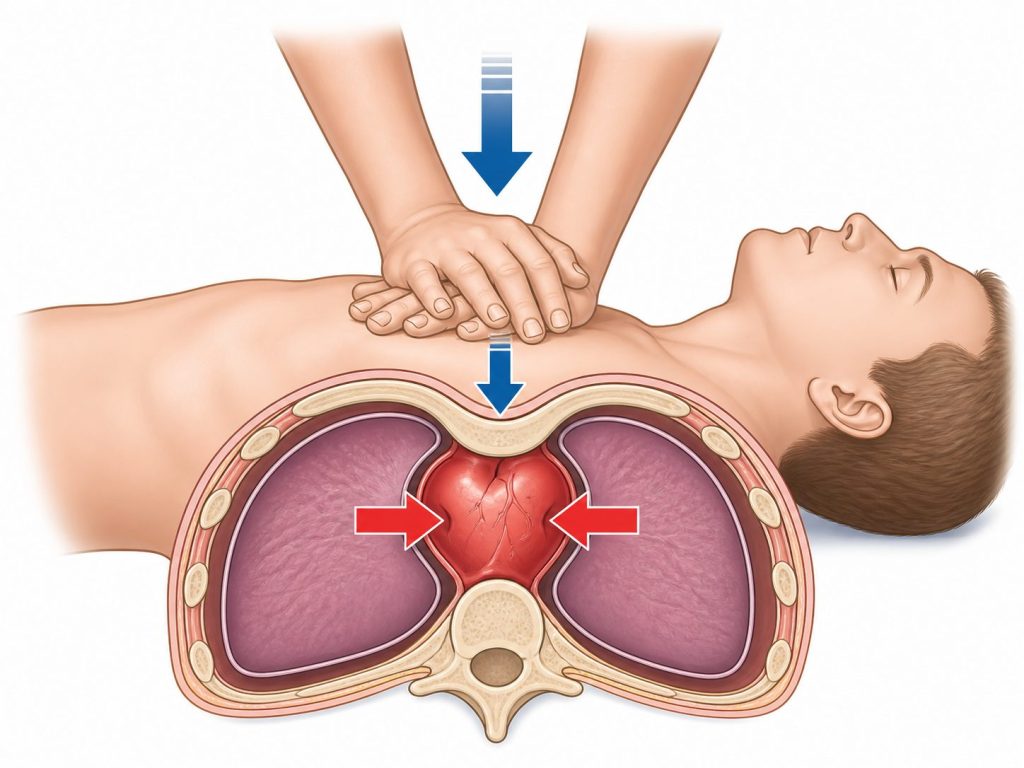
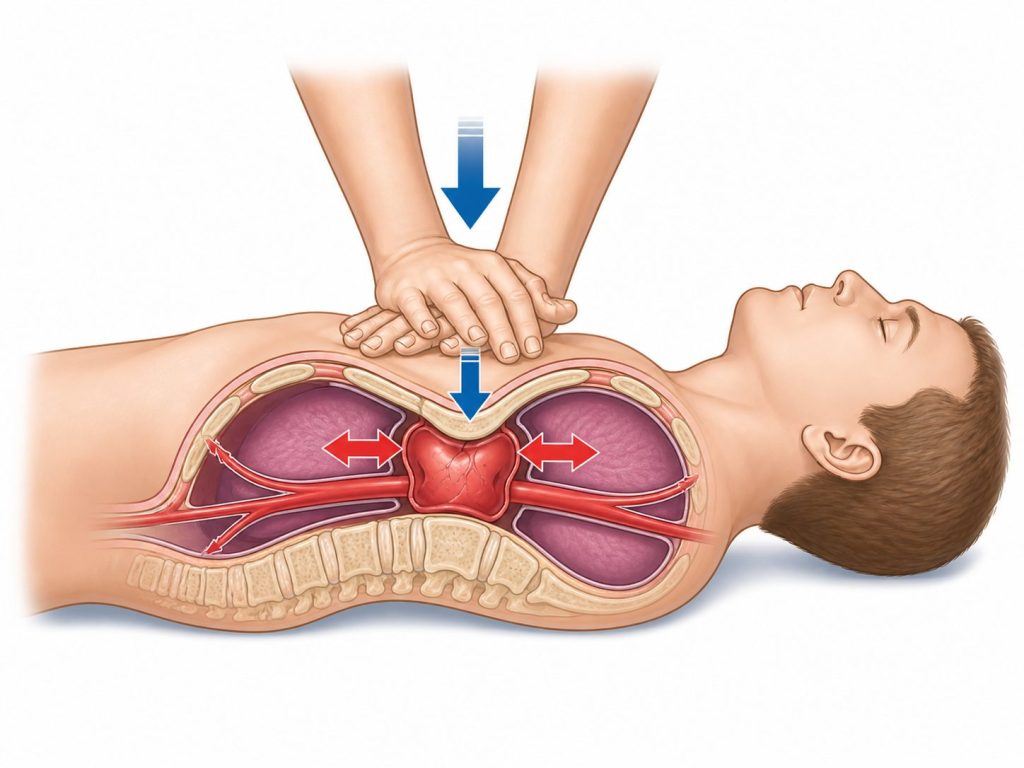
Chest compressions act like a temporary pump.
Each time you press down on the chest, you help squeeze the heart and move blood forward. Each time you release, the chest rises back up and the heart can refill. Then you press again.
It is not perfect. CPR does not work exactly like a normal heartbeat. But it can buy precious time. In a cardiac arrest emergency, that time matters.
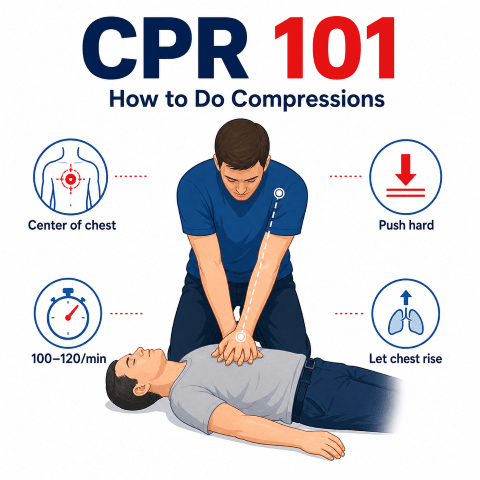
The American Heart Association identifies several pieces of high-quality CPR, including a compression rate of 100 to 120 compressions per minute, adult compression depth of at least 2 inches, full chest recoil, and limited interruptions.
First, Make Sure CPR Is Needed
Before starting chest compressions, check the person.
Tap their shoulder and shout something direct, such as, “Are you okay?”
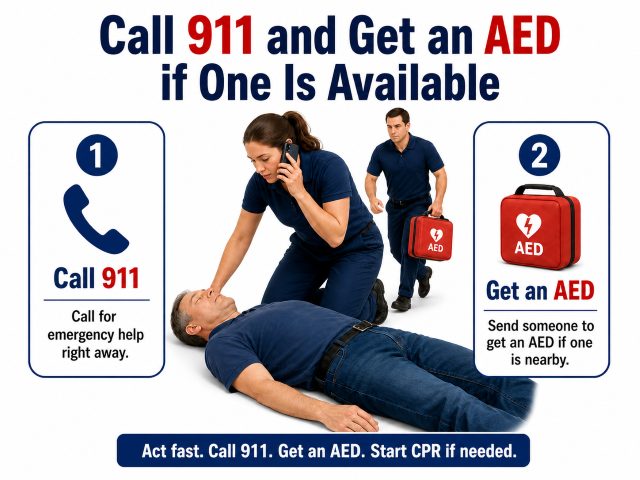
If they do not respond and they are not breathing normally, call 911 or tell someone nearby to call. If an AED is available, send someone to get it right away.
Do not let gasping fool you. A person in cardiac arrest may make strange, irregular gasping sounds. That is not normal breathing. If the person is unresponsive and not breathing normally, start CPR.
Proper Hand Placement for Adult CPR
For adult CPR, place the person flat on their back on a firm surface. Kneel beside them.
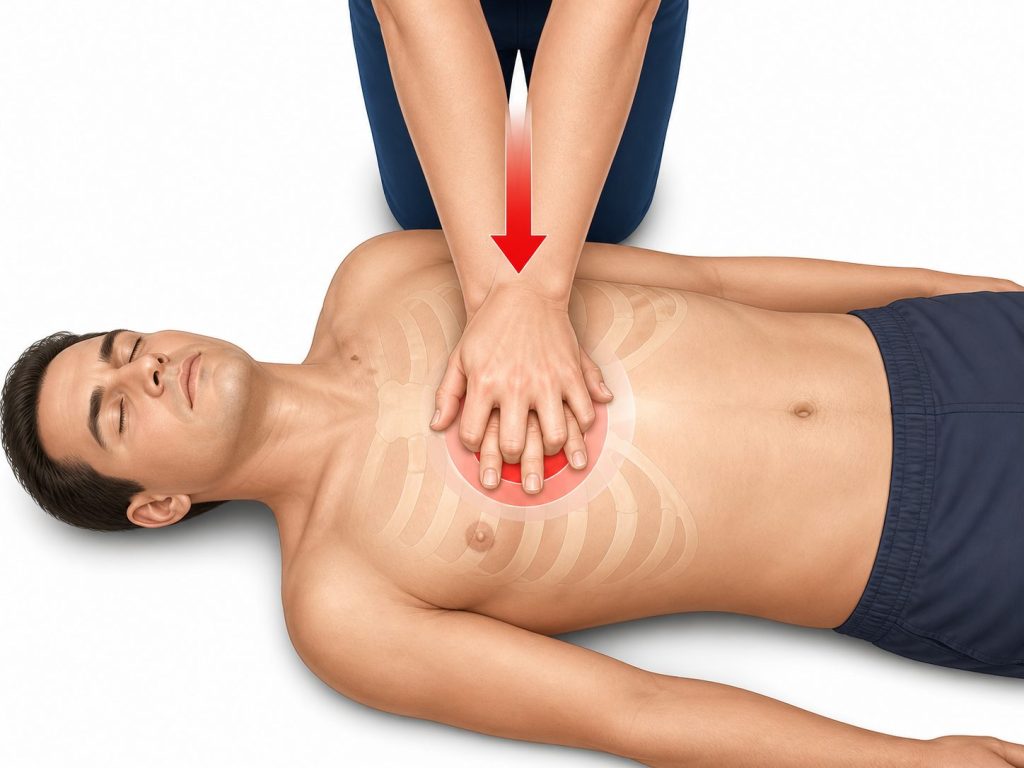
Place the heel of one hand in the center of the chest. Your hand should be on the lower half of the breastbone, not down on the stomach and not off to the side on the ribs. Place your other hand on top. Interlace your fingers or keep them lifted so the pressure stays on the heel of your hand.
Your hands should be centered. This matters because poor hand placement can make compressions less effective and may increase the chance of injury.
The Red Cross describes adult CPR hand position as two hands centered on the chest, with shoulders directly over the hands and elbows locked.
“Liability fades when skills ascend. CPR training: the smartest hedge against disaster.”
Troy Bowman
Use Your Body Weight, Not Just Your Arms
This is one of the biggest technique details people miss.
CPR is not supposed to be an arm workout.
If you bend your elbows and try to push with your arms, you will get tired quickly. Your compressions may also become too shallow.
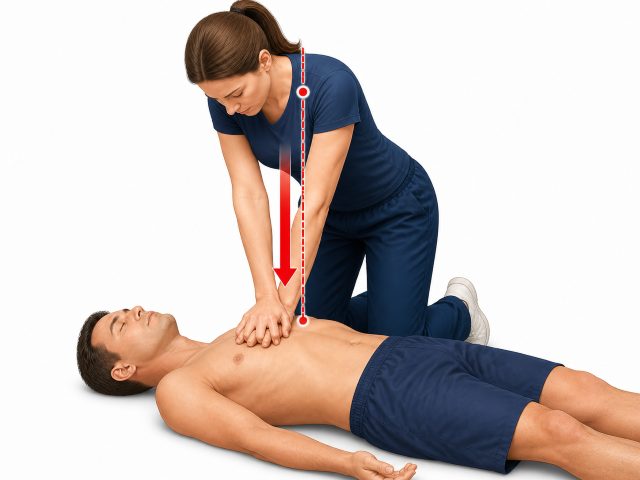
Instead, get your shoulders directly above your hands. Lock your elbows. Keep your arms straight. Use your upper body weight to press straight down into the chest.
You should be moving from your torso, not pumping from your elbows.
A good way to picture it: your shoulders, arms, and hands should stack over the center of the chest. That straight line helps you push deeper and stay more consistent.
How Deep Should Chest Compressions Be?
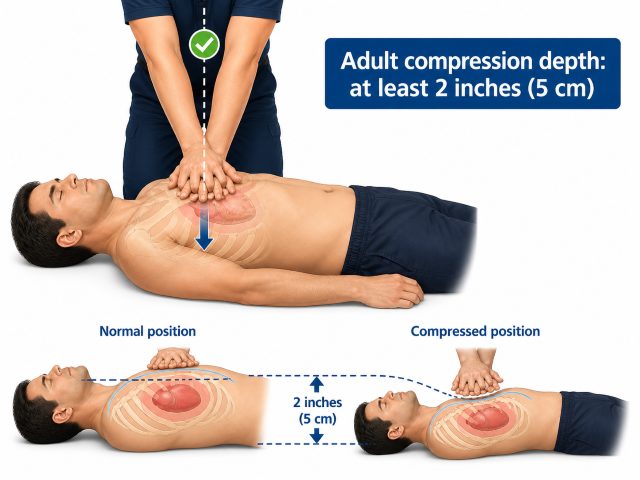
For adults, chest compressions should be at least 2 inches deep.
That is deeper than many people expect.
In a real emergency, shallow compressions are a common problem. People are often afraid to push hard. They worry about hurting the person. That reaction is understandable, but cardiac arrest is already life-threatening. The person needs blood flow.
You may feel or hear cracking during CPR. This can happen. Do not stop just because of that. Keep going unless the person starts breathing normally, an AED tells you to pause, EMS takes over, the scene becomes unsafe, or you physically cannot continue.
Gentle pressing is not enough. Effective compressions require real force.
How Fast Should Chest Compressions Be?
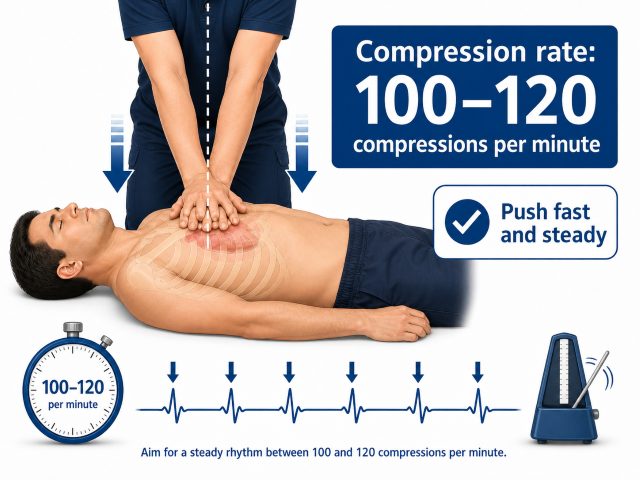
The recommended compression rate is 100 to 120 compressions per minute.
Too slow, and you may not move enough blood. Too fast, and the compressions may become shallow or the chest may not fully return to its normal position between pushes.
People often use familiar songs to remember the rhythm, but the rhythm is only part of the skill. You still need the right depth, hand placement, and recoil.
Push hard. Push fast. Stay steady.
Let the Chest Come All the Way Back Up
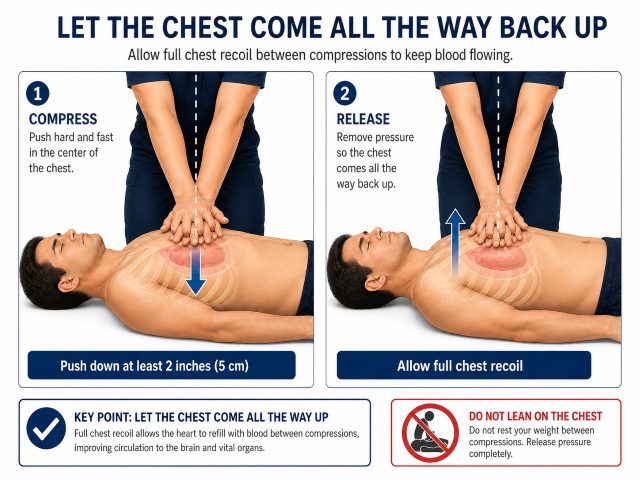
Chest recoil is the release after each compression.
This part is easy to overlook. Some people push down correctly but keep leaning on the chest between compressions. That can reduce how well the heart refills with blood before the next push.
After every compression, let the chest return to its normal position. Do not lift your hands off the chest, but do release your weight.
CPR is not just push, push, push. It is push and release. Push and release. The release matters.
The American Heart includes allowing the chest to return to normal position after each compression as one of the key CPR points.
Do Not Stop Unless You Have To
Every pause in chest compressions reduces blood flow.
That does not mean you never pause. You may need to pause when an AED tells you to stop touching the person. You may need to switch with another rescuer. EMS may take over. The person may begin breathing normally.
But avoid unnecessary stops.
Do not stop every few seconds to check for a pulse. Do not stop because you are unsure if you are doing it perfectly. Do not stop because it feels awkward.
If another trained person is with you, switch compressors about every two minutes if possible. CPR is tiring, and compression quality can drop as the rescuer gets fatigued. The American Heart Association notes that compression depth can begin to decrease after 90 to 120 seconds of CPR.
Hands-Only CPR vs. CPR With Breaths
For many adult sudden cardiac arrest emergencies, hands-only CPR can help by keeping blood moving until more advanced help arrives. This is especially important for bystanders who are not trained or who are unsure about giving breaths.
Hands-only CPR means calling 911, sending for an AED, and giving continuous chest compressions.
Trained rescuers may provide rescue breaths along with compressions, depending on the situation and their level of training. Breaths are especially important in many child and infant emergencies, drowning incidents, and breathing-related emergencies.
This is one reason CPR training matters. Adults, children, and infants are not handled exactly the same way.
Chest Compressions for Children and Infants
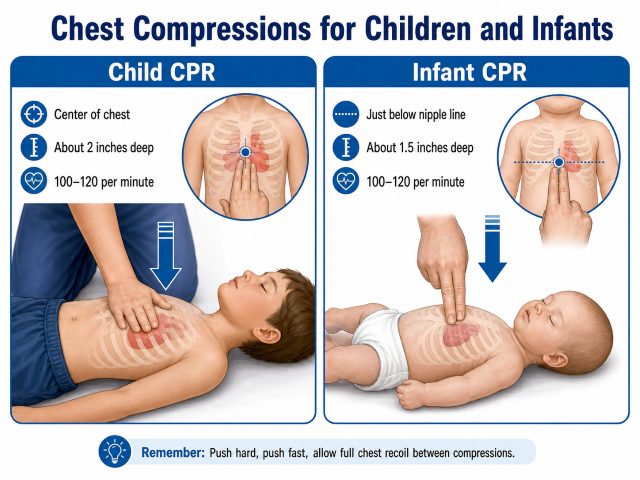
The basic idea is the same: push hard, push fast, and allow the chest to come back up.
But the technique changes based on the size and age of the person.
For a child, you may use one hand or two hands, depending on the child’s size. The compression depth is about 2 inches, with a rate of 100 to 120 compressions per minute. For an infant, compressions are shallower, about 1.5 inches, and may be done with two fingers or with the two-thumb encircling technique when properly trained.
The most important point for parents, teachers, childcare workers, coaches, and healthcare staff is this: child and infant CPR should be practiced hands-on. Reading the steps helps, but practice builds confidence.
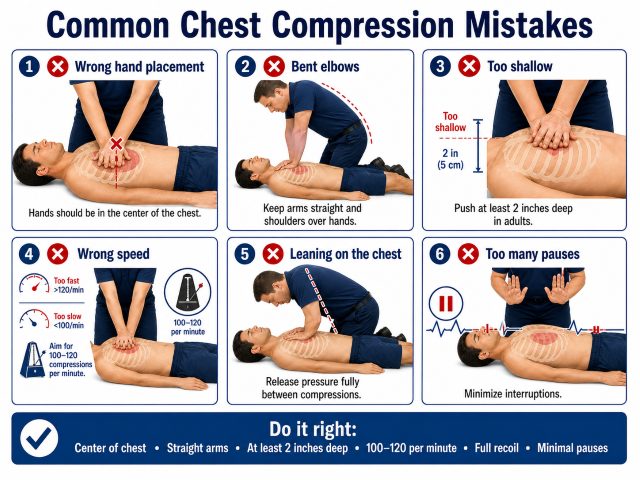
Common Chest Compression Mistakes
Most CPR mistakes are fixable with practice.
Some of the most common include placing the hands too low, bending the elbows, rocking back and forth instead of pushing straight down, not pressing deep enough, pressing too fast, leaning on the chest between compressions, and stopping too often.
Another common mistake is waiting too long to begin.
People freeze because they are afraid of doing something wrong. But in cardiac arrest, doing nothing is usually the worst option. Call 911, get an AED if one is nearby, and start compressions.
Why Hands-On CPR Practice Matters
You can read about CPR in a few minutes. Learning how it feels takes practice.
In a hands-on CPR class, students learn where to place their hands, how deep to press, how fast to go, and how to avoid leaning on the chest. Instructors can correct small technique problems before they become real emergency problems.
Many people are surprised by how firm chest compressions need to be. Others realize they were bending their elbows or pressing in the wrong spot. Practice makes those details more natural.
That matters because emergencies do not wait for people to feel ready.
When Should You Stop CPR?
Keep giving CPR until one of these things happens:
EMS arrives and takes over. An AED tells you to pause. The person starts breathing normally. The scene becomes unsafe. You are too exhausted to continue.
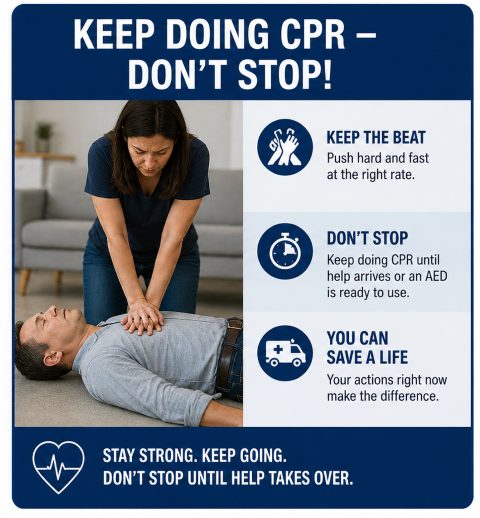
Until then, keep going.
Key Takeaways
CPR chest compressions are crucial for maintaining blood flow during cardiac arrest, so act quickly when someone collapses.
Push hard and fast: compress at least 2 inches deep and at a rate of 100 to 120 compressions per minute.
Ensure proper hand placement by placing the heel of one hand on the lower half of the breastbone, with the other hand on top.
Allow the chest to fully recoil between compressions for effective blood flow and avoid unnecessary pauses during CPR.
Practice hands-on techniques in CPR classes to build confidence and improve your skills for real emergencies.
Final Thought
CPR chest compressions are simple, but they are powerful.
Put your hands in the center of the chest. Lock your elbows. Keep your shoulders over your hands. Push at least 2 inches deep for an adult. Keep a steady rate of 100 to 120 compressions per minute. Let the chest rise fully between compressions. Keep pauses short.
You do not need to be perfect to make a difference. But good technique helps.
When someone collapses from sudden cardiac arrest, the best CPR is the CPR that starts. Call 911, send for an AED, and begin chest compressions. Push hard. Push fast. Keep going until help arrives.
In-Pulse CPR offers hands-on American Heart Association CPR, AED, First Aid, and BLS certification classes for new and renewing students. Our classes give you the chance to practice these skills, ask questions, and leave knowing what to do when an emergency happens.
No. Rib or cartilage injuries can happen during CPR, especially on adults. If the person is in cardiac arrest, blood flow is the priority. Keep going unless the person starts breathing normally, an AED tells you to pause, EMS takes over, the scene becomes unsafe, or you are physically unable to continue.
Is hands-only CPR enough?
Hands-only CPR can help in many adult sudden cardiac arrest emergencies, especially when the rescuer is not trained or is unsure about giving breaths. Call 911, send someone for an AED, and give continuous chest compressions. Trained rescuers should follow their training, which may include rescue breaths.
What is the most common CPR compression mistake?
One of the most common mistakes is not pushing deep enough. Other common mistakes include bending the elbows, placing the hands too low, leaning on the chest, pushing too fast or too slow, and stopping too often.
Why should I take a CPR class if I can read the steps online?
Reading the steps helps, but CPR is a physical skill. In a hands-on class, you can practice the correct hand placement, compression depth, rate, and chest recoil. You also get feedback from an instructor, which makes a big difference in confidence and technique. It adds value to add to a resume’ and builds confidence so you don’t panic when an emergency happens.
Troy has been the the VP and CFO of In-Pulse CPR since September, 2009. Troy is married to Mollie who is the owner and TCC for the company. Currently they have 7 children with several of them grown up. Troy enjoys outdoor activities including camping, hiking, and spending time with his family.