
She “was not responding” to CPR

This weekend I was home watching TV, flipping through the channels, when a program caught my attention. This program was reviewing the case of a gentleman who had lost his wife in a diving “accident”.  They were trying the evidence presented at his trial.  His apparent lack of emotions,  the situation that left her alone in the water for a period of time and other topics were covered.  The part that stuck in my mind the most was the part where they asked the husband if he had performed CPR on his wife, and for how long.

He said he had performed CPR on her for a few minutes, but discontinued because she “was not responding”.  “I wasn’t going to waste time on someone who was unresponsive” was what he said.  I felt so sad. Either he was just a “jerk” or he really didn’t know the “what” and “why” of CPR.  CPR is NOT performed on someone who is responsive,  most rescuers will NOT see a response from their measures. Responses come (if they are going to happen) with the assistance of an AED and the medical professionals at the hospital.

It is so very important that people learn proper CPR and the importance of performing it.  Knowing the “how” is important, but also the “why” and “what”.   PLEASE, if you take a CPR class, don’t leave unless you understand the reasons as well as the technique.   I know for a fact that you will not leave uninformed from an In-Pulse CPR course.

The Best Way To Stay Safe On A Cruise Ship

Cruise ships have the best safety record in the travel industry, but despite international maritime rules and regulations, U.S. Coast Guard guidelines, and stringent international laws, cruise ship accidents or incidents still occur. If your cruise ship captain steers too close to the shore, hits a rock, is distracted by a 25 year old blond and lives by the motto “every man for himself”, you probably can’t anticipate that in advance. But there are measures you can take to optimize your general safety on a cruise ship. Your crew, though far better trained than you, commonly works 12 hour shifts, 7 days a week for weeks or months on end. Fatigue undermines judgment, so keep yours sharp!


  • Always participate in the required safety drills.
  • You will be provided with the ship’s map. Take the time to study it and walk the ship to orient yourself with the location of life rafts, lifeboats, and stairwells.


If you’re nervous about the safety record of a cruise line or particular ship:

  • Book through a travel agent. They are most familiar with cruise line reputations.
  • Check the Centers for Disease Control’s “report card” for your cruise ship by going to www.cdc.gov/inspectionquerytool/inspectionsearch.aspx
  • Tap your social media networks for personal recommendations
  • Read consumer reviews at www.Cruisereport.com


It is way more likely that you will have food poisoning, a fall, twist an ankle on an onshore excursion or get robbed than run aground or sink so take practical precautions. Don’t eat anything that smells funny, hold onto the rail, watch the booze, and stow valuable in the ship’s safe if you are not using them such as excess cash, jewelry, and your passport.

  • Keep your ticket. The tiny print on the bottom is your contract with the cruise line. If you feel you have been wronged, you’ll need your ticket and a personal injury lawyer.


Knowing that you can communicate with loved ones can bring you and them great peace of mind if there is an emergency. Here are your options:

–          If you can, wait till you reach port and use your cell phone

–          Direct dial from your stateroom phone. It is convenient but will cost you $7-$20.00 per minute.

–          Obtain your cell phone provider’s cruise coverage rate before your trip

–          Send text messages from your cell phone. It is faster and cheaper than calls.

–          Take advantage of the pre-paid internet use option for sending emails.

–          Use Skype or another VOIP service.

–          Purchase a cruise ship phone card to make calls ship-to-shore. The card will reduce your costs. Ship-to-shore rates without a calling card can be as much as $20.00 a minute which may or may not concern you in an emergency.


—–Judith Kolberg- Writer, Author, and Book Coach. www.squallpress.net, info@squallpress.net

Quantity over Quality? Not all CPR classes are the same.

As a former daycare provider, I know a daycare center prides itself on how many teachers they can say are CPR and First Aid certified. When a potential parent is touring and the director can say that a large percentage of the staff is certified…well, how much better can it get?

I was certified for several years and I thank God I never needed to employ either skill.  Why? I would not have had a clue where to begin.  Our certification consisted of the following: CPR dummies were slapped down in front of each of the 20 ladies and the instructor told us to imitate him. Most people chatted and giggled throughout the brief rundown and then certification cards were passed out.  It terrifies me to look back and realize that in an emergency situation most of us would have been extremely unprepared. What’s worse, is that a majority of these women had their own children enrolled at the center.

In May of 2011, a law was passed in Minnesota adding stricter requirements for CPR certified teachers and childcare providers after a 4 year old girl choked on grape and died because there was no one around to perform CPR. While this is a wonderful step in the right direction, it is now the responsibility of these centers to choose reputable classes and make their staff understand the importance of what they are doing. They need to realize that these classes are not just to satisfy mandates of this new law, but instead help children celebrate many more birthdays and keep horrible accidents from haunting both the parents and childcare providers.

Parents are trusting us with their most precious possession. It is both an honor and responsibility that must be taken seriously. When you say you are certified, they are trusting that you will know what to do in an emergency.  We cannot just sit around with our fingers crossed, hoping nothing will go wrong.  Daycare providers, nannies, teachers, as well as individuals need to realize the significance of attending a quality CPR and first aid class. Being certified is more than just wielding a card, it is about the knowledge and ability to potentially save a life.

What a Bystander was Taught Saves a Teacher’s Life

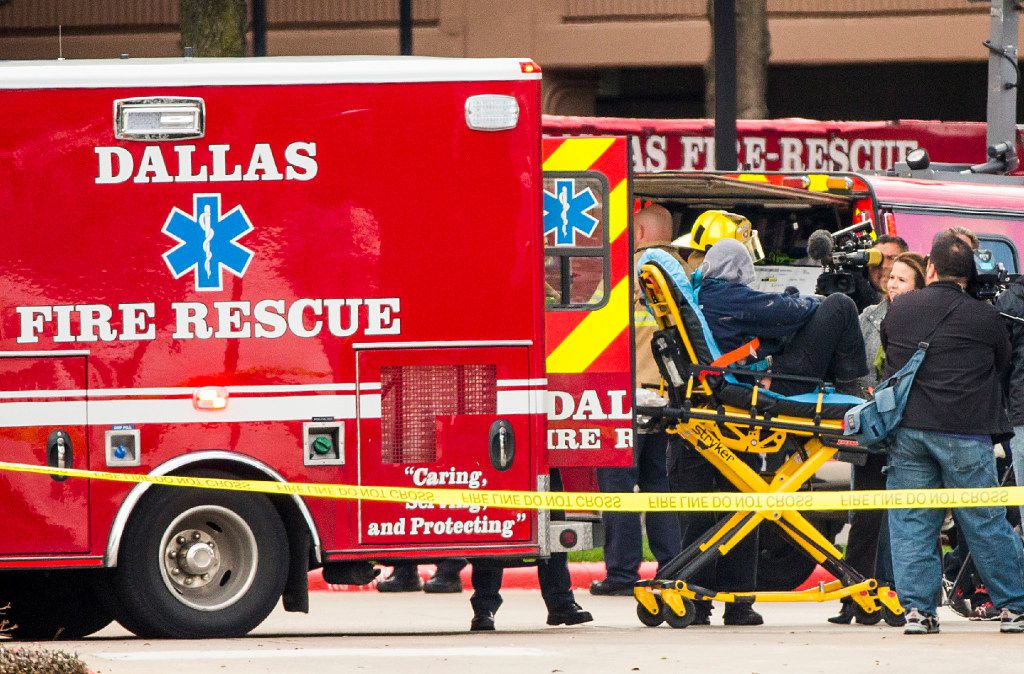
When paramedics in Dallas arrived at Sarah Zumwalt Middle School, they found a teacher in the midst of a heart attack. “He was in ventricular fibrillation, a fatal rhythm,” said Fire Department Lieutenant Greg Henderson. They also found that a fellow educator already was performing CPR. Said Henderson, “Bystander CPR is what saved this person’s life.”

The story is often the same in such cases, but sadly, they are few and far between. Only eight percent of heart attack victims survive, mainly because not enough people have taken the small amount of time to learn proper CPR. When the technique is applied quickly and in the right way, the survival rate triples and complications from loss of blood flow to the brain are minimized.

In this case, by happy coincidence, it turned out the victim and his colleague-savior were friends, and had taken CPR classes together, which included training in use of the Automated External Defibrillator, a portable device that aids in restoring normal heart rhythm when accompanied by effective CPR. More and more AED’s are being made available in public places, but not nearly enough people have been taught how to use them.

It’s estimated that only one-in-three heart attack victims receives quick CPR from a bystander. As mentioned, in a quirk of symmetry, their survival rate triples when they do. Sudden cardiac arrest is the number one cause of natural death in the United States, killing over 325,000 people a year. If you take the few hours required to learn CPR, those statistics indicate you have a pretty good chance to put your knowledge to life-saving use. A small investment of time for such an incalculably great return!

Lieutenant Henderson summed up the situation simply: “It’s stories like this that tell you how important bystander CPR is.” And, by definition, how important it is for us to learn it. And if your training took place more than a few years ago, it’s time for a new class, because proper technique has changed. The American Heart Association’s key focus is on  chest compression, because blood flow to the brain is so crucial.

How many compressions a minute to apply, how to time them and how much force is necessary are things you can learn in a very short time. What are you waiting for?

Even First Responders Can Become Disaster Victims, Atlanta Ice Storm Jan 2011


“I’m trained in CPR and always thought of myself as a first responder and a caretaker of others, but during Atlanta’s ice storm in January, 2011 I was the one who ended up needing assistance”, reflects Dr. Benjamin Albright. The icy parking lot in front of his busy Marietta chiropractic office lay at the bottom of a hill, hundreds of yards from the main street. “My feet flew out from underneath me. I fell flat on my back, and lay there in the parking lot unable to move I was so wracked with pain.” With no other employees, patients, or personnel around Dr. Albright lie there for nearly five hours before being rescued. “Basically, I worked on remaining conscious and calm. Slowly the ice numbed my pain and I was finally able to ease my cell phone out of my pocket and call 911.” Dr. Albright suffered a herniated disc, no laughing matter although the irony was not lost on him. “I have a great chiropractor!” he quips.


Dr. Albright’s advice? “Don’t be a martyr or a hero. Unless you have a well-thought out safety plan for reporting to a job where your service is absolutely essential; stay home. Wireless technology and computers make it possible to do a wide range of business tasks from home. “While I was lying on the ice, my colleagues and staff were getting bookkeeping done, catching up on email, and doing professional reading,” Albright reports.


If you must work during a weather disaster:

  • Listen to the weather reports for alerts, warnings and watches and be ready to change your plans.
  • If you must travel, be certain your cell phone is charged and you’re going to a location where you can get a signal.
  • Tell someone where you are traveling to and when you expect to return.
  • Wear appropriate clothing in the event you have to walk, wait or otherwise be outdoors in bad weather.
  • Keep basic safety equipment in your car such as a flashlight, matches, a small shovel, a blanket, bottled water and high-protein energy bars.

Judith Kolberg, Community Emergency Response Team (CERT) Volunteer

Author, Organize for Disaster: Prepare Your Family and Your Home for Any Natural or Unnatural Disaster

Prompt Intervention Saves Lives in Grand Marais


Gary Radloff, a bailiff for Cook County in Grand Marais, MN. has become a local hero in the community. His quick intervention helped save lives when a man who just received a guilty verdict in a criminal case went on a shooting rampage. Two people were shot and two others received injuries during this courthouse assault, which could have been far worse, but for the brave actions of Radloff and other people.


Radloff, 70, was in the courtroom with Judge Mark Munger of Duluth and members of the jury when he heard gunshots being fired right outside the door of the courtroom. Radloff screamed for everyone to clear the courtroom, and immediately charged down the hall to confront the shooter Daniel Schlienz.


Schlienz had already shot a Grand Marais man, Gregory Thompson, who had testified in Schlienz’s trial, and he had also shot Tim Scannell, the County Attorney. Radloff reached the scene, where he, along with Schlienz’s mother Ginger Berglund, and Assistant County Attorney Molly Hicken overpowered Schlienz and disarmed him. By the time a Minnesota State Patrol officer arrived, Radloff had already brought the situation under control.


Radloff commented about his act of bravery, “I was just doing my job. The training just kicked in.”


Molly Hicken’s father, Jeff Hicken along with Michael Scott, a partner at a law firm said that Molly Hicken had helped remove the gun from the possession of Schlienz. Scott said he was told that Molly threw the gun out of the window. She was not struck by gunfire, but she received splattering of blood and suffered some bruises and bumps.


The victims, Scannel, 45, and Thompson, 53, were sent to the Essentia Health St. Mary’s Medical Center in Duluth. Scannell was reported to be in a fair condition following surgery, and Thompson was in good condition. Thompson received treatment for multiple gunshot wounds to the leg, and Scannell got shot in the groin and twice in the abdomen.


Radloff and Hicken were taken to the Northshore Hospital in Cook County, where they received treatment and were released. Agents from the Bureau of Criminal Apprehension have scoured the crime scene at the courthouse, which was shut down for the day. They questioned a number of witnesses to learn more about the shooting that rocked one of the least populous counties in Minnesota.

Winter Play Safety Tips for Children


Snow is one of nature’s greatest toys for all ages. You can mold it, build with it, slide on it, throw it, and so much more. No matter how old you are, it is important to be safe when playing outside in the fresh powder. These six simple guidelines can help everyone make the most of their time in a winter wonderland.

  1. Refrain from Eating Snow- Even if you start to get thirsty, it is never a good idea to pick up snow and eat it. There are several reasons for this. Contrary to what most people think, some forms of snow can dehydrate the body. To melt the snow our bodies have to heat it up. This takes heat away from keeping us warm and lowers the body temperature. Snow in urban or suburban areas can be dirty and make us sick. The only time someone would ever need to eat snow would be if they were out in the wilderness. Then they would have to put it into a water bottle and put it against their body to melt it before drinking it.


  1. Be Aware of When You Start to Sweat- Between the heavy clothing and running around in the snow, our bodies start to sweat. This is the body cooling itself down. It sounds easy enough just to take off our winter coats to cool off, but it can do more harm than good. When we sweat, our pores open up and make our skin susceptible to cold. This is why it is best to dress in layers when playing outside in the cold. Shedding layers helps to cool us down without letting too much cold get in. If you start to sweat too much, it’s time to go back inside and rest.


  1. Protect Your Hands and Feet- It’s fun to make a snowman or lay down and make a snow angel, but long exposure to snow can hurt human skin and cause frostbite. Frostbite is when the skin cells freeze and die. It’s almost like a burn from cold. Wear gloves when you need to touch the snow and never go outside barefoot. It looks easy in Christmas movies, but it can cause a lot of harm.


  1. Keep Your Head Covered– A lot of heat escapes from our heads in the cold weather, making our body temperature go down much faster. Our mouth, nose, and eyes are wet and are more susceptible to the cold. Wear a hat or a hood when going out to play in the snow to keep your head from getting sick. Your ears will thank you too.


  1. Stay Active- Moving around keeps the blood pumping and warms up the body naturally. Don’t just sit and watch everyone else have fun. Build a snowman, go sledding, or make a snow fort. If you start to feel tired, go inside and rest for a few hours and then go out again. Snow is for playing in for short bursts and then going inside to warm up.


  1. Go Out With a Friend or Parent– Playing in snow can easily dehydrate and tire someone out so going out alone is never a good idea. Sledding and ice skating are lots of fun but they can be dangerous. Every year they cause unexpected injuries for even the most experienced at winter sports. If you are in the woods or not in view of a house, you should have an adult with you. If you are in a well populated area with other people, a friend will do fine.

Dealing with Epilepsy: A First-Aider’s Guide

There are few conditions that a first aider will come across that are scarier than a classic grand mal seizure. While you can bandage a wound, place someone in the recovery position, or administer CPR, the sight of someone shaking on the ground is extremely daunting if you are not use to it.

First, though, you should not panic. Your first priority is to remove any hazards that could be hit by the seizing person. These could include knives, scissors, and other sharp objects or electrical goods such as hair curlers, electric fires, and other hot items. If you cannot remove an item, such as a door or wardrobe corner, cushion it with either your body or a blanket. Ensure the head is cushioned if possible. Do not try to restrain the person or hold down the tongue as this may cause potentially severe injuries.

Your next priority is to dial 911. The operator will ask you for your location, the age of the casualty, and whether he or she is still breathing. Give as much information as you can. You may already know whether this is the casualty’s first seizure or not and how long they typically last. Alternatively, you can ask whoever is with the person.

Having made the area safe and called for help, you must consider the comfort and dignity of the person. A seizure always creates a lot of attention, and ideally the casualty’s dignity must be preserved. Set up screens if they are available or close the area off. Remove any bystanders who are just staring. If they refuse to leave the area, ask them to consider whether they would like to be stared at in a similar situation.

If the patient is still fitting when the paramedic arrives, a line will normally be placed in the casualty’s arm. Alternatively, a suppository may be administered if the fitting is too severe or a vein is hard to find. This will help the patient to recover from the procedure.

If the seizure abates before medical help arrives, put the patient in the recovery position. Keep the casualty warm by covering with a blanket. He or she may be very confused upon waking up from the seizure. Some may become frightened or momentarily aggressive. Explain what has happened and that help is on the way. Suggest the patient stays still until help arrives.

Whatever happens, when dealing with a seizure, you must keep calm. The vast majority of seizures will not cause any serious harm to the casualty. Staying focused and following your first-aid training is the best way to help an epileptic recover.