

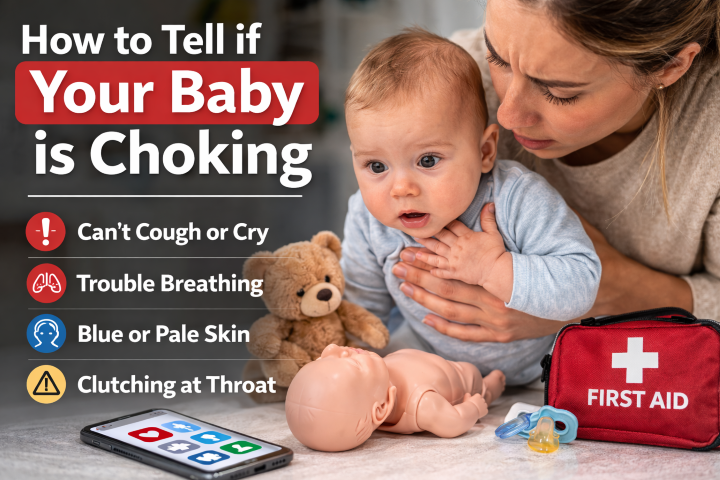
How to Tell if Your Baby is Choking
Essential Guide: Recognizing the Warning Signs of Infant Choking
As your baby starts trying solid foods and grabbing anything within reach, choking becomes a real concern. One of the most important things you can learn is the difference between gagging and choking. Gagging is usually loud and part of how babies protect themselves. Choking is often quiet and requires immediate action.
Knowing the signs of a blocked airway, like not being able to cry, silent coughing, or a bluish color around the lips, helps you respond quickly. Just as important, learning infant CPR and choking rescue ahead of time gives you the confidence to act if it ever happens.
How to Tell if Your Baby is Choking
If you are the parent or caregiver of an infant, you spend a great deal of time making sure they are safe and well cared for. Feeding, nurturing, routine doctor visits, and vaccinations are all important parts of keeping your baby healthy. But how prepared are you for unexpected emergencies?
One situation many parents do not think about until it happens is infant choking. As babies begin transitioning to solid foods and exploring objects with their mouths, the risk of choking increases. Knowing the warning signs of choking can help you act quickly during an emergency.
Gagging vs. Choking
It is important to understand the difference between gagging and choking. Gagging is a normal reflex that helps prevent choking and often sounds loud and dramatic. A gagging baby may cough, make noise, or spit out food.
Choking, however, is far more serious. When a baby is choking, their airway may be blocked and they may not be able to breathe, cry, or cough effectively.
Signs Your Baby May Be Choking
Watch for the following warning signs that may indicate your baby is choking:
- Difficulty breathing or weak breathing sounds
- Inability to cry or make normal sounds
- Persistent coughing or gagging that does not clear the airway
- Blue or pale skin color, especially around the lips or face
- Clutching at the throat or sudden distress
- Loss of consciousness
If your baby cannot breathe, cough, or cry, immediate action is required and emergency services should be contacted.
Reducing the Risk of Infant Choking
While choking emergencies can happen suddenly, there are steps parents can take to reduce the risk:
- Provide foods that are soft and cut into small pieces
- Avoid common choking hazards such as whole grapes, nuts, popcorn, and hard candies
- Always supervise babies while they are eating
- Keep small household objects out of reach
Learn Infant CPR and First Aid
One of the most important things parents and caregivers can do is learn infant CPR and choking rescue techniques. Proper training teaches you how to respond if an infant’s airway becomes blocked and how to provide lifesaving care until emergency responders arrive.
Infant CPR and First Aid classes are designed to give parents, grandparents, babysitters, and childcare providers the confidence to act quickly in an emergency.
Many local infant CPR classes are available. Visit In-Pulse CPR to find a class near you.
Prepared Parents Are Safer Parents
Parents work hard to keep their children safe every day. Learning how to recognize choking and knowing what to do in an emergency is another important way to protect your child.
With proper training in CPR and First Aid, you can be prepared to respond quickly and confidently if a choking emergency occurs.
FAQ: Local Significance & Emergency Training
Where can I find infant-specific CPR and choking classes in my area? Standard CPR classes often focus on adults, so it is important to choose a course specifically covering Pediatric BLS (Basic Life Support). Organizations like In-Pulse CPR offer local, hands-on certification throughout the region, ensuring parents and babysitters practice techniques on infant-sized manikins for real-world readiness.
How do local emergency response times impact my need for training? In a total airway obstruction, brain damage can begin in as little as four minutes. While local EMS teams are highly skilled, the care you provide in the seconds before they arrive is the most critical link in the “Chain of Survival.” Having the confidence to act immediately is the best way to protect your baby.
Does my local daycare require staff to be certified in infant choking rescue? Most state regulations require licensed childcare providers to maintain current Pediatric First Aid and CPR certifications. However, it is always a good idea to ask your local provider for their specific credentials and to ensure their training is refreshed every two years. Babysitters too need this training.
Here are some more blogs discussing this topic:
Recommended Resources for Parents and Caregivers
- Choking Prevention for Babies & Children (HealthyChildren.org)
- Why it’s useful: Published by the American Academy of Pediatrics, this is the gold standard for parents. It provides an extensive, easy-to-read list of common choking hazards and detailed prevention strategies.
- Infant Choking: How To Help (American Red Cross)
- Why it’s useful: This resource offers clear, step-by-step instructions on the “five back blows, five chest thrusts” technique, making it a vital reference for emergency situations.
- Choking: First Aid (Mayo Clinic)
- Why it’s useful: A concise, expert-vetted guide that explains exactly what to do when a choking incident occurs, including when it is appropriate to call for emergency help.
- Common Choking Hazards for Babies (Solid Starts)
- Why it’s useful: This is an excellent visual and practical resource for parents transitioning to solid foods, offering tips on how to safely prepare specific foods (like grapes or carrots) to reduce risk.
- First Aid for a Choking Baby (Nationwide Children’s Hospital)
- Why it’s useful: This guide provides a very accessible breakdown of the signs of choking versus gagging, which directly complements your article’s focus on recognition.