
Bloodborne Pathogens: Where They Are and How They Are Transmitted
 by Elizabeth Di Vergigelis
- Aug 12, 2016
- 0
- Category: Who needs Bloodborne Pathogens
 by Elizabeth Di Vergigelis
When considering bloodborne pathogens most people believe that in order to be contaminated by these pathogens they must come in contact with the infected person’s blood in some way into a bodily orifice such as the mouth or nose to become contaminated, as well. But, it is a highly mistaken misnomer of the fact that pathogens only reside in the bloodstream. These same pathogens can be found in many other places where bodily fluids reside in the human and mammal body.
There are many means for pathogen to come in contact with another host in the body and many ways for one to become infected by these pathogens. These potentially harmful fluids include semen, the viscid, whitish fluid from the male during sexual coitus and, vaginal secretions that come from the female cervix fluid. Cerebrospinal fluid, the colorless liquid that surrounds the brain and spinal cord can carry serious pathogens that can lead to serious damage to the body and leave catastrophic brain damage and even death. Synovial fluid, fluid that lubricates and cushions joints between the bones in the body can be a carrier of these pathogens. Pleural fluid, the fluid between the pleural membranes of the lungs and the inner chest walls, can, also, be a carrier fluid of pathogens released into the air by simply coughing and even breathing. Peritoneal fluid, the fluid in the gastrointestinal organs, is yet another means of passing these pathogens along to other hosts that can pass the pathogens in a vicious cycle to another host. Amniotic fluid carried in the amniotic sac surrounding the fetus of a gestational female can carry pathogens that can be passed to the fetus from the mother and any other host that comes in contact with the pregnant mother. Saliva is another form and path to pass these pathogens on to the next host and probably the easiest way to send these pathogens on to their next destination. Practically any bodily fluid that carries blood cells, and all bodily fluids carry blood cells, will be able to contaminate the next available warm blooded host.
It is highly important to be aware and to be knowledgeable about the various and many ways that exposure and transmission are most likely to occur in any particular situation whether it is in providing something as simple as minor first aid to handling blood specimens in a laboratory, to cleaning a dirty bathroom floor or kitchen countertop. Various and just a few ways to make contact with pathogens include sexual contact, the sharing of hypodermic needles. From mother to babies at birth or before birth, accidental punctures from dirty needles, broken glass or other sharps, contact between broken or damaged and infected body fluids, contact between mucous membranes and infected body fluids. Anytime there is blood-to-blood contact with infected blood or body fluids, these is a potential for transmission.
Unbroken skin forms an impervious barrier to prevent these pathogens entering your body other than your natural bodily orifices. However, infectious pathogenic blood can enter your system through such ways as open sores, abrasions, cuts, acne and any sort of damaged or broken skin such as sunburns or blisters. Even your eyes, nose and mouth are pathways for bloodborne pathogens to enter your body. It is important to always remember to cover your mouth and nose by covering your face in the bend of your elbow when coughing and/or sneezing. Back away as quickly and as far as you can when someone else is coughing or sneezing without covering their face to ensure you are not contaminated should the other person be a carrier of such pathogens. One can never be too careful in keeping away from the microscopic pathogens that cause disease and illnesses that can lead to something as small as discomfort to as devastating as death itself.

 by Steve Rakowski
 ed signs of a heart attack and immediately sprang into action. One staffer called 911. One prepped the hotel’s AED and provided aspirin. The 3rd staffer attended to him and kept him calm. It was no time before an ambulance arrived. He was transported to the hospital, treated and made a full recovery. A happy ending for certain, but how frightening does that sound? Having to deal with a serious health incident while being miles from home without your normal support network around you is hard to imagine.
 by Nadene Seiters
 by Derek Walborn

 , we always think the same thing: “I’m glad it’s not on its way to see me.”
 by Carol Sarao
 can help you prevent heat-related illnesses – heat cramps, heat exhaustion, and heat stroke – from marring your Tampa summer.
 What should I do?

 by Laura Crider
 by Anonymous
 by Troy Bowman
 by Robin Johnson
 A commentary recently released by the Mayo Clinic argues that CPR training in high
 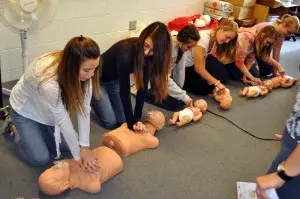 for the cause of death within the United States today, the chances are that most students in high school will either be affected indirectly, or directly by a cardiac arrest at some point during their lives. This means that mandatory CPR training could help to mitigate existing health disparities.