

CPR and First Aid for Babysitters: What Parents Should Look For
Leaving your child with a babysitter requires trust.
Parents usually ask about experience, references, schedules, and routines. But one of the most important questions is easy to overlook:
Does your babysitter know CPR and First Aid?
Children can choke, fall, suffer allergic reactions, experience breathing emergencies, or become seriously ill with little warning. A caregiver who knows how to recognize an emergency and respond appropriately can make a tremendous difference while professional help is on the way.
Babysitters Should Know CPR
CPR training teaches caregivers how to respond when an infant or child becomes unresponsive and is not breathing normally.
The 2025 American Heart Association guidelines continue to emphasize early recognition of pediatric cardiac arrest, rapid activation of emergency medical services, and immediate high-quality CPR beginning with chest compressions.
For infants and children, rescue breaths are especially important because pediatric cardiac arrests are more commonly related to breathing problems than adult cardiac arrests.
That makes pediatric CPR training especially valuable for anyone responsible for young children.
Babysitters Should Know How to Respond to Choking
Young children explore the world with their hands and mouths, making choking a serious concern.
The 2025 AHA guidelines updated choking procedures.
For a conscious child with severe choking, rescuers should alternate:
5 back blows followed by 5 abdominal thrusts
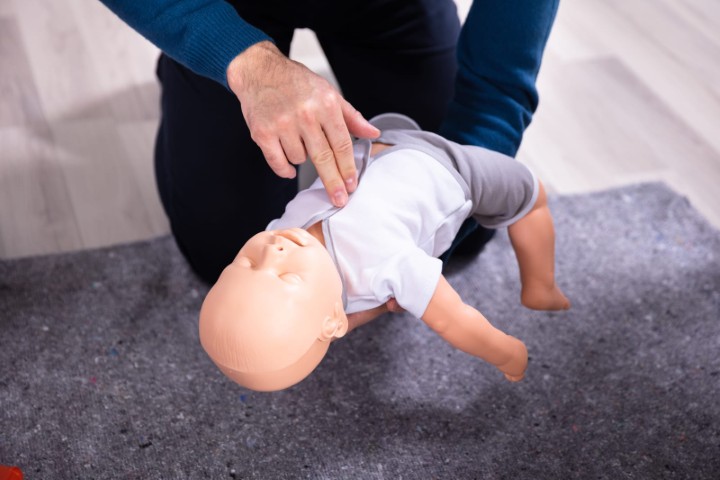
For an infant with severe choking, rescuers should alternate:
5 back blows followed by 5 chest thrusts
Abdominal thrusts should not be performed on infants.
If the child or infant becomes unresponsive, CPR should begin.
These are exactly the types of skills that are much easier to perform correctly after hands-on training.
First Aid Training Matters Too
CPR is only one part of emergency preparedness.
A babysitter should also have basic knowledge of how to respond to:
- Cuts and bleeding
- Burns
- Falls and possible fractures
- Allergic reactions
- Seizures
- Poisoning
- Heat-related illness
- Breathing emergencies
- Choking
Formal First Aid training helps caregivers recognize when an injury can be managed with basic care and when it is time to call 911.
Make Emergency Information Easy to Find
Parents should leave babysitters with important information before leaving the home.
That should include:
- Parent or guardian phone numbers
- Home address
- Emergency contacts
- Child’s allergies
- Medical conditions
- Current medications
- Location of emergency medications such as epinephrine or inhalers
- Pediatrician information
- Location of the First Aid kit
A babysitter should also have immediate access to a working phone.
During a serious emergency, valuable time should not be spent searching for contact information.
Ask for Current CPR Certification
Parents should feel comfortable asking a babysitter whether they have completed CPR and First Aid training.
If CPR certification is important to your family, ask to see the caregiver’s current certification card.
Skills can fade over time, and CPR recommendations periodically change. Current training helps ensure caregivers are practicing techniques based on the latest guidelines.
Babysitters: CPR Training Makes You More Prepared
CPR and First Aid certification is also valuable for teenagers and adults who babysit.
It demonstrates to parents that you have taken additional steps to prepare for emergencies and, more importantly, gives you practical skills that may be needed when you are the only person available to help.
Reading about CPR is useful.
Watching a video is useful.
But neither completely replaces practicing CPR, choking relief, and other emergency skills during hands-on training.
Learn CPR and First Aid
In-Pulse CPR provides hands-on American Heart Association CPR, AED, and First Aid training for parents, babysitters, childcare providers, teachers, and others who work with children.
View Upcoming CPR and First Aid Classes
You hope a babysitter will never need to perform CPR or respond to a choking emergency.
But if that moment ever comes, knowing what to do matters.
Updated September 2026: This article has been substantially revised to reflect the 2025 American Heart Association Guidelines for CPR and Emergency Cardiovascular Care, including updated pediatric CPR and choking recommendations.

COMMENT (2)
Babysitting Services / July 15, 2010
Hi,
I saw your post and visit about your site really it’s a very interesting post about first aid for babysitter. Thank you for providing this nice information.
Dom @TutorCare / February 8, 2012
Absolutely agree. It’s always beneficial for parents to know who they are hiring. Having a child minder with the necessary skills in first aid will always gives you peace of mind when away from home.