When you buy an AED, the price of the unit is only part of the story. The real cost shows up over time through replacement pads, batteries, cabinets, signage, and the work of keeping the device ready to use.
For a business, school, church, gym, or property manager, this matters. Two AEDs may look close in price at checkout, but the long-term cost can be very different. Some models have pads that expire sooner. Others have more expensive batteries. A lower upfront price does not always mean the AED will be cheaper to own.
That is why it helps to look at the total cost of ownership. Below is a simple breakdown of what several common AED models may cost over 5, 10, and 15 years.
AED Model
5-Year Cost
10-Year Cost
15-Year Cost
HeartSine Samaritan PAD
$2,024
$2,266
$2,508
Avive Connect AED
$2,100
$2,400
$2,600
Defibtech Lifeline AED
$1,907
$2,365
$2,749
Philips HeartStart OnSite
$1,992
$2,464
$2,847
ZOLL AED Plus
$2,404
$2,726
$3,048
Stryker / LIFEPAK CR2
$2,177
$2,703
$3,229
Cardiac Science Powerheart G5
$2,828
$3,587
$4,258
Click any column heading to sort the table. Costs are estimates and may vary by package, distributor, replacement supply pricing, taxes, and shipping.
For many organizations, the long-term cost is smaller than it first appears. When the 15-year ownership cost is divided across employees, members, students, or regular visitors, the yearly cost per person can be very low.
That does not mean the purchase is unimportant. It simply means the budget should be viewed over the full life of the AED, not only on the day it is purchased.
AED Cost Per Employee Calculator
Enter the number of people at your location to see how a typical AED ownership cost breaks down over 15 years.
Many people wonder, “Can you get sick by performing CPR?” While CPR involves close contact with another person, the risk of catching a disease during cardiopulmonary resuscitation is extremely low. According to medical research and emergency response guidelines, there are no documented cases of HIV transmission from performing CPR, and the chance of contracting most infectious diseases during rescue efforts is very small. In fact, the greater danger is often not providing CPR at all, since immediate chest compressions can double or even triple a cardiac arrest victim’s chance of survival. Understanding the real risks, the protective equipment available, and the option of hands-only CPR can help bystanders feel more confident stepping in during a life-threatening emergency.
by Nupur Agarwal
Cardiopulmonary resuscitation (CPR) is a combination of rescue breathing and chest compressions delivered to victims thought to be in cardiac arrest. When cardiac arrest occurs, the heart stops pumping blood. CPR can support a small amount of blood flow to the heart and brain to “buy time” until normal heart function is restored.
It’s clear that CPR is an effective part of the emergency response to cardiopulmonary arrest, one that could potentially save thousands of lives a year. Yet, in most cases, victims aren’t getting this lifesaving treatment, even when bystanders are familiar with CPR.
It turns out that a large number of people are afraid of contracting some nasty disease during mouth-to-mouth resuscitation to strangers. This fear was heightened by the emergence of deadly infectious diseases, such as HIV, that are spread by bodily fluids. Even though there have been no documented cases of anyone ever catching HIV during CPR, there is still a chance, however tiny, of this happening. Hepatitis C may be a bigger threat as most people who carry this incurable disease may not even be aware that they have it.
It is true that a rescuer could come in contact with bacteria and virus while performing CPR. However, the chance of actually contracting a disease from CPR are low but the threat is still real. Since you may not be aware of your victims history it is best to protect yourself before giving mouth-to-mouth resuscitation, a lifesaving part of performing CPR. There are ways to protect yourself. Real CPR is very different from classroom CPR. You come in contact with a lot of bodily fluids when actually performing CPR in a real life situation. To assuage the public’s fear, CPR training now incorporates personal protective gear during the various steps. Some of the safety devices used include the following :
Gloves – Gloves prevent contact with saliva (if you have to reach in their mouth) and blood (if the victim has cuts or abrasions). The most popular types are latex and nitrile. Nitrile are preferred because there are people who have severe latex allergies.
Safety Glasses – Safety glasses are going to protect your eyes from blood, vomit, or any other bodily fluid. If you are an EMT make it a habit to always wear them.
CPR Barrier Devices – CPR barrier devices are the most important piece of equipment that you can use to protect yourself from disease. Many times a person will have blood or vomit in their mouth and you will be happy that you have a barrier device.
CPR barrier devices are available in our online store starting at only $6.00 and include free shipping
There are 3 types of CPR barrier devices that you should know about:
Bag Valve Masks (BVMs)
Pocket Masks
Keychain Masks
Bag valve mask is a mask that is placed over an unconscious person’s face that is attached to a bag. The bag is squeezed and the air in the bag is pushed into the patient’s lungs. The bag can also be hooked up to oxygen, making it the safest and most effective way to deliver breaths during CPR.
Pocket masks are not as effective as the BVM, but they are portable. The masks are placed over the patient’s face and they have a one way valve so that air can pass through to the patient’s lungs, but “goo” cannot come back through the mask to your mouth.
Keychain masks are the most portable CPR barrier devices available. They consist of a one way valve fixed into the center of a piece of plastic. The plastic will fit over the patient’s face; some masks will fit around the ears as well.
These measures need you to carry your CPR kit with you everywhere. Most people don’t plan when they go into cardiopulmonary arrest, so you never know where you might need your gear. This article is not meant to make you fearful of providing CPR without the kit in an emergency. When unsure or fearful of contracting something bad while performing CPR, especially on a stranger, remember you don’t have to give mouth-to-mouth resuscitation for CPR to be effective. Hands only CPR is better than not doing anything at all.
Yes, performing CPR on a stranger is considered safe and is strongly encouraged during a cardiac arrest emergency. Medical experts, including the American Heart Association, emphasize that the chances of contracting a disease while helping someone in cardiac arrest are extremely low. In most real-world situations, the victim’s survival depends on immediate chest compressions from nearby bystanders before emergency responders arrive. Even if you are unsure about rescue breathing, performing hands-only CPR (chest compressions only) can still significantly increase the victim’s chances of survival.
Can you catch diseases from mouth-to-mouth?
The risk of catching a disease from mouth-to-mouth resuscitation is very small. While rescuers could potentially be exposed to saliva or other bodily fluids, documented cases of disease transmission during CPR are extremely rare. Using protective equipment such as CPR barrier masks, pocket masks, or bag valve masks can further reduce the risk of exposure. Many CPR training programs now teach both traditional CPR and hands-only CPR, allowing rescuers to provide lifesaving chest compressions without rescue breaths if they feel uncomfortable performing mouth-to-mouth.
Searching for “online CPR classes near me” is incredibly common. Whether you are a nursing student preparing for clinicals, a construction foreman managing workplace safety, or a childcare director keeping staff compliant, you need a solution that is fast, convenient, and universally accepted.
However, when it comes to true CPR certification, choosing a 100% online class is a gamble that rarely pays off.
CPR is not an information-based subject you can simply memorize; it is an intense, physical skill. In a real-world cardiac emergency, you won’t be clicking a mouse—you will be delivering deep, rapid chest compressions, deploying an AED, and sustaining someone’s life until EMS arrives.
For professionals and students across the Tampa Bay area, a local classroom CPR class provides critical advantages that an online-only certificate simply cannot deliver.
To perform high-quality CPR, you must achieve precise physical standards: correct hand placement on the sternum, a compression depth of 2 to 2.4 inches, full chest recoil between every single compression, and a steady pace of 100 to 120 beats per minute. Most people are surprised by the sheer physical effort required until they try it on a realistic manikin.
In a Classroom Setting: Students practice these exact physical skills with an authorized instructor watching their technique. If your compressions are too shallow, if you are compressing too fast, or if you are leaning on the chest, an instructor corrects you in real time.
In an Online-Only Setting: There is zero physical feedback. You have no way of knowing if your technique is effective or dangerously flawed, creating a false sense of security that could fail in a high-stress crisis.
High-Quality CPR Training is Only a Neighborhood Away
Don’t compromise on your safety compliance or real-world readiness. We provide official, hands-on certification classes right where you live and work across the Tampa Bay area. Find an authorized classroom training site near you:
2. Online-Only CPR Cards Are Routinely Rejected by Florida Employers
The number one reason people search for online CPR training is to fulfill a strict employment or licensing requirement. This is precisely where 100% online courses fall short and cost you more money in the long run.
Many major employers, healthcare systems, dental networks, corporate safety boards, and state licensing agencies across Florida strictly mandate a hands-on practical skills check. A completely digital certificate will be flagged and rejected by compliance officers.
Watch Out for Red Flag Wording: Many online CPR companies use phrases like “follows AHA guidelines” or “AHA compliant.” This is misleading marketing. It simply means they read the American Heart Association’s public guidelines—it does not mean you will receive an official, accredited AHA certification card.
Tampa Classroom vs. 100% Online CPR Training
Feature
100% Online Course
Local Classroom Course
Hands-On Practice
None
Yes, on feedback manikins
Instructor Feedback
None
Immediate, real-time corrections
Florida Compliance
Rarely accepted for professional licensing
Widely accepted by OSHA, AHCA, and medical boards
Certification Type
Third-party digital certificate
Official, accredited AHA eCard
3. Local Classroom CPR Builds Real-World Confidence
In a medical crisis, you do not rise to the level of a digital multiple-choice quiz you passed on your phone; you fall back on what you have physically practiced.
Hands-on training eliminates the panic factor. In a local classroom, you handle an actual AED trainer, listen to its automated voice prompts, practice coordinated rescue breathing, and work through scenarios in a low-pressure setting.
Furthermore, taking a class locally means your instructor can tailor the scenarios to the exact workplace environments found right here in the Tampa area. Whether you are managing safety teams at a warehouse near Port Tampa, training dental teams in Brandon, or preparing nursing students for clinical rotations at major regional medical centers, live training connects the material to the real-world situations you face daily.
What About Blended Learning?
If you are trying to balance a hectic schedule but still need a fully compliant, accredited certification, Blended Learning is your ideal solution.
With a blended course, you complete the lecture and cognitive portion online at your own pace whenever it fits your schedule. However—unlike a 100% online course—you then attend a brief, focused, in-person skills session with a local instructor to verify your physical compression and AED skills. This gives you the ultimate convenience of digital learning without sacrificing the legality or quality of your card.
Why “Near Me” Still Matters
When someone searches for “online CPR classes near me,” they aren’t looking to cut corners on safety—they just want a class that easily fits into their local life.
Instead of taking a chance on a 100% online certificate that your employer or school program might reject, choosing a local, instructor-led classroom course ensures you walk away with a fully accredited AHA eCard and the genuine confidence required to save a life. CPR is simply too important to leave as a checkbox on a computer screen.
Frequently Asked Questions (Tampa Bay FAQ)
Q: Are 100% online CPR cards accepted by Florida healthcare and childcare boards?
A: Generally, no. Regulatory bodies across the state—including the Florida Board of Nursing, the Agency for Health Care Administration (AHCA), and the Department of Children and Families (DCF) for childcare providers—explicitly require an in-person, hands-on skills assessment. A 100% online course will not satisfy these professional licensing standards.
Q: Can I get my official AHA certification card the same day as my class?
A: Official electronic eCards are processed directly following the successful completion of your hands-on training. Depending on corporate administrative timelines and portal processing queues, cards are typically emailed directly to your inbox by the next business day.
Q: Where can I find an official classroom CPR course in the Tampa area?
A: To ensure your certification is fully accredited and universally accepted, you should always select an authorized training site. Look for convenient, high-frequency physical classrooms located throughout the metro area, including key regional hubs like Tampa Westshore, Citrus Park, Brandon, Largo-Clearwater, and the USF/Busch Gardens area.
Searching for “online CPR classes near me” is incredibly common. People naturally look for options that are fast, convenient, and readily accepted by their employer, school, or licensing program. However, when it comes to true CPR certification, a 100% online class is rarely the best choice.
CPR is not just information you memorize; it is a physical, kinetic skill. In a real emergency, you must be ready to instantly recognize cardiac arrest, call for help, deliver high-quality chest compressions, operate an AED, and maintain that effort until emergency responders arrive. That muscle memory is incredibly difficult to build by simply watching videos or clicking through a digital slideshow.
For professionals and students in Minneapolis, St. Paul, and the surrounding Twin Cities area, a local classroom CPR class provides critical advantages that online-only programs simply cannot match.
Effective CPR requires precise physical execution: correct hand placement, proper compression depth (2 to 2.4 inches), full chest recoil, and a steady rhythm of 100 to 120 beats per minute. Most people do not realize how much physical effort effective compressions require until they practice on a realistic manikin.
In a Classroom Setting: Students practice these exact skills with a certified instructor physically present. The instructor can immediately notice and correct critical errors—such as whether your hand placement has drifted, whether you are compressing deep enough, or if you are leaning on the chest between compressions.
In an Online-Only Setting: There is no real-time feedback loop. Without that correction, you risk practicing the wrong technique, leaving you with a false sense of security that could fail in a real crisis.
2. Online-Only CPR Cards May Not Be Accepted By Your Employer
The primary reason people search for online CPR training is to fulfill a strict requirement for work, school, or professional licensing. This is precisely where 100% online courses fall short.
Many employers, healthcare programs, childcare centers, fitness facilities, construction companies, and state licensing boards strictly mandate a hands-on practical skills check. A certificate from a completely online website will often be rejected by compliance officers.
A Warning on Misleading Marketing: Some online CPR websites prominently use phrases like “follows AHA guidelines” or “AHA compliant.” This wording is deliberately confusing. It simply means the company read the publicly available research guidelines; it does not mean you will receive an official, accredited American Heart Association (AHA) certification card.
Classroom vs. 100% Online CPR Training
Feature
100% Online Course
Local Classroom Course
Hands-On Practice
None
Yes, on feedback manikins
Instructor Feedback
None
Immediate, real-time corrections
Employer Acceptance
Rarely accepted for professional compliance
Widely accepted by OSHA, corporate, & medical boards
Certification Type
Third-party digital certificate
Official, accredited certification
3. Local Classroom CPR Builds True Confidence
In an emergency, people do not rise to the level of a quiz they passed online; they fall back on what they have physically practiced.
Hands-on training removes the fear of the unknown. In a local classroom, you get to handle an actual AED trainer, hear its voice prompts, practice pacing with a team, and ask specific questions in a low-pressure setting.
Furthermore, taking a local class in the Twin Cities means you are learning alongside people from your own community. Whether you are a parent, school teacher, youth coach, dental hygienist, or construction foreman, a live instructor can tailor the scenarios to the exact environments you encounter every day in Minnesota.
High-Quality CPR Training is Only a Neighborhood Away
Don’t compromise on your safety compliance or real-world readiness. We provide official, hands-on certification classes right where you live and work across the Twin Cities metro area. Find an authorized classroom training site near you:
If you are looking for the convenience of online scheduling but still need a valid, compliant certification, Blended Learning is the perfect middle ground.
With this format, you complete the cognitive, lecture portion of the course online at your own pace. However—unlike a 100% online course—you then attend a brief, focused, in-person skills session with a local instructor to practice and test your physical CPR and AED skills. This satisfies all employer and licensing requirements while respecting your busy schedule.
Why “Near Me” Still Matters
When someone searches for “online CPR classes near me,” they rarely want to sacrifice the quality of their training; they just want a solution that fits into their local life seamlessly.
Instead of taking a gamble on a 100% online certificate that your employer or school program might reject, choosing a local, instructor-led classroom course ensures you walk out the door with a fully accredited card and the genuine confidence required to save a life. CPR is simply too important to leave as a checkbox on a computer screen.
Frequently Asked Questions (Twin Cities FAQ)
Q: Are 100% online CPR cards accepted by Minnesota healthcare or educational boards?
A: Generally, no. Major regulatory bodies in Minnesota—including the Minnesota Board of Nursing, the Department of Human Services (DHS) for childcare providers, and OSHA for industrial workplaces—explicitly require a physical, hands-on skills assessment. A 100% online course will not satisfy these professional licensing requirements.
Q: Can I get my official AHA certification card the same day as a local class?
A: While official electronic cards are processed immediately following the completion of your hands-on training, depending on corporate administrative and portal processing schedules, cards are typically emailed directly to you by the next business day.
Q: How do I know if a local Twin Cities class is officially accredited?
A: Look for courses explicitly designated as official American Heart Association (AHA) training. Ensure the provider operates as an authorized Training Center or authorized site, which guarantees your card will be universally recognized by employers across Minneapolis, St. Paul, and nationwide.
Sudden cardiac arrest (SCA) can strike without warning. It does not discriminate between a healthy student-athlete on the field, a teacher in the hallway, or a parent in the bleachers.
According to the American Heart Association, thousands of children under the age of 18 experience cardiac arrest outside of a hospital each year in the U.S., and a significant percentage of those cases are sports-related. In those terrifying moments, the first few minutes matter most. Immediate access to an Automated External Defibrillator (AED) and a trained bystander can turn a heartbreaking emergency into a survivable event.
In fact, schools equipped with AEDs see youth survival rates climb dramatically compared to the national average.
To make emergency responses more organized, practiced, and consistent across the Commonwealth, Pennsylvania has enacted a major legislative update. Known as Greg Moyer’s Law, this new statute helps ensure that schools are no longer just reacting to emergencies, but actively preparing for them.
What Is Greg Moyer’s Law?
On May 13, 2026, Governor Josh Shapiro signed Senate Bill 375 into law as Act 17 of 2026. Officially designated as Greg Moyer’s Law, the legislation honors 15-year-old Greg Moyer, a Notre Dame Jr./Sr. High School student who tragically died from sudden cardiac arrest during a high school basketball game in 2000.
Act 17 updates the Pennsylvania Public School Code by establishing clear statewide safety standards for:
CPR and AED instruction availability
AED access during school hours and athletic activities
Trained personnel presence in school buildings
Cardiac Emergency Response Plans (CERPs)
Annual AED inventory and readiness reporting
Who Is Affected?
The law applies broadly across Pennsylvania’s educational landscape. The following entities must comply with the new requirements:
Public school districts
Charter schools, regional charter schools, and cyber charter schools
Intermediate units (IUs)
Area career and technical schools
Nonpublic schools, including private and parochial schools
While some components apply to basic school-day operations, other requirements specifically apply to schools that participate in interscholastic athletics.
CPR and AED Training Requirements
Act 17 ensures that school staff have access to life-saving instruction. Under the law, schools must make CPR and AED instruction available to employees and approved volunteers at least once every two years.
For general employees and volunteers, the law focuses on making instruction available. Certain roles, however, have specific training and certification requirements.
Instruction may be provided by recognized certifying agencies, including:
The American Heart Association (AHA)
The American Red Cross
The National Safety Council
Other approved certifying organizations
Schools are also required to maintain documentation of completed training sessions and active certifications.
Practical Takeaway: Do not wait until the compliance deadline approaches to train your staff. Schools should begin mapping out a rolling, two-year training calendar now to prevent administrative bottlenecks, missed renewals, and scheduling conflicts.
Who Must Be Trained?
The law specifically identifies certain frontline staff members who must hold active CPR and AED certifications. These individuals are often closest to students during periods of physical activity or school-day medical emergencies.
Mandatory training applies to:
School nurses, or their official designees
Athletic coaches
Athletic trainers
Physical education teachers
Marching band directors
These roles matter because cardiac emergencies often happen where students are active: gyms, fields, practices, games, marching band events, and physical education classes.
CPR & AED Training for Pennsylvania Schools
In-Pulse CPR has provided CPR and AED training for schools and educational organizations across Pennsylvania, including Central Dauphin Middle School in Harrisburg, Copeland Run Academy in Downingtown, Infinity Charter School in Harrisburg, Joyful Noise in York, Lititz Area Mennonite School in Lititz, Messiah University in Mechanicsburg, The Silver Academy in Harrisburg and others. For schools reviewing their AED readiness under Pennsylvania’s new requirements, we can help train nurses, coaches, teachers, athletic staff, office teams, support staff, and student groups through hands-on American Heart Association CPR and AED classes.
Trained Responders Must Be Present During the School Day
Having life-saving equipment is only part of the equation. Schools also need people on-site who know how to respond.
Act 17 requires that at least one CPR and AED-trained individual be present in each school building during each school day.
The law defines the “school day” as the hours when children subject to compulsory attendance are expected to receive instruction. This means school administrators need to think carefully about staffing logistics, employee absences, substitute coverage, and multiple-building campuses.
Practical Checklist for Administrators
[ ] Identify and Audit: Map out every distinct school building owned or leased by your school entity.
[ ] Roster Check: List all currently certified staff members assigned to those specific locations.
[ ] Monitor Expirations: Log certification expiration dates into a central dashboard or spreadsheet.
[ ] Build Redundancy: Create a backup coverage plan so a certified responder is still present when the primary nurse, teacher, or staff member is absent.
[ ] Automate Renewals: Set recurring calendar reminders several months before staff certifications expire.
Athletic Events and Practices Get Special Attention
Because many youth sudden cardiac arrest emergencies happen during or around physical activity, Greg Moyer’s Law places special emphasis on athletic settings.
For schools participating in interscholastic athletics, the law requires AED readiness during athletic activities and practices. Schools must ensure that trained responders are available and that AEDs are readily accessible when students are participating in athletic events or practices.
This includes planning for more than just the main gym. Schools should review AED access for:
Outdoor fields
Stadiums
Practice areas
Locker rooms
Field houses
Remote areas of campus
Events held outside normal school hours
The “Locked Door” Trap
An AED locked securely inside the nurse’s office or main administration building may not be truly useful during an afternoon football practice, a weekend track meet, or an outdoor athletic event on the far side of campus.
The key question for school leaders is simple: Can a trained responder get to the AED and bring it back fast enough to matter?
That is why AED placement, visibility, access, and staff training all need to be reviewed together.
The Core of the Law: Cardiac Emergency Response Plans (CERPs)
Owning an AED is only half the battle. The real life-saving power lies in a practiced, coordinated response.
Act 17 requires schools participating in interscholastic athletics to develop or update a comprehensive Cardiac Emergency Response Plan, often called a CERP.
A strong CERP should outline:
The exact locations of AEDs on school premises and athletic areas
Clear steps to take when someone collapses from suspected cardiac arrest
Who calls 911
Who starts CPR
Who retrieves the closest AED
How staff communicate during the emergency
How the school coordinates with local Emergency Medical Services (EMS)
How cardiac emergency information is shared with staff, students, and families
How the plan will be reviewed and practiced
This is where the law moves beyond simple equipment ownership. A school should not only have an AED. It should have a plan for who uses it, where it is located, and how quickly it can be brought to the person in need.
Annual Drills and Practice
A plan on paper will not save a life if staff freeze during a crisis.
Schools participating in interscholastic athletics are required to conduct annual sudden cardiac arrest response drills. These drills may be conducted with or without student participation.
The goal is to build confidence and reveal weak spots before a real emergency happens.
A drill may uncover practical issues such as:
An AED cabinet that is hard to open
A device located too far from an athletic field
Staff confusion about who calls 911
Poor communication between indoor and outdoor areas
Expired AED pads or batteries
A lack of backup trained responders
Practice turns a written plan into a real response.
AED Maintenance and Readiness
Schools must actively maintain their life-saving equipment according to manufacturer guidelines and Department of Health specifications.
Dead batteries and expired pads can turn an AED into an expensive wall decoration. A device may be present, but if it is not maintained, it may not be ready when someone needs it most.
Essential AED Maintenance Log
Tracking Metric
Requirement / Action
Device Location
Must be clearly marked, visible, unhindered, and easily accessible.
Battery Life
Track installation and expiration dates.
Electrode Pads
Monitor expiration dates for adult and pediatric pads.
Inspection Log
Assign a specific staff member to perform and document regular visual checks.
Replacement Schedule
Budget ahead for batteries, pads, cabinets, signage, and device replacement.
A simple spreadsheet can help schools avoid last-minute surprises and make annual reporting easier.
Annual Reporting Requirements
To ensure accountability across the state, annual AED inventory reporting to the Pennsylvania Department of Education begins by June 30, 2027.
Every year, schools must submit AED readiness information, including:
The number of AEDs owned
The age of each device
The model and condition of each AED
Pad and battery expiration dates
Specific placement locations throughout school buildings and grounds
Organizing this data now can prevent a chaotic administrative scramble when reporting requirements begin.
AED Purchasing Program and Funding Options
To help schools acquire and maintain AEDs, Act 17 establishes a statewide AED purchasing program.
The Department of Education will issue competitive invitations to bid, allowing school entities and nonpublic schools to purchase AEDs and replacement supplies at reduced contract pricing.
The law also addresses funding support.
For public schools, AED training is added as an allowable use under certain school safety and security grant categories.
For nonpublic schools, the law provides grant funding support to assist with AED equipment and CPR/AED training compliance requirements.
This is especially important for smaller schools that may need to purchase multiple devices, replace older AEDs, or train several staff members at once.
Liability Protections
Greg Moyer’s Law also reinforces Good Samaritan-style civil immunity protections for school employees, volunteers, and trained individuals who step in to use an AED or perform CPR during an emergency.
These protections are important because hesitation can cost precious time. When someone collapses from suspected sudden cardiac arrest, immediate action matters.
Disclaimer: This section provides a general summary of the law and should not be treated as formal legal advice. School administrators should consult their legal counsel regarding specific liability, insurance, and compliance questions.
What Pennsylvania Schools Should Do Now
Full compliance with the foundational training, placement, and emergency planning elements of Act 17 is required no later than three years from the law’s effective date. However, smart school administrators should begin preparing now.
1. Conduct a Comprehensive AED Audit
Map your campus and inventory every AED. Include device location, model, age, battery expiration date, pad expiration date, cabinet location, signage, and condition.
2. Review Staff Credentials
Audit current CPR and AED certifications for school nurses, coaches, athletic trainers, physical education teachers, marching band directors, and other trained staff.
3. Identify Coverage Gaps
Make sure every school building has trained responder coverage during each school day. Build backup plans for absences, substitutes, and multiple-building campuses.
4. Review Athletic AED Access
Look closely at gyms, fields, stadiums, locker rooms, and off-hour practice locations. Ask whether an AED is truly readily accessible from each area.
5. Draft or Update Your CERP
Use nationally recognized guidance, such as American Heart Association cardiac emergency response planning resources, to build or update your Cardiac Emergency Response Plan.
6. Schedule Annual Drills
Do not wait for an actual emergency to test the plan. Practice helps staff respond faster and exposes weak points before lives are on the line.
7. Partner with a Certifying Training Provider
Secure an ongoing training plan to certify required staff and make CPR/AED instruction available to employees and volunteers on a regular schedule.
How In-Pulse CPR Can Help Your School Prepare
Navigating new state requirements can feel overwhelming, but your school does not have to build its CPR and AED training strategy alone.
In-Pulse CPR provides official, hands-on American Heart Association CPR, AED, and Basic Life Support (BLS) training for schools and educational staff.
Our instructors can come directly to your school campus for convenient on-site group training sessions. We can help your nurses, coaches, physical education teachers, athletic staff, marching band directors, and other employees receive the training they need in an interactive classroom setting.
We also provide training documentation, making it easier for your school to track completed certifications and plan future renewals.
Do not wait until the compliance deadline closes in. Protect your students, empower your staff, and prepare your school with confidence.
Contact In-Pulse CPR today to schedule an on-site group CPR and AED training session for your Pennsylvania school.
Frequently Asked Questions
Does every single Pennsylvania school employee need to be CPR certified?
No. The law requires schools to make CPR and AED instruction available to employees and volunteers at least once every two years. However, certification is specifically required for certain roles, including school nurses or designees, athletic coaches, physical education teachers, athletic trainers, and marching band directors.
Do schools need to have an AED at outdoor sports practices?
Schools participating in interscholastic athletics must ensure that AEDs are readily accessible during athletic activities and practices. For outdoor fields, stadiums, or remote practice areas, schools should carefully review whether an AED locked inside the main building would truly be accessible fast enough during an emergency.
When do Pennsylvania schools legally have to meet these requirements?
Annual AED inventory reporting to the Pennsylvania Department of Education begins by June 30, 2027. The broader operational requirements, including required training, school-day responder coverage, CERP planning, and athletic AED readiness, must be satisfied no later than three years from the law’s effective date.
Do schools need to report AED information every year?
Yes. Schools must report AED inventory and readiness information annually, including the number of AEDs, condition, age, expiration dates, and locations.
Why does this law matter for local Pennsylvania communities?
Before Act 17 of 2026, AED access and cardiac emergency planning varied from school to school. Greg Moyer’s Law creates a more consistent statewide safety standard. That means students, staff, families, and spectators should benefit from stronger emergency planning whether they are at their home school, an away game, or a school-sponsored athletic event in another community.
The “chain of survival” is a simple way to explain how multiple time‑critical actions work together to improve outcomes after sudden cardiac arrest. For organizations that host on‑site training, teaching this chain helps staff understand why their role—whether recognizing the emergency, starting compressions, or grabbing an AED—directly affects whether a colleague or visitor survives.
Each Link Leads to Higher Survival Rates
In adult out‑of‑hospital cardiac arrest, the chain typically includes early recognition and activation of emergency response, early CPR, rapid defibrillation, effective advanced life support, and integrated post‑cardiac arrest care. Each link contributes to higher survival and better neurologic outcomes.
For example, national data suggest that when bystander CPR is provided, survival to hospital discharge and neurologically intact survival both increase meaningfully compared with cases where no CPR is given. When an AED is applied quickly and delivers a shock for a shockable rhythm, survival can triple or quadruple relative to scenarios without defibrillation before EMS arrival.
Early Recognition: Why It’s Important
Early recognition is often the most overlooked step. Staff should be trained to treat sudden collapse, unresponsiveness, and abnormal or absent breathing as a likely cardiac arrest and to call 911 immediately.
Dispatcher‑assisted CPR, where the emergency telecommunicator coaches the caller through compressions, has been associated with higher rates of bystander CPR and better outcomes in several studies. On‑site training can include realistic scenarios where participants practice clear communication with dispatchers while another rescuer begins compressions.
The second link, early CPR, buys time by manually circulating blood until defibrillation and advanced care can occur. Evidence shows that starting CPR promptly, ideally within 2 to 5 minutes, significantly improves survival and neurological outcomes.
Keep Everything Simple
Simplified, hands‑only CPR for adults has been widely promoted, and research indicates that simplifying guidelines has helped increase bystander CPR rates over the past two decades. In-Pulse CPR classes can reinforce these streamlined steps and teach staff how to continue compressions with minimal interruptions.
Rapid defibrillation with an AED is the next critical link. Public access defibrillation programs, which place AEDs in offices, malls, airports, and other high‑traffic areas, have been shown to raise survival rates when devices are used within a few minutes of collapse.
One review reported survival as high as 70% when an AED was used within two minutes in witnessed cardiac arrest. On‑site courses should not only teach how to operate an AED but also include site‑specific drills so staff know exactly where the nearest device is located and who is responsible for retrieving it.
Knowledge is Power
Finally, advanced life support and post‑arrest care, provided by EMS and hospitals, build on the early actions taken in the field. While these latter links are outside an employer’s direct control, organizations can dramatically influence the first three links through training, policies, and equipment.
For In-Pulse CPR and its clients, the goal is to help every participant see themselves as a vital part of this chain and to give them the skills and confidence to act without hesitation.
Key Takeaways
“Chain of survival” sounds clinical, but it’s really a simple idea: several fast actions, done in the right order, dramatically improve survival after cardiac arrest. For your workplace, the first three links are where your team makes the biggest difference.
First is recognition and calling 911. If someone suddenly collapses and isn’t breathing normally, staff should treat it as cardiac arrest and activate emergency services immediately. Waiting to be “certain” wastes precious time.
Second is early CPR. Strong, steady chest compressions keep blood moving to the brain and heart until a shock or advanced care is available. Training teaches employees where to place their hands, how deep to compress, and how to keep interruptions to a minimum.
Third is rapid defibrillation. An AED analyzes the heart rhythm and, if needed, delivers a shock to reset it. AEDs are designed for laypeople, but only if staff know where they are and feel comfortable using them. Practice with trainer devices in your actual building makes that possible.
The last links, advanced life support and hospital care, are out of your hands. But if your team executes the first three, you give EMS and hospital staff a patient who still has a fighting chance.
Help your staff become a strong link in the chain of survival. Schedule on‑site CPR/AED training with In‑Pulse CPR so your team is ready long before EMS arrives.
Hands‑Only CPR: Making the Action Simple for Lay Responders
Image, Donna Ryan Digital
Hands‑only CPR was developed to lower the psychological barrier to action for lay rescuers who witness an adult suddenly collapse. Instead of worrying about rescue breaths, bystanders are instructed to focus on hard, fast chest compressions in the center of the chest at a rate of 100–120 compressions per minute, allowing full recoil between compressions.
For many workplaces and community groups, emphasizing hands‑only CPR in training is the fastest way to empower more people to respond.
A Technique that Leads to Better Results
Data from the American Heart Association indicate that bystander CPR improves survival and neurologic outcomes, but many people still hesitate to help.
Surveys show that only about half of Americans report they would perform bystander CPR, often because they fear doing it incorrectly, worry about disease transmission from rescue breaths, or are concerned about legal consequences.
Hands‑only CPR directly addresses these concerns by simplifying the skill set and removing the need for mouth‑to‑mouth ventilation in most adult sudden cardiac arrest situations.
Getting the Training Onsite: Getting the Training Right
Research suggests that simplifying CPR guidance can increase bystander participation. Analyses of trends over time have shown that bystander CPR rates rose from roughly 40–41% in the early 2000s to around 65–70% in more recent years, largely driven by increased use of chest‑compression‑only CPR by lay rescuers.
Simultaneously, survival from out‑of‑hospital cardiac arrest has inched upward, though it still averages around 10% nationwide, which underscores the importance of further improving bystander response. The combination of clear public messaging and structured hands‑on training is key.
What to Expect in Training
Hands‑only CPR is most appropriate for teens and adults who suddenly collapse and are unresponsive and not breathing normally, or who are producng agonal respiration.
In-Pulse CPR instructors can walk participants through recognizing agonal gasps, checking responsiveness, and starting compressions while another coworker calls 911 and retrieves an AED. Role‑play with dispatcher‑assisted CPR scenarios helps participants practice staying on the phone, following prompts, and counting compressions out loud, reinforcing the correct rate and minimizing delays.
Compression-only CPR: When It Works the Best
Even without rescue breaths, high‑quality chest compressions maintain some blood flow to vital organs until a shock or advanced care can be delivered. Several observational studies and meta‑analyses have found that compression‑only CPR can produce survival and neurological outcomes comparable to or better than traditional CPR with breaths in adult cardiac arrest, especially when initiated quickly.
CPR with Breaths
That said, full CPR with breaths remains important for certain populations, including infants and children, and in situations like drowning or overdose, which is why comprehensive training still covers both methods and when each is appropriate.
For organizations considering on‑site training, promoting hands‑only CPR as the “minimum standard” for any adult collapse can help reduce hesitation.
When staff know that simply pushing hard and fast in the center of the chest while emergency services are on the way can double or triple a person’s chance of survival, they are more likely to act. In-Pulse CPR classes can position hands‑only CPR as an accessible, lifesaving skill that every employee can master in a single session.
Key Takeaways
One reason people hesitate to start CPR is the belief they need to perform mouth‑to‑mouth breaths perfectly. For most adult sudden cardiac arrests, that’s no longer true. Hands‑only CPR focuses on hard, fast chest compressions, and it’s proven to save lives.
Hands‑only CPR has just two steps: call 911, then push hard and fast in the center of the chest—about 100 to 120 times per minute—until help or an AED arrives. This simplified approach has been shown to increase the number of bystanders willing to step in. It also makes CPR easier to teach across an entire workforce, regardless of prior medical background.
In a crisis, simple is powerful. Employees who know they can “just push” are less likely to freeze. With practice on manikins, they learn the correct depth, rhythm, and body mechanics, so they can maintain quality compressions long enough for responders to take over.
For adults who suddenly collapse at work, hands‑only CPR is often the fastest way to act. It won’t replace full CPR in every situation—such as pediatric cases or drowning, but it gives every employee a lifesaving baseline skill.
Rely on In-Pulse CPR for Getting the Training You Need
Give your team a simple, proven way to save a life. Book a hands‑only CPR session with In‑Pulse CPR and train your employees to act confidently in an emergency.
How AED Programs Transform Workplace Safety
Image, Donna Ryan Digital
An automated external defibrillator (AED) is a portable device that analyzes heart rhythms and delivers a shock when needed to treat sudden cardiac arrest caused by arrhythmias, such as ventricular fibrillation.
In the workplace, AEDs are an essential complement to CPR because they can restore a viable rhythm when compressions alone are not enough. Public access defibrillation (PAD) programs that place AEDs in offices and public venues have been repeatedly shown to improve survival and neurological outcomes.
Studies from various countries and settings report that when AEDs are used by bystanders before EMS arrival, survival to hospital discharge can be two to four times higher than in similar cardiac arrests without early defibrillation.
One U.S. study found that survival rates were as high as 70% when an AED was used within two minutes of collapse in witnessed cardiac arrests.
The Importance of On-Site CPR Training for Emergency Preparedness in the Workplace August 2, 2024Donna RyanIn any given moment, a sudden cardiac arrest (SCA) can strike without warning, turning a routine day into a life-threatening emergency. As one of the leading causes of death worldwide, sudden cardiac arrest is a critical health issue that requires immediate attention. Cardiopulmonary resuscitation (CPR) has been widely acknowledged as an essential lifesaving technique that can …
Don’t Learn CPR Online: On-Site CPR Training is a Better Alternative May 30, 2024Donna RyanCardiopulmonary resuscitation (CPR) is an essential, life-saving procedure. When executed correctly, it can mean the difference between life and death for anyone experiencing a cardiac arrest. In recent years, online CPR programs have gained popularity due to their convenience and accessibility. However, when assessing the true value and effectiveness of the training, you need to take …
Survival Success
A large observational analysis reported survival to hospital admission around 33% among patients treated through PAD programs, higher than many historic benchmarks. These figures highlight the value of not just owning an AED, but ensuring it can be located and used quickly.
Time to first shock is the critical factor. Research shows that when a defibrillation shock is delivered within three minutes of collapse, survival can exceed 70%, while each additional minute of delay reduces the chance of survival by 7–10%.
That reality should shape how organizations plan their AED programs. Devices should be placed so they can be retrieved and applied within a 3‑minute round trip from any point in the building, with clear signage and unobstructed access.
Get the right Training and Equipment
In-Pulse CPR can help employers map traffic patterns and identify optimal AED locations during on‑site training or safety consultations.
Training is just as important as equipment. Although AEDs are designed to be intuitive, with voice prompts, diagrams, and automatic rhythm analysis, studies show that people are more likely to use them correctly and promptly if they have practiced in advance on trainer devices.
On‑site AED training can include practice opening the cabinet, attaching pads to a manikin, following prompts, and ensuring that no one is touching the victim during shock delivery. Regular drills reinforce muscle memory and reveal gaps, such as cabinets blocked by furniture or staff who are unaware of device locations.
An effective AED program also includes maintenance and oversight. Manufacturers and guidelines recommend regular checks of battery status, pad expiration dates, and device self‑test indicators.
AED Support from In-Pulse CPR
Assigning responsibility for monthly checks, documenting inspections, and integrating AED status into broader safety audits help ensure the device will function correctly when needed. In-Pulse CPR can support clients by educating a designated “AED coordinator” or safety team during classes.
By integrating AED deployment with CPR training, organizations create a comprehensive response system rather than a collection of standalone devices.
Employees learn that their goal is to recognize cardiac arrest, start compressions, deploy the nearest AED, and continue care until EMS arrives. This coordinated approach dramatically improves the chances that a sudden collapse at work will be met with confident, effective action instead of confusion.
CPR Quality: What “High‑Quality” Really Means in Class and in the Field
Image, Donna Ryan Digital
High‑quality CPR is not just a slogan; it describes specific technical standards that correlate with better survival and neurological outcomes after cardiac arrest.
For In-Pulse CPR, teaching these standards and providing participants with feedback during practice are essential to preparing them for real‑world emergencies. Even modest improvements in compression depth, rate, and consistency can translate into more patients leaving the hospital with intact brain function.
Effective chest compressions require adequate depth to generate meaningful blood flow. Current adult guidelines recommend compressing at least 2 inches (5 cm) deep but not more than 2.4 inches (6 cm), at a rate of 100–120 compressions per minute. Studies examining bystander CPR and EMS‑provided CPR have found that when compressions are too shallow or too slow, survival decreases.
In one notable study, patients who received “effective” bystander CPR, defined by parameters such as adequate depth and rate, had survival rates several times higher than those whose CPR did not meet these benchmarks.
Minimizing interruptions is another key element of high‑quality CPR. Every pause in compressions reduces blood flow to the heart and brain, and it takes several compressions to restore adequate pressure after each stop.
Team Coordination is Significant
Guidelines emphasize limiting interruptions to fewer than 10 seconds, even during tasks such as switching rescuers or delivering shocks. In the workplace, that means training teams to coordinate their actions—one person performing compressions, another preparing the AED, and a third communicating with EMS, so compressions continue almost continuously.
Full chest recoil between compressions is equally important. Allowing the chest to come back to its normal position between compressions lets the heart refill with blood; incomplete recoil reduces the effectiveness of each compression.
Many lay rescuers, especially those who are anxious or fatigued, tend to lean on the chest, which can compromise recoil. Manikin‑based training with real‑time feedback devices can help participants learn what proper recoil feels like and how to maintain it even when tired.
Feedback Tools Onsite
In-Pulse CPR classes can incorporate objective feedback tools, such as manikins with indicators or electronic sensors, to measure compression depth and rate. Evidence shows that real‑time feedback improves CPR performance during training and can carry over into clinical settings.
Scenario‑based practice, including timed drills where participants perform compressions for 2–3 minutes before switching, also prepares them for the physical demands of sustained CPR.
Finally, the emotional and environmental aspects of real‑world CPR should be addressed. Performing compressions on a colleague, client, or family member is inherently stressful. Training that simulates noisy environments, crowds, and the presence of family members can help participants learn to maintain focus on the technical aspects of high‑quality CPR despite distractions.
Reinforcing a simple checklist, push hard, push fast, allow recoil, minimize pauses, and use an AED as soon as it arrives, gives rescuers a clear mental framework to lean on under pressure.
Why In‑Person, On‑Site CPR Training Beats Online‑Only Courses
Image, Donna Ryan Digital
Online CPR modules can introduce concepts, but there is strong rationale for offering in‑person, on‑site training where participants can practice skills under instructor supervision.
Hands-on Experience
Studies of CPR performance show that hands‑on practice and feedback are critical for achieving correct compression depth, rate, and hand placement. For organizations, bringing an experienced instructor to the workplace ensures that staff not only know the steps but can physically perform them.
Several investigations have demonstrated that people who practice on manikins with instructor or device feedback are more likely to deliver effective CPR later, compared with those who only watched videos or read materials.
Correct Errors More Easily On-Site
On‑site training allows instructors from In-Pulse CPR to correct common errors in real time, such as compressions that are too shallow, leaning on the chest between compressions, or hands placed too low or too high on the sternum. This immediate correction accelerates skill acquisition and boosts confidence.
Developing Realistic Scenarios
On‑site classes also allow customization to the workplace environment. Instructors can walk employees through realistic scenarios: a collapse in a conference room, in a warehouse aisle, or in a break area.
Participants can practice navigating actual obstacles, moving furniture, and deciding who will call 911 and who will retrieve the AED. These contextual drills reveal practical issues—like locked AED cabinets or blocked access routes—that generic online courses cannot address.
Emergency Preparedness Equals a Safer Work Environment
Another advantage of in‑person training is the opportunity for team‑building and culture change. When staff learn together, they see that leadership values emergency preparedness and expects them to act as a coordinated response team, not as isolated individuals.
Group courses encourage questions, discussion of fears, and sharing of personal experiences with emergencies, all of which help break down barriers that might otherwise prevent someone from starting CPR in a crisis.
Take Part in Refresher Training
Retention of CPR skills declines over time, and refresher training is important regardless of format. However, evidence suggests that people who received high‑quality, hands‑on instruction retain better performance for longer and can regain proficiency more quickly with brief refreshers.
Schedule On-Site CPR/AED Classes
For employers, scheduling regular on‑site recertification sessions with In-Pulse CPR ensures that staff stay current on guidelines and maintain the muscle memory needed to deliver high‑quality CPR and operate AEDs confidently. Schedule on-site CPR training now.
Dispatcher‑Assisted CPR: Why Training Still Matters When 911 Is on the Line
Image, Donna Ryan Digital
Modern emergency dispatch centers increasingly provide telephone CPR instructions to callers who report a possible cardiac arrest. Dispatcher‑assisted CPR (DA‑CPR) has been associated with increased rates of bystander CPR and improved survival compared with situations where no CPR is performed.
However, relying solely on dispatcher guidance is not a substitute for training; instead, on‑site classes prepare employees to use that guidance more effectively.
The Value of Dispatcher Guidance
Research has shown that DA‑CPR can boost the proportion of cardiac arrest victims who receive some form of bystander CPR. In one analysis, dispatcher coaching increased survival to hospital discharge compared with cases where no bystander CPR occurred at all.
Another study found that compression‑only CPR guided by dispatchers was associated with better neurological outcomes and survival to discharge than scenarios without such guidance. These findings underscore the value of dispatchers as part of the chain of survival.
Limitations of Phone-Only Instructions
Yet DA‑CPR has limitations. Time is lost while the dispatcher recognizes that the caller is dealing with a cardiac arrest, asks key questions, and begins instructions. One study reported that each 30‑second delay in recognizing the cardiac arrest and starting CPR instructions was associated with a 3% reduction in the likelihood of a good neurological outcome.
Callers who are already familiar with CPR concepts and confident in recognizing unresponsiveness and abnormal breathing are better positioned to shorten this interval and start compressions quickly.
Practice Makes the Call Smoother
In‑person training helps employees understand what to expect when they call 911. In-Pulse CPR instructors can simulate dispatcher‑assisted CPR scenarios, teaching participants how to describe the emergency, follow instructions, and perform compressions simultaneously.
Practicing these interactions in a calm environment means that, in a real emergency, staff are less likely to be overwhelmed by stress or confusion on the phone.
Training Reinforces Quality
Training also reinforces the technical aspects that dispatchers cannot fully assess remotely. While a dispatcher can tell a caller where to place hands and how fast to push, they cannot feel whether compressions are deep enough or whether the rescuer is allowing full chest recoil.
Participants who have practiced under supervision will be more capable of delivering high‑quality compressions even when receiving only audio guidance.
Final Thoughts
Ultimately, DA‑CPR and on‑site training should be viewed as complementary. Dispatcher instructions can guide an untrained bystander through basic steps, but employees who have completed an In-Pulse CPR course will start sooner, compress more effectively, and coordinate better with coworkers retrieving AEDs.
This synergy maximizes the chances that a victim will survive with good brain function, turning a potentially tragic event into a success story.
CPR and AED Readiness for Office and Corporate Environments
Image, Donna Ryan Digital
Office environments may seem low risk compared with industrial workplaces, but sudden cardiac arrest can occur anywhere adults gather.
Given that many employees spend a large portion of their day at work, corporate settings are important targets for CPR and AED preparedness efforts. In-Pulse CPR’s on‑site programs can help companies turn their offices into safer environments for staff and visitors.
High Stakes in Corporate Settings
Data from national cardiac arrest registries indicate that a substantial proportion of out‑of‑hospital arrests occur in non‑residential, non‑healthcare locations, including offices, retail sites, and public buildings.
Bystander CPR and rapid defibrillation in these settings significantly improve survival compared with cases where no immediate help is provided. For employers, this means that investing in training and equipment is not just a compliance measure, it is a critical component of employee health and safety.
Developing an Office-Specific Plan
Developing an office‑specific emergency response plan starts with mapping the physical space. During on‑site training, In-Pulse CPR instructors can walk through the layout, identify optimal AED locations, and help determine how long it would take someone to retrieve a device from any point in the building.
The goal is that an AED can be accessed and applied within 3 minutes of a suspected cardiac arrest, which aligns with evidence that early shocks dramatically increase survival.
The Role of Corporate Culture
Corporate culture also plays a significant role. When leadership visibly supports CPR and AED initiatives by allocating time for training during work hours, recognizing trained employees, and including cardiac arrest response in safety communications—staff are more likely to take the skills seriously and volunteer as emergency responders.
On‑site group classes allow teams to practice together, assign roles, and rehearse communication during mock events.
Maintenance and Refreshers
Ongoing readiness requires maintenance and refreshers. AED batteries and pads have expiration dates, and devices may issue alerts if they fail self‑checks; someone must be responsible for responding to those alerts.
In-Pulse CPR can help identify or train an in‑house coordinator to oversee AED checks and to schedule periodic refresher courses, ensuring that the workforce retains skills and remains aware of equipment locations.
Summary
For employers, the benefits extend beyond risk management. Demonstrating a commitment to employee safety and preparedness can support wellness initiatives, strengthen trust, and even create positive public relations when organizations share stories of lives saved thanks to onsite training.
A well‑designed CPR and AED program turns the office from a passive environment into an active link in the community chain of survival.
CPR and AED Preparedness in Industrial and Warehouse Settings
Image, Donna Ryan Digital
Industrial and warehouse workplaces often have unique risk profiles: larger physical spaces, heavy equipment, and sometimes longer distances for EMS to navigate within the site.
These factors make on‑site CPR and AED readiness especially critical. In-Pulse CPR can tailor training and planning to the realities of manufacturing floors, distribution centers, and similar environments.
Leveraging a Safety Culture
Out‑of‑hospital cardiac arrests in industrial settings may be witnessed by coworkers who are already accustomed to safety protocols. This culture of safety can be leveraged to incorporate medical emergency response alongside procedures for fire, spills, or equipment incidents.
Evidence shows that when bystanders initiate CPR and apply an AED before EMS arrival, survival to hospital discharge and neurologic outcomes improve compared with delayed or absent interventions.
Addressing the Distance Challenge
One challenge in industrial environments is distance. AEDs must be strategically placed so that they can be reached and returned to a victim within a few minutes. Large warehouses may require multiple devices, positioned near high‑traffic areas or at intersections of work zones.
During on‑site training, instructors can conduct timed drills for AED retrieval and practice CPR scenarios in realistic locations, such as between pallet racks or near machinery, helping identify bottlenecks.
Training for Logistical Challenges
Noise and physical obstacles can complicate communication in an emergency. Training should include strategies for gaining attention, stopping equipment safely, and assigning roles quickly.
For example, one worker might stop nearby machinery and clear space, another calls 911 and meets EMS at the entrance, while a trained responder begins compressions and a designated person retrieves the AED. Practicing these sequences under instructor guidance ensures that responders are prepared for the logistical realities of the site.
Ensuring Coverage Across Shifts
Industrial workplaces may also have rotating shifts and high employee turnover, making regular training and refreshers essential.
In-Pulse CPR can work with management to develop a training schedule that ensures each shift has enough trained responders on site at all times. Incorporating CPR and AED topics into safety meetings and orientation sessions further reinforces their importance.
Conclusion
By integrating CPR and AED preparedness into existing safety frameworks, industrial and warehouse employers can significantly improve their readiness to manage cardiac arrest events on site.
The presence of trained responders and accessible AEDs means that, even in large and complex facilities, a sudden collapse can be met with a swift, coordinated response that maximizes the chance of survival.
Home and Community Benefits of Workplace CPR Training
Image, Donna Ryan Digital
While employers focus on protecting staff at work, the benefits of CPR training extend well beyond the workplace. Because roughly 70–75% of out‑of‑hospital cardiac arrests occur in homes or residences, many lives saved by CPR and AED use happen in living rooms, kitchens, and driveways rather than offices or public places. When employees receive high‑quality training at work through organizations like In-Pulse CPR, they carry those skills back to their families and communities.
Closing the Home Intervention Gap
Statistics from national registries show that bystander CPR in the home is less common than in public settings, and survival rates are typically lower. This is partly because arrests at home are more likely to be unwitnessed and because fewer people in the household may be trained in CPR.
However, when family members are present and ready to act, the same survival benefits seen in public settings apply: early recognition, prompt CPR, and, when available, rapid defibrillation increase the chance that a loved one will survive with a good neurological outcome.
Equipping the Community
Workplace training can help close this gap by equipping more adults with both knowledge and confidence. Employees who complete In-Pulse CPR courses often report that they feel better prepared not only to help coworkers but also to respond at home, at children’s sporting events, in faith communities, and in other social settings. Each trained individual effectively becomes a mobile link in the community’s chain of survival.
Supporting Home AED Use
Some families choose to purchase home AEDs when a household member is at elevated risk for cardiac arrest, such as those with certain heart conditions or a history of arrhythmias. In such cases, workplace CPR and AED training provide critical skills for operating the device correctly and integrating it into an emergency plan.
Even for families without a home AED, training teaches them to quickly call 911, start compressions, and consider whether a nearby public AED might be available, such as in an apartment complex gym or clubhouse.
Training as a Public Health Intervention
Community organizations—schools, sports leagues, and faith institutions—also benefit indirectly when more people are trained at work. Parents and volunteers who have completed employer‑sponsored CPR courses may spearhead efforts to obtain AEDs, organize drills, or advocate for broader training in those settings. In this way, corporate investment in on‑site CPR training seeds preparedness across the broader community.
Schedule Training with In-Pulse CPR Now
For In-Pulse CPR, emphasizing these home and community benefits can help motivate employers and participants alike. The skills learned in a conference room today may save the life of a spouse, child, or neighbor tomorrow, making workplace training a powerful public health intervention as well as a safety initiative.
Addressing Fear and Hesitation: How CPR Training Helps People Step Up
Image, Donna Ryan Digital
Despite strong evidence that bystander CPR improves survival, many people hesitate to act when confronted with a real cardiac arrest. Common concerns include fear of doing something wrong, fear of harming the victim, worries about disease transmission, and uncertainty about legal protection.
On‑site CPR courses give organizations like In-Pulse CPR an opportunity to address these barriers directly and build a culture where taking action is encouraged and supported.
Understanding the Barriers
Surveys cited by the American Heart Association show that only about half of adults say they would be willing to perform CPR on a stranger, even though most acknowledge its importance.
At the same time, studies of real cardiac arrest events demonstrate that when bystanders do provide CPR, victims are significantly more likely to survive to hospital discharge and to do so with good neurological function. Bridging this gap between perceived and actual risk requires education and realistic practice.
Training Reduces Perceived Risk
Training helps participants understand that the risks of attempting CPR are low compared with the risks of doing nothing. Cardiac arrest is essentially fatal without intervention, and broken ribs or soreness—while possible—are acceptable trade‑offs for saving a life. Instructors can explain that hands‑only CPR reduces concerns about disease transmission because it does not require mouth‑to‑mouth contact in most adult cases.
Discussing Good Samaritan principles in plain language reassures participants that, in general, people who act in good faith to help are legally protected in many jurisdictions, though specific laws vary.
Building Confidence Through Practice
Hands‑on practice is crucial for overcoming hesitation. When participants feel the resistance of a manikin’s chest and learn to maintain compressions at the correct depth and rate, they are more likely to trust their ability in a real emergency.
Role‑playing scenarios, such as responding to a collapse in a meeting, a lobby, or a parking lot, helps normalize the idea of stepping forward and taking charge. In a group setting, employees see peers and leaders practicing the same skills, which reinforces social norms that support intervention.
Supportive Workplace Policies
In-Pulse CPR can also help organizations develop supportive policies. For example, employers can publicly recognize staff who volunteer for an emergency response team, provide debriefing resources after an incident, and communicate a clear expectation that employees should call 911 and start CPR when they suspect cardiac arrest. Knowing that their employer backs them reduces anxiety about potential repercussions.
Conclusion
Ultimately, the combination of information, practical skill‑building, and visible organizational support changes how people respond in critical moments. Instead of freezing, trained individuals are more likely to call for help, start compressions, and deploy an AED, dramatically improving the odds that someone in their workplace or community will survive.
Good Samaritan Concepts: Reassuring Employees About Helping in Emergencies
Image, Donna Ryan Digital
Legal concerns are a common reason people hesitate to perform CPR or use an AED. Many worry that if they make a mistake or the person does not survive, they could face lawsuits or other consequences.
While In-Pulse CPR does not provide legal advice, on‑site training can introduce Good Samaritan concepts that help participants understand, in general terms, how many jurisdictions encourage bystander assistance.
Legal Protection for Bystanders
In the United States and numerous other countries, Good Samaritan principles are designed to protect individuals who provide reasonable assistance in emergencies from civil liability, as long as they act in good faith and without gross negligence.
These protections typically apply when people voluntarily help someone in distress without expectation of compensation. While specific statutes vary by state or country, the underlying policy goal is to remove legal barriers that might discourage lifesaving action.
Emphasizing the Stakes
During training, instructors can explain that, in practice, lawsuits against lay rescuers for performing CPR or using an AED are extremely rare and that courts and laws often favor those who attempt to help.
At the same time, they can emphasize that the risk of not acting, given the low survival rates for untreated cardiac arrest, is far greater than the risk of legal repercussions for attempting CPR. Reinforcing this message helps shift participants’ focus from fear of liability to their potential to save a life.
Integrating with Internal Policy
Organizations can also support employees by establishing clear internal policies that encourage emergency response and outline expected steps: call 911, start CPR, use the nearest AED, and notify designated supervisors.
Communicating that the company values and supports reasonable efforts to assist in medical emergencies further reduces anxiety. In-Pulse CPR trainers can work with safety officers or HR to integrate these messages into training sessions, without venturing into jurisdiction‑specific legal interpretation.
Summary
Employees should be encouraged to seek legal guidance from appropriate professionals if they have detailed questions about their jurisdiction’s laws, particularly in regulated environments.
However, the key training message is that most legal frameworks and organizational policies are designed to support, not punish, good‑faith efforts to help someone in cardiac arrest. When combined with solid CPR and AED skills, this reassurance increases the likelihood that bystanders will act quickly when seconds matter.
CPR and AED Training for Schools and Youth‑Focused Organizations
Image, Donna Ryan Digital
Schools, sports clubs, and youth programs are important settings for CPR and AED readiness because they bring together large numbers of students, staff, and families. Although sudden cardiac arrest is less common in children and adolescents than in adults, it does occur, often in athletic contexts or among youth with underlying heart conditions. Training adults in these environments to recognize and respond to cardiac arrest can be lifesaving.
Training Staff and Students
Public health initiatives increasingly encourage or require CPR education in schools, both for staff and sometimes for students. Evidence suggests that when more people in a community are trained, bystander CPR rates increase and survival improves across age groups.
On‑site courses provided by organizations like In-Pulse CPR allow schools and youth programs to train teachers, coaches, and volunteers in a coordinated fashion, ensuring that multiple adults are prepared to respond at practices, games, and events.
AEDs in Youth Settings
AED availability is particularly important in athletic and school settings. Studies of public access defibrillation programs have documented higher survival rates when AEDs are applied quickly in public locations, including sports facilities and campuses.
For young athletes who experience sudden collapse due to arrhythmias or structural heart disease, rapid defibrillation can mean the difference between complete recovery and permanent harm or death.
On‑site training can include drills that simulate a collapse on a playing field or in a gym, with assigned roles for calling 911, starting CPR, and retrieving the AED.
Pediatric-Specific Training
Pediatric CPR has specific considerations that differ from adult CPR, particularly regarding compression depth, technique, and integration of rescue breaths.
In-Pulse CPR courses can cover these differences in age‑appropriate modules, ensuring that staff understand when to use one‑handed compressions, how to perform rescue breaths for small children, and how to use pediatric AED pads or settings when available. This knowledge is especially important in settings such as daycare centers and elementary schools.
Schedule Onsite CPR/AED Training with In-Pulse CPR Today
Beyond immediate response, schools and youth organizations serve as hubs for broader community education. Staff members trained at work may share their skills with parents and students, and students themselves can become advocates for CPR and AED awareness.
In this way, investing in on‑site CPR and AED training for youth‑centered environments helps strengthen the entire community’s chain of survival.
Public Access Defibrillation: How Businesses Can Support Community Survival
Image, Donna Ryan Digital
Public access defibrillation (PAD) programs aim to place AEDs in locations where cardiac arrests are likely to occur and where bystanders can reach and use them quickly.
Businesses that host large numbers of employees, customers, or visitors—such as malls, theaters, fitness centers, hotels, and transportation hubs—are key partners in these programs. In-Pulse CPR can help such organizations align their internal AED strategies with broader community goals.
The Impact of PAD Programs
Multiple studies have shown that PAD programs significantly improve survival from out‑of‑hospital cardiac arrest, particularly when an AED is used within a few minutes of collapse. A review of real‑world PAD use reported survival to hospital admission in roughly one‑third of cases, higher than many previous estimates in settings without widespread AED availability.
Another report noted survival rates as high as 70% when AEDs were used within 2 minutes of collapse. These results underscore the value of making AEDs visible, accessible, and integrated into emergency plans.
Optimal Placement and Registration
Effective PAD implementation requires more than simply purchasing devices. Site assessments should identify high‑traffic areas, locations where physical exertion is common, and spots with potential delays for EMS access.
AEDs should be mounted in unlocked or easily accessible cabinets, clearly marked with signage, and registered with local emergency services when possible, so dispatchers can direct callers to the nearest device. On‑site training sessions can introduce employees to these site‑specific placements and practice retrieval routes.
Overcoming Awareness Gaps
Awareness remains a major challenge. Surveys reported in medical journals and public health studies have found that relatively few people know where the nearest AED is located in common environments such as workplaces, transit areas, or neighborhoods.
On‑site CPR and AED training addresses this gap by physically walking participants to each device, discussing when and how to use it, and reinforcing the message that AEDs are designed to be safe for lay use.
Learn More From In-Pulse CPR
Businesses that actively support PAD efforts contribute to improved outcomes not only within their walls but also in the surrounding community.
When employees are trained and AEDs are readily available, bystanders are more likely to intervene in cardiac arrests that occur in parking lots, nearby sidewalks, or adjacent venues. In-Pulse CPR can partner with organizations to develop PAD‑aligned policies and training that turn commercial spaces into robust links in the community chain of survival.
CPR and AED Training for High‑Risk Populations and Caregivers
Image, Donna Ryan Digital
Certain individuals face a higher risk for sudden cardiac arrest, including those with known heart disease, prior cardiac arrest, inherited arrhythmia syndromes, or severe cardiomyopathy. For these patients, having trained family members, caregivers, and nearby coworkers can be especially important. I
n-Pulse CPR’s on‑site training programs offer a convenient way for organizations that serve high‑risk groups—such as cardiac rehab facilities, senior living communities, and specialty clinics—to equip staff and caregivers with critical skills.
Caregivers as First Responders
Because most cardiac arrests occur at home, caregivers often serve as first responders for high‑risk patients. Studies show that when bystanders initiate CPR promptly and use an AED when available, these patients have better survival and neurological outcomes than when no immediate intervention is provided.
For families and caregivers, training provides the knowledge and confidence needed to recognize arrest quickly, start compressions, and operate a home or onsite AED.
Home AED Readiness
Home AEDs may be recommended for some high‑risk individuals, though decisions depend on clinical evaluation. When AEDs are present in the home or in residential care settings, training must address device familiarity: where the AED is stored, how to activate it, how to place pads correctly, and how to follow voice prompts.
On‑site training can simulate nighttime or bathroom scenarios, where access may be more challenging, to ensure that caregivers can respond under realistic conditions.
Standardized Training for Care Staff
Organizations that employ caregivers—such as home health agencies, assisted living facilities, and adult day programs—benefit from standardized CPR and AED training for staff.
In-Pulse CPR can provide group sessions that align with current guidelines and address population‑specific needs, such as managing frail patients, navigating cluttered home environments, and coordinating with family members during emergencies.
Ensuring Increased Success
By focusing on high‑risk populations and their caregivers, CPR and AED training amplifies its impact. A relatively small group of trained individuals can significantly improve outcomes for patients who are most likely to experience cardiac arrest, both in healthcare‑adjacent settings and in private residences.
Tracking and Improving CPR and AED Readiness Over Time
Image, Donna Ryan Digital
Implementing CPR and AED training is an important first step, but maintaining readiness requires ongoing assessment and improvement. Organizations that partner with In-Pulse CPR can treat resuscitation preparedness as a continuous quality initiative rather than a one‑time project, mirroring approaches used in healthcare systems.
Key Performance Indicators (KPIs)
Key performance indicators might include the number and distribution of trained employees, AED coverage and accessibility, completion rates for initial and refresher training, and results of periodic drills.
For example, timed drills can measure how long it takes responders to recognize a simulated collapse, call 911, start compressions, and apply an AED. Comparing these times to evidence‑based targets (such as delivering the first shock within 3–5 minutes) provides objective goals for improvement.
Learning from Feedback and Drills
Organizations can also track qualitative feedback from participants and observers after drills or real events. Staff may identify confusing aspects of the emergency plan, obstacles to reaching AEDs, or emotional barriers to initiating CPR. In-Pulse CPR instructors can use this feedback to tailor future training sessions, address misconceptions, and refine scenarios to reflect actual challenges.
Essential Equipment Audits
Regular equipment audits are essential to ensure that AEDs remain operational. Checklists should confirm battery status, pad expiration dates, device self‑test indicators, and cabinet accessibility.
Documenting these audits and assigning clear responsibility help prevent lapses in readiness. Integrating AED checks into broader safety or facility inspection routines can make the process more efficient.
CPR/AED Best Practices – Partner with In-Pulse CPR
Over time, organizations can compare their internal performance against public health benchmarks, such as national goals to increase the percentage of out‑of‑hospital cardiac arrests receiving bystander CPR.
While individual workplaces may not have access to detailed outcome data, they can strive to ensure that every feasible step—training, equipment, drills, and culture—is aligned with best practices that have been shown to improve survival on a population level.
Partner with In-Pulse CPR Today
By adopting a continuous improvement mindset, employers and community organizations transform CPR and AED readiness from a compliance checkbox into a dynamic, life‑saving capability.
In-Pulse CPR can act as an ongoing partner in this process, providing updated training, helping interpret guideline changes, and supporting periodic evaluations.
Myth‑Busting: Common Misconceptions About CPR and AEDs
Image, Donna Ryan Digital
Myths and misconceptions about CPR and AEDs can discourage people from acting in emergencies. Addressing these myths head‑on during on‑site training helps participants make informed decisions and focus on what truly matters: starting CPR quickly and using an AED when available.
Myth: Waiting for a Pulse Check
One frequent myth is that CPR is only needed if the person has “no pulse,” which lay rescuers often cannot reliably assess. Current guidance emphasizes that if someone is unresponsive and not breathing normally—or is only gasping—bystanders should assume cardiac arrest, call 911, and begin CPR. Waiting for certainty wastes precious minutes and reduces the chances of survival and good neurological outcome.
Myth: Causing Harm
Another misconception is that performing CPR or using an AED is likely to cause serious harm if the person is not in cardiac arrest. In reality, AEDs are designed to analyze the heart rhythm and will not deliver a shock unless a shockable arrhythmia is detected. While CPR may cause discomfort or potential rib fractures, these risks are minor compared with the consequences of untreated cardiac arrest, which is almost always fatal without intervention.
Myth: Disease Transmission
Concerns about disease transmission often revolve around mouth‑to‑mouth ventilation. Hands‑only CPR for adults eliminates this barrier by focusing solely on chest compressions, while still providing significant survival benefits.
Training can clarify when rescue breaths are recommended (such as for infants, children, or drowning victims) and how to perform them safely, but the core message is that chest compressions alone are strongly encouraged for adult sudden cardiac arrest of presumed cardiac cause.
Myth: Legal Liability
Fear of legal liability is another persistent myth. As discussed earlier, Good Samaritan principles in many jurisdictions are designed to protect reasonable, good‑faith efforts to help someone in an emergency.
While specific laws vary, the legal risk to lay rescuers is generally low, especially when compared with the high stakes of cardiac arrest and the clear evidence that bystander intervention improves survival.
Debunk the Myths: Sign Up for In-Pulse Onsite CPR Training Now
By systematically debunking these myths with clear explanations and evidence, In-Pulse CPR’s on‑site courses help participants replace anxiety with knowledge and actionable skills. When misconceptions no longer stand in the way, more bystanders are willing to step forward, perform compressions, and use an AED, actions consistently shown to save lives.
Donna Ryan
Donna Ryan is a writer and editor with extensive writing and editing experience. She has covered subjects, such as health and fitness, home and gardening, technology, travel, business, and general news content. She is also an award-winning poet. You can send her a message by visiting donnaryanwriting@wordpress.com.
First Reported, January 26, 2026, St. Elizabeth Hospital – When Shawn Martin suddenly collapsed from cardiac arrest during a morning walk, his wife, Emily, immediately triggered a remarkable sequence of events that saved his life. Just three days later, Shawn walked out of the hospital, an extraordinary recovery that defied the odds in cardiac care.
The Critical First Moments
The day began like any other quiet Sunday walk for Shawn and Emily Martin near their Southgate, Kentucky home. The peace of the morning was shattered in an instant when, without any warning, Shawn clutched his chest and fell to the ground. It was a sudden, devastating cardiac arrest.
Emily’s immediate response, born of instinct and perhaps prior training, was significant and life-saving. She immediately called 911, clearly communicating their location and the severity of the emergency. Without hesitating, she then began chest compressions, keeping vital, oxygenated blood flowing to Shawn’s brain and organs; an essential action in the critical minutes before professional help could arrive.
An unexpected ally bolstered this essential initial action. A retired firefighter, living nearby, heard Emily’s frantic calls for help and the distinctive cadence of an emergency unfolding. Without a second thought, he sprinted across the road and through the woods, arriving at the scene to find Emily administering CPR. He immediately took over, bringing his years of professional training and strength to bear, maintaining continuous, high-quality compressions until the arrival of the local fire department and EMTs.
This seamless “chain of survival,” started by Emily and maintained by the retired firefighter, was the critical foundation upon which Shawn Martin’s miracle rested. Rapid Response and Defibrillation
The Southgate Fire Department’s EMS crew arrived approximately ten minutes after the collapse. They quickly transported life-saving equipment 200 yards down the path to Shawn. Paramedics identified his condition as ventricular fibrillation (V-fib), a life-threatening, chaotic heart rhythm. They immediately applied a defibrillator, delivering an electric shock that successfully restored a normal heartbeat and circulation.
Thanks to the combined efforts of early bystander CPR and rapid defibrillation, Shawn’s pulse returned. He was quickly stabilized and rushed to St. Elizabeth Hospital in Edgewood, Kentucky, for advanced care.
A Race Against Time: Battling the “Widow-Maker”
The EMS team alerted the hospital, allowing the medical staff to prepare for Shawn’s emergency arrival. He was taken straight to the Cardiac Catheterization Lab. There, Interventional Cardiologist Dr. Stephen Schutzman diagnosed a 90% blockage in Shawn’s left anterior descending artery, a notoriously dangerous condition often called the “widow-maker.” Dr. Schutzman acted swiftly, placing a stent to reestablish blood flow to Shawn’s heart.
“In cardiology, we often talk about seconds and millimeters, how small margins can mean the difference between life and loss,” noted Dr. Schutzman. “Shawn’s case was a vivid reminder of that. Every moment mattered, and every person involved, from his wife to the cath lab team, played a role in giving him a second chance.”
Following the procedure, Shawn was transferred to the Cardiac Intensive Care Unit (CICU) for continuous monitoring and recovery.
Defying the Odds: A Lightning-Fast Recovery
The speed and completeness of Shawn Martin’s recovery were astounding, defying established medical expectations and astonishing even the most seasoned clinicians. Despite the grim prognosis associated with an estimated twelve minutes of cardiac arrest, a period during which his brain was starved of oxygen, Shawn was awake, alert, and communicating with his family within twenty-four hours of the life-saving intervention.
While he initially presented with minor, short-term memory lapses, his cognitive function rapidly and remarkably improved. Most critically, advanced diagnostic imaging and neurological exams revealed no signs of major, permanent neurological damage, a common and devastating complication for survivors of prolonged cardiac arrest. This rapid improvement allowed for an unprecedented early release.
Just seventy-two hours, or three days, after the near-fatal cardiac event, Shawn’s condition stabilized so profoundly that Dr. Schutzman, confident in his patient’s remarkable trajectory, authorized his discharge home to continue his recovery.
Dr. Schutzman, reflecting on the case, was deeply moved by the outcome. “Shawn’s recovery was nothing short of extraordinary, a genuine medical miracle,” he stated. “It was one of those rare and profound moments where every element of the chain of survival came together flawlessly: the immediate courage and presence of mind shown by his wife, the quick instinct and effective intervention performed by a knowledgeable neighbor who started CPR, the precision and swiftness of the arriving EMS team, and finally, the specialized expertise and dedicated care provided by our hospital team.”
The doctor added, “Stories like this one do more than just validate our long hours and hard work; they powerfully remind us why we do this work and, more importantly, they renew our collective purpose and faith in the potential for life-saving collaboration.”
Why Shawn’s Story is Essential
National data show that most survivors of out-of-hospital cardiac arrest require one to two weeks, or more, of hospitalization. Shawn’s three-day discharge is indeed a rare outcome, achieved through a combination of rapid intervention, expert care, and community support.
His story powerfully illustrates the critical nature of the “Chain of Survival”:
Link
Action
Shawn’s Outcome
1
Early recognition and 911 activation
Emily’s immediate call
2
Immediate CPR by a bystander
Emily and the retired firefighter
3
Rapid defibrillation by EMS
Southgate Fire Department restoring heart rhythm
4
Advanced hospital care
St. Elizabeth’s cath lab and Dr. Schutzman’s stent placement
5
Post-arrest recovery and rehabilitation
Discharged in only three days
Every link in Shawn’s chain was strong, saving a life and keeping a family whole. His survival is a stark reminder that you do not need to be a doctor or first responder to be the critical first link in someone’s survival story.
Donate to CPR Training in Nashville and across central TN | In-Pulse CPR
Donate to CPR Training in Central TN | In-Pulse CPR
When Cardiac Arrest Hits Close to Home: A Central Tennessee Way to Help Our Neighbors Be Ready
When someone you love is affected by cardiac arrest, life changes in a way that is hard to explain. One minute, you are enjoying a normal day in Central Tennessee. The next, someone is on the floor, 911 is being called, and you are looking around the room, desperately hoping a coworker or bystander knows what to do.
In those first few critical minutes, CPR matters. An AED matters. Above all, confidence matters. That confidence does not appear by accident; it is carefully built in a classroom long before the emergency ever happens.
At In-Pulse CPR, we see this transformation every single month across the region. We train local parents, teachers, healthcare workers, corporate office staff, youth sports coaches, daycare providers, church volunteers, and everyday residents who never expected to use life-saving skills. Then, weeks or months later, we hear the stories right here in our communities:
A student successfully used CPR on a family member at home in Cookeville.
A coworker calmly grabbed the office AED at a facility in Crossville.
A parent knew exactly how to react when their child started choking at a local community park.
A bystander stepped in because they had practiced the skills in our local classrooms before the panic arrived. That is why hands-on training is irreplaceable—and why your local donation makes a direct impact right here across Central Tennessee.
A Different Kind of CPR Donation in Central Tennessee
Many people searching for a CPR donation in Central TN or a way to support cardiac safety in the region find massive national organizations first. Groups like the American Red Cross and the American Heart Association do vital work shaping national awareness. But In-Pulse CPR is deeply rooted in our local neighborhoods.
We aren’t talking about cardiac arrest survival from a distance. We are on the front lines, teaching it week after week across the Upper Cumberland and Central Tennessee regional hubs. Our instructors are in local rooms teaching residents how hard to push, how fast to compress, and how to act when every second counts.
“We watch the hesitation leave their hands. People walk into our Tennessee classrooms nervous and leave saying, ‘I think I could actually do this now.'”
Why Donating to Central Tennessee CPR Training Matters
Cardiac arrest does not wait for perfect circumstances. It happens at home, at work, at school, at local churches, in neighborhood gyms, or in a local grocery store aisle. Often, the person who collapses is surrounded by people who care deeply but are entirely unsure how to help. That uncertainty costs lives.
Your financial support helps us reach community organizations, smaller workforces, and neighborhood groups that may not otherwise have easy access to these skills. A donation to In-Pulse CPR directly funds hands-on training equipment, classroom resources, and subsidized outreach opportunities for schools, local nonprofits, and community groups where the need is urgent.
Our $200,000 Goal: Keeping Resources Local
Our current goal is to raise $200,000 to expand CPR training access, upgrade classroom technology, and reach underserved communities across Central Tennessee. Your donation directly supports:
Hands-on CPR and AED training for local community members across the region.
Advanced training equipment that helps Tennessee students build real muscle memory and confidence.
Targeted outreach to local schools, small regional nonprofits, and neighborhood groups.
This is not a distant cause. This is the neighbor down the street, a student at a local high school, or a coworker in your break room. It is the person you love.
Ways to Donate
Your support directly funds life-saving CPR equipment and community training across Central Tennessee. We accept contributions through several convenient payment methods. Please include your name with your payment so we can properly track and acknowledge your support.
1. Pay by Zelle® (Recommended)
Send your contribution instantly through your online banking portal or mobile app using Zelle. Because Zelle doesn’t charge processing fees, 100% of your contribution goes directly toward funding our local community education, outreach initiatives, and classroom resources.
Send payments to our exact email address:
zelle@inpulsecpr.com
Note: Please include “Donation” on the memo line, or email/call us once the payment is made so we can properly track your support.
2. Donate Online (Bank Transfer, Credit Card, or PayPal)
You can make a direct contribution online through our secure billing portal. Available online options include secure Bank Transfer (ACH), PayPal account balances, and all major credit cards.
To submit an online payment securely, please visit our main payment gateway:
Frequently Asked Questions: CPR and Central Tennessee Impact
Why do you accept donations if you charge for your CPR classes?
Our standard class fees directly cover the immediate costs of providing high-quality, certified training—including professional instructors, official certification processing, and daily classroom operations. In short, class fees keep our doors open.
However, community needs go far beyond our standard schedule. Donations allow us to look outward. Your support bridges the gap by funding subsidized or completely free training for local schools, small nonprofits, volunteer groups, and underserved communities across Central Tennessee who otherwise couldn’t afford it.
While class fees sustain our everyday operations, donations are what allow us to expand our reach to those who need it most.
Why should I support a local Central Tennessee CPR training group over a national charity?
When you support In-Pulse CPR, your contribution stays entirely within our local regional communities. It directly funds physical equipment, local instructors, and subsidized training classes for community groups, schools, and nonprofits right here in the Central Tennessee and Upper Cumberland area rather than going toward national administrative overhead.
Where in Central Tennessee do you provide CPR training?
We host regular, accessible hands-on certification classes at community-focused training hubs across the region. You can find our instructors and equipment frequently scheduled in areas like Cookeville and Crossville, making it simple for regional businesses and residents to get certified.
How long has In-Pulse CPR been serving local communities?
For more than 17 years, In-Pulse CPR has provided official American Heart Association CPR, AED, First Aid, and BLS certification classes. We have proudly trained over 150,000 students nationwide, building a massive network of prepared, confident bystanders across our core regional service hubs.
Donate Today
If sudden cardiac arrest has touched your life, you already know exactly what is at stake. Help In-Pulse CPR train more people, equip more classrooms, and safeguard our local Tennessee neighborhoods.
Help train the person who may be there when minutes matter most. Donate today.
Please note: In-Pulse CPR is a dedicated training organization. Donations directly fund community training initiatives and equipment, but are non-deductible for tax purposes.
Donate to CPR Training in Harrisburg PA | In-Pulse CPR
Donate to CPR Training in Harrisburg PA | In-Pulse CPR
When Cardiac Arrest Hits Close to Home: A Harrisburg Way to Help Our Neighbors Be Ready
When someone you love is affected by cardiac arrest, life changes in a way that is hard to explain. One minute, you are enjoying a normal day in South Central Pennsylvania. The next, someone is on the floor, 911 is being called, and you are looking around the room, desperately hoping a coworker or bystander knows what to do.
In those first few critical minutes, CPR matters. An AED matters. Above all, confidence matters. That confidence does not appear by accident; it is carefully built in a classroom long before the emergency ever happens.
At In-Pulse CPR, we see this transformation every single month across the region. We train local parents, teachers, healthcare workers, corporate office staff, youth sports coaches, daycare providers, church volunteers, and everyday residents who never expected to use life-saving skills. Then, weeks or months later, we hear the stories right here in our communities:
A student successfully used CPR on a family member at home in Mechanicsburg.
A coworker calmly grabbed the office AED at a business in Harrisburg.
A parent knew exactly how to react when their child started choking at a neighborhood community park.
A bystander stepped in because they had practiced the skills in our local classrooms before the panic arrived. That is why hands-on training is irreplaceable—and why your local donation makes a direct impact right here in the Capital Region.
A Different Kind of CPR Donation in Harrisburg, Lancaster & York
Many people searching for a CPR donation in Harrisburg or a way to support cardiac safety in the metro area find massive national organizations first. Groups like the American Red Cross and the American Heart Association do vital work shaping national awareness. But In-Pulse CPR is deeply rooted in our local neighborhoods.
We aren’t talking about cardiac arrest survival from a distance. We are on the front lines, teaching it week after week, from Harrisburg to Lancaster, York to Hershey, and throughout our primary training hubs. Our instructors are in local rooms teaching residents how hard to push, how fast to compress, and how to act when every second counts.
“We watch the hesitation leave their hands. People walk into our Pennsylvania classrooms nervous and leave saying, ‘I think I could actually do this now.'”
Why Donating to Harrisburg Area CPR Training Matters
Cardiac arrest does not wait for perfect circumstances. It happens at home, at work, at school, at local churches, in neighborhood gyms, or in a local grocery store aisle. Often, the person who collapses is surrounded by people who care deeply but are entirely unsure how to help. That uncertainty costs lives.
Your financial support helps us reach community organizations, smaller workforces, and neighborhood groups that may not otherwise have easy access to these skills. A donation to In-Pulse CPR directly funds hands-on training equipment, classroom resources, and subsidized outreach opportunities for schools, local nonprofits, and community groups where the need is urgent.
Our $200,000 Goal: Keeping Resources Local
Our current goal is to raise $200,000 to expand CPR training access, upgrade classroom technology, and reach underserved communities across South Central Pennsylvania. Your donation directly supports:
Hands-on CPR and AED training for local community members across the region.
Advanced training equipment that helps Pennsylvania students build real muscle memory and confidence.
Targeted outreach to local schools, small regional nonprofits, and neighborhood groups.
This is not a distant cause. This is the neighbor down the street, a student at a local high school, or a coworker in your break room. It is the person you love.
Ways to Donate
Your support directly funds life-saving CPR equipment and community training across the Harrisburg area. We accept contributions through several convenient payment methods. Please include your name with your payment so we can properly track and acknowledge your support.
1. Pay by Zelle® (Recommended)
Send your contribution instantly through your online banking portal or mobile app using Zelle. Because Zelle doesn’t charge processing fees, 100% of your contribution goes directly toward funding our local community education, outreach initiatives, and classroom resources.
Send payments to our exact email address:
zelle@inpulsecpr.com
Note: Please include “Donation” on the memo line, or email/call us once the payment is made so we can properly track your support.
2. Donate Online (Bank Transfer, Credit Card, or PayPal)
You can make a direct contribution online through our secure billing portal. Available online options include secure Bank Transfer (ACH), PayPal account balances, and all major credit cards.
To submit an online payment securely, please visit our main payment gateway:
Frequently Asked Questions: CPR and Harrisburg Area Impact
Why do you accept donations if you charge for your CPR classes?
Our standard class fees directly cover the immediate costs of providing high-quality, certified training—including professional instructors, official certification processing, and daily classroom operations. In short, class fees keep our doors open.
However, community needs go far beyond our standard schedule. Donations allow us to look outward. Your support bridges the gap by funding subsidized or completely free training for local schools, small nonprofits, volunteer groups, and underserved communities across South Central Pennsylvania who otherwise couldn’t afford it.
While class fees sustain our everyday operations, donations are what allow us to expand our reach to those who need it most.
Why should I support a local Harrisburg CPR training group over a national charity?
When you support In-Pulse CPR, your contribution stays entirely within our regional Pennsylvania communities. It directly funds physical equipment, local instructors, and subsidized training classes for community groups, schools, and nonprofits right here in South Central PA rather than going toward national administrative overhead.
Where in the Harrisburg area do you provide CPR training?
We host regular, accessible hands-on certification classes at community-focused training locations throughout the area. You can find our instructors and equipment frequently scheduled in Harrisburg, Lancaster, York, Mechanicsburg, Hershey, and Carlisle, making it simple for anyone in South Central PA to get certified.
How long has In-Pulse CPR been serving local communities?
For more than 17 years, In-Pulse CPR has provided official American Heart Association CPR, AED, First Aid, and BLS certification classes. We have proudly trained over 150,000 students nationwide, building a massive network of prepared, confident bystanders across our core regional service hubs.
Donate Today
If sudden cardiac arrest has touched your life, you already know exactly what is at stake. Help In-Pulse CPR train more people, equip more classrooms, and safeguard our local Central PA neighborhoods.
Help train the person who may be there when minutes matter most. Donate today.
Please note: In-Pulse CPR is a dedicated training organization. Donations directly fund community training initiatives and equipment, but are non-deductible for tax purposes.
Donate to CPR Training in Tampa Bay | In-Pulse CPR
Donate to CPR Training in <a href="https://inpulsecpr.com/florida/tampa">Tampa</a> Bay | In-Pulse CPR
When Cardiac Arrest Hits Close to Home: A Tampa Bay Way to Help Our Neighbors Be Ready
When someone you love is affected by cardiac arrest, life changes in a way that is hard to explain. One minute, you are enjoying a normal day in the Tampa Bay area. The next, someone is on the floor, 911 is being called, and you are looking around the room, desperately hoping a coworker or bystander knows what to do.
In those first few critical minutes, CPR matters. An AED matters. Above all, confidence matters. That confidence does not appear by accident; it is carefully built in a classroom long before the emergency ever happens.
At In-Pulse CPR, we see this transformation every single month across the direct market. We train local parents, teachers, healthcare workers, corporate office staff, youth sports coaches, daycare providers, church volunteers, and everyday residents who never expected to use life-saving skills. Then, weeks or months later, we hear the stories right here in our communities:
A student successfully used CPR on a family member at home in North Tampa.
A coworker calmly grabbed the office AED at a business in Westshore.
A parent knew exactly how to react when their child started choking at a local community park.
A bystander stepped in because they had practiced the skills in our local classrooms before the panic arrived. That is why hands-on training is irreplaceable—and why your local donation makes a direct impact right here in the Tampa Bay area.
A Different Kind of CPR Donation in Tampa, St. Pete & Clearwater
Many people searching for a CPR donation in Tampa or a way to support cardiac safety in the metro area find massive national organizations first. Groups like the American Red Cross and the American Heart Association do vital work shaping national awareness. But In-Pulse CPR is deeply rooted in our local neighborhoods.
We aren’t talking about cardiac arrest survival from a distance. We are on the front lines, teaching it week after week, from Central Tampa to Brandon, Clearwater to St. Petersburg, and throughout our primary training hubs. Our instructors are in local rooms teaching residents how hard to push, how fast to compress, and how to act when every second counts.
“We watch the hesitation leave their hands. People walk into our Tampa classrooms nervous and leave saying, ‘I think I could actually do this now.'”
Why Donating to Tampa Bay CPR Training Matters
Cardiac arrest does not wait for perfect circumstances. It happens at home, at work, at school, at local churches, in neighborhood gyms, or in a local grocery store aisle. Often, the person who collapses is surrounded by people who care deeply but are entirely unsure how to help. That uncertainty costs lives.
Your financial support helps us reach community organizations, smaller workforces, and neighborhood groups that may not otherwise have easy access to these skills. A donation to In-Pulse CPR directly funds hands-on training equipment, classroom resources, and subsidized outreach opportunities for schools, local nonprofits, and community groups where the need is urgent.
Our $200,000 Goal: Keeping Resources Local
Our current goal is to raise $200,000 to expand CPR training access, upgrade classroom technology, and reach underserved communities across the Tampa Bay area. Your donation directly supports:
Hands-on CPR and AED training for local community members across the region.
Advanced training equipment that helps Tampa Bay students build real muscle memory and confidence.
Targeted outreach to local schools, small regional nonprofits, and neighborhood groups.
This is not a distant cause. This is the neighbor down the street, a student at a local high school, or a coworker in your break room. It is the person you love.
Ways to Donate
Your support directly funds life-saving CPR equipment and community training across the Tampa Bay area. We accept contributions through several convenient payment methods. Please include your name with your payment so we can properly track and acknowledge your support.
1. Pay by Zelle® (Recommended)
Send your contribution instantly through your online banking portal or mobile app using Zelle. Because Zelle doesn’t charge processing fees, 100% of your contribution goes directly toward funding our local community education, outreach initiatives, and classroom resources.
Send payments to our exact email address:
zelle@inpulsecpr.com
Note: Please include “Donation” on the memo line, or email/call us once the payment is made so we can properly track your support.
2. Donate Online (Bank Transfer, Credit Card, or PayPal)
You can make a direct contribution online through our secure billing portal. Available online options include secure Bank Transfer (ACH), PayPal account balances, and all major credit cards.
To submit an online payment securely, please visit our main payment gateway:
Frequently Asked Questions: CPR and Tampa Bay Impact
Why do you accept donations if you charge for your CPR classes?
Our standard class fees directly cover the immediate costs of providing high-quality, certified training—including professional instructors, official certification processing, and daily classroom operations. In short, class fees keep our doors open.
However, community needs go far beyond our standard schedule. Donations allow us to look outward. Your support bridges the gap by funding subsidized or completely free training for local schools, small nonprofits, volunteer groups, and underserved communities across the Tampa Bay area who otherwise couldn’t afford it.
While class fees sustain our everyday operations, donations are what allow us to expand our reach to those who need it most.
Why should I support a local Tampa Bay CPR training group over a national charity?
When you support In-Pulse CPR, your contribution stays entirely within our local regional communities. It directly funds physical equipment, local instructors, and subsidized training classes for community groups, schools, and nonprofits right here in the Tampa Bay metro area rather than going toward national administrative overhead.
Where in the Tampa Bay area do you provide CPR training?
We host regular, accessible hands-on certification classes at regional training hubs across the area. You can find our instructors and equipment frequently scheduled in Westshore, Central Tampa, North Tampa, Brandon, Clearwater, and St. Petersburg, making it simple for anyone in the region to get certified.
How long has In-Pulse CPR been serving local communities?
For more than 17 years, In-Pulse CPR has provided official American Heart Association CPR, AED, First Aid, and BLS certification classes. We have proudly trained over 150,000 students nationwide, building a massive network of prepared, confident bystanders across our core regional service hubs.
Donate Today
If sudden cardiac arrest has touched your life, you already know exactly what is at stake. Help In-Pulse CPR train more people, equip more classrooms, and safeguard our local Tampa Bay neighborhoods.
Help train the person who may be there when minutes matter most. Donate today.
Please note: In-Pulse CPR is a dedicated training organization. Donations directly fund community training initiatives and equipment, but are non-deductible for tax purposes.
Donate to CPR Training in Twin Cities | In-Pulse CPR
Donate to CPR Training in Minneapolis & St. Paul | In-Pulse CPR
When Cardiac Arrest Hits Close to Home: A Twin Cities Way to Help Our Neighbors Be Ready
When someone you love is affected by cardiac arrest, life changes in a way that is hard to explain. One minute, you are enjoying a normal day in the Twin Cities. The next, someone is on the floor, 911 is being called, and you are looking around the room, desperately hoping a coworker or bystander knows what to do.
In those first few critical minutes, CPR matters. An AED matters. Above all, confidence matters. That confidence does not appear by accident; it is carefully built in a classroom long before the emergency ever happens.
At In-Pulse CPR, we see this transformation every single month across the metro area. We train local parents, teachers, healthcare workers, office staff, youth sports coaches, daycare providers, church volunteers, and everyday residents who never expected to use life-saving skills. Then, weeks or months later, we hear the stories right here in our communities:
A student successfully used CPR on a family member at home in the West Metro.
A coworker calmly grabbed the office AED at a local business.
A parent knew exactly how to react when their child started choking at a neighborhood park.
A bystander stepped in because they had practiced the skills in our local classrooms before the panic arrived. That is why hands-on training is irreplaceable—and why your local donation makes a direct impact right here in the Twin Cities.
A Different Kind of CPR Donation in Minneapolis & St. Paul
Many people searching for a CPR donation in Minneapolis or a way to support cardiac safety in the metro area find massive national organizations first. Groups like the American Red Cross and the American Heart Association do vital work shaping national awareness. But In-Pulse CPR is deeply rooted in our local neighborhoods.
We aren’t talking about cardiac arrest survival from a distance. We are on the front lines, teaching it week after week, from Woodbury to Maple Grove, Burnsville to Roseville, and right in the hearts of Minneapolis and St. Paul. Our instructors are in local rooms teaching residents how hard to push, how fast to compress, and how to act when every second counts.
“We watch the hesitation leave their hands. People walk into our Twin Cities classrooms nervous and leave saying, ‘I think I could actually do this now.'”
Why Donating to Twin Cities CPR Training Matters
Cardiac arrest does not wait for perfect circumstances. It happens at home, at work, at school, at local churches, in neighborhood gyms, or in a local grocery store aisle. Often, the person who collapses is surrounded by people who care deeply but are entirely unsure how to help. That uncertainty costs lives.
Your financial support helps us reach metro communities and organizations that may not otherwise have easy access to these skills. A donation to In-Pulse CPR directly funds hands-on training equipment, classroom resources, and subsidized outreach opportunities for schools, local nonprofits, and community groups where the need is urgent.
Our $200,000 Goal: Keeping Resources Local
Our current goal is to raise $200,000 to expand CPR training access, upgrade classroom technology, and reach underserved communities across the Twin Cities. Your donation directly supports:
Hands-on CPR and AED training for local community members across the metro.
Advanced training equipment that helps Twin Cities students build real muscle memory and confidence.
Targeted outreach to local schools, small local nonprofits, and neighborhood groups.
This is not a distant cause. This is the neighbor down the street, a student at a local high school, or a coworker in your break room. It is the person you love.
Ways to Donate
Your support directly funds life-saving CPR equipment and community training across the Twin Cities. We accept contributions through several convenient payment methods. Please include your name with your payment so we can properly track and acknowledge your support.
1. Pay by Zelle® (Recommended)
Send your contribution instantly through your online banking portal or mobile app using Zelle. Because Zelle doesn’t charge processing fees, 100% of your contribution goes directly toward funding our local community education, outreach initiatives, and classroom resources.
Send payments to our exact email address:
zelle@inpulsecpr.com
Note: Please include “Donation” on the memo line, or email/call us once the payment is made so we can properly track your support.
2. Donate Online (Bank Transfer, Credit Card, or PayPal)
You can make a direct contribution online through our secure billing portal. Available online options include secure Bank Transfer (ACH), PayPal account balances, and all major credit cards.
To submit an online payment securely, please visit our main payment gateway:
Frequently Asked Questions: CPR and Twin Cities Impact
Why do you accept donations if you charge for your CPR classes?
Our standard class fees directly cover the immediate costs of providing high-quality, certified training—including professional instructors, official certification processing, and daily classroom operations. In short, class fees keep our doors open.
However, community needs go far beyond our standard schedule. Donations allow us to look outward. Your support bridges the gap by funding subsidized or completely free training for local schools, small nonprofits, volunteer groups, and underserved communities across the Twin Cities who otherwise couldn’t afford it.
While class fees sustain our everyday operations, donations are what allow us to expand our reach to those who need it most.
Why should I support a local Twin Cities CPR training group over a national charity?
When you support In-Pulse CPR, your contribution stays entirely within our local Minneapolis-St. Paul communities. It directly funds physical equipment, local instructors, and subsidized training classes for community groups, schools, and nonprofits right here in the metro area rather than going toward national administrative overhead.
Where in the Twin Cities area do you provide CPR training?
We host regular, accessible hands-on certification classes at training sites all over the metro area. You can find our instructors and equipment in Minneapolis, St. Paul, Bloomington, Burnsville, Woodbury, Maple Grove, Roseville, Minnetonka, and other surrounding suburbs, making it easy for anyone in the Twin Cities to get prepared.
How long has In-Pulse CPR been serving local communities?
For more than 17 years, In-Pulse CPR has provided official American Heart Association CPR, AED, First Aid, and BLS certification classes. We have proudly trained over 150,000 students, building a massive network of prepared, confident bystanders across the Twin Cities and beyond.
Donate Today
If sudden cardiac arrest has touched your life, you already know exactly what is at stake. Help In-Pulse CPR train more people, equip more classrooms, and safeguard our local Twin Cities neighborhoods.
Help train the person who may be there when minutes matter most. Donate today.
Please note: In-Pulse CPR is a dedicated training organization. Donations directly fund community training initiatives and equipment, but are non-deductible for tax purposes.
It does not look dramatic at first. Sometimes it is. Sometimes it is weirdly quiet—a chair tips. A body slides down a wall. People freeze because the brain wants a reason that is less scary than what it might be.
And if what just happened is sudden cardiac arrest, SCA, then time does this awful thing where it speeds up and slows down at the same time.
This is the part nobody wants to hear, but it matters.
In SCA, the heart is not pumping blood effectively. The brain starts running out of oxygen in minutes. Not hours. Minutes. Which means the difference between life and death is often decided before the ambulance even turns onto the street.
CPR training, real CPR training that people can actually use under stress, is one of the few things that consistently moves the odds in the right direction. Fast.
This article is about that kind of training. The kind that makes people act.
Not the kind that leaves you with a card in your wallet and a vague memory of plastic ribs.
What SCA actually is (and why people get it wrong)
A lot of people mix up “heart attack” and “cardiac arrest.” It is understandable. TV has not helped.
A heart attack is usually a circulatory problem—a blockage. The heart is still beating, at least at first.
Sudden cardiac arrest is an electrical problem. The heart may quiver, stop, or go into a rhythm that fails to pump blood. The person can be unresponsive, not breathing normally, and they can lose consciousness quickly.
And here is the brutal part.
When SCA happens outside a hospital, the chances of survival drop rapidly with every minute that passes without CPR and defibrillation. That is why bystander action is such a big deal. It is not a nice bonus. It is the bridge.
Ambulances are essential, obviously. But they are rarely there in the first minute or two. You are.
Or your coworker. Or the guy in line behind you.
“Fast” is not just speed. It involves fewer decision points
When people say “act fast,” it sounds like sprinting.
In real emergencies, acting fast usually means you do not waste time deciding what to do. You do not negotiate with yourself. You do not stand there hoping someone else will take over.
Good CPR training reduces the number of thoughts you have to have.
It turns this:
Is this a seizure?
Is he breathing?
What if I hurt them?
I do not want to do it wrong.
What if I get sued?
Where is my phone?
Should I look for a pulse?
Into something like this:
Check responsiveness and breathing.
Call 911, put it on speaker.
Start compressions.
Get an AED.
Follow the AED prompts.
That is the whole game. Less thinking. More doing.
The one skill that matters most: high-quality chest compressions
If you take nothing else from CPR training, take this.
Chest compressions are the engine.
Not gentle compressions. Not “I do not want to break anything” compressions.
Not “I’m tired, so I’ll slow down” compressions.
High-quality compressions.
That usually means:
Push hard and fast in the center of the chest.
Rate: about 100-120 compressions per minute. Not 60. Not 160.
Depth: about 2 inches (5 cm) in adults.
Full recoil: let the chest come back up each time.
Minimize pauses: stopping and starting is costly.
CPR is basically manual circulation. You are moving oxygenated blood to the brain and heart. You are buying time until an AED can reset the rhythm, or until advanced care arrives.
And yes, you can crack ribs. It happens. People worry about that a lot. In a real cardiac arrest, ribs are not the main problem. Oxygen is.
Mouth-to-mouth is not the barrier people think it is
A lot of folks avoid CPR because they think it requires rescue breaths, and that feels intimate, scary, and messy.
Here is the good news.
For adult sudden collapses, hands-only CPR is recommended for untrained bystanders in many guidelines: continuous chest compressions, no breaths.
Especially in the first few minutes, that can be lifesaving.
That does not mean rescue breaths are useless. For drowning, overdose, children, or when the arrest is from respiratory causes, breaths matter more.
But training that saves SCA survivors fast focuses on what most bystanders can do immediately without hesitation.
Chest compressions. Call. AED.
That is why modern CPR training should teach both, but it should also normalize hands-only CPR as a legitimate, effective response for adult SCA.
Because if the choice is perfect CPR vs no CPR, the real choice in public is usually imperfect CPR vs no CPR.
Imperfect CPR wins.
AEDs: the thing that makes CPR work better, sooner
If CPR is the bridge, an AED is often the exit ramp.
An AED, automated external defibrillator, analyzes heart rhythm and tells you if a shock is needed. It literally talks you through what to do. You do not have to interpret rhythms. You do not have to be a clinician. You follow prompts.
The reason AEDs are so powerful is that many SCAs are caused by shockable rhythms early in the course. The sooner a shock occurs when needed, the better the chance of restoring a rhythm that can actually pump blood.
But.
AEDs do not replace CPR. CPR keeps oxygen moving while you get the AED, while the AED analyzes, between shocks, and until help arrives.
A CPR course that saves SCA survivors fast does not treat AEDs as an “extra.” It trains people to:
Send someone to get the AED immediately.
Turn it on fast.
Apply pads correctly.
Clear the victim before analysis and shock.
Resume compressions immediately after shock, no long pause.
That last point, the pause thing, matters more than most people realize. People stop compressions and then… linger. Watching. Waiting. Hoping.
Training should hammer this.
Shock delivered. Hands back on chest.
Why most CPR training fails in the real world
This part might sting a little, but it is true.
A lot of CPR classes are built to “cover content,” not build action under pressure.
People pass, they leave, and then six months later, they are not sure they could do it. Or they are sure they cannot.
So what goes wrong?
1. Too much talk, not enough reps
CPR is physical. It needs practice. You do not learn compressions by watching slides.
A good class has you on the manikin early and often. You should leave feeling the pace in your body.
2. No stress inoculation
Real cardiac arrest does not feel like class. It is loud. People cry. Someone says, “Do something.” The victim’s skin looks different. Breathing might be weird, like agonal gasps, and that confuses people.
Training should include scenarios. Noise. Role assignment. Someone is calling 911 on speaker. Someone is retrieving an AED. Someone is switching compressors.
Not to be theatrical. Just to be closer to reality.
3. People are not taught to recognize agonal breathing
This is a big one.
Agonal breathing can sound like gasping, snorting, or gurgling. It is not normal breathing. It can happen in cardiac arrest. Bystanders see it and think, ” Oh, he’s breathing, we should wait.
No. That can be cardiac arrest. Start CPR.
CPR training that saves lives fast makes this clear, with audio examples if possible. Because in the moment, that sound is a trap.
4. No clear permission to act
Some people need to hear, explicitly, that it is okay to take charge. That you might be the leader by default.
Training should include phrases like:
“I’m starting CPR.”
“You, call 911 and tell them we have an unresponsive adult, possible cardiac arrest.”
“You, get the AED. Now.”
“I need someone to time two-minute cycles.”
It sounds bossy. It is not. It is clarity.
What “fast” CPR training looks like (the pieces that matter)
If you are choosing a course for yourself, your workplace, a school, a gym, a church, whatever, here is what I would look for.
Skills-based, not lecture-based
You want hands-on practice, with feedback.
Many programs use manikins that click at the right depth or devices that show rate and recoil. Those tools are not gimmicks. They create muscle memory.
Simple algorithm, repeated until automatic
The core loop should be drilled until it is boring:
If your class adds a bunch of optional “well, you could also” branches before you have the basics, it is doing it backward.
Practice switching compressors
Most people get tired quickly, even fit people. Compressions get shallow without the person realizing it.
Training should teach switching every 2 minutes, with minimal interruption. Like, 5 seconds or less.
AED practice that is not awkward
People get weird around AEDs. They treat it like a medical device that requires permission.
No. It is a tool for laypeople.
Your training should include actually turning one on, placing pads, and responding to prompts with the manikin, and not just pointing at a picture.
A focus on barriers: fear, germs, legal worries
People do not fail CPR because they do not know the steps. They fail because of emotion.
So address it head-on:
Hands-only CPR reduces hesitation.
Good Samaritan laws generally protect people acting in good faith (still, check your local laws).
You can use a barrier device if available, but do not delay compressions while searching for one.
Doing something is better than doing nothing.
The “chain” is real, but it starts with you
You will hear this phrase in CPR education: the chain of survival.
It usually includes early recognition, early CPR, rapid defibrillation, advanced care, and post-arrest care.
That is not abstract. It is literally a timeline.
If the first links do not happen immediately, the rest of the chain can be perfect, and the outcome still gets worse.
Bystander CPR increases the likelihood that the brain remains viable when the heart is restarted. That is the whole point. Survival is not just “alive.” It is a function. It is the ability to go home, to speak, to remember your family.
CPR buys that chance.
How to build a CPR-ready workplace or community (without making it a big production)
Many organizations hold one training day and check the box. Then three years go by.
If you want CPR that saves SCA survivors fast, you need a little system. Nothing fancy. Just intentional.
Put AEDs where people can actually reach them
Not locked in an office. Not behind a counter. Not in a closet.
Visible. Marked. Maintained. With pads that are not expired.
If you have a large building, conduct a timed walk-through. How long does it take to reach an AED and get back? If it is more than a couple of minutes, add another.
Do short refreshers, not just big classes
Skills decay fast. A 10-minute hands-only CPR refresher every few months can be more useful than a one-time long class.
You can do:
Compression-only practice.
AED turn on and pad placement drill.
Scenario walk-through.
Assign roles before an emergency happens.
This sounds dramatic, but it works.
In a gym, the front desk calls 911. Trainer starts compressions. The manager grabs the AED.
In an office, the closest person starts CPR. Reception calls. Facilities bring an AED.
You do not have to script it perfectly. Just decide who tends to be where.
Teach people to call 911 on speaker.
Dispatchers can coach CPR. But only if they can hear you and you can keep your hands on your chest.
Speakerphone is underrated.
Make it culturally normal to act.
Post the steps near AEDs. Run a short drill. Talk about it once in a while. The goal is to make CPR feel like something people do, not something people “should” do.
A quick, practical response guide (what I’d want you to remember)
If an adult collapses and is unresponsive:
Tap and shout. “Are you okay?”
Check breathing. If not breathing normally or only gasping, treat as cardiac arrest.
Call 911. Put it on speaker. Say: “Unresponsive adult, not breathing normally, starting CPR.”
Start compressions. Center of chest, hard and fast, 100-120 per minute.
Send someone for the AED. If alone, get it if it is very close. Otherwise, start CPR first.
Use the AED. Turn it on. Follow prompts. Clear for analysis and shock.
Resume compressions immediately. Keep going until EMS takes over or the person clearly recovers.
That is it. That is the spine of it.
Everything else is detail. Useful detail, sure. But the spine is what saves a life quickly.
The part nobody says out loud
If you ever do CPR on a real person, it can feel intense afterward.
You might shake. You might cry. You might replay it for weeks. You might be fine one moment and not fine the next.
That is normal. It does not mean you did it wrong.
And if the person does not survive, that also does not mean you failed. SCA is a severe event. CPR is a chance, not a guarantee.
But the only way that chance exists is if someone starts.
Let’s wrap this up
CPR training that saves SCA survivors fast is not about memorizing a textbook. It is about building a reflex.
If you are picking a CPR course, pick one that gets you on the manikin, makes you practice under a little pressure, teaches you hands-only CPR clearly, and treats AED use like the normal thing it is.
Because in the moment, you will not rise to the level of your good intentions.
You will fall to the level of your training.
And for someone in sudden cardiac arrest, that training can be the difference between “we did everything we could” and “he’s awake, he’s talking, he’s going to be okay.”
FAQs (Frequently Asked Questions)
What is sudden cardiac arrest (SCA), and how is it different from a heart attack?
Sudden cardiac arrest (SCA) is an electrical problem where the heart quivers, stops, or goes into a rhythm that does not move blood effectively, causing the person to become unresponsive and lose consciousness quickly. This differs from a heart attack, which is usually a circulation problem caused by a blockage, where the heart is still beating initially.
Why is immediate action important during sudden cardiac arrest?
In SCA, the heart stops pumping blood effectively, leading to the brain running out of oxygen within minutes. Survival chances drop rapidly with every minute that passes without CPR and defibrillation. Immediate bystander action, such as performing CPR and using an AED, can be the critical bridge between life and death before emergency services arrive.
What does effective CPR training focus on to help people act fast in emergencies?
Effective CPR training reduces decision points and simplifies actions, enabling people to act quickly without hesitation. It teaches checking responsiveness and breathing, calling 911, starting chest compressions immediately, getting an AED, and following its prompts—minimizing overthinking and maximizing prompt response.
What are the key components of high-quality chest compressions during CPR?
High-quality chest compressions involve pushing hard and fast in the center of the chest at a rate of about 100 to 120 compressions per minute, with a depth of approximately 2 inches (5 cm) in adults. It’s important to allow full chest recoil after each compression and minimize pauses to maintain effective manual circulation of oxygenated blood.
Is mouth-to-mouth rescue breathing necessary for all adult sudden cardiac arrest cases?
For adult sudden collapses, hands-only CPR—continuous chest compressions without rescue breaths—is recommended for untrained bystanders in many guidelines. While rescue breaths are important for cases like drowning or overdose, hands-only CPR is a legitimate and effective immediate response that can save lives without hesitation.
How do automated external defibrillators (AEDs) improve survival during sudden cardiac arrest?
AEDs analyze the heart’s rhythm and provide voice prompts to guide users through delivering shocks if needed. Many SCAs are caused by shockable rhythms early on, so timely defibrillation significantly increases the chances of restoring a normal heartbeat. However, AEDs complement but do not replace CPR; continuous chest compressions keep oxygen moving until advanced care arrives.
If you are a North Central University (NCU) student juggling classes, chapel, and campus life, finding an efficient way to fulfill your graduation, internship, or clinical requirements is critical.
In-Pulse CPR provides official American Heart Association (AHA) certification courses right here in the Minneapolis area. Whether you are entering a healthcare setting, preparing for student teaching, or serving in a local ministry, getting certified should fit seamlessly into your schedule.
Which CPR Class Do You Need for Your Major?
Not all CPR courses satisfy institutional requirements. To ensure you register for the correct training, match your specific NCU path or employment goal to the options below:
Certification Type
Best For (NCU Programs & Jobs)
Key Focus
BLS Provider (Basic Life Support)
Pre-Nursing, Healthcare jobs (CNA, EMT), Dental pathways, and Clinical placements.
Professional team rescues, advanced airway management, and high-quality CPR.
Heartsaver CPR AED
Sports Management, Coaching, Youth Ministry, Church Outreach, and General Safety.
Adult, child, and infant CPR, choking relief, and automated external defibrillator (AED) operation.
First Aid CPR AED
Elementary Education, Student Teaching, Childcare settings, Camp counseling, and Missions.
Standard CPR training combined with first aid response (bleeding, allergic reactions, seizures).
Critical Check: Always verify the precise phrasing of your department’s requirement before booking. If your clinical syllabus specifies AHA BLS Provider, a basic community CPR class will not be accepted. The great news is In-Pulse CPR has got you covered.
Why Hands-On Training Matters in Downtown Minneapolis
Learning life-saving skills requires muscle memory that a computer screen simply cannot provide. In a real-world crisis, emergencies are fast and stressful. Practicing compressions on high-fidelity manikins prepares you to act decisively when it matters most.
What You Will Master in Class
High-Quality Chest Compressions: Achieving the proper depth and rate for adults, children, and infants.
AED Integration: Utilizing an Automated External Defibrillator safely and quickly.
Choking Relief: Administering responsive care for conscious and unconscious victims.
First Aid Essentials: (For combined courses) Managing medical emergencies like severe bleeding, burns, fainting, and heat stroke.
Streamlined for Campus Schedules
Between studies and commuting, your time is limited. In-Pulse CPR holds local classes designed to get you certified efficiently, providing official AHA eCards issued directly to your email right after successful completion.
Local Training Hub
Classes are hosted at our accessible Twin Cities training centers, including our primary University Hub near downtown Minneapolis (located right off the Metro Green Line at the Prospect Park Station). This makes it easy to commute via transit or a short drive from the Elliot Park neighborhood.
View upcoming class dates, pricing, and open seats:
Do you need to get an entire group certified at once? In-Pulse CPR coordinates private, on-site training sessions tailored specifically for campus organizations:
You are not just looking for someone to sit on the couch while your child watches a movie. You are trusting someone with your child’s safety. That means the babysitter needs to be responsible, alert, and able to make good decisions if something goes wrong.
Most babysitting jobs are quiet. Dinner, bedtime, maybe a little homework, maybe a child asking for one more snack after they already brushed their teeth.
But emergencies do happen.
A child can choke on food. A toddler can fall. A baby can stop breathing normally. A child may have an allergic reaction, a seizure, or an injury that needs quick attention. In those moments, the babysitter needs to know how to call 911, give clear information, follow instructions, and begin basic first aid or CPR if needed.
Pennsylvania Does Not Set a Specific Babysitting Age
Pennsylvania does not have a statewide law that gives one exact age when a child can be left home alone. It also does not set one exact minimum age for babysitters.
That leaves the decision to parents, but it does not remove the responsibility.
Parents still need to think carefully about the child, the babysitter, the neighborhood, how long they will be gone, and whether the person in charge can handle an emergency. A short evening in Harrisburg may be different from a full afternoon watching younger kids in York. A late night in Lancaster may raise different questions than a quick trip to the store while an older child stays home.
The details matter.
Age helps, but it does not tell the whole story. Some teenagers are mature, calm, and prepared. Some older people are not. What matters is whether the babysitter can actually care for the child and respond if something unexpected happens.
What Parents Should Look For
A good babysitter should be more than available.
They should know how to reach the parents, when to call 911, where the emergency contacts are, and what rules matter in that home. They should know if the child has allergies, asthma, medications, or any special concerns.
They should also be able to stay calm.
That sounds simple, but it is important. A babysitter who panics during an emergency may lose valuable time. CPR and first aid training give them a better chance of doing the right thing quickly.
For infants and young children, this matters even more. Small children can choke on grapes, hot dogs, coins, small toys, balloons, and other everyday items. A babysitter who knows child and infant CPR and choking care is better prepared than someone who is just hoping nothing happens.
Do Not Rely on Age Alone
Parents should ask real questions before hiring a babysitter.
Have they watched children before? Do they know what to do if a child chokes? Can they handle more than one child? Would they call 911 if they were unsure? Do they know the home address in case they need to give it to a dispatcher?
These are not over-the-top questions. They are basic safety questions.
A family hiring a sitter in Harrisburg may need someone for a work dinner or evening meeting. Parents in York may need help during school events, sports schedules, or weekend shifts. In Lancaster, a babysitter may be watching children while parents attend church activities, family events, or a night out.
The setting may change, but the responsibility does not.
Avoid the “It Will Probably Be Fine” Trap
Most of the time, everything is fine.
The children eat dinner. They play. They watch a show. Someone refuses bedtime. Someone asks for water. The night ends without a problem.
But babysitting is not only about the easy nights. It is about being ready for the one night that is not easy.
That is why CPR and first aid training are so valuable. They do not make a babysitter perfect. They do not turn them into a nurse or paramedic. But they do give them practice with the basics: checking breathing, calling for help, helping a choking child, starting CPR, and knowing what to do until emergency responders arrive.
That kind of preparation gives parents peace of mind.
CPR Training Makes a Babysitter More Trusted
For babysitters, CPR and first aid training can also make a difference when looking for jobs.
Parents notice when someone takes childcare seriously. A babysitter who has taken the time to get trained is easier to trust than someone who treats the job like casual weekend money.
If you babysit near Harrisburg, CPR training can help parents feel more comfortable leaving you in charge. If you babysit around York, it can help you stand out from others who have no emergency training. If you babysit in Lancaster, it shows families that you understand the job is more than just being present.
More importantly, CPR training can help you respond if a child ever needs help.
Hopefully, you never need to use those skills. But if you do, guessing is not a plan.
When you are looking for a CPR, AED, First Aid, or BLS class in Florida, it is natural to compare the obvious details first: price, location, date, and how soon you can get a seat.
Those things absolutely matter. Nobody wants to fight traffic across Tampa Bay or drive across town if there is a class five minutes away. And if another area provider is a few dollars cheaper, it makes sense to wonder whether you should just book that class instead.
Those things absolutely matter. Nobody wants to fight traffic across Tampa Bay or drive across town if there is a class five minutes away. And if another area provider is a few dollars cheaper, it makes sense to wonder whether you should just book that class instead.
But a safety certification is not quite like buying a pack of batteries or choosing the cheapest oil change. The real question is not just, “Which class is less expensive?” The better question is, “Will this class actually satisfy my employer, school, or licensing requirement, and does the provider offer real support after I register?”
That is exactly why we created the In-Pulse Protection Guarantee™.
CPR Training Should Be More Than a Seat in a Classroom
For the vast majority of our students, CPR certification is directly tied to something important:
A fitness, coaching, or community safety requirement
In Florida, we train students from across the Tampa Bay area and surrounding communities, including Tampa, St. Petersburg, Clearwater, Brandon, Wesley Chapel, Lakeland, Sarasota, and nearby areas. Many come to us because their employer requires an official American Heart Association certification. Others are trying to renew an expiring card before a licensing, school, or employment deadline.
Either way, they need the class to count. If you are comparing your options right now, you can view our current Florida CPR class calendar to see upcoming dates and locations nearby:
A lower-cost class might look attractive at first glance, and a closer location might seem more convenient. But if the certification is not accepted by your employer, if the class is poorly organized, or if your electronic card is difficult to retrieve, that “cheap” class may not feel like much of a bargain.
That is where true value matters.
What the In-Pulse Protection Guarantee™ Includes
The In-Pulse Protection Guarantee™ was built around a simple idea: when you register for a class, your student support should not end the moment the classroom door closes.
Your registration includes:
Employer-Accepted Certification: American Heart Association training that meets current AHA standards.
Hands-On Instruction: In-person skill practice with modern training equipment.
One Additional Session: A backup safety net if you need extra time to meet course requirements.
30-Day Early Renewal Notices: Reminder support so your certification is less likely to accidentally lapse.
Free Skills Practice Refreshers: Practice access during your active certification period, based on availability.
24/7 Record Access: Retrieve your official AHA eCard online at any time.
This does not mean every service is unlimited or that future renewal courses are free. It means we have built extra layers of support around the certification process so students are not left guessing.
The True Cost of “Cheap” Certifications
Many Florida employers, schools, healthcare organizations, childcare centers, and licensing programs specifically require American Heart Association certification. That detail matters.
It is common to find lower-cost CPR options online, including some that advertise fast or instant certification. But a class may say “CPR certified” on its website and still not meet the requirement your employer, school, or licensing agency expects.
If your workplace or program requires an AHA credential, a non-AHA course may not be accepted. If that happens, the cheaper class can end up costing you more time, more money, and unnecessary stress.
In-Pulse CPR provides official American Heart Association courses that meet current national standards and are widely accepted by employers, schools, and regulatory agencies nationwide. If an issue ever comes up where an employer questions your credential, we will work with you to help resolve it. If it cannot be resolved, eligible students may qualify for an additional session or refund, based on the terms of our guarantee.
Real Support When Things Don’t Go Perfectly
What if you don’t pass the first time?
Most of our students pass their class on the first attempt, and that is always our goal. However, proper CPR training is hands-on. Students must demonstrate required skills correctly, including compression depth, compression rate, AED use, and ventilation skills when included in the course.
Some people get nervous. Some have never taken a CPR class before. Others simply need more time to feel comfortable with the equipment or testing requirements.
Our guarantee includes an extra layer of support for those moments. If you need additional help meeting course requirements, eligible students may attend one additional session at no cost within 30 days of the original class date, based on seat availability.
We do not promise an automatic pass. We promise that eligible students are not simply pushed out the door without another option to get it right.
Avoiding the last-minute renewal scramble
Anyone who needs certification for work knows the panic of realizing their card expires at the end of the week. Suddenly, you are searching for open seats, fighting limited availability, and trying to force a class into a full work schedule.
The In-Pulse Protection Guarantee™ includes 30-Day Early Renewal Notice reminders. We send alerts before your certification expires so you can plan ahead, secure a convenient seat, and avoid the emergency scramble.
In a busy area like Tampa Bay, checking upcoming Florida CPR and BLS renewal dates early can make all the difference:
Free skills practice refreshers are for confidence, not renewal
This is an important point of transparency: In-Pulse students who are within their active certification period may attend a scheduled class for extra hands-on skills practice at no charge, based on open seat availability.
This is a practice-only benefit.
It does not include:
A free renewal course
A new certification card
A deadline extension
A new two-year credential
To receive a new AHA eCard, students must register for the full renewal course.
This benefit is specifically for people who want extra practice to stay sharp, such as a childcare provider, healthcare worker, teacher, coach, fitness employee, or workplace safety team member who wants to feel more confident if an emergency happens at work.
24/7 Card Recovery When You Need It Most
Lost your card? Need proof of certification after hours? Trying to send documentation to your employer before a shift, school deadline, or licensing requirement?
Your official American Heart Association eCard can be accessed online anytime. Instead of waiting for business hours or digging through old emails, you have a reliable way to retrieve your certification record when you need it.
Before You Book: The 4-Point Value Checklist
Before choosing the lowest-priced provider in Florida, ask yourself these four questions:
Is the credential issued through the American Heart Association? If your employer or school requires AHA certification, make sure the class meets that requirement.
What happens if I struggle with the hands-on skills? Will the provider offer support, or will you need to pay for another full class?
Can I access my card digitally after hours? If you need proof of certification quickly, card access matters.
Will I receive renewal reminders before my card expires? A reminder can help you avoid the last-minute scramble two years from now.
Convenience and price matter. But when your job, school program, licensing requirement, or workplace compliance depends on that certification being accepted, ongoing support matters too.
At In-Pulse CPR, our goal has never been to run the cheapest CPR class in Florida. Our focus has been providing employer-accepted American Heart Association training backed by support that continues after class day.
View Florida CPR, AED, First Aid, and BLS class dates here:
Is the In-Pulse Protection Guarantee™ a free renewal program?
No. Free skills practice refreshers are for hands-on practice only. They do not include a free renewal course, a new certification card, or a new two-year certification period.
What happens if I do not pass the first time?
Most students pass on their first attempt. If you need additional support, eligible students may attend one additional session at no cost within 30 days of the original class date, based on availability. Certification is issued only after all required AHA course skills and testing requirements are successfully completed.
Are In-Pulse CPR classes accepted by employers?
Yes. In-Pulse CPR provides official American Heart Association certification courses that meet current AHA standards and are widely accepted by healthcare employers, schools, licensing programs, and regulatory agencies nationwide.
Does In-Pulse CPR offer classes in Florida?
Yes. In-Pulse CPR offers hands-on CPR, AED, First Aid, and BLS certification classes in Florida, including Tampa Bay and surrounding communities.
Key Takeaways
When choosing a CPR class in Florida, consider certifications that meet employer requirements, not just price or location.
The In-Pulse Protection Guarantee™ offers support beyond the classroom, including hands-on instruction and 24/7 access to certification records.
Affordable classes may not meet professional standards, potentially resulting in additional costs and stress.
When you are looking for a CPR, AED, First Aid, or BLS class in Minnesota, it is natural to compare the obvious details first: price, location, date, and how soon you can get a seat.
A lower-cost class might look attractive at first glance, and a closer location might seem more convenient. But if the certification is not accepted by your employer, if the class is poorly organized, or if your electronic card is difficult to retrieve, that “cheap” class may not feel like much of a bargain.
That is where true value matters.
Those things absolutely matter. Nobody wants to fight rush-hour traffic across the Twin Cities if there is a classroom five minutes down the road. And if another area provider is a few dollars cheaper, it makes sense to wonder whether you should just book that class instead.
But a safety certification is not quite like buying a pack of batteries or choosing the cheapest oil change. The real question is not just, “Which class is less expensive?” The better question is, “Will this class actually satisfy my employer, school, or licensing requirement, and does the provider offer real support after I register?”
That is exactly why we created the In-Pulse Protection Guarantee™.
CPR Training Should Be More Than a Seat in a Classroom
For the vast majority of our students, CPR certification is directly tied to something important:
A healthcare job or hospital placement
A competitive nursing or physician assistant program
In Minnesota, we train students from across the Twin Cities metro, including Minneapolis, St. Paul, Bloomington, Eagan, Roseville, Maple Grove, Woodbury, and surrounding communities. Many come to us because their employer requires an official American Heart Association certification. Others are trying to renew an expiring card before a licensing, school, or employment deadline.
Either way, they need the class to count. If you are comparing your options right now, you can view our current Minnesota CPR class calendar to see upcoming dates and locations nearby:
A lower-cost class might look attractive at first glance, and a closer location might seem more convenient. But if the certification is not accepted by your employer, if the class is poorly organized, or if your electronic card is difficult to retrieve, that “cheap” class may not feel like much of a bargain.
That is where true value matters.
What the In-Pulse Protection Guarantee™ Includes
The In-Pulse Protection Guarantee™ was built around a simple idea: when you register for a class, your student support should not end the moment the classroom door closes.
Your registration includes:
Employer-Accepted Certification: American Heart Association training that meets current AHA standards.
Hands-On Instruction: In-person skill practice with modern training equipment.
One Additional Session: A backup safety net if you need extra time to meet course requirements.
30-Day Early Renewal Notices: Reminder support so your certification is less likely to accidentally lapse.
Free Skills Practice Refreshers: Practice access during your active certification period, based on availability.
24/7 Record Access: Retrieve your official AHA eCard online at any time.
This does not mean every service is unlimited or that future renewal courses are free. It means we have built extra layers of support around the certification process so students are not left guessing.
The True Cost of “Cheap” Certifications
Many Minnesota employers, schools, and healthcare organizations specifically require American Heart Association certification. That detail matters.
It is common to find lower-cost CPR options online, including some that advertise fast or instant certification. But a class may say “CPR certified” on its website and still not meet the requirement your employer, school, or licensing agency expects.
If your workplace or program requires an AHA credential, a non-AHA course may not be accepted. If that happens, the cheaper class can end up costing you more time, more money, and unnecessary stress.
In-Pulse CPR provides official American Heart Association courses that meet current national standards and are widely accepted by employers, schools, and regulatory agencies nationwide. If an issue ever comes up where an employer questions your credential, we will work with you to help resolve it. If it cannot be resolved, eligible students may qualify for an additional session or refund, based on the terms of our guarantee.
Real Support When Things Don’t Go Perfectly
What if you don’t pass the first time?
Most of our students pass their class on the first attempt, and that is always our goal. However, proper CPR training is hands-on. Students must demonstrate required skills correctly, including compression depth, compression rate, AED use, and ventilation skills when included in the course.
Some people get nervous. Some have never taken a CPR class before. Others simply need more time to feel comfortable with the equipment or testing requirements.
Our guarantee includes an extra layer of support for those moments. If you need additional help meeting course requirements, eligible students may attend one additional session at no cost within 30 days of the original class date, based on seat availability.
We do not promise an automatic pass. We promise that eligible students are not simply pushed out the door without another option to get it right.
Avoiding the last-minute renewal scramble
Anyone who needs certification for work knows the panic of realizing their card expires at the end of the week. Suddenly, you are searching for open seats, fighting limited availability, and trying to force a class into a full work schedule.
The In-Pulse Protection Guarantee™ includes 30-Day Early Renewal Notice reminders. We send alerts before your certification expires so you can plan ahead, secure a convenient seat, and avoid the emergency scramble.
In a busy market like the Twin Cities, checking upcoming Minnesota CPR and BLS renewal dates early can make all the difference:
Free skills practice refreshers are for confidence, not renewal
This is an important point of transparency: In-Pulse students who are within their active certification period may attend a scheduled class for extra hands-on skills practice at no charge, based on open seat availability.
This is a practice-only benefit.
It does not include:
A free renewal course
A new certification card
A deadline extension
A new two-year credential
To receive a new AHA eCard, students must register for the full renewal course.
This benefit is specifically for people who want extra practice to stay sharp, such as a childcare provider, healthcare worker, teacher, coach, or employee who wants to feel more confident if an emergency happens at work.
24/7 Card Recovery When You Need It Most
Lost your card? Need proof of certification after hours? Trying to send documentation to your employer before a shift or deadline?
Your official American Heart Association eCard can be accessed online anytime. Instead of waiting for business hours or digging through old emails, you have a reliable way to retrieve your certification record when you need it.
Before You Book: The 4-Point Value Checklist
Before choosing the lowest-priced provider in the Twin Cities, ask yourself these four questions:
Is the credential issued through the American Heart Association? If your employer or school requires AHA certification, make sure the class meets that requirement.
What happens if I struggle with the hands-on skills? Will the provider offer support, or will you need to pay for another full class?
Can I access my card digitally after hours? If you need proof of certification quickly, card access matters.
Will I receive renewal reminders before my card expires? A reminder can help you avoid the last-minute scramble two years from now.
Convenience and price matter. But when your job, school program, or workplace compliance depends on that certification being accepted, ongoing support matters too.
At In-Pulse CPR, our goal has never been to run the cheapest CPR class in Minnesota. For more than 17 years, our focus has been providing employer-accepted American Heart Association training backed by support that continues after class day.
Is the In-Pulse Protection Guarantee™ a free renewal program?
No. Free skills practice refreshers are for hands-on practice only. They do not include a free renewal course, a new certification card, or a new two-year certification period.
What happens if I do not pass the first time?
Most students pass on their first attempt. If you need additional support, eligible students may attend one additional session at no cost within 30 days of the original class date, based on availability. Certification is issued only after all required AHA course skills and testing requirements are successfully completed.
Are In-Pulse CPR classes accepted by employers?
Yes. In-Pulse CPR provides official American Heart Association certification courses that meet current AHA standards and are widely accepted by healthcare employers, schools, licensing programs, and regulatory agencies nationwide.
Does In-Pulse CPR offer classes in the Twin Cities?
Yes. In-Pulse CPR routinely offers hands-on CPR, AED, First Aid, and BLS certification classes at convenient training sites throughout the Minnesota Twin Cities metro area.
Use of any advise on this site is purely at your own risk. The information supplied is designed to accompany CPR and first aid training not to replace. In-Pulse CPR, Inc disclaims any liability for losses you incur as a result of inaccuracy of the information provided on this website. Information on this site is for education, supplemental to examination by and advice of medical professionals. Any information regarding first aid treatments is not meant to replace the advice of medical professionals including physicians, paramedics, emergency room attendants, nurses or other licensed medical personnel.


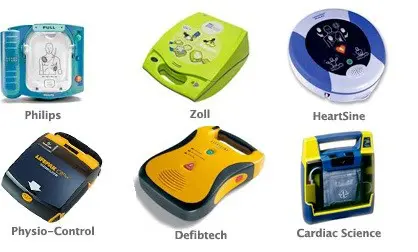
 by Troy Bowman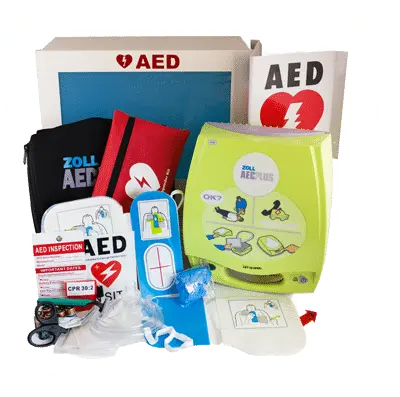
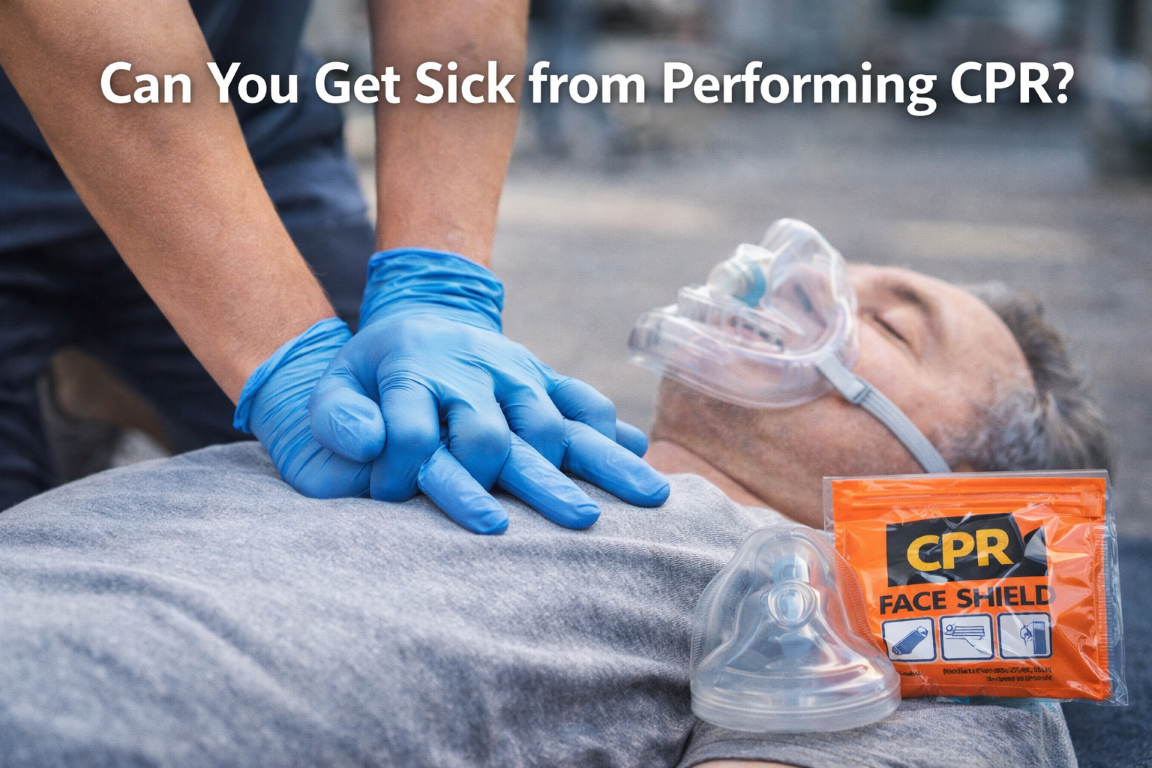
 by Nupur Agarwal
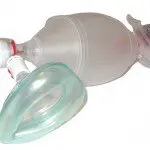 Bag valve mask is a mask that is placed over an unconscious person’s face that is attached to a bag. The bag is squeezed and the air in the bag is pushed into the patient’s lungs. The bag can also be hooked up to oxygen, making it the safest and most effective way to deliver breaths during CPR.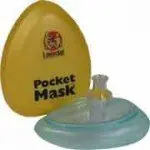
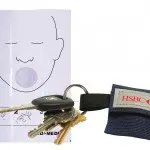 Keychain masks are the most portable CPR barrier devices available. They consist of a one way valve fixed into the center of a piece of plastic. The plastic will fit over the patient’s face; some masks will fit around the ears as well.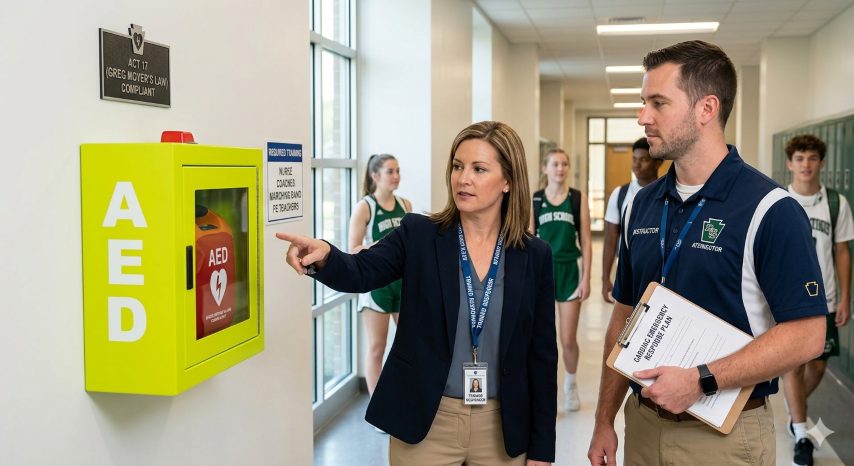
 by Donna Ryan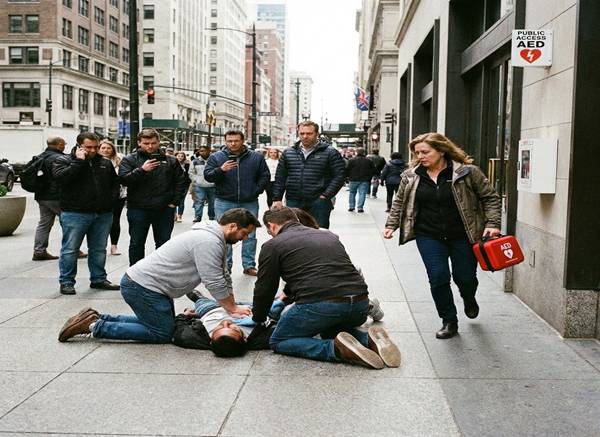
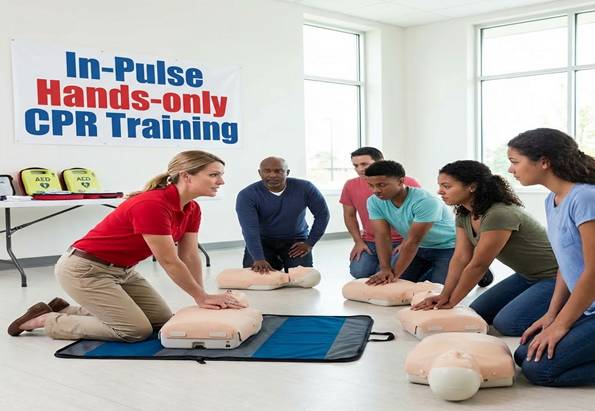
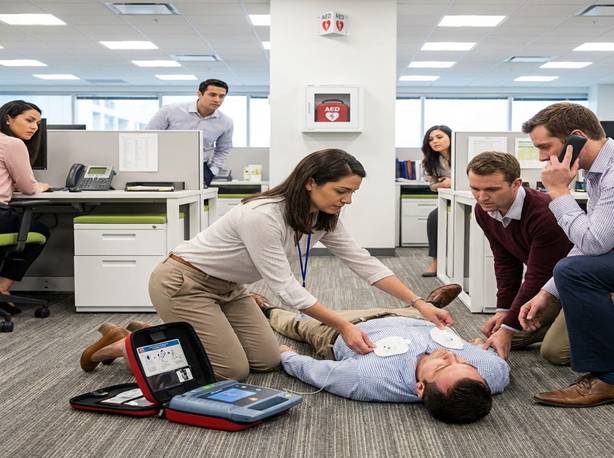
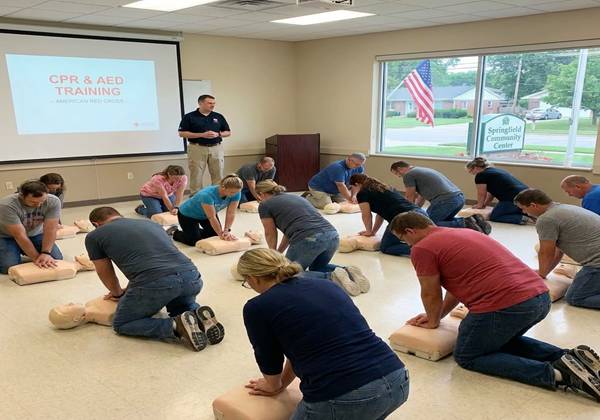
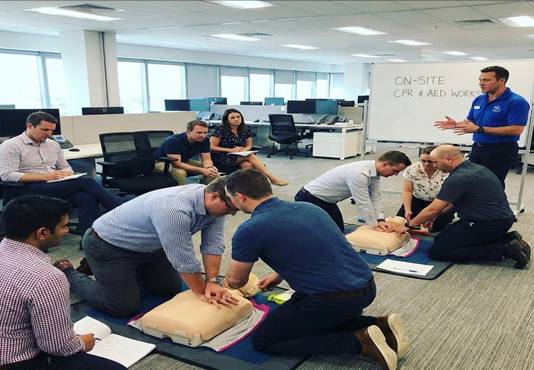
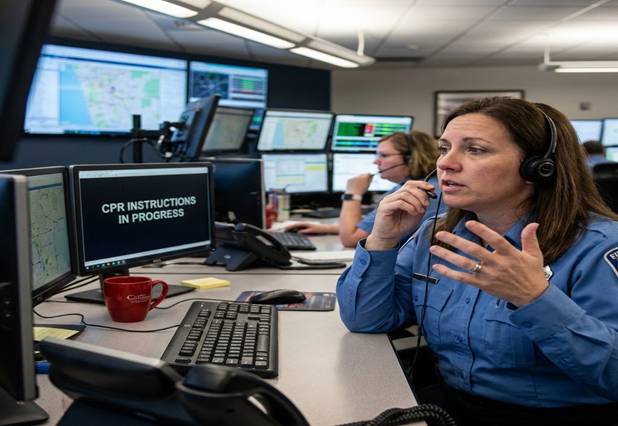
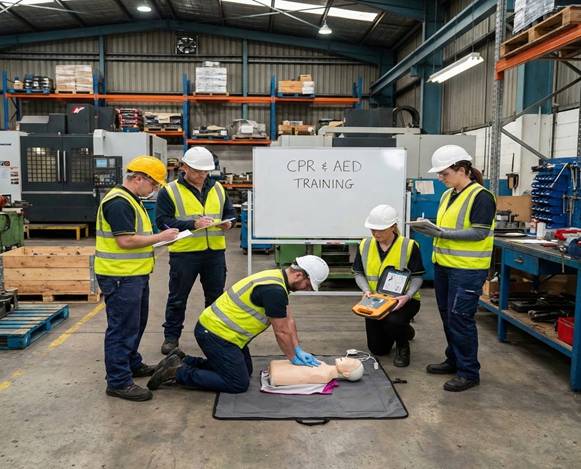
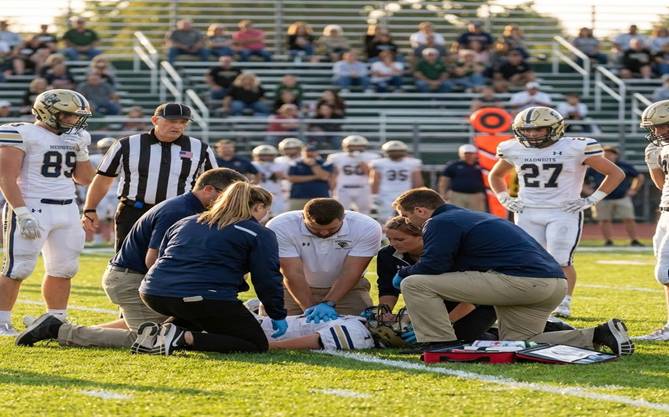
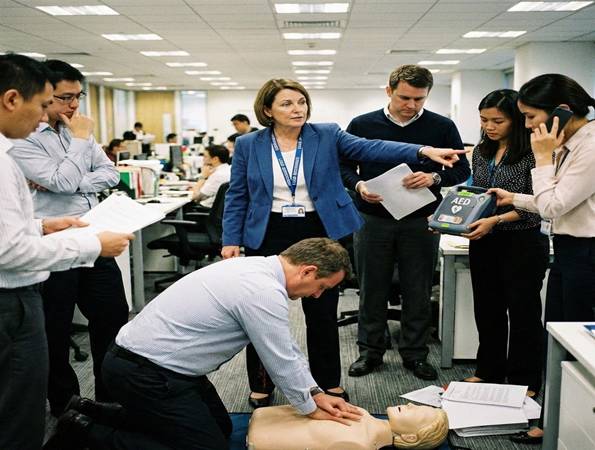
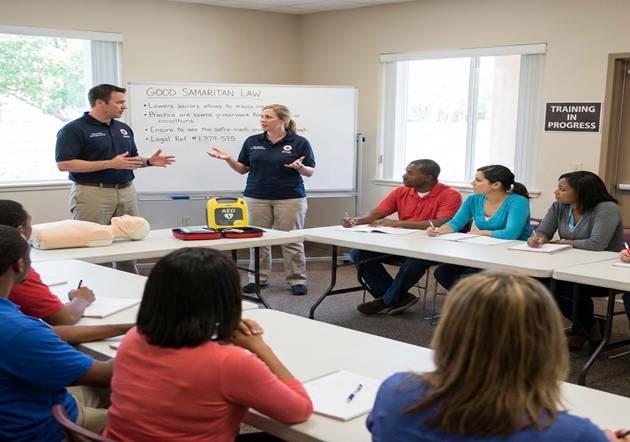
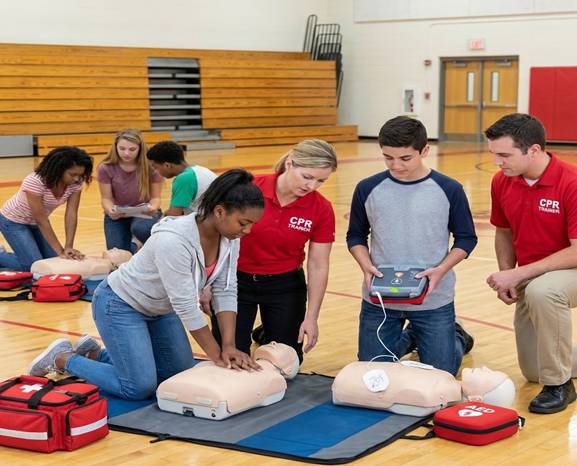
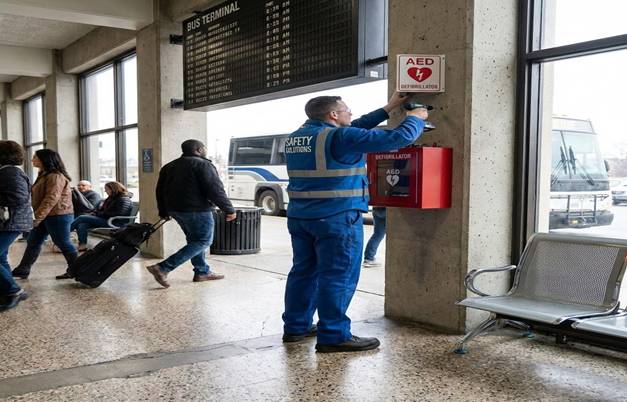
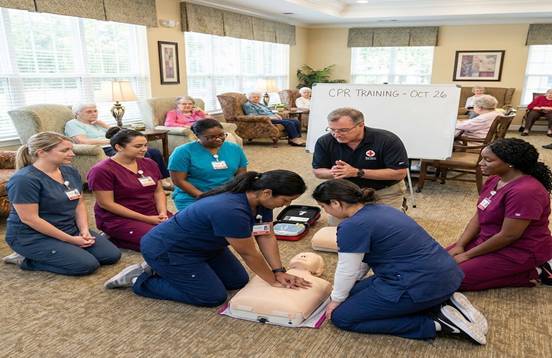
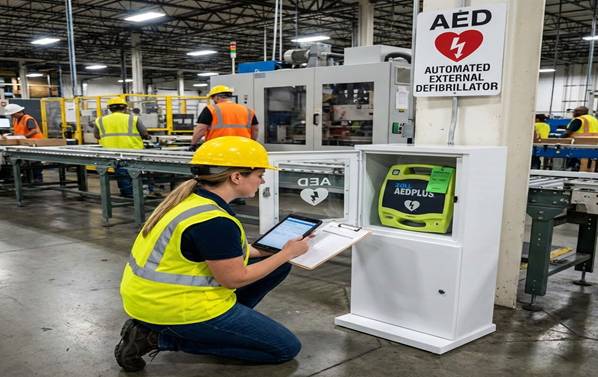
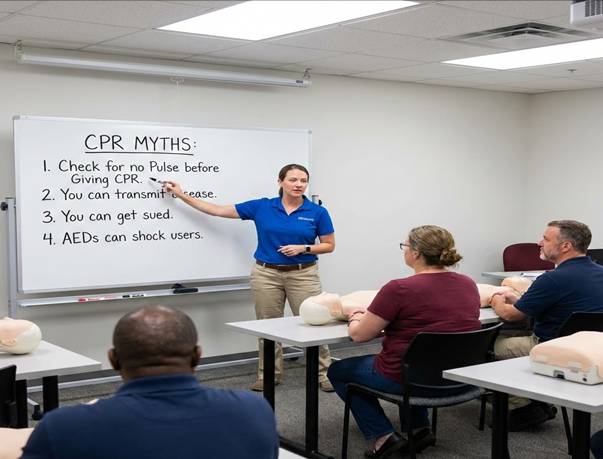

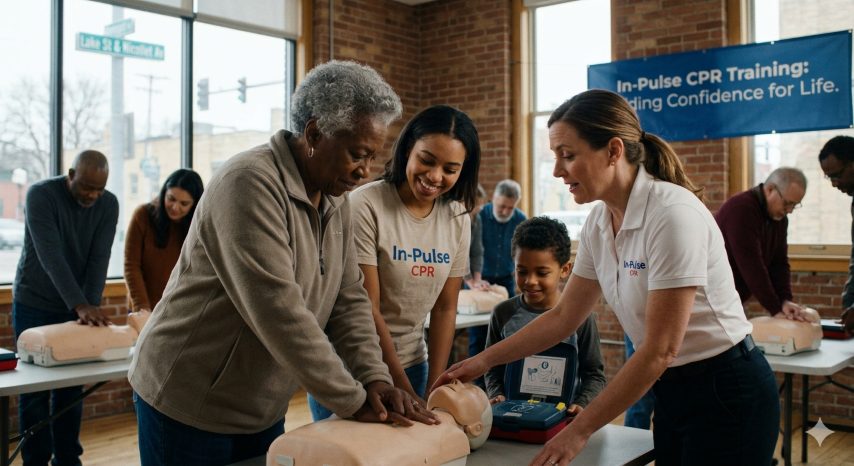
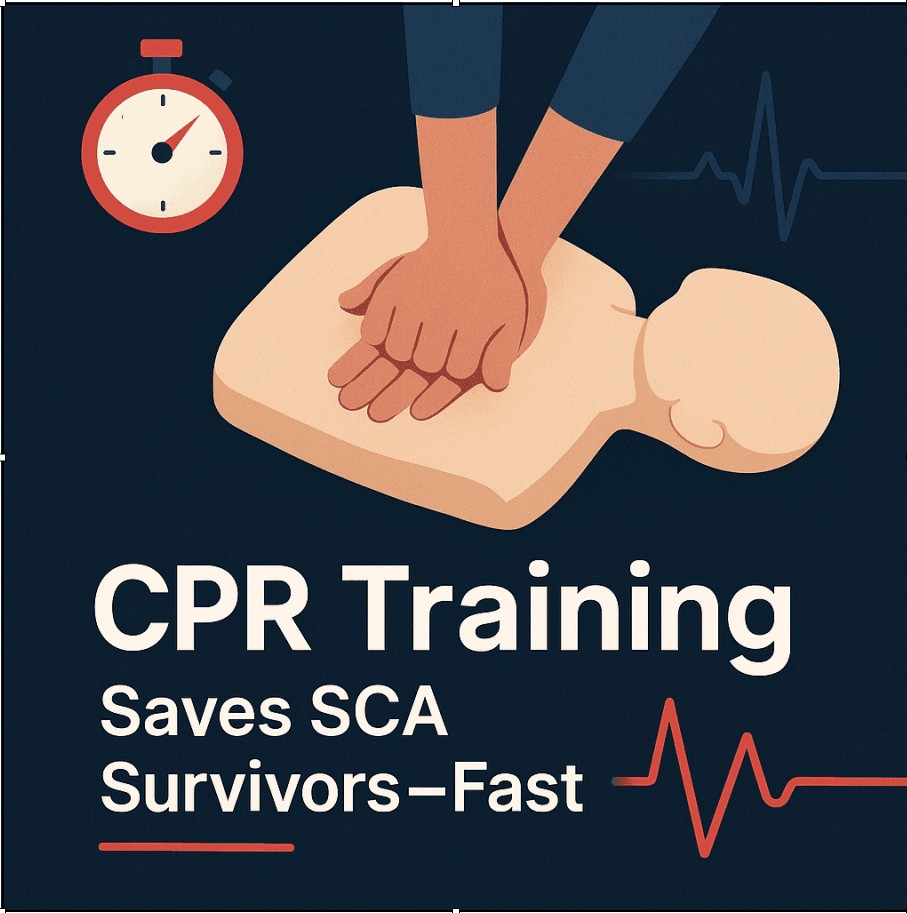
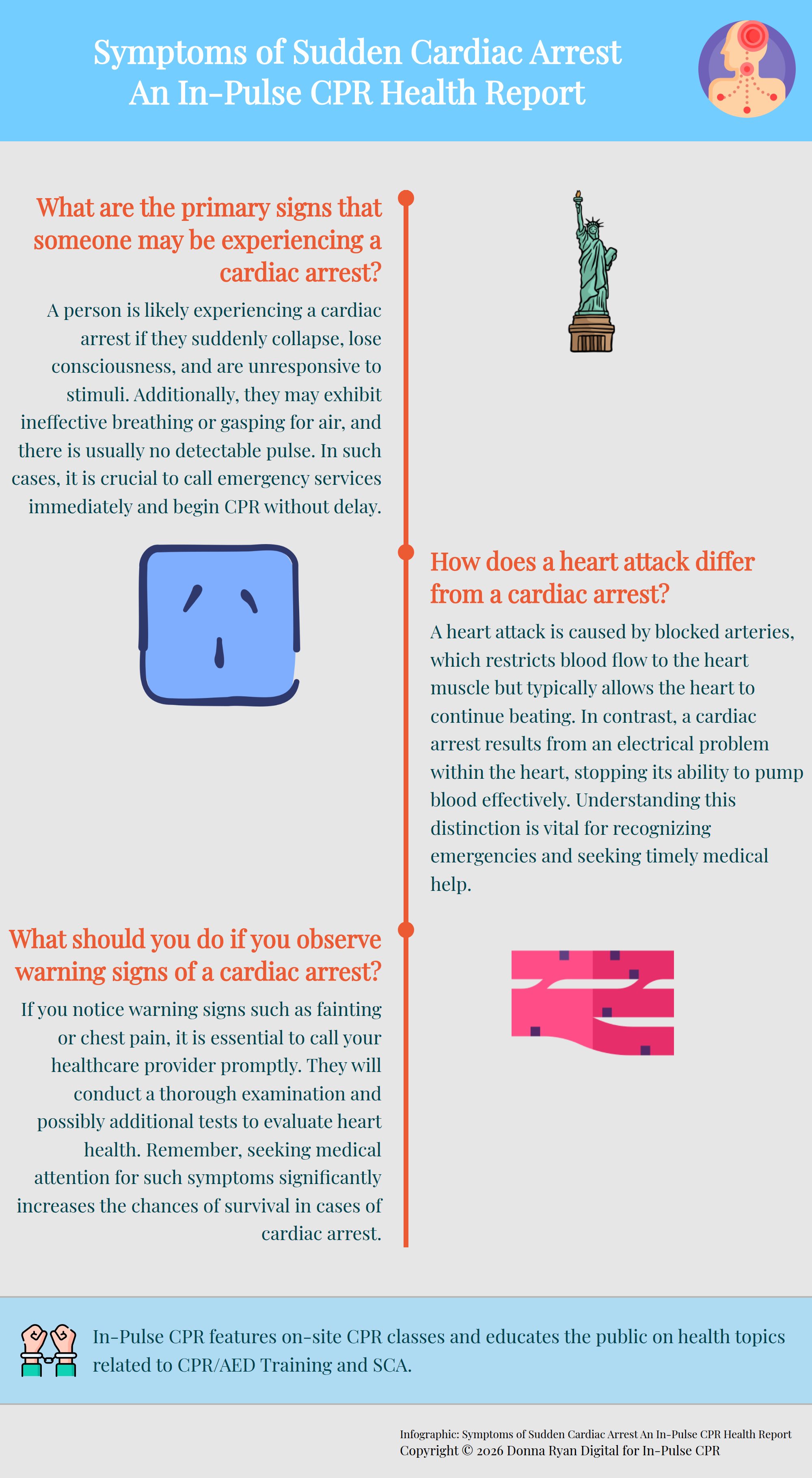
 by Benjamin Roussey