Updated: How do bloodborne pathogens spread?

Understanding Blood-Borne Pathogens

Blood-borne pathogens are infectious microorganisms present in blood and certain body fluids that can cause serious disease in humans. The most common include:

Hepatitis B (HBV)
Hepatitis C (HCV)
Human Immunodeficiency Virus (HIV)

These pathogens are transmitted when infected blood or certain body fluids enter another person’s body through broken skin, mucous membranes, or direct bloodstream exposure.

How Blood-Borne Pathogens Are Transmitted

Transmission does not occur through casual contact. Infection requires direct exposure to infected blood or high-risk body fluids.

The most common transmission routes include:

Needlestick or sharps injuries
Contact with mucous membranes of the eyes, nose, mouth, or genitals
Open cuts or broken skin
Sharing needles or injection equipment
Sexual contact involving blood exposure
Mother-to-child transmission during pregnancy or delivery

While fresh blood presents the highest risk, dried blood can still carry infectious viruses for several days. Hepatitis B, Hepatitis C, and HIV can survive on surfaces long enough to create real exposure risks if proper cleaning is not performed.


How Healthcare and Workplace Exposure Happens

Healthcare and first-responder environments present the highest risk, but exposure can also occur in schools, childcare, custodial services, and public facilities.

Common exposure pathways include:

Needlestick injuries and sharps punctures
Contact with blood or body fluids during patient care
Blood splashes to eyes, nose, or mouth
Handling contaminated equipment or waste
Improper disposal of sharps or biohazard materials
Cleaning blood or bodily fluid spills without protection

Secondary workers such as housekeeping staff, laundry workers, janitors, and waste handlers face risk when sharps or contaminated materials are improperly discarded.


Universal Precautions

The safest approach is to assume all blood and certain body fluids are potentially infectious. This is known as Universal Precautions.

Core Universal Precaution Principles

1. Continuous Training
Employers must provide ongoing training on blood-borne pathogens, exposure prevention, and response procedures. Workers should understand:

• What blood-borne pathogens are
• How exposure occurs
• How to protect themselves
• What to do after an exposure

2. Hand Hygiene
Hand washing is one of the most powerful infection-control tools.

• Wash hands after contact with blood or body fluids
• Use soap and water for at least 20 seconds
• Scrub fingernails and between fingers
• Dry hands completely before contact with others

Alcohol-based hand sanitizer can be used when soap and water are not available, but soap and water are required after visible contamination.


Personal Protective Equipment (PPE)

Employers must provide PPE when exposure risk exists. This includes:

• Gloves (latex, nitrile, or vinyl)
• Eye protection
• Face masks or shields
• Gowns or aprons

PPE should be worn whenever there is a risk of contact with:

• Blood
• Vomit
• Saliva (in certain procedures)
• Feces
• Open wounds

All PPE must be removed after use and hands washed immediately afterward.


Cleaning and Disinfecting Contaminated Areas

When blood or body fluids are present:

• Always wear gloves
• Use disposable towels to absorb fluid
• Clean with a bleach solution (1:10 to 1:100) or hospital-approved disinfectant
• Dispose of all cleaning materials in biohazard containers
• Wash hands thoroughly after cleaning

All reusable medical equipment must be washed, disinfected, and dried before reuse.


Sharps and Biohazard Waste

Sharps and contaminated materials must be handled with extreme care.

• Never recap needles
• Dispose of sharps in approved sharps containers
• Never place sharps in regular trash
• Never overfill sharps containers
• Treat all biological waste as infectious

Workers handling biohazard waste should wear puncture-resistant gloves and avoid direct contact with contents.


Resuscitation Equipment

To reduce risk during emergency breathing or CPR, workplaces should provide:

Disposable CPR masks or face shields
Bag-valve masks (BVMs) when appropriate

These devices protect rescuers from exposure while still allowing lifesaving care.


Why Blood-Borne Pathogen Training Matters

One exposure can change a life forever. Training reduces:

• Employee injury
• Legal and OSHA risk
• Medical costs
• Workplace infections

Blood-borne pathogen training empowers workers to protect themselves while continuing to provide care.

Updated 2026 In-Pulse CPR

Why Full Chest Recoil Is Critical for High-Quality CPR and Survival Outcomes

High-quality CPR remains the single most important factor in improving survival from sudden cardiac arrest. Modern American Heart Association (AHA) resuscitation guidelines emphasize that how CPR is performed matters just as much as whether CPR is started at all.

One of the most commonly overlooked components of effective CPR is complete chest recoil between compressions.

Failure to allow full recoil significantly reduces blood flow during resuscitation and can decrease a patient’s chance of survival.


What Defines High-Quality CPR According to Current AHA Guidelines?

Current American Heart Association CPR guidance identifies several essential elements of high-quality CPR:

  • Minimize interruptions in chest compressions

  • Compress at the correct rate (100–120 compressions per minute)

  • Achieve proper compression depth

  • Avoid excessive ventilation

  • Allow complete chest recoil after every compression

These components work together to maintain circulation to the brain and vital organs during cardiac arrest.

Among them, full recoil is often the most difficult skill for rescuers to consistently perform.


What Is Chest Recoil During CPR?

Chest recoil occurs when the rescuer completely releases pressure from the chest after each compression, allowing the chest to return to its natural position.

During CPR:

  • Compression pushes blood out of the heart.

  • Recoil allows blood to flow back into the heart.

Without full recoil, the heart cannot adequately refill between compressions.

Think of CPR as a mechanical pump cycle. Each push circulates blood forward, but each release prepares the heart for the next effective compression.

No refill means reduced circulation.


Why Leaning During CPR Is Dangerous

“Leaning” happens when rescuers maintain residual pressure on the chest instead of fully releasing between compressions.

Research studying CPR performance has shown that even small amounts of continuous pressure can:

  • Reduce coronary blood flow

  • Increase pressure inside the chest cavity

  • Decrease cardiac output

  • Lower survival probability

Modern CPR studies demonstrate that rescuers frequently lean unintentionally, especially during fatigue or prolonged resuscitation attempts.

Even trained providers can develop this habit without feedback or coaching.


The Physiology Behind Full Recoil

Complete chest recoil creates negative intrathoracic pressure. This pressure difference helps draw blood back into the heart’s chambers between compressions.

When recoil is incomplete:

  • Venous return decreases

  • Heart filling is reduced

  • Subsequent compressions move less blood

  • Brain and organ perfusion declines

In simple terms, effective CPR depends on both compression and release working together as a continuous circulation system.


CPR Quality Improves With Coaching and Feedback

Studies consistently show that CPR performance improves dramatically when rescuers receive real-time feedback.

Modern instructor-led CPR training now emphasizes:

  • Hands-on skills correction

  • Compression feedback devices

  • Visual and auditory coaching

  • Scenario-based repetition

Participants who initially struggle with recoil technique typically correct the issue quickly once proper instruction is provided.

This reinforces why hands-on CPR education remains essential for developing life-saving competence.


Why CPR Instructors Must Emphasize Full Recoil

For CPR instructors and training programs, emphasizing recoil is critical to closing the gap between CPR science and real-world performance.

Effective instruction should teach students to:

  • Push hard and fast

  • Fully release pressure after each compression

  • Avoid resting weight on the chest

  • Rotate rescuers to prevent fatigue

  • Maintain consistent compression quality

Proper technique ensures that CPR delivers maximum blood flow until advanced care arrives.


Hands-On Training Saves Lives

Research continues to confirm that survival rates improve when bystanders and healthcare providers deliver high-quality, guideline-compliant CPR.

Instructor-led CPR classes allow students to physically experience:

  • Correct compression depth

  • Proper body positioning

  • Realistic resistance from training manikins

  • Immediate correction of leaning habits

These experiences build confidence and muscle memory that cannot be replicated through observation alone.


The Bottom Line: Every Release Matters

CPR is not simply about pushing on the chest. It is about creating effective circulation.

Each compression moves blood forward.
Each full recoil allows the heart to refill.

When rescuers allow complete chest recoil, they maximize blood flow, improve organ perfusion, and give cardiac arrest victims the best possible chance of survival.

In CPR, saving a life depends not only on action but on precision.


SEO Boosting Keywords Naturally Included

This version strengthens ranking for:

  • high-quality CPR

  • chest recoil CPR

  • AHA CPR guidelines

  • CPR compression depth and rate

  • hands-on CPR training

  • CPR instructor training standards

  • cardiac arrest survival CPR

What does “full chest recoil” mean in CPR?
Full chest recoil means completely releasing pressure after each compression so the chest returns to its normal position, allowing the heart to refill with blood.

Why is full recoil important during CPR?
Complete recoil helps blood return to the heart between compressions. Without it, each compression moves less blood forward, reducing circulation to the brain and heart.

What is “leaning” during CPR?
Leaning is when a rescuer keeps some weight or pressure on the chest between compressions instead of fully releasing. It can reduce blood flow during CPR.

How do I avoid leaning between compressions?
Lock your elbows, keep shoulders over your hands, and actively “lift” pressure off the chest after each push. If you’re getting tired, switch rescuers about every 2 minutes if possible.

What is the correct CPR compression rate?
For adult CPR, the target compression rate is 100–120 compressions per minute.

How deep should chest compressions be for adults?
Adult compressions should be at least 2 inches (5 cm) and not more than 2.4 inches (6 cm).

Do I need to give rescue breaths, or is hands-only CPR okay?
For adult sudden cardiac arrest, hands-only CPR is recommended for untrained bystanders. Trained rescuers may provide breaths depending on training and situation.

When should an AED be used during CPR?
Use an AED as soon as it is available. Continue CPR while someone retrieves and powers on the AED, then follow the prompts.

CPR Class Online vs Classroom

Why In-Person CPR Training Still Matters in the Age of Online Learning

Online education has evolved dramatically over the past decade. Modern e-learning platforms now offer interactive modules, high-definition video instruction, and virtual simulations that make learning more accessible than ever before. From professional development courses to college degrees, online learning continues to expand opportunities for students and employees alike.

But when it comes to CPR certification and life-saving emergency skills, convenience alone should not be the deciding factor.

Some skills simply cannot be mastered through a screen.


Are Online CPR Certifications Accepted by Employers?

Many employers, healthcare organizations, schools, and workplace safety programs do not accept fully online CPR certifications.

Industries governed by OSHA guidelines, healthcare licensing standards, childcare regulations, and corporate safety policies typically require:

  • ✅ Hands-on CPR skills testing

  • ✅ Instructor-led evaluation

  • ✅ Live AED practice

  • ✅ Real-time feedback from certified instructors

Employers understand that CPR is not theoretical knowledge. It is a physical emergency response skill that must be performed correctly under pressure.

For this reason, American Heart Association (AHA) CPR classes and other instructor-led certifications remain the gold standard for workplace compliance.


CPR Is a Hands-On Skill, Not Just Information

Learning CPR online is similar to watching instructional videos for sports or skilled trades. You may understand the concept, but execution is another matter entirely.

Effective CPR requires learners to physically practice:

  • Correct compression depth and rate

  • Proper hand placement

  • Body positioning and posture

  • Rescue breathing technique

  • Infant and child CPR adjustments

  • AED operation during real scenarios

Without hands-on training, students cannot truly feel the resistance of chest compressions or develop muscle memory needed during a real cardiac emergency.

In a live CPR class, instructors immediately correct technique errors that an online course simply cannot detect.


Why Instructor Feedback Makes a Critical Difference

One of the biggest limitations of online CPR training is the lack of interaction.

You cannot pause an emergency situation to ask questions.

During an in-person CPR certification class, students benefit from:

  • Immediate coaching and correction

  • Scenario-based training exercises

  • Realistic emergency simulations

  • Personalized instruction

  • Confidence-building repetition

Small adjustments in compression depth or positioning can determine whether CPR is effective or ineffective. Instructor feedback ensures students leave class prepared, not guessing.


Real Equipment Builds Real Confidence

Hands-on CPR training uses professional equipment including:

  • Adult, child, and infant manikins

  • Training AED devices

  • Barrier devices and rescue masks

  • Team response simulations

Practicing with real equipment prepares students for the physical and emotional reality of responding to a cardiac arrest event.

This experience cannot be replicated through video instruction alone.


In-Person CPR Training Improves Emergency Readiness

Students who complete live CPR training consistently report higher confidence levels when responding to emergencies.

Beyond certification, in-person classes allow participants to:

  • Ask real-world safety questions

  • Learn from instructor experience

  • Understand workplace emergency planning

  • Explore First Aid or AED training options

  • Prepare for medical, workplace, or family emergencies

CPR training becomes more than a requirement. It becomes preparedness.


Online CPR vs In-Person CPR: Which Is Better?

Online CPR courses may provide introductory knowledge, but hands-on CPR certification delivers true competency.

When a life depends on immediate action, confidence and proper technique matter far more than convenience.

Choosing an instructor-led CPR class ensures you are trained to respond effectively when seconds count.


Choose Hands-On CPR Training You Can Trust

When it comes to CPR certification, there is no substitute for live instruction and practical experience.

In-person CPR classes provide:

✅ Employer-accepted certification
✅ Hands-on skills testing
✅ American Heart Association training options
✅ Immediate certification cards
✅ Real-world emergency preparedness

Because CPR is not just something you learn.
It’s something you perform when it matters most.

Frequently Asked Questions About CPR Certification

Is online CPR certification accepted by employers?
Many employers do not accept fully online CPR certification programs because they lack hands-on skills testing. Healthcare providers, schools, childcare centers, and OSHA-regulated workplaces typically require instructor-led CPR training with in-person evaluation.


What is the difference between online and in-person CPR certification?
Online CPR courses focus primarily on theory, while in-person CPR classes include hands-on practice using manikins and AED trainers. Instructor-led classes allow students to demonstrate proper compression depth, hand placement, and rescue techniques required for real emergencies.


Do I need hands-on CPR training for workplace compliance?
Yes. Most workplace safety standards require hands-on CPR skills verification. Instructor-led American Heart Association CPR classes meet employer and regulatory compliance requirements for workplace certification.


How long does an in-person CPR certification class take?
Most CPR and AED certification classes take between 2 and 4 hours depending on the course type, such as BLS for Healthcare Providers or Heartsaver CPR/AED for workplace training.


Is American Heart Association CPR certification better than online CPR courses?
American Heart Association (AHA) CPR certification is widely considered the industry standard because it includes instructor-led training and hands-on skills testing accepted by employers nationwide.


Can you really learn CPR effectively online?
Online courses can introduce CPR concepts, but effective CPR requires physical practice. Hands-on instruction builds muscle memory, confidence, and proper technique needed during real cardiac emergencies.


How often do you need to renew CPR certification?
Most CPR certifications are valid for two years. Renewal ensures rescuers stay current with updated emergency response guidelines and maintain hands-on proficiency.


Why is hands-on CPR training important?
Hands-on CPR training allows students to practice compression depth, rate, and positioning using realistic training equipment while receiving live instructor feedback, improving emergency response confidence.

Why First Aid Training Still Saves Lives in 2026

When most people think of lifesaving skills, CPR and AEDs come to mind. But in the real world, first aid is what gets used most often. From severe bleeding and allergic reactions to broken bones, burns, choking, and heat emergencies, first aid is what fills the critical gap before paramedics arrive.

In 2026, with faster lifestyles, aging populations, and more people working in high-risk environments, first aid training is more important than ever.

First Aid Is the First Line of Defense

Emergency medical services are incredibly fast, but they are not instant. The average ambulance response time in the U.S. is still 7 to 10 minutes or more. In those minutes, a lot can happen.

That is where trained bystanders make the difference.

First aid training teaches you how to:

• Stop life-threatening bleeding
• Recognize stroke and heart attack symptoms
• Treat burns, fractures, and head injuries
• Respond to allergic reactions and asthma attacks
• Stabilize a person until EMS arrives

These are not rare events. They happen every day in homes, schools, workplaces, churches, factories, gyms, and parking lots.

Bleeding Control Is Now a Core First Aid Skill

One of the biggest shifts in first aid training over the last decade has been the emphasis on bleeding control.

Severe bleeding is now recognized as one of the leading causes of preventable death after injury. The difference between survival and tragedy can be as simple as knowing how to apply:

• Direct pressure
• Tourniquets
• Wound packing

Modern first aid training gives everyday people the ability to stop hemorrhage before it becomes fatal. This is the same principle used by trauma medics and emergency responders.

First Aid and CPR Work Together

First aid and CPR are not separate skills. They are part of the same lifesaving system.

A person who collapses may need CPR.
A person who is bleeding may go into shock.
A choking victim may become unconscious and need CPR.
A drowning victim may need rescue breathing and CPR.

First aid training gives you the full picture so you know what to do first, what to do next, and how to avoid making things worse.

Why Workplaces Are Prioritizing First Aid Training

Across the U.S., businesses are increasingly requiring first aid training because:

• OSHA encourages first aid coverage in workplaces
• Insurance carriers offer discounts for trained staff
• Liability risk drops when employees are prepared
• Employee safety and morale improves

Manufacturing plants, warehouses, schools, daycares, churches, fitness centers, and offices all benefit when people on site know how to respond to injuries and medical emergencies.

First Aid for Families and Caregivers

Most emergencies do not happen at work. They happen at home.

Parents, grandparents, babysitters, foster parents, and caregivers are often the first ones on scene when a child falls, chokes, burns themselves, or has a medical crisis.

First aid training teaches you how to stay calm, act quickly, and give your loved one the best possible chance while waiting for help.

The Confidence Factor

One of the most powerful things first aid training gives you is confidence.

People freeze when they do not know what to do.
Trained people act.

Knowing how to control bleeding, treat injuries, and assess a situation changes panic into purpose. It turns bystanders into helpers.

Get Trained. Be Ready.

Emergencies do not wait for convenient moments. They happen during dinner, at work, on the road, at school, and in the middle of everyday life.

First aid training makes you part of the solution.

👉 In-Pulse CPR offers hands-on First Aid, CPR, and AED training across Minnesota, Florida, Pennsylvania, and Tennessee.

Whether you are protecting your family, your employees, or your community, the skills you learn today could save a life tomorrow.

Being prepared is not optional.
It is powerful.

CPR Certification for Capella University Nursing & Healthcare Students

Students enrolled in nursing and healthcare programs at Capella University are required to maintain current CPR certification as part of their clinical and program enrollment requirements. In-Pulse CPR proudly supports Capella students by offering American Heart Association–aligned CPR training that meets healthcare education standards.


Which CPR Certification Do Capella Students Need?

Capella University healthcare and nursing students are typically required to provide documentation of a current CPR certification for healthcare providers.

The accepted and nationally recognized standard is:

BLS for Healthcare Providers (American Heart Association–aligned)

This course is designed specifically for:

  • Nursing students
  • Allied health students
  • Healthcare professionals
  • Clinical program participants

When registering, Capella students should select the BLS for Healthcare Providers course to ensure compliance with program requirements.


Why Choose In-Pulse CPR?

In-Pulse CPR offers hands-on, in-person CPR training that prepares students for both clinical expectations and real-world emergencies.

Our classes feature:

  • Interactive, instructor-led training
  • Hands-on CPR and AED practice
  • Modern manikins and training equipment
  • Realistic healthcare scenarios
  • Same-day or prompt certification processing

Students leave class confident, prepared, and ready to submit documentation to their academic program.


Convenient CPR Classes for Capella Students

In-Pulse CPR offers CPR certification at multiple classroom locations, making it easy for Capella students to find a class that fits their schedule.

You can:

  • View upcoming BLS classes on our calendar
  • Register for public CPR classes
  • Request group training if multiple students are enrolling together

👉 View our CPR Class Calendar to find upcoming BLS for Healthcare Providers courses.


CPR Courses Offered

In-Pulse CPR offers a full range of certifications, including:

  • BLS for Healthcare Providers
    (Required for Capella nursing and healthcare students)
  • Heartsaver CPR & AED
  • Heartsaver First Aid
  • Combined CPR, AED, and First Aid courses
  • Additional safety and workplace training options

BLS courses are clearly labeled on our class calendar to help students register correctly.


Trusted by Healthcare Students and Programs

In-Pulse CPR training is widely accepted by nursing schools, healthcare programs, and clinical partners. Our BLS courses align with current resuscitation science and healthcare education expectations.

If you are a Capella University student preparing for clinical placement or program enrollment, our BLS course will help you meet CPR certification requirements with confidence.


Already Took a Class with In-Pulse CPR?

We value student feedback. If you’ve completed a CPR class with In-Pulse CPR, we invite you to share your experience and help other students choose the right training.

What TV Gets Wrong About CPR — And Why That Matters in Real Life

Television dramas and action shows make CPR look dramatic — often with characters suddenly collapsing in public and fictional bystanders jumping in with perfect timing. But recent research shows that TV depictions of CPR often stray far from what actually works in real emergencies — and those inaccuracies can shape how people think about CPR and how they act when lives are on the line.

1. Many Shows Still Use Outdated Techniques

Even though the American Heart Association (AHA) endorsed Hands-Only CPR in 2008 for lay rescuers (focused on 100-120 chest compressions per minute), scripted TV often shows outdated steps like dramatic pulse checks or mouth-to-mouth breaths that aren’t recommended for untrained responders in most adult sudden cardiac arrest cases.

Experts note that in many TV scenes, characters are shown “checking for a pulse first” — something CPR instructors today don’t teach for bystander CPR, because waiting to check a pulse can waste critical minutes when every second counts.

2. Hands-Only CPR Is Underrepresented on Screen

A study analyzing nearly 170 TV episodes that depict CPR found that less than 30% accurately show the recommended Hands-Only CPR sequence (call 911 → start compressions). In many scenes, compressions are mixed with breaths or unnecessary steps — which doesn’t reflect the real-world strategy advised by health experts.

This matters because Hands-Only CPR is simpler, easier to remember, and proven to double or triple a cardiac arrest victim’s chance of survival when started immediately.

3. TV Misleads About Who Needs CPR and Where It Happens

On screen, cardiac arrests and CPR scenes frequently involve younger characters in dramatic public settings. But real out-of-hospital cardiac arrests most often happen to older adults and usually at home — not in remote or highly visible places.

That skewed portrayal can make people think CPR is “someone else’s problem” — not something that might happen to a loved one in their living room or backyard where CPR skills are most often needed.

4. Who Receives CPR on TV Doesn’t Reflect Real Life

TV shows often focus on male characters or white adults receiving CPR, which mirrors some real-world disparities in bystander CPR rates but doesn’t fully reflect the diversity of people affected by cardiac arrest. In reality, women and Black or Latino adults are less likely to receive bystander CPR, but that’s not clearly or comprehensively depicted on screen.

5. Misleading TV Scenes Can Undermine Confidence

Research suggests that watching fictional CPR can influence how people think about the skill — sometimes more than classroom training or official guidelines. If viewers assume what they saw on TV is correct, they may hesitate or use incorrect steps when a real emergency happens.

That’s the opposite of what public health experts want. In the real world, doing simple Things Right — calling 911 immediately and starting chest compressions hard and fast — is what keeps oxygen flowing to the brain and vital organs until EMS arrives.


Why This Matters for You and Your Community

Watching CPR on TV might make it look familiar — but familiar isn’t always accurate. Outdated portrayals can lead people to:

• Delay starting compressions
• Expect rescue breaths when they’re unnecessary for adults
• Misjudge where and when cardiac arrest typically occurs
• Doubt their ability to act when it counts

In real life, simple, high-quality CPR saves lives — and accurate training gives you the confidence to act quickly and correctly when someone collapses.


The Takeaway

Don’t let TV shape your CPR knowledge.
Learn hands-on, evidence-based CPR — the kind taught by professionals — so you know what to do when it really matters.

👉 Sign up for In-Pulse CPR’s hands-on CPR + AED certification class and replace TV myths with real, lifesaving skills.

Understanding Heart Disease, Stroke Warning Signs, and Life-Saving Cardiac Care

A practical medical overview for patients, families, and workplace responders

https://images.openai.com/static-rsc-3/SZcV3ujB7OB5X_p9mpTeqs8-Z2E0ODMlychOFfYwKsWtPphm7NeaeCX9V991wnNqy0HPe4mzfiWGuSA6k28Q0sBH56yqY-Iu78USFVRQaIA?purpose=fullsize&v=1
https://images.openai.com/static-rsc-3/zmjTi5tyAD6c3Tl1JnlhUnafZ3uC43tyBhp5963wjNUxkgZ5PalujqQXS8Uj8sZJJBWBPsVFPb-DXZn4FUMLUP1ovGIazCtRdHIG8opwewQ?purpose=fullsize&v=1
https://images.openai.com/static-rsc-3/aNQaAS9P5-vISe-uJwiVtjLcazWVDVcEgkBTzn6nvHxrA8zI155yj3H3y6TL-dwd6eD44sSl2NkQ1miqndz9rw3tFs3k-Ur1GMCRQeE1wK8?purpose=fullsize&v=1

4

Cardiovascular disease remains the leading cause of death worldwide, yet many cardiac emergencies develop quietly over years before symptoms ever appear. Understanding how heart disease progresses, recognizing warning signs early, and knowing how modern treatments restore blood flow can dramatically improve survival and long-term outcomes.

This guide explains the medical foundations behind heart attacks, stroke warning events, cholesterol, cardiac procedures, and heart failure using clear clinical language appropriate for healthcare-aware readers and safety professionals alike.


What Happens During a Heart Attack?

A heart attack, medically known as a myocardial infarction, occurs when blood flow delivering oxygen to the heart muscle becomes severely reduced or completely blocked.

Most heart attacks begin long before symptoms appear.

Over time, coronary arteries gradually narrow due to atherosclerosis, a process where fat, cholesterol, calcium, and inflammatory cells accumulate along artery walls forming plaque. These plaques stiffen and narrow vessels, limiting oxygen delivery to heart tissue.

The critical moment occurs when:

  1. A plaque ruptures
  2. A blood clot rapidly forms
  3. The clot blocks coronary blood flow

Without oxygen, heart muscle cells begin to die within minutes.

Common Heart Attack Warning Signs

  • Chest pressure, squeezing, or heaviness
  • Pain spreading to arm, jaw, neck, or back
  • Shortness of breath
  • Nausea or cold sweating
  • Unexplained fatigue

Symptoms may be subtle, especially in women, older adults, and people with diabetes.

Immediate emergency activation by calling 9-1-1 remains the most important survival step.


TIA: The “Warning Stroke” You Should Never Ignore

A Transient Ischemic Attack (TIA) is often called a mini-stroke, but medically it should be viewed as a major warning event.

A TIA occurs when a clot temporarily blocks blood flow to part of the brain. Unlike a full stroke, the blockage resolves before permanent brain injury develops.

Symptoms appear suddenly and may include:

  • Facial drooping
  • Arm weakness
  • Speech difficulty
  • Vision changes
  • Loss of coordination

Even if symptoms disappear within minutes, there is no reliable way to distinguish a TIA from an evolving stroke outside a hospital setting.

A TIA significantly increases the risk of a major stroke within days or weeks. Emergency evaluation is essential every time.


Cholesterol and Artery Health

https://images.openai.com/static-rsc-3/ap0b83Awn1ieYD0h0Xr1NH-dn-EzColGdGHha5qHWP4mXpEBRPkS6Ds_MoJhJ5dFLHcn0tYPZ91GxXp9FqUD-PohTa-l0pgAEguVxZsbsH0?purpose=fullsize&v=1
https://images.openai.com/static-rsc-3/SZcV3ujB7OB5X_p9mpTeqs8-Z2E0ODMlychOFfYwKsWtPphm7NeaeCX9V991wnNqy0HPe4mzfiWGuSA6k28Q0sBH56yqY-Iu78USFVRQaIA?purpose=fullsize&v=1
https://images.openai.com/static-rsc-3/D8vG533OPRo5s6TKP83YC5Y1iRoRwKyKuQHqdjrUO_XVFuLt4X3-dlzEu1rHsLLV_pbo08F4ZAH2qR_4Hd3RmmcKhXYEdA9Wck484Pp2ZSM?purpose=fullsize&v=1

4

Cholesterol is a wax-like substance naturally produced by the body and necessary for hormone production and cellular function. Problems arise when cholesterol transport becomes unbalanced.

LDL Cholesterol (“Bad”)

Low-density lipoprotein carries cholesterol into artery walls where it contributes to plaque formation and narrowing.

HDL Cholesterol (“Good”)

High-density lipoprotein removes excess cholesterol from circulation and transports it back to the liver for disposal.

Higher LDL levels increase risk for:

  • Heart attack
  • Stroke
  • Peripheral artery disease

Healthy lifestyle choices and medical therapy aim to reduce LDL while improving HDL function.


Cardiac Catheterization: Looking Inside the Heart

When heart disease is suspected, physicians often perform cardiac catheterization, commonly called a cardiac cath.

During this minimally invasive procedure:

  • A thin catheter is inserted through an artery in the wrist or groin.
  • Contrast dye visible on X-ray is injected.
  • Real-time angiograms reveal narrowed or blocked coronary arteries.

Cardiac catheterization allows physicians to both diagnose and immediately treat blockages when necessary.


Coronary Stents and Restoring Blood Flow

If a significant blockage is identified, physicians may perform angioplasty and place a coronary stent.

A stent is a small wire mesh tube that:

  • Expands narrowed arteries
  • Maintains long-term vessel opening
  • Restores oxygen delivery to heart muscle
  • Reduces chest pain (angina)

Most stents remain permanently in place and dramatically reduce repeat artery closure when combined with prescribed medications.


Understanding Heart Failure

https://images.openai.com/static-rsc-3/h63S6uHg_T2OYxlib_8KPY20Q1Dj7ZLkWjAxgq4bRh89Ef5LhFue6h32ybmS4Envoh4olm4wvRyIRYjoOoJdLslWHkr_3f9W88NrL1jLk0M?purpose=fullsize&v=1
https://www.verywellhealth.com/thmb/HAMT0Feg4FDdHf9bgDZ6ggl-F9E%3D/1500x0/filters%3Ano_upscale%28%29%3Amax_bytes%28150000%29%3Astrip_icc%28%29/GettyImages-1277450943-a26b6a2e487d4ace982627bd9a815cac.jpg
https://images.openai.com/static-rsc-3/BnAa-X2ZJIXBpom0rAibMNl9SkMl08NYnwCFuQOFgz0vbolEInneAOL-qgszKQT6yuvKFdDl4GCBbrUs6DZkIUr4XHRuV6t7dDPJMzNyTCw?purpose=fullsize&v=1

4

Heart failure does not mean the heart has stopped working. Instead, it describes a condition where the heart cannot pump efficiently enough to meet the body’s needs.

As pumping ability declines, blood backs up and fluid accumulates throughout the body.

Common Signs and Symptoms

SymptomWhat Patients May NoticeWhy It Happens
Shortness of breathDifficulty breathing during activity or lying flatFluid buildup in lungs
Persistent coughWhite or pink mucusPulmonary congestion
Swelling (edema)Legs, ankles, abdomen swellingFluid retention
FatigueReduced staminaPoor tissue oxygen delivery
Loss of appetiteNausea or fullnessReduced digestive blood flow
ConfusionMemory or concentration changesReduced brain perfusion
Rapid heartbeatPalpitationsCompensation for weak pumping
Sudden weight changeRapid gain or lossFluid imbalance

Patients with heart failure are commonly advised to monitor:

  • Daily weight
  • Blood pressure
  • Heart rate
  • Fluid intake
  • Medication response

Sudden changes should always be reported to a healthcare provider.


Life After a Cardiac Event

Survival after heart attack or heart failure diagnosis has improved dramatically due to advances in emergency medicine, medications, and interventional cardiology.

Recovery focuses on:

  • Risk factor control
  • Medication adherence
  • Cardiac rehabilitation
  • Nutrition and activity changes
  • Ongoing symptom monitoring

The first 90 days following a heart attack are particularly important for preventing recurrence.


Prevention and Community Response Matter

Many cardiac emergencies occur outside hospitals, often at home or in workplaces. Early recognition and rapid response remain the strongest predictors of survival.

Key prevention strategies include:

  • Blood pressure management
  • Cholesterol control
  • Smoking cessation
  • Regular physical activity
  • Diabetes management
  • Stress reduction

Equally important is public readiness.

When cardiac arrest occurs, immediate CPR and AED use can double or triple survival rates. Communities trained in CPR create measurable improvements in survival outcomes.


Final Thoughts

Heart disease rarely begins suddenly. It develops silently through years of vascular change before revealing itself through heart attack, stroke warning events, or heart failure symptoms.

Understanding these conditions empowers individuals, families, and workplaces to recognize danger early, seek treatment quickly, and actively participate in prevention.

Knowledge, rapid action, and preparedness remain the strongest tools we possess against cardiovascular emergencies.

Why Updated CPR Guidelines Matter in 2026 (Practical Takeaways from AHA Guidance)

children in classroom

How the latest American Heart Association recommendations improve survival and what everyday responders should know

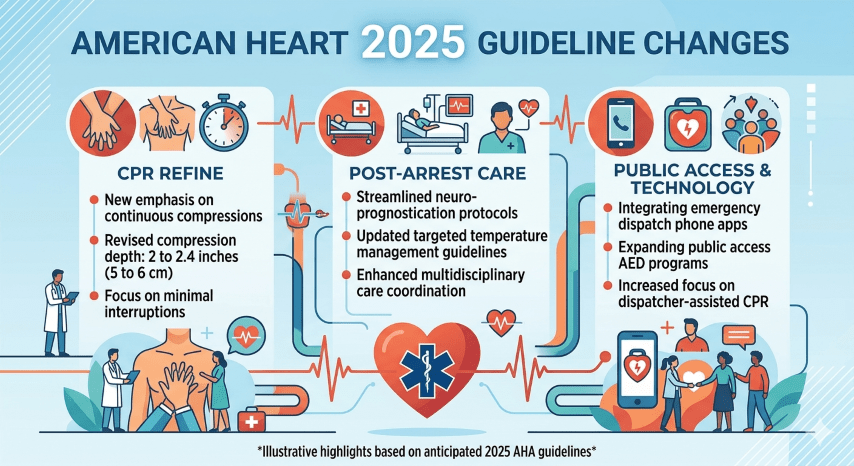
Every few years, the American Heart Association (AHA) updates its CPR and Emergency Cardiovascular Care (ECC) guidelines to reflect the latest research and best practices in lifesaving care. The 2025 AHA Guidelines for CPR and ECC — first full comprehensive revisions since 2020 — are now rolling out nationwide and will shape CPR training and practice in 2026 and beyond.

These changes matter not just for clinicians, but for CPR instructors, lay rescuers, caregivers, and community members everywhere — including your family, workplace, school, and neighborhood. Here’s what you need to know.


1. A Unified “Chain of Survival” for All Ages and Settings

The 2025 guidelines simplify how we think about responding to cardiac arrest by unifying the Chain of Survival — no separate chains for adults vs. children or in- vs. out-of-hospital events. This helps make training clearer and more consistent for everyone.

Takeaway for CPR Students: No matter where you are — at home, in a gym, school, workplace, or public venue — the steps are the same:

  1. Recognize the emergency and call 911
  2. Start high-quality CPR
  3. Use an AED if available
  4. Support advanced care
  5. Focus on post-resuscitation recovery

This unified approach reduces confusion and reinforces the importance of acting fast.


2. Better Guidance on Choking Intervention for All Ages

Choking is a common emergency that can quickly lead to cardiac arrest. The updated AHA guidelines now offer refined recommendations on how to help someone who’s choking safely and effectively — from infants to adults.

For example, adults and children now follow a pattern of five back blows followed by five abdominal thrusts, repeated until the object is expelled or the victim becomes unresponsive. Infant choking guidance uses back blows and chest thrusts using the heel of one hand.

Takeaway for CPR Students:
✔ Know the updated choking response sequence
✔ Practice both adult and pediatric techniques in your certification
✔ Quick, correct action can prevent a choking incident from escalating into cardiac arrest


3. Opioid Overdose Protocol Incorporated into CPR Guidance

For the first time, the AHA guidelines include protocols for suspected opioid overdose, recognizing it as a major cause of respiratory arrest that can rapidly lead to cardiac arrest.

This includes guidance on when to administer naloxone, a life-saving medication that can reverse opioid overdose effects in combination with CPR.

Takeaway for CPR Students:
✔ Learn to recognize signs of opioid overdose (e.g., slow or no breathing, gurgling sounds, small pupils)
✔ Know how naloxone works in tandem with CPR until EMS arrives
✔ Consider training that includes overdose response scenarios


4. Pediatric & Neonatal Updates Improve Young Patient Care

The updated AHA CPR guidelines also offer revised recommendations for pediatric and neonatal resuscitation, developed jointly with the American Academy of Pediatrics. These updates cover basic and advanced life support techniques for infants, children, and adolescents.

This includes age-specific algorithms that account for differences in anatomy, physiology, and common causes of arrest (e.g., respiratory issues in children vs. heart disease in adults).

Takeaway for CPR Students:
✔ Pediatric CPR training is essential — even for parents, teachers, and coaches
✔ Know pediatric compression depth and rhythm differences
✔ Be ready to switch between age-specific techniques confidently


5. Emphasis on Education & Community Engagement

The 2025 guidelines call for stronger community education and training programs to increase the number of trained responders — including teaching CPR to children 12 years and older and promoting public awareness.

This reflects a sobering statistic: only around 40–45% of people experiencing out-of-hospital cardiac arrest receive bystander CPR before EMS arrives. More training and awareness can significantly improve that number.

Takeaway for CPR Advocates:
✔ Advocate for CPR in schools, workplaces, and community centers
✔ Encourage friends and family to get certified
✔ Host or support public CPR/AED events


Why This Matters for You — And Your Community

The purpose of updated CPR guidelines isn’t just academic. Each revision is backed by the latest scientific evidence and real-world emergency data to improve survival and neurologic outcomes after cardiac arrest.

Here’s what that means in practical terms:

Quicker recognition and better response in emergencies
Improved CPR technique effectiveness
Expanded skill sets for choking, overdose, and pediatric emergencies
Unified, easier-to-remember procedures that empower bystanders


Make Your Training Count — Get Certified With In-Pulse CPR

Updated guidelines matter because they reflect what actually works in real cardiac emergencies. But knowing about guidelines isn’t enough — you need hands-on training to translate them into action.

👉 Sign up for an In-Pulse CPR + AED course today — stay current with the latest AHA recommendations and build the confidence to act when it matters most.

Because in cardiac emergencies, seconds count and preparedness saves lives. 💓

Survival Guide on Venomous Snakes in Florida

As Florida transitions from winter into spring, warming temperatures draw more people outdoors to enjoy trails, waterways, and wooded areas. Humans, however, are not the only ones responding to the seasonal change. As reptiles emerge from cooler winter conditions, they become more active while regulating their body temperature, increasing the likelihood of encounters between people and snakes.

Understanding which snakes are venomous, how to avoid them, and what to do in the event of a bite can significantly reduce risk and improve outcomes.


Venomous Snakes Found in Florida

Florida is home to four native venomous snake species. While encounters are uncommon, bites can be serious and require immediate medical attention.

https://images.openai.com/static-rsc-3/1otOiqNYvmjhzdnYVpdSjmgtlbqydzVL6_WdzSJHyXVPVIaqMRbFQ_MySpW0YD5i_fh6Ba6MdF6ldBwtgHwmlvzBPlWBqy7sNEF69G0hT8I?purpose=fullsize&v=1
https://images.openai.com/static-rsc-3/0XuiEm2s4zW7ynSzPyjQ7Qygtx7nr8OpROdMPF1IqqfdgRBI1PEWD8SbG925f0cJrWsCeddtmblOB8dsawNVHgUq0wfxDkqXj4wcH0blT5U?purpose=fullsize&v=1
https://images.openai.com/static-rsc-3/zs52-fZM0jQ8L9e3LMC9Iie2DbDa7BPHb2zaXHcUwjcn6v_7o3-BnEx6z9jtsr5kvrynYKIaraoc3PWJ8v_Z0oYcSqkNrf15RC9RU_lkax4?purpose=fullsize&v=1

4

The four venomous species are:

  • Dusky pygmy rattlesnake
  • Eastern coral snake
  • Florida cottonmouth (water moccasin)
  • Eastern diamondback rattlesnake

The severity of a bite depends on multiple factors, including the snake species, the amount of venom injected, the location of the bite, and the size and health of the victim. While potentially life-threatening, most snake bites in Florida are survivable with prompt medical care.


How to Reduce Your Risk of a Snake Bite

Prevention is always the best strategy. When hiking, fishing, camping, or walking near dense vegetation or water, remain aware of your surroundings.

Key prevention tips include:

  • Watch where you step and place your hands, especially in tall grass, leaf litter, or rocky areas
  • Avoid reaching into brush, logs, or holes where snakes may be hiding
  • Remember that snakes rely on camouflage and often remain motionless when threatened
  • Do not assume a rattlesnake will always rattle before striking
  • Wear tall, thick boots and long pants when outdoors in snake-prone areas

Snakes usually bite defensively when startled or stepped on. Giving them space greatly reduces the risk of an encounter turning dangerous.


What to Do If a Venomous Snake Bite Occurs

If a snake bite does happen, stay calm and act quickly. Panic increases heart rate and can accelerate venom spread.

Immediate First Aid Steps

  • Move the person away from the snake to prevent additional bites
  • Call 911 immediately or seek emergency medical help
  • Limit movement of the affected person to slow venom circulation
  • Immobilize the bitten limb using a sling or splint if possible
  • Apply a firm pressure bandage if trained to do so
  • Remove tight clothing, jewelry, or watches before swelling occurs
  • Keep the bite at or slightly below heart level

If possible, note the snake’s color and pattern, but do not attempt to capture or kill it. Medical professionals do not need the snake to provide treatment.


What NOT to Do

Some long-standing myths about snakebite treatment are dangerous and ineffective.

Do NOT:

  • Cut the wound or attempt to suck out venom
  • Apply a tourniquet
  • Use ice or electric shock
  • Give alcohol or caffeine

These actions can worsen tissue damage and delay proper treatment.


Stay Calm: Snake Bites Are Rarely Fatal

While venomous snake bites are serious, fatalities are uncommon when prompt medical care is received. Remaining calm, limiting movement, and getting professional help as quickly as possible are the most important actions you can take.

Education, awareness, and preparation dramatically reduce risk. With basic precautions and knowledge, Florida’s outdoors can be enjoyed safely year-round.


🐍 Snake Bite First Aid: Quick Reference

DO

  • Move away from the snake immediately to avoid additional bites
  • Call 911 or seek emergency medical help right away
  • Keep the person calm and still to slow venom circulation
  • Immobilize the bitten limb with a sling or splint if possible
  • Remove rings, watches, or tight clothing before swelling starts
  • Keep the bite at heart level or slightly below
  • Note the snake’s color and pattern if it can be done safely

DON’T

  • Do NOT cut the wound
  • Do NOT try to suck out the venom
  • Do NOT apply a tourniquet
  • Do NOT use ice, electric shock, or home remedies
  • Do NOT give alcohol or caffeine
  • Do NOT attempt to capture or kill the snake

⚠️ Remember

Most venomous snake bites are not fatal when treated promptly.
Stay calm, limit movement, and get medical help immediately.

Rewrite by Axe Vale 2026

The American Heart Association: A brief history of a great institution. 2026 Update

The American Heart Association was founded in 1915 in New York City at a time when heart disease was poorly understood and often considered untreatable. Originally called the Association for the Prevention and Relief of Heart Disease, it was established by physicians and social workers committed to expanding knowledge, improving care, and advancing research in cardiovascular health.

In its earliest years, the organization focused on studying heart disease and disseminating medical knowledge to clinicians to challenge prevailing notions that cardiac patients were beyond help.


From Local Effort to National Influence

As interest in heart disease research spread, similar cardiac health organizations formed in other cities. It became clear that a national organization was necessary to unify efforts, share insights, and coordinate research across regions. This realization led to the development of a national association that could accelerate progress in cardiovascular science.


Extending Reach Beyond Medicine

By the late 1930s, the AHA began extending its activities into public health. Early community programs, such as a widespread campaign against rheumatic fever supported by donations from civic organizations like the American Legion, helped the Association engage with the public and broaden its mission.

Public support and philanthropic involvement grew, enabling AHA to expand both its educational outreach and research funding.


Organizational Growth and Innovation

A major turning point came in 1948, when the AHA reorganized and brought in non-medical volunteers with expertise in business, communications, education, and fundraising. This strategic shift enabled rapid growth, enhanced influence, and a broader public presence.

The Association’s role expanded dramatically from that point forward, supporting major research initiatives that shaped cardiovascular care and prevention for decades.


From Research to Practice

Between the 1950s and 1980s, the AHA emerged as a major force in cardiovascular science and education. It began translating research into clinical guidelines and spreading evidence-based recommendations not only to clinicians but also to the public.

In the mid-1990s, the pace of scientific discovery accelerated, and the AHA increasingly focused on rapidly moving research findings from laboratories and clinical trials into practice. Establishing clinical guidelines and public education campaigns became central to its mission.


Today’s Role in Public Health

Today, the American Heart Association is globally recognized as a leading authority on heart health, stroke prevention, and emergency cardiovascular care. It:

  • Funds and supports cutting-edge cardiovascular research
  • Develops evidence-based clinical guidelines for clinicians and emergency responders
  • Educates healthcare professionals and the public
  • Advocates for public health policy
  • Provides rescue education (like CPR and ECC) to millions

Through digital media, publications, community programs, and collaborations with healthcare organizations, the AHA remains at the forefront of improving heart and brain health worldwide.


Latest News and Recent Accomplishments

In 2025 and into early 2026, the American Heart Association has continued to expand its impact on research, equity initiatives, and public health:

  • At the 2025 Scientific Sessions, global experts gathered to share cutting-edge cardiovascular research, including a record number of scientific abstracts and late-breaking clinical insights.
  • The AHA updated its 2025 CPR and Emergency Cardiovascular Care Guidelines, with new recommendations on choking response, opioid overdose interventions, and unified chains of survival.
  • Major research highlights released for 2025 identified new ways to prevent and manage high blood pressure, stroke, heart failure, and dangerous blood clots—strengthening evidence-based care strategies.
  • The signature Go Red for Women® campaign continued its mission to improve women’s heart health, with leadership returning to spearhead awareness and education efforts into 2026.
  • The AHA’s Rural Health Care Outcomes Accelerator was extended to support rural hospitals and clinicians through 2028, addressing disparities in cardiovascular care access and outcomes.

These developments reflect the AHA’s ongoing commitment to bridging research, clinical care, community education, and health equity.

Updated: Heart Health is all about the Choices We Make

Cardiovascular disease remains one of the leading health challenges in modern society. Long hours of sitting, screen-based work, and low daily movement have quietly reshaped how our bodies function. But improving your health does not require extreme workouts or a complete lifestyle overhaul. Small, consistent changes can significantly increase your energy, improve your heart health, and reduce your risk of chronic disease. Once you begin to feel the difference, healthy habits tend to build on themselves. Momentum is powerful.

Physical activity is one of the most effective ways to protect your heart and overall health. You do not need to live in the gym to benefit. Everyday choices create meaningful impact. Taking the stairs instead of the elevator, walking a few extra blocks, or standing and stretching during the day all shift your body from passive to active. When you start noticing how often convenience replaces movement, it becomes easier to reclaim those moments for your health.

Lunch breaks are a perfect example. Instead of driving a few blocks to pick up food, walking provides both exercise and a mental reset. Public health guidelines recommend about 150 minutes of moderate activity per week, but that number becomes manageable when broken into short sessions. Two or three ten-minute walks per day can meet the goal and fit easily into a busy schedule.

Nutrition is the other half of the equation. Many people treat eating as something to squeeze between meetings rather than a chance to fuel their bodies. Meal planning can change that. Preparing food in advance makes healthy eating easier and more consistent. Choose foods you actually enjoy. Healthy does not have to mean bland. A simple protein like chicken can be used in salads, sandwiches, wraps, or seasoned in different ways throughout the week. Variety keeps healthy eating sustainable.

Packing your own lunch and snacks gives you control over both quality and portions. It also creates opportunities to step outside during the workday. Even a short walk in a park or a few minutes in fresh air can reset your focus and reduce stress. Over time, as processed foods fade from your routine, cravings shift. What once felt like a sacrifice becomes a preference.

The goal is not perfection. It is consistency.
Small changes repeated daily lead to better energy, stronger hearts, and healthier lives.
And once you experience those benefits, maintaining them becomes easier than you ever expected.

Rasmussen College students are welcome to our CPR Training Classes

At In-Pulse CPR, we are committed to delivering high-quality CPR education for nursing, dental, and healthcare students. Our courses use current instructional technology and modern training equipment to create an interactive, hands-on learning environment that supports skill retention and clinical confidence.

Each student leaves class prepared to perform CPR effectively in both academic and real-world healthcare settings.


Rasmussen Partnership with us

Rasmussen University partners with In-Pulse CPR to provide American Heart Association–aligned CPR certification at select campus and community locations. Classes are open to Rasmussen students, faculty, healthcare students, and the general public, offering convenient access to hands-on CPR training and two-year certification.  See partnership


Rasmussen University CPR Class Locations

We offer CPR certification at over 12 Rasmussen University campus locations across Minnesota and Florida, in addition to many other convenient local training sites.

Students may attend public classes that align with their campus or nearby clinical placement sites.


Faculty & College Staff Discounts

College faculty and staff are eligible for special discounted admission to our CPR classes.
Faculty ID is required at registration.

For details, please contact our office directly at 813-343-4024.


Accepted by Nursing & Dental Programs

A large number of nursing and dental students choose In-Pulse CPR instead of college-hosted courses due to flexible scheduling, hands-on instruction, and rapid certification processing.

Please be assured:

  • Our CPR training is widely accepted by nursing and dental programs throughout the region

  • Courses align with healthcare program CPR requirements

  • Students should register for BLS for Healthcare Providers to meet program standards


CPR Certifications Offered

In-Pulse CPR offers the following certifications:

  • BLS for Healthcare Providers
    (Required for nursing, dental, and healthcare students)

  • Heartsaver CPR

  • Heartsaver AED

  • Heartsaver First Aid

  • Nursing Student CPR Courses

  • Additional safety and workplace training options


Share Your Experience

If you have recently attended a CPR class with In-Pulse CPR, we welcome your feedback. Student reviews help others choose the right training and support continuous improvement.

Official AHA CPR & BLS Classes Across Tampa, Orlando & Southwest Florida

Now Offering Expanded AHA BLS & CPR Training Across Florida

As healthcare and workplace safety requirements continue to evolve in 2026, In-Pulse CPR is proud to announce the expansion of our American Heart Association (AHA) training network across Florida. We’ve added more classroom locations and increased course frequency to better serve healthcare professionals, schools, childcare providers, and corporate teams throughout the state.

All courses are taught 100% in-person by experienced instructors and follow official AHA curriculum guidelines, with streamlined digital eCard issuance.


The In-Pulse Advantage:

  • 100% In-Person & Hands-On: No online pre-work required.
  • Fast AHA eCard Issuance: Most students receive certification the same day or next business day.
  • Efficient 3–3.5 Hour Format: Complete certification in one session.
  • Official AHA Curriculum: Accepted by employers, healthcare systems, and licensing boards statewide.

Understanding Florida Law for CPR, First Aid & AED Compliance for: Public Schools | OSHA | Childcare / Daycare

In-Pulse CPR Florida

In-Pulse CPR is an American Heart Association (AHA)–authorized training provider offering in-person CPR, BLS, AED, and First Aid certification across Florida with experienced local instructors and fast AHA eCard issuance.


Florida CPR Class Locations

Tampa Bay Area
TampaBrandonLargoPalm HarborOdessaWesley ChapelNew Port RicheyPort RicheyLand O LakesZephyrhills

Pinellas County
St. PetersburgClearwaterDunedinOldsmar

Hernando, Pasco & Citrus County
Spring HillCrystal RiverCitrus ParkDade City

Central Florida, Lake County & Polk County
LakelandOcalaLake WalesClermontOrlandoAltamonte Springs

Gulf Coast & Southwest Florida
BradentonFort Myers

Florida CPR & First Aid Courses

BLS for Healthcare Providers • Heartsaver CPR & AED • Pediatric CPR & First Aid • Bloodborne Pathogens • HeartCode® BLS Skills Sessions • Childcare CPR & First Aid • Nursing & Dental CPR • Workplace & OSHA-Compliant Training


Who We Train

Healthcare professionals • Dental and medical offices • Childcare and schools • Manufacturing and warehouses • Gyms and athletic programs • Churches, camps, and youth organizations • Small businesses and corporate teams


Register for a Florida CPR Class

With convenient locations across Tampa Bay, Central Florida, and Southwest Florida, In-Pulse CPR makes it easy to find a nearby AHA-certified class that fits your schedule.

Browse your local city page above to view upcoming class dates and secure your spot.