
Why do we need CPR training?

Introduction

Heart disease remains the leading cause of death in the United States, claiming more than 600,000 lives each year. What makes this even more urgent is where cardiac arrests happen. More than half occur outside of hospitals, often in homes, workplaces, or public spaces. In these moments, survival doesn’t begin with doctors or equipment—it begins with the people nearby.

That’s where CPR training becomes essential.


❤️ The Power to Save a Life

CPR is one of the few skills where:

  • You can learn it in hours
  • Use it anywhere
  • And change the outcome instantly

Why CPR training matters:

  • You become the first responder
    Emergency crews aren’t immediate. You are.
  • Most victims are people you know
    Cardiac arrests commonly happen at home.
  • Early CPR can double or triple survival rates
  • You keep oxygen flowing to the brain
    Preventing permanent brain injury

The Critical First Minutes

When cardiac arrest occurs, the heart stops pumping blood to the brain and vital organs. Within just 4 to 6 minutes, brain damage can begin. Emergency responders are highly trained, but even the fastest response times usually take several minutes to arrive.

CPR bridges that gap.

By keeping blood and oxygen circulating, CPR helps preserve brain function and organ health until advanced care takes over. When performed quickly, it can double or even triple a person’s chance of survival. In simple terms, CPR doesn’t just help—it buys time when time is running out.


A Chance to Save Someone Close to You

Many people imagine emergencies happening in public places, but the reality is much closer to home. Most cardiac arrests occur in residential settings, often involving a family member, friend, or coworker.

CPR training prepares you for these real-life situations. It gives you the ability to step in during a critical moment and provide immediate care while waiting for emergency responders. In that sense, CPR is not just a skill—it’s a way to protect the people around you.


⏱️ The Reality of Cardiac Arrest (Time vs Survival)

When the heart stops, the clock starts ticking fast.

y=10x+100y = -10x + 100y=−10x+100-10-8-6-4-2246810204060801004.22, 57.75

How to read this:

  • Each minute without CPR reduces survival by ~10%
  • After 4–6 minutes, brain damage begins
  • EMS response times often fall between 6–10 minutes

👉 CPR doesn’t “fix” the heart
👉 CPR buys time until advanced care arrives


Overcoming Hesitation

One of the biggest reasons people don’t perform CPR is uncertainty. They worry about doing it incorrectly, or they freeze in the moment because they’ve never practiced the skill.

Training changes that.

A CPR course provides hands-on experience and clear guidance, helping turn hesitation into action. Instead of feeling helpless, you gain confidence and a simple, repeatable process to follow. That confidence can make all the difference when seconds matter.


Simple to Learn, Powerful to Use

CPR training is designed to be accessible to everyone. It does not require a medical background, and most courses can be completed in just a few hours. The techniques are straightforward, and once learned, they tend to stay with you.

Beyond the certification itself, CPR training builds awareness, preparedness, and the ability to stay calm under pressure—skills that extend far beyond a single emergency.


Why CPR Training Matters

At its core, CPR is about maintaining life until more advanced care can take over. It helps keep oxygen flowing to the brain, reduces the risk of permanent damage, and increases the likelihood of survival.

Without CPR, survival chances decrease rapidly with each passing minute. With CPR, you create a window of opportunity—a critical period where a life can still be saved.

🧬 What CPR Actually Does

CPR keeps the body alive long enough for advanced care.

It helps:

  • Maintain blood flow to the brain
  • Deliver oxygen to vital organs
  • Delay irreversible damage
  • Increase chances of full recovery

Without it, survival becomes unlikely within minutes.


A few real life CPR stories of saving someone’s life
Carter Zahn Ralph Harms 10 yo Samantha


Final Thought

CPR training is more than a requirement or a credential. It is a practical life skill that prepares you for one of the most serious emergencies a person can face.

You may never need to use it. But if you do, having that training means you won’t be standing by—you’ll be ready to act.
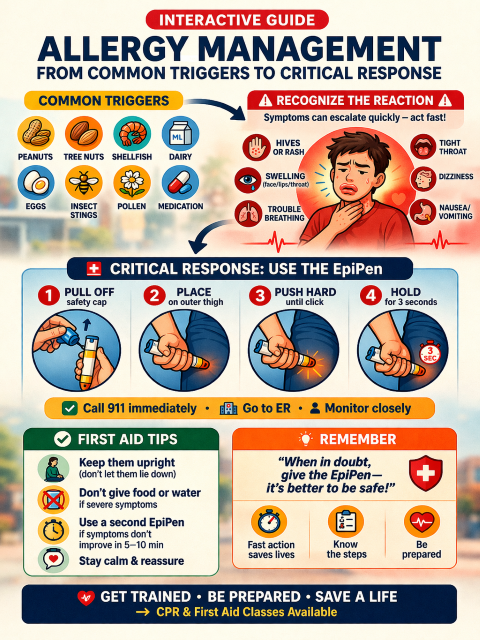
Allergy Management: From Common Triggers to Critical Response (Interactive Guide)

Understanding the Biological Trigger

To respond effectively, it is helpful to understand what is happening inside the body. An allergic reaction is essentially a case of “mistaken identity” by the immune system.

When an allergen enters the body, the immune system produces Immunoglobulin E (IgE) antibodies. these antibodies travel to cells that release chemicals, most notably histamine.

In a severe reaction (anaphylaxis), this chemical release becomes systemic, causing blood vessels to leak fluid into surrounding tissues (swelling) and causing blood pressure to drop dangerously.


Interactive: Is It a Mild Reaction or an Emergency?

Click each symptom below to see how allergic reactions can range from uncomfortable to life-threatening.

Tap a symptom group above

Learn how symptoms can escalate and when fast first aid action matters most.


🧠 Identify the Reaction

Select symptoms:


⏱️ How Allergic Reactions Escalate


💉 How to Use an EpiPen


🚨 Emergency Scenario: Would You Know What To Do?


💡 Think you'd know what to do?
Learn these skills hands-on in a real class.

Find a Class Near You

Step-by-Step: Using an Epinephrine Auto-Injector

While your article mentions using an EpiPen, providing the mechanical steps can reduce panic during an actual emergency.

  1. Prepare: Flip open the case and remove the injector. Grasp the unit with an orange tip pointing down (never put your thumb over either end).
  2. Unlock: Pull off the blue safety release.
  3. Inject: Swing and push the orange tip firmly against the outer mid-thigh until it "clicks." It can go through clothing.
  4. Hold: Keep the injector pressed against the thigh for 3 full seconds.
  5. Seek Help: Even if symptoms improve, you must call emergency services, as a "biphasic reaction" (a second wave of symptoms) can occur hours later.

Rare and Unusual Allergic Reactions

While we typically think of allergies as a reaction to something we eat or breathe, the immune system can sometimes react to physical forces or environmental elements. These rare conditions highlight how complex—and sometimes unpredictable—our bodies can be.

  • Water (Aquagenic Urticaria): One of the rarest conditions known, where skin contact with water of any temperature causes painful, itchy hives.
  • Sunlight (Solar Urticaria): Not a standard sunburn, but a rapid immune response to UV radiation or visible light that triggers welts within minutes.
  • Vibration (Vibratory Urticaria): Physical "shaking" from activities like jogging, lawnmowing, or even a bumpy car ride can cause localized swelling and a metallic taste in the mouth.
  • Cold (Cold Urticaria): A sudden drop in temperature—like a cold breeze or jumping into a pool—triggers hives. This can be dangerous if it leads to a full-body reaction (anaphylaxis) while swimming.
  • Red Meat (Alpha-gal Syndrome): Triggered by a bite from the Lone Star Tick, this causes a person to become allergic to a sugar found in mammalian meat (beef, pork, lamb). Unlike most food allergies, the reaction is often delayed by 3 to 6 hours.
  • Physical Touch (Dermatographia): Often called "skin writing," where the slightest pressure or scratch causes the skin to swell into a raised, red welt in that exact shape.
  • Exercise-Induced Anaphylaxis: A rare condition where physical exertion itself triggers a severe reaction. In some cases, this only happens if a specific "trigger food" was eaten a few hours before the workout.
  • Your Own Sweat (Cholinergic Urticaria): A reaction to the rise in core body temperature, often causing tiny, itchy "heat bumps" during exercise or hot showers.
  • Hormonal Changes: In very rare cases, individuals can develop a cyclical allergic rash that syncs with their natural hormone cycles.
  • Human Seminal Plasma: A rare allergy to proteins found in semen, which can cause localized or systemic reactions.
  • Is She allergic to me?

Comparing Common vs. Rare Triggers

TypeTrigger ExampleTypical Reaction Speed
Common (Food/Insect)Peanuts, Bee StingsImmediate (Seconds to Minutes)
EnvironmentalPollen, Dust MitesOngoing / Seasonal
Physical (Rare)Vibration, Cold, WaterImmediate upon contact
Biological (Rare)Alpha-gal (Red Meat)Delayed (3–6 Hours)

Why Recognition is Vital

Whether a reaction is common or extremely rare, the physiological "panic" in the body is similar. For conditions like Cold Urticaria or Exercise-Induced Anaphylaxis, the risk of sudden, severe symptoms is high. Understanding these "strange" triggers ensures that even non-traditional symptoms are taken seriously and treated with the same urgency as a peanut allergy or a bee sting.


FAQ: Local Significance & Environmental Factors

Integrating local context helps readers understand risks specific to their geography and community resources.

QuestionAnswer
Are certain seasons more dangerous in this region?Yes. In many temperate climates, "pollen seasons" peak in spring (trees) and late summer (ragweed), significantly increasing the baseline "allergic load" for sensitive individuals.
How do I find local emergency resources?Most local health departments provide maps of "Allergy-Friendly" public spaces or schools. You can also check if your local pharmacy participates in epinephrine disposal programs.
What are the local laws regarding auto-injectors?Many regions have "Entity Acts" that allow schools, camps, and restaurants to maintain "stock" epinephrine for use on individuals without a personal prescription during an emergency.

Expanded Prevention Checklist

To bolster the "Prevention and Preparedness" section, consider adding these professional protocols:

  • The "Rule of Two": If you have a known severe allergy, carry two auto-injectors. About 15-20% of individuals may require a second dose if symptoms do not subside or if emergency services are delayed.
  • Cross-Contamination Awareness: For food allergies, "hidden" allergens often reside on shared cutting boards, spatulas, or in frying oil.
  • Digital Alerts: Save your allergy information in the "Medical ID" section of your smartphone so first responders can access it even if your phone is locked.

Summary Table: Mild vs. Severe Response

FeatureMild/Moderate ReactionSevere (Anaphylaxis)
SkinHives, redness, itchingPale/blue tinge, widespread swelling
BreathingRunny nose, sneezingWheezing, tight throat, hoarse voice
ActionAntihistamines, observationEpinephrine, Call 911
PositionComfortable sittingLying flat with legs raised

🧪 Weird but True: Allergy Facts

Think you know allergies? Some of these are surprising. True or False?


Final Thought

Prompt action is the bridge between a medical emergency and a recovery. By recognizing the biological "red flags" and knowing how to use the tools at your disposal, you transform from a bystander into a lifesaver.

  • Updated: How do bloodborne pathogens spread? March 2, 2026Siam BUnderstanding Blood-Borne Pathogens Blood-borne pathogens are infectious microorganisms present in blood and certain body fluids that can cause serious disease in humans. The most common include: • Hepatitis B (HBV)• Hepatitis C (HCV)• Human Immunodeficiency Virus (HIV) These pathogens are transmitted when infected blood or certain body fluids enter another person’s body through broken skin, mucous membranes, or ...
  • What is Bloodborne Pathogens Training? May 25, 2022Donna RyanThe Occupational Safety and Health Administration (OSHA) supports bloodborne pathogens training. It is used to prevent the spread of bloodborne pathogens or viruses. The main pathogens include hepatitis B, hepatitis C, and the human immunodeficiency virus (HIV).  Bloodborne pathogens training is not limited to healthcare workers. Therefore, anyone who works with or around patients can benefit ...
  • How to Tell if Your Baby is Choking March 23, 2026Troy BowmanAs a baby starts to eat more solid food this becomes more and more of a possibility. This is complicated by the fact that some babies are more vocal than others which can make confusing for parents to know if their baby is really choking.
  • When a fun day turns tragic: Choking hazard September 11, 2024Elayne BowmanChoking hazards for kids are everywhere It was on Christmas Eve, during a family gathering, when Joey grabbed a piece of hard candy and put it in his mouth.  Joey was only 2 years old.  No one saw Joey take the candy. They were all actively enjoying the festivities.  Then in happened.  Joey’s dad noticed that he ...

Pressing the Speed Dial or 911 is Not Enough – Learn CPR


2006-04-24web

Be Proactive – Sign Up for Heartsaver CPR

You can’t just press “911” and hope for the best. In a cardiac emergency, every second matters, and survival often depends on what happens before paramedics arrive.

Each day, nearly 1,000 people in the United States suffer cardiac arrest outside of a hospital. Most of these events happen at home, in front of family, friends, or coworkers—the very people who feel the least prepared to respond.

Calling 911 is critical.
But it’s only the first step.


The Reality Most People Don’t Think About

  • Emergency response time averages 8–12 minutes
  • Brain injury can begin in 4–6 minutes without oxygen
  • After 10 minutes, damage is often severe and irreversible

That leaves a gap where your actions—not emergency services—determine the outcome.


Why CPR Training Matters

Knowing CPR allows you to:

Without CPR, even the fastest response may not be fast enough.


Be Proactive — Don’t Wait for an Emergency

Learning CPR isn’t just for healthcare workers. It’s for:

  • Parents and caregivers
  • Teachers and coaches
  • Workplace employees
  • Fitness trainers and lifeguards
  • Anyone who wants to be prepared when it matters most

Training gives you something powerful in an emergency: confidence.


A Skill That Changes Everything

CPR is not complicated—but it is specific.
And those specifics can mean the difference between life and death.

Taking a class doesn’t just teach you what to do.
It removes the hesitation that costs time.

Because when a life is on the line,
“I think I know what to do” isn’t enough.

Smoking is an addiction that has gripped the country — But there is help

Smoking remains one of the most powerful and preventable causes of heart disease in the United States.

Nicotine addiction compels smokers to prioritize their next cigarette over weather, comfort, and even medical advice. It is not uncommon to see patients step outside hospitals, IV lines still in place, to smoke despite oxygen therapy or recent cardiac events. The short-lived stimulation from nicotine can mask the real and escalating damage occurring inside the body.

When the effect fades, the consequences remain.


Smoking and Cardiovascular Disease: A Direct Link

Cardiovascular disease is the leading cause of death for both women and men, and smoking is one of its most significant contributors. While heart disease is often perceived as inevitable or genetic, it is, in many cases, largely preventable.

Smoking directly damages the cardiovascular system by:

  • Injuring the lining of blood vessels

  • Increasing inflammation and clot formation

  • Raising LDL (“bad”) cholesterol

  • Lowering oxygen levels in the blood

  • Forcing the heart to work harder and faster

Nicotine stimulates the nervous system, increasing heart rate and blood pressure while simultaneously reducing oxygen delivery to the heart muscle. Over time, arteries narrow and stiffen, blood flow becomes restricted, and the heart is placed under constant strain.

This process dramatically increases the risk of coronary artery disease, heart attack, and sudden cardiac death.


Smoking, Heart Attacks, and Early Death

Smoking-related heart disease does not only affect older adults. It is a major cause of heart attacks in people under 50, many of whom have no prior warning signs.

According to the American Heart Association, cigarette smoking remains a leading modifiable risk factor for coronary heart disease death, especially in younger adults.


Secondhand Smoke Is Also Dangerous

The cardiovascular risks of smoking extend beyond the smoker.

Secondhand smoke, also known as environmental tobacco smoke, exposes nonsmokers to the same toxic chemicals found in cigarettes. Research has shown that exposure to secondhand smoke:

  • Increases the risk of heart disease by up to 25–30%

  • Raises the risk of stroke

  • Causes immediate damage to blood vessel function

There is no safe level of exposure to secondhand smoke. Even brief encounters can negatively affect cardiovascular health.


The Good News: Quitting Works Quickly

One of the most important truths about smoking-related heart disease is that risk begins to decline almost immediately after quitting.

After smoking cessation:

  • Heart rate and blood pressure begin to normalize within 24 hours

  • Circulation and oxygen levels improve within weeks

  • Risk of heart disease drops significantly within 1 year

  • Long-term cardiovascular risk continues to decline with sustained abstinence

Quitting smoking is one of the most powerful actions a person can take to protect their heart and overall health.


Help Is Available

Smoking is an addiction, not a failure of willpower. Support, counseling, medications, and structured quit programs dramatically increase the likelihood of success.

If you or someone you know is ready to quit:

  • Speak with a healthcare provider

  • Seek evidence-based cessation programs

  • Access trusted educational resources on heart health

Taking that first step can save years of life and prevent irreversible damage.


The Numbers – 2026

Here are current, real-world data that show both the scope of the problem and the power of quitting:

  • Nearly 66% of U.S. adult smokers want to quit, and more than half have attempted to stop in the past year.

  • Smokers who quit before age 40 reduce their risk of dying from smoking-related disease by about 90%.

  • Within 5 years of quitting, excess risk of stroke drops to that of a never-smoker in many cases.

  • Tobacco use remains responsible for about 1 in 5 deaths from heart disease, making it one of the largest preventable contributors to cardiovascular mortality.

  • According to national health data, roughly 14% of U.S. adults currently smoke cigarettes, a significant reduction from previous decades, reflecting public health success but highlighting remaining opportunity.

These statistics reflect how deeply smoking affects cardiovascular health and how powerful cessation can be for reducing long-term risk.


Smoking is a powerful addiction, but it is also one of the most preventable causes of heart disease. With support, resources, and a plan, quitting is possible — and the heart responds quickly.

https://inpulsecpr.com/category/staying-healthy

USCG

If you work in government, people count on you when things go wrong. CPR training isn’t just a requirement. It’s something your team needs to feel confident using.

At In-Pulse CPR, we focus on simple, hands-on training that prepares your team for real situations.


Trusted by Government Agencies

In 2013, the United States Coast Guard brought us in to train 50 personnel. Since then, we’ve worked with over two dozen additional government agencies throughout Tampa.

They needed training that worked under pressure, not just something to check a box. That same approach is how we train every group today.


What Makes Our Training Different

  • 100% in-person and hands-on
  • Based on American Heart Association standards
  • Easy to follow and practical
  • Focused on real-life response

We keep it simple so your team remembers what to do when it matters.


Training Options in the Tampa Area

We serve teams across Tampa and nearby areas.

On-site training

  • We come to your location
  • Flexible scheduling
  • Best for groups

https://inpulsecpr.com/onsite-training

Classroom training

  • Multiple local locations
  • Easy online sign-up
  • Fast certification cards

Courses Offered

  • BLS for Healthcare Providers
  • CPR / AED
  • First Aid
  • CPR/AED + First Aid
  • Bloodborne Pathogens

All training meets workplace and regulatory requirements.


Get Started

Ready to schedule training for your team?

Calling 911 may not be enough to save a loved one

Every day in the United States, nearly 1,000 people die from cardiac arrest outside of a hospital. It’s sudden. It’s unpredictable. And most of the time… it happens at home, in front of the people who care about them most.

As CPR instructors, our mission is simple:
give everyday people the ability to step in and save a life before help arrives.

Because here’s the reality most people don’t realize…


The Critical Gap Most People Miss

  • ⏱️ 911 response time: Typically 8–12 minutes
  • 🧠 Brain injury begins: 4–6 minutes without CPR
  • ⚠️ Severe, irreversible damage: Around 10 minutes

That means there is a life-or-death gap of several minutes where the outcome depends entirely on whoever is standing nearby.

Not the paramedics.
Not the hospital.

You.

Pressing the Speed Dial or 911 is Not Enough


The Truth About Cardiac Arrest

  • It can happen to anyone, at any age
  • Over 95% of victims do not survive without immediate help
  • Survival rates can jump dramatically when CPR and AED use happen quickly
  • In some areas, survival rates reach up to 40–50% when defibrillation occurs within minutes

CPR doesn’t just help—it buys time. It keeps oxygen flowing to the brain and heart until advanced care arrives.

Without it, even the fastest emergency response may be too late.


Why Training Matters

Watching CPR on TV isn’t training.
Guessing in an emergency isn’t a plan.

Real CPR requires:

  • Proper compression depth and rate
  • Correct hand placement
  • Understanding when and how to use an AED
  • The confidence to act immediately without hesitation

That confidence only comes from hands-on practice.

5 Common CPR Mistakes (and How to Avoid Them)


About In-Pulse CPR

At In-Pulse CPR, we make learning CPR practical, approachable, and memorable.

  • 📍 Classes available in Minnesota, Pennsylvania, Florida, Tennessee, and beyond
  • 🕒 Evening and weekend options to fit busy schedules
  • 👩‍⚕️ Led by experienced EMTs, nurses, and first responders
  • 💬 Real-life scenarios, hands-on learning, and a teaching style that keeps you engaged

We don’t just teach CPR—we prepare you for the moment you hope never comes.


One Final Thought

When cardiac arrest happens,
you are the first responder.

And the actions you take in the first few minutes can mean everything.

Take a class. Learn the skill. Be ready.

Because when it’s someone you love…
waiting is not a strategy.

MNSCU CPR Training Classes Near You

MNSCU CPR Training Classes Near You

Looking for CPR training for an MNSCU (Minnesota State) program? You’re in the right place.

While In-Pulse CPR is no longer affiliated with MNSCU, we continue to train a large number of students from nursing, dental, EMT, and other healthcare programs across the Twin Cities and greater Minnesota.

Click here to view our upcoming CPR classes near you

Still Accepted by Schools and Employers

We regularly have students from local programs choose our classes instead of going through their college. Our certifications are through the American Heart Association and are widely accepted by schools and employers.

If you are unsure what to sign up for, most students need our BLS for Healthcare Providers course.

What to Expect

We keep things simple, practical, and hands-on. Our goal is for you to leave class knowing what to do in a real emergency, not just checking a box for school.

  • Hands-on, in-person training
  • Practice with manikins and AEDs
  • Smaller class sizes
  • Same-day or next business day certification cards

Locations Across the Metro

We offer CPR classes at 13+ locations around the Minneapolis–St. Paul metro area, so there is usually a class site close to you.

View the full Minnesota class calendar

Classes We Offer

  • BLS for Healthcare Providers
  • Heartsaver CPR / AED
  • Heartsaver First Aid
  • Bloodborne Pathogens

Quick Note for Students

If your program mentions MNSCU or Minnesota State CPR requirements, that is okay. Our American Heart Association classes meet the same standards commonly used by healthcare programs and employers throughout Minnesota.

Took a Class With Us?

If you have recently taken a class with In-Pulse CPR, we would love to hear from you. Your feedback helps other students know what to expect.

Tags:
American Heart Association, BLS, CPR classes, CPR certification, nursing, dental, EMT, Minnesota State, MNSCU

Updated: I understand why I need to learn CPR but why should I learn how to use an AED?

Why Every CPR Class Includes AED Training

Many people understand the importance of learning CPR, but not everyone realizes why AED training is just as critical. In a sudden cardiac arrest, CPR keeps blood moving, but an AED is what can restart the heart. The two work together, and one without the other is often not enough.

Because of this, AEDs are now found in airports, gyms, schools, churches, sports facilities, malls, offices, and community buildings. These devices are placed in public spaces for one reason: early defibrillation saves lives.


Why AEDs Matter

Sudden cardiac arrest is most often caused by a dangerous heart rhythm called ventricular fibrillation. In this rhythm, the heart is quivering instead of pumping, and blood is no longer being circulated.

The only effective treatment for ventricular fibrillation is defibrillation, which is the electrical shock delivered by an AED.

Survival rates are directly tied to how quickly that shock is delivered:

• Defibrillation within three minutes can increase survival by up to 70 percent
• AED use within one minute of collapse can raise survival to as high as 90 percent

Waiting for emergency responders is often too long. In most communities, ambulances take 8 to 10 minutes to arrive, and brain injury can begin in just 4 to 6 minutes without oxygen.


AEDs Are Designed for Everyday People

An Automated External Defibrillator is built to be used by anyone, even without medical training. The device gives clear voice instructions and will only deliver a shock if it is medically necessary.

AEDs analyze the heart rhythm automatically and prevent accidental shocks, making them safe, simple, and reliable.

If you are the first person to reach someone who has collapsed, you may be their only chance to receive defibrillation before EMS arrives.


CPR and AEDs Work Together

An AED does not replace CPR. It works alongside it.

CPR keeps oxygenated blood moving to the brain and heart
The AED corrects the heart’s dangerous rhythm

After a shock is delivered, CPR must continue immediately until the heart regains a stable rhythm or paramedics take over. If an AED is not available, start CPR right away while waiting for emergency responders.


When to Use an AED

An AED should be used when a person:

• Suddenly collapses
• Is unresponsive
• Is not breathing normally

Even if you did not witness the collapse, use the AED if you find someone in this condition.

Call 911, send someone to retrieve the AED, and begin CPR while it is being brought to you.

Every minute without defibrillation reduces the chance of survival by 7 to 10 percent.


Workplace AEDs Save Lives

OSHA and safety organizations now strongly encourage AED placement in workplaces, and many states are adopting laws that require AEDs in certain buildings.

If your business or organization owns an AED, your staff must be trained to use it quickly and correctly. An AED on the wall does not save lives unless people are confident using it.


In-Pulse CPR Can Help

In-Pulse CPR provides hands-on CPR and AED training for businesses, schools, churches, and community organizations across Minnesota, Florida, Pennsylvania, and Tennessee.

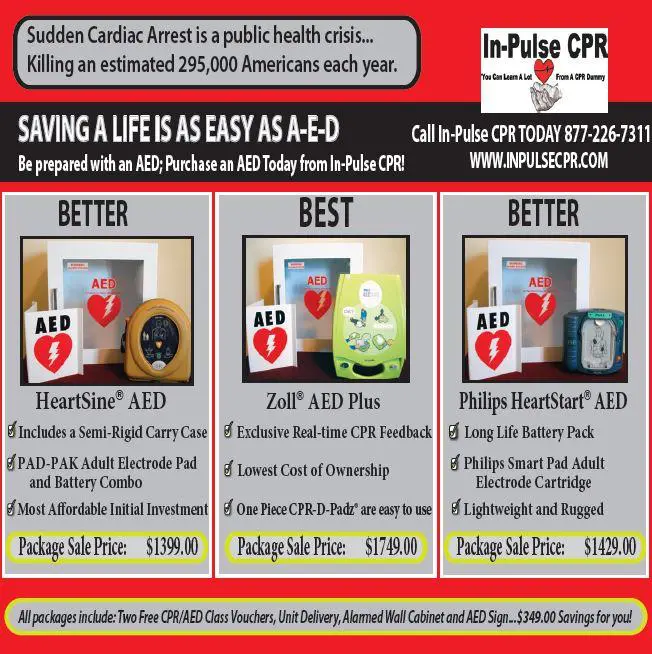
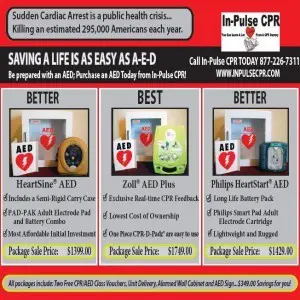
We also offer AEDs at discounted pricing for organizations that want to improve their emergency preparedness.

Contact In-Pulse CPR to learn more about AED training or to equip your workplace with this lifesaving technology.


In-Pulse CPR is now offering AED’s at a special
discounted price.  Contact our office for details.

AED Packages


In-Pulse CPR vs Impulse CPR Training – What’s the Difference?

If you’ve been searching for In-Pulse CPR, you’ve likely noticed a few other companies showing up with very similar names. You might see Impulse CPR Training, Pulse CPR School, or even Pulse-CPR in your search results.

Because the names are so close, it’s easy to click the wrong link without realizing it. This page is here to clear that up so you can be confident you’re booking the exact training you need.

A Quick Way to Tell the Difference

Here are a few simple ways to identify In-Pulse CPR compared to similarly named providers:

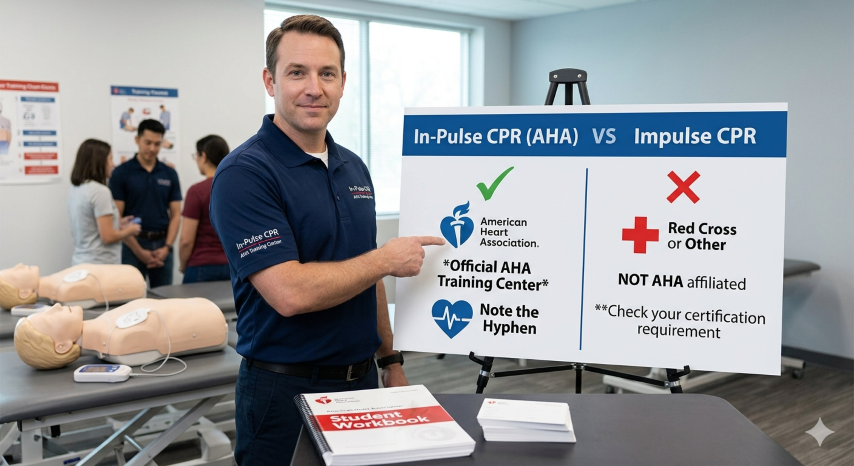
  • Name: In-Pulse CPR (look for the hyphen)
  • Certification: American Heart Association (AHA)
  • Website: InPulseCPR.com
  • Experience: Over 150,000 students trained since 2009

Other companies with similar names may offer different certifications, operate under different websites, and vary widely in experience.

In-Pulse CPR isn’t a small or temporary provider. We’re a large, established training center with the experience and scale to deliver consistent, reliable training.

Who In-Pulse CPR Is

In-Pulse CPR is an American Heart Association (AHA) Training Center focused on in-person, hands-on training.

We offer:

  • CPR & AED
  • BLS (Basic Life Support)
  • First Aid

Since 2009, we’ve trained more than 150,000 students, including healthcare professionals, teachers, childcare providers, and workplace teams.

Our goal is simple. Provide training that is practical, straightforward, and accepted by employers without question.

Why the Confusion Happens

Search engines like Google don’t always do a perfect job separating similar business names.

If you type “In Pulse CPR” or “Impulse CPR,” the results often overlap. That can make it look like the companies are related when they are not.

Impulse CPR Training, Pulse CPR School, and Pulse-CPR are separate organizations and are not affiliated with In-Pulse CPR.

How to Make Sure You’re Booking the Right Class

Before you register, it only takes a few seconds to double-check that you’re in the right place.

  • Check the website: Our official site is InPulseCPR.com
  • Look for AHA certification: We follow American Heart Association standards
  • Confirm the class location: Make sure it matches one of our listed training sites

These quick checks can save you from booking the wrong class.

Why This Matters

For many people, CPR certification isn’t optional. It’s required for work, licensing, or school.

Many employers, especially in healthcare, dental offices, and education, specifically require American Heart Association certification.

If you accidentally sign up with a similarly named provider that offers a different certification, there’s a good chance it won’t be accepted. That can mean having to take the class again.

Find a Class

If you’re looking for in-person training that follows AHA standards, you can view upcoming classes here:

View Class Registration →
https://inpulsecpr.com/class-registration/

Frequently Asked Questions

Are In-Pulse CPR and Impulse CPR Training the same company?
No. They are completely separate organizations with different ownership, instructors, and certification options.

Does In-Pulse CPR provide AHA certification?
Yes. Our courses follow American Heart Association standards, which are widely accepted by hospitals, schools, and employers.

Why does the name difference matter?
Many employers require AHA certification specifically. Choosing the wrong provider could result in a certification that isn’t accepted.

How do I know I’m on the right website?
Look for the hyphen in the name (In-Pulse CPR) and confirm the website is InPulseCPR.com.
Because the names are similar, search engines often display them together for related searches.

Proper precautions and training can prevent the spread of bloodborne pathogens

By Pearl Salkin, Updated 2026 by Val.

If a lab technician at a major medical research center drops a glass beaker, it’s highly unlikely that any bloodborne pathogen present will trigger a chain reaction leading to widespread infection. That’s not luck—it’s the result of strict safety protocols governed by the Occupational Safety and Health Administration (OSHA), designed to protect both workers and the public from biological hazards.

Bloodborne pathogens are infectious microorganisms found in human blood that can cause disease. When proper precautions are followed in environments where exposure is possible, the risk of transmission can be dramatically reduced—often nearly eliminated.

While HIV and AIDS have dominated headlines for decades, two other bloodborne pathogens pose significant and often underrecognized risks: hepatitis B (HBV) and hepatitis C (HCV). These viruses continue to spread across the U.S. and globally, often without the same level of public awareness.

The most effective way to control the spread of bloodborne pathogens is prevention at the source—especially in workplaces where exposure is possible. This starts with proper training for anyone who may come into contact with human blood. Employees must understand how to safely respond to incidents involving blood, which may carry infectious diseases.

OSHA has established guidelines and regulations, including the Needlestick Safety and Prevention Act, to address occupational exposure risks. These standards outline everything from minimizing exposure risks to responding appropriately when incidents—such as injuries involving contaminated sharps—occur.

Bloodborne Pathogen Requirements by State

Requirement AreaMinnesota (MN)Pennsylvania (PA)Florida (FL)Tennessee (TN)
Governing StandardFederal OSHA adopted by MNOSHAFederal OSHAFederal OSHAFederal OSHA
Core RegulationOSHA 29 CFR 1910.1030OSHA 29 CFR 1910.1030OSHA 29 CFR 1910.1030OSHA 29 CFR 1910.1030
Who Must Be TrainedEmployees with occupational exposure to blood or OPIMSame as federal OSHASame as federal OSHASame as federal OSHA
Training FrequencyInitial + annual refresher requiredInitial + annualInitial + annualInitial + annual
Training Content RequiredExposure risks, PPE, transmission, emergency responseSameSameSame
Hepatitis B VaccineMust be offered within 10 days of job assignmentSameSameSame
Exposure Control PlanRequired (written plan)RequiredRequiredRequired
Post-Exposure Follow-UpRequired at no cost to employeeSameSameSame
RecordkeepingTraining + exposure records requiredSameSameSame
State-Specific Additions• Employee Right-to-Know (ERTK) law • Additional safety program (AWAIR) requirementsNone beyond OSHANone beyond OSHANone beyond OSHA
Special Industry RulesBody art requires 5 hours BBP training for licensingVaries by licensing boardsVaries by licensing boardsVaries by licensing boards

Certain professions clearly require this training, including healthcare workers, lab technicians, dental professionals, EMTs, and even tattoo artists. However, exposure risks extend beyond these roles. Employees in industries such as manufacturing, construction, warehousing, maintenance, and retail may also encounter situations involving blood, particularly during workplace injuries.

Even a well-intentioned coworker providing first aid for a minor cut can unknowingly be exposed. OSHA defines occupational exposure as reasonably anticipated contact with blood or other potentially infectious materials through the skin, eyes, mucous membranes, or by injury.

Because of this, relying solely on whether a workplace is mandated to follow bloodborne pathogen standards is not enough. Any organization where injuries could occur should consider comprehensive first aid and bloodborne pathogen training.

Preparing employees with the knowledge and tools to respond safely isn’t just about compliance—it’s about protecting people. In situations where seconds matter and risks are not always visible, proper training is one of the most practical and responsible investments a workplace can make.

Bloodborne Pathogen (BBP) Training – Who Needs It & How Often

Industry / RoleExamples of JobsBBP Training Required?How Often?Why They’re at Risk
HealthcareDoctors, Nurses, CNAs, Medical Assistants✅ YesInitial + AnnualDirect exposure to blood, needles, patient care
DentalDentists, Hygienists, Assistants✅ YesInitial + AnnualOral procedures with blood exposure
Emergency ResponseEMTs, Paramedics, Firefighters✅ YesInitial + AnnualTrauma response, bleeding injuries
LaboratoriesLab Techs, Phlebotomists✅ YesInitial + AnnualHandling blood samples
Hospital SupportHousekeeping, Laundry, Maintenance✅ YesInitial + AnnualContact with contaminated materials
Tattoo / Body ArtTattoo Artists, Piercers✅ Yes (often state required)Initial + Annual (or per license)Skin penetration, blood contact
First Responders (Non-Medical)Police, Security Officers✅ YesInitial + AnnualInjury response situations
Schools & ChildcareTeachers, Daycare Staff, School Nurses✅ Yes (if first aid duties)Initial + AnnualAssisting injured children
Coaches & AthleticsCoaches, Athletic Trainers✅ YesInitial + AnnualSports injuries, bleeding
Janitorial / CustodialCleaning Staff, Custodians✅ Yes (if exposure possible)Initial + AnnualCleaning blood or bodily fluids
Funeral ServicesMorticians, Embalmers✅ YesInitial + AnnualHandling human remains
Correctional FacilitiesGuards, Staff✅ YesInitial + AnnualHigh-risk injury environment
Manufacturing / IndustrialMachine Operators, Line Workers⚠️ Often RequiredInitial + AnnualWorkplace injuries involving blood
ConstructionContractors, Laborers⚠️ Often RequiredInitial + AnnualCuts, trauma incidents
Warehousing / LogisticsWarehouse Staff, Forklift Operators⚠️ Often RequiredInitial + AnnualBox cutters, equipment injuries
Automotive / MechanicsMechanics, Technicians⚠️ Sometimes RequiredInitial + AnnualInjuries in shop environments
Food Processing / ButchersMeat Cutters, Processing Workers⚠️ Often RequiredInitial + AnnualSharp tools, frequent cuts
Retail / General WorkplaceStore Employees, Supervisors⚠️ Sometimes RequiredInitial + AnnualFirst aid response to injuries
Maintenance / FacilitiesBuilding Maintenance, Grounds Crew⚠️ Sometimes RequiredInitial + AnnualInjury cleanup, sharp hazards
HospitalityHotel Staff, Housekeeping⚠️ Sometimes RequiredInitial + AnnualGuest injury response, cleanup
Good Samaritan EmployeesAny employee expected to provide first aid⚠️ Often Overlooked but RequiredInitial + AnnualAssisting injured coworkers

https://inpulsecpr.com/category/bloodborne-pathogens-training

A Neighborly Miracle: The SCA Survival of Riley Broadhurst

Photo from Family

Seconds from Tragedy, a Neighborhood Sprung into Action

On Wednesday, December 13, 2023, 17-year-old Riley Broadhurst, a Fleming Island High senior and competitive Ninja Warrior athlete, set out for what should have been a routine run. He was just doors away from his home on Castille Drive when he suddenly collapsed in a neighbor’s yard. Despite his peak physical condition, described by his father, Dr. Christian Broadhurst, as that of an “athletic monster”, Riley had suffered a sudden cardiac arrest with no prior warning signs.

The odds of survival for such an event are remarkably low, but a series of precise, life-saving coincidences intervened. It began when Vivian Primizic decided to leave her son’s house early that day. Her timely departure allowed her to discover Riley and scream for help, alerting a group of neighbors who possessed the exact skills needed to save his life.

The Chain of Survival

The response was immediate and professional. Three neighbors, each with critical backgrounds in emergency response and CPR, took charge of the scene:

ResponderBackgroundRole in Rescue
Mike LeachRetired MilitaryAdministered chest compressions
Stephanie PrattFormer ER NurseProvided mouth-to-mouth resuscitation
Bobby DopsonRetired FiremanAssisted while also recovering from his own open-heart surgery

Pratt, who has spent 15 years in emergency rooms, noted that this experience was different. “It was in a street in my next-door neighbor’s house. It was personal,” she shared. Even Bobby Dopson, struggling through his own recovery from surgery five weeks prior, was fueled by adrenaline to assist.

Clay County Fire Rescue arrived shortly thereafter, utilizing a defibrillator to shock Riley’s heart three times before a normal rhythm was restored.

A Path to Recovery

Following his stabilization at HCA Florida Orange Park Hospital, Riley was transported to Wolfson Children’s Hospital in Jacksonville, Florida. His mother, Dr. Jennifer Broadhurst, noted that while the family faced a “horrific experience,” they felt as though they had “won the lottery” given the outcome.

Riley’s recovery has been steady:

  • Medical Progress: His heart passed a stress test “with flying colors,” and he underwent an MRI to assess his condition further.
  • Protection: He has since had an internal defibrillator (EV-ICD) implanted to manage his diagnosis of idiopathic ventricular fibrillation.
  • Long-term Outlook: While he faces a long road ahead, medical professionals have indicated he suffered no permanent damage.

Divine Intervention

For the Broadhurst family, the timing of the event added a profound layer of emotion. The collapse occurred on the first anniversary of the passing of Riley’s grandmother. The family had planned a vigil for her that evening; instead, they found themselves at the hospital fighting for Riley’s life.

“I have absolutely no doubt that she played an enormous part in his making it through this in one piece,” said Christian Broadhurst. He remains eternally grateful to the neighbors whose presence he describes as “divine intervention”.

Riley spent 24 hours in a medically induced coma and 8 days in Pediatric CV-ICU. He underwent a cardiac ablation. Doctors diagnosed him with idiopathic ventricular fibrillation.

The Florida legislature has mandated EKG testing for student-athletes.


Reported by: Donna Ryan for In-Pulse CPR
Date: March 23, 2026, First Reported December 13, 2023 in Clay Today

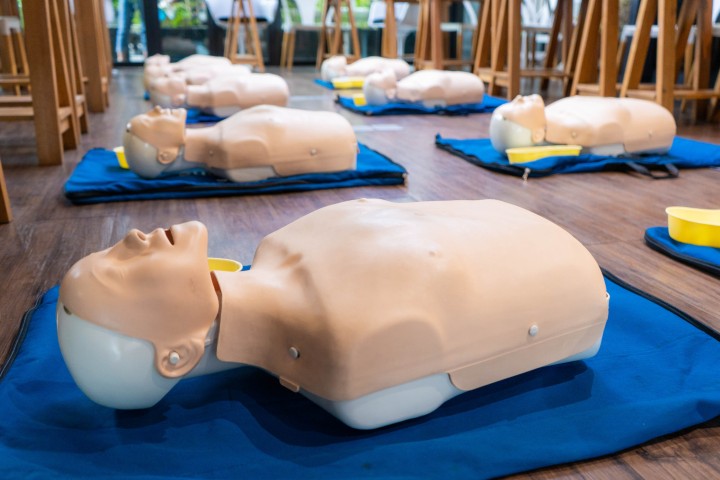
Inside a CPR Class: The Equipment That Teaches Lifesaving Skills

CPR Training Equipment and the 2025 AHA Guidelines

Since 2009, In-Pulse CPR has trained more than 150,000 students in lifesaving CPR skills. One of the biggest reasons our classes are effective is the equipment we use to teach those skills.

The American Heart Association’s 2025 CPR and Emergency Cardiovascular Care (ECC) Guidelines reflect the latest science and real-world data on resuscitation. These updates emphasize something instructors have long known: hands-on training with accurate feedback is essential for learning high-quality CPR.

The updated guidelines are expected to be fully implemented by March 1, 2026, and they reinforce the importance of modern CPR training equipment.


Why CPR Training Equipment Matters

CPR is not just a theory-based skill. It requires physical practice to develop the muscle memory needed to perform compressions correctly during a real emergency.

High-quality training equipment allows students to practice:

  • Correct hand placement
  • Compression depth
  • Compression speed (100–120 compressions per minute)
  • Full chest recoil
  • Rescue breathing technique
  • Team-based resuscitation

Practicing these skills with feedback helps ensure rescuers perform CPR effectively when seconds matter.


Key Equipment Updates Referenced in the 2025 AHA Guidelines

The 2025 guidelines reinforce the importance of feedback-driven CPR training. Several important training principles are highlighted.

1. CPR Feedback Devices (Class 1 – Strong Recommendation)

The AHA strongly recommends using feedback devices during CPR training for both healthcare providers and lay rescuers.

Feedback systems help measure:

  • Compression depth
  • Compression rate
  • Chest recoil
  • Ventilation performance

Many modern CPR manikins include visual lights or audible indicators that guide students to perform compressions at the correct speed and depth.

This type of feedback helps learners quickly adjust their technique and build confidence.


2. Updated Infant Compression Techniques

The 2025 guidelines reinforce updated techniques for infant resuscitation. The two-thumb encircling hands technique or the heel-of-one-hand method is recommended to improve compression depth and consistency.

Training equipment must allow students to practice these techniques realistically.


3. Gender Representation in CPR Training

Research has shown that disparities exist in CPR response rates between men and women.

Training programs are increasingly incorporating female CPR manikins and inclusive training equipment to help address these disparities and ensure rescuers feel comfortable providing care to all patients.


4. CPR Training for Younger Students

The new guidelines also encourage introducing CPR education to children younger than 12 years old.

Community training programs and school-based CPR education help build future generations of confident lay rescuers.

Compact training manikins designed for group instruction make it easier to deliver CPR education in classrooms and community settings.


5. Opioid Overdose Response Training

The opioid crisis has led to expanded recommendations for naloxone (NARCAN) training for lay rescuers.

CPR training programs increasingly incorporate overdose response education so students understand how to respond quickly during an opioid emergency.


6. Ventilation Feedback

The 2025 guidelines reinforce the importance of delivering effective ventilations that produce visible chest rise.

Modern training manikins can now measure ventilation volume and provide feedback to ensure breaths are delivered properly.


7. Chest Compression Fraction Reporting

The guidelines also highlight the importance of measuring Chest Compression Fraction (CCF), which represents the percentage of time compressions are actively performed during resuscitation.

This metric is now required to be reported on some advanced life support training documentation.


How Modern CPR Equipment Improves Training

Advanced CPR training equipment helps instructors measure and reinforce high-quality CPR performance.

Examples of commonly used CPR training tools include:

  • Adult, child, and infant CPR manikins
  • AED training devices
  • Compression feedback sensors
  • Ventilation monitoring systems
  • Opioid overdose response training tools

These tools allow students to practice in realistic scenarios while receiving immediate feedback.


Why Hands-On CPR Training Is Essential

Many employers, hospitals, and nursing programs require in-person CPR training because it provides real hands-on experience.

Students learn far more effectively when they practice compressions and ventilations under the guidance of certified instructors using professional equipment.

Hands-on training builds the confidence needed to respond during a real emergency.


Training with Modern CPR Equipment

At In-Pulse CPR, we use professional training equipment aligned with current American Heart Association standards.

Since 2009, we have trained more than 150,000 students including healthcare providers, workplace safety teams, teachers, and community members.

Our CPR classes include:

  • Hands-on CPR practice using feedback manikins
  • AED training
  • Ventilation and airway management skills
  • Instructor-guided performance feedback

Students leave class confident in their ability to respond during cardiac arrest and other medical emergencies.


Find CPR Classes Near You

In-Pulse CPR offers American Heart Association CPR, BLS, and First Aid certification classes across several regions including:

All classes are 100% in-person and hands-on, with certification cards issued the same day.

View upcoming classes:
https://inpulsecpr.com

More on AHA guideline updates here


Where to Buy CPR Manikins in the United States

When purchasing CPR manikins in the United States, you generally have two options: buying directly from a manufacturer (the brands themselves) or purchasing through a national distributor that carries multiple brands.

For most instructors, schools, and organizations, national distributors are the preferred option because they allow you to compare prices, purchase accessories, and choose from multiple brands in one place.

Below are the top companies to purchase CPR manikins in the U.S., based on industry reputation, AHA compliance, and product variety.


Top National CPR Equipment Distributors

Company Best Known For Key Advantages
WorldPoint Largest CPR training distributor Carries Laerdal, PRESTAN, Simulaids and their own inclusive CPR Taylor and Baby Tyler manikins.
AED Superstore Large inventory and selection tools Excellent buying guides and comparison tools for schools and first-time buyers.
CPR Savers & First Aid Supply Competitive pricing Often offers some of the lowest prices on PRESTAN and Laerdal equipment.
American Red Cross Store Red Cross instructor equipment Offers the BigRed training manikin line featuring LED blood flow indicators.
School Health Corporation Education sector Popular with K-12 schools and universities for CPR training programs.
GTSimulators Advanced medical simulation Leader in high-fidelity patient simulators used in medical schools and EMS programs.

Top CPR Manikin Manufacturers

Manufacturer Key Feature Why Instructors Choose Them
PRESTAN Products Made in the USA Lightweight, durable manikins with built-in compression clicker and visual feedback lights.
Laerdal Medical Industry gold standard Famous for Little Anne and Resusci Anne with advanced QCPR feedback and Bluetooth monitoring.
Nasco Healthcare (Simulaids / Life-form) Specialized training models Known for Basic Buddy and Sani-Man budget models plus specialty training manikins.
Innosonian (Brayden) Visual learning system LED lighting displays simulated blood flow to show how compressions circulate oxygen.

Quick Buying Guide

Buyer Type Recommended Equipment Where to Buy
Independent CPR Instructors PRESTAN Professional Manikin 4-packs WorldPoint or CPR Savers
Healthcare Training Programs Laerdal Resusci Anne QCPR WorldPoint or GTSimulators
Budget or Mass Training Basic Buddy or PRESTAN Ultralite AED Superstore

A Life-Saving Call: When Every Second Counts

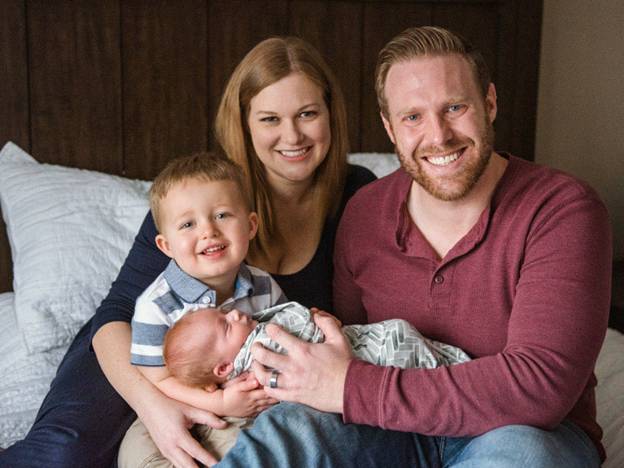
The Schammert family (clockwise from top left): Kym, Bill, and sons Cameron and Theo. (Photo – Emily Hardy Photography)

First Reported April 2021

The moment that would change everything started with something as simple as the sniffles. For Bill and Kym Schammert, what began as a routine precautionary visit to their pediatrician became a parent’s worst nightmare—and ultimately, a testament to the power of staying calm under pressure.

Their newborn son Cameron, just 13 days old, had developed what seemed like a minor cold. Better safe than sorry, they thought, as they prepared to take him to the doctor. But as Bill secured Cameron in his car seat, something went terribly wrong.

“He was as purple as purple can be,” Bill would later recall, his voice heavy with the memory.

The infant was gasping, struggling for air that wouldn’t come. Panic set in as Kym quickly lifted Cameron from his seat while Bill’s fingers found his phone, dialing the three numbers that connect us to help when we need it most: 911.

On the other end of the line, dispatcher Lisa Pachunka’s voice cut through their terror with steady professionalism. She ran through her checklist—was the baby choking? Was there an obstruction? But the answers painted a frightening picture: Cameron was limp, unresponsive, his tiny body fighting a battle he was losing.

“I was hoping I’d hear his baby cry after a few seconds,” Pachunka later admitted. “But that wasn’t the case.”

When it became clear that Cameron needed CPR, Pachunka faced a common but critical situation. The parents had learned the technique three years earlier during prenatal classes for their first son, Theo, but in this moment of crisis, their minds had gone blank. Fear has a way of erasing everything we think we know.

So Pachunka became their lifeline, her voice streaming through the phone’s speaker as she guided them step by step. She explained the precise technique for giving CPR to an infant: two fingers positioned in the center of the chest, about half an inch below the nipples. She reminded them to cover Cameron’s entire nose and mouth when giving rescue breaths.

Kym took the first shift, alternating 30 chest compressions with two rescue breaths, then Bill stepped in for his turn. Through it all, Pachunka’s voice remained their anchor.

“During the most stressful moment of our lives, she was one of the calmest voices I’d ever heard,” Bill said.

Then, like the most beautiful sound they’d ever heard, Cameron cried. Color returned to his skin. Life returned to their world. Paramedics arrived moments later, rushing mother and baby to the hospital while Bill followed behind, his hands likely trembling on the steering wheel.

At the hospital, doctors ran test after test—flu, COVID-19, various viral infections—but everything came back negative. A chest X-ray revealed the culprit: congested lungs that required treatment at the specialized children’s hospital in Omaha.

The transfer separated the family due to COVID-19 protocols. For two and a half hours, Bill and Kym waited, not knowing if their son was okay. “That was one of the harder moments,” Bill said, a masterpiece of understatement.

But when they arrived at the children’s hospital, they found Cameron’s condition stabilizing. By the next morning, the sniffles were gone, his oxygen levels normal. Doctors believed a mucus plug had blocked his airway—something his tiny body couldn’t clear on its own, but something that CPR had helped dislodge.

“We were surrounded by heroes and the best possible outcome happened,” Bill reflected.

The Schammerts knew exactly who their hero was. Bill arranged to meet Pachunka in person, a gesture that moved the veteran dispatcher deeply. She had never met a caller face-to-face before, but this case had touched her heart.

“As much as he says I’m a hero, he should get the credit for being such a great dad in that situation,” Pachunka said, deflecting praise with the humility common among those who save lives as part of their daily work.

When Bill returned to his job as a TV news anchor, he used his platform to share their story. Beyond thanking Pachunka, the first responders, and medical staff, he had a larger message: CPR training isn’t just useful—it’s essential.

“These skills aren’t hard to pick up,” he told his viewers, “and they could save a life.”

In Cameron’s case, those skills saved everything that matters. Today, he’s a healthy, thriving child, living proof that sometimes the difference between tragedy and triumph is as simple as knowing what to do when every second counts—and having someone calm enough to guide you through it when your world is falling apart.

The Schammerts’ story reminds us that heroes come in many forms: the dispatcher who stays calm in chaos, the parents who perform CPR with shaking hands, the medical professionals who provide expert care. But perhaps most importantly, it reminds us that any of us can be that hero—if we’re prepared.

A Miracle on a Sunday Morning: How a Chain of Heroes Saved Shawn Martin’s Life

Shawn Martin and his family

First Reported, January 26, 2026, St. Elizabeth Hospital – When Shawn Martin suddenly collapsed from cardiac arrest during a morning walk, his wife, Emily, immediately triggered a remarkable sequence of events that saved his life. Just three days later, Shawn walked out of the hospital, an extraordinary recovery that defied the odds in cardiac care.

The Critical First Moments

The day began like any other quiet Sunday walk for Shawn and Emily Martin near their Southgate, Kentucky home. The peace of the morning was shattered in an instant when, without any warning, Shawn clutched his chest and fell to the ground. It was a sudden, devastating cardiac arrest.

Emily’s immediate response, born of instinct and perhaps prior training, was significant and life-saving. She immediately called 911, clearly communicating their location and the severity of the emergency. Without hesitating, she then began chest compressions, keeping vital, oxygenated blood flowing to Shawn’s brain and organs; an essential action in the critical minutes before professional help could arrive.

An unexpected ally bolstered this essential initial action. A retired firefighter, living nearby, heard Emily’s frantic calls for help and the distinctive cadence of an emergency unfolding. Without a second thought, he sprinted across the road and through the woods, arriving at the scene to find Emily administering CPR. He immediately took over, bringing his years of professional training and strength to bear, maintaining continuous, high-quality compressions until the arrival of the local fire department and EMTs.

This seamless “chain of survival,” started by Emily and maintained by the retired firefighter, was the critical foundation upon which Shawn Martin’s miracle rested. Rapid Response and Defibrillation

The Southgate Fire Department’s EMS crew arrived approximately ten minutes after the collapse. They quickly transported life-saving equipment 200 yards down the path to Shawn. Paramedics identified his condition as ventricular fibrillation (V-fib), a life-threatening, chaotic heart rhythm. They immediately applied a defibrillator, delivering an electric shock that successfully restored a normal heartbeat and circulation.

Thanks to the combined efforts of early bystander CPR and rapid defibrillation, Shawn’s pulse returned. He was quickly stabilized and rushed to St. Elizabeth Hospital in Edgewood, Kentucky, for advanced care.

A Race Against Time: Battling the “Widow-Maker”

The EMS team alerted the hospital, allowing the medical staff to prepare for Shawn’s emergency arrival. He was taken straight to the Cardiac Catheterization Lab. There, Interventional Cardiologist Dr. Stephen Schutzman diagnosed a 90% blockage in Shawn’s left anterior descending artery, a notoriously dangerous condition often called the “widow-maker.” Dr. Schutzman acted swiftly, placing a stent to reestablish blood flow to Shawn’s heart.

“In cardiology, we often talk about seconds and millimeters, how small margins can mean the difference between life and loss,” noted Dr. Schutzman. “Shawn’s case was a vivid reminder of that. Every moment mattered, and every person involved, from his wife to the cath lab team, played a role in giving him a second chance.”

Following the procedure, Shawn was transferred to the Cardiac Intensive Care Unit (CICU) for continuous monitoring and recovery.

Defying the Odds: A Lightning-Fast Recovery

The speed and completeness of Shawn Martin’s recovery were astounding, defying established medical expectations and astonishing even the most seasoned clinicians. Despite the grim prognosis associated with an estimated twelve minutes of cardiac arrest, a period during which his brain was starved of oxygen, Shawn was awake, alert, and communicating with his family within twenty-four hours of the life-saving intervention.

While he initially presented with minor, short-term memory lapses, his cognitive function rapidly and remarkably improved. Most critically, advanced diagnostic imaging and neurological exams revealed no signs of major, permanent neurological damage, a common and devastating complication for survivors of prolonged cardiac arrest. This rapid improvement allowed for an unprecedented early release.

Just seventy-two hours, or three days, after the near-fatal cardiac event, Shawn’s condition stabilized so profoundly that Dr. Schutzman, confident in his patient’s remarkable trajectory, authorized his discharge home to continue his recovery.

Dr. Schutzman, reflecting on the case, was deeply moved by the outcome. “Shawn’s recovery was nothing short of extraordinary, a genuine medical miracle,” he stated. “It was one of those rare and profound moments where every element of the chain of survival came together flawlessly: the immediate courage and presence of mind shown by his wife, the quick instinct and effective intervention performed by a knowledgeable neighbor who started CPR, the precision and swiftness of the arriving EMS team, and finally, the specialized expertise and dedicated care provided by our hospital team.”

The doctor added, “Stories like this one do more than just validate our long hours and hard work; they powerfully remind us why we do this work and, more importantly, they renew our collective purpose and faith in the potential for life-saving collaboration.”

Why Shawn’s Story is Essential

National data show that most survivors of out-of-hospital cardiac arrest require one to two weeks, or more, of hospitalization. Shawn’s three-day discharge is indeed a rare outcome, achieved through a combination of rapid intervention, expert care, and community support.

His story powerfully illustrates the critical nature of the “Chain of Survival”:

LinkActionShawn’s Outcome
1Early recognition and 911 activationEmily’s immediate call
2Immediate CPR by a bystanderEmily and the retired firefighter
3Rapid defibrillation by EMSSouthgate Fire Department restoring heart rhythm
4Advanced hospital careSt. Elizabeth’s cath lab and Dr. Schutzman’s stent placement
5Post-arrest recovery and rehabilitationDischarged in only three days

Every link in Shawn’s chain was strong, saving a life and keeping a family whole. His survival is a stark reminder that you do not need to be a doctor or first responder to be the critical first link in someone’s survival story.

A Second Chance: Mary’s Journey from Cardiac Arrest to Recovery

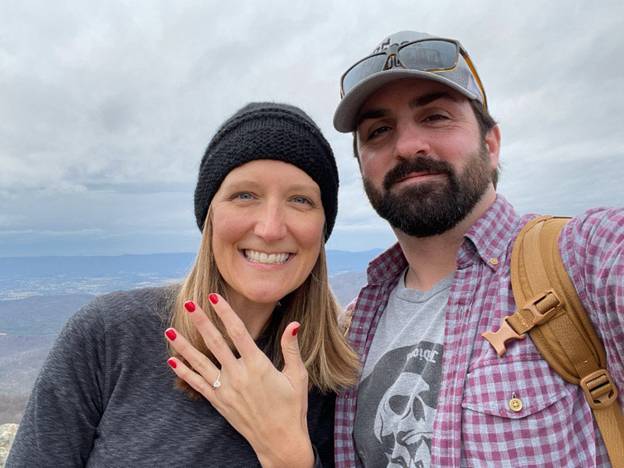
Cardiac arrest survivor Mary Gordon (left) with her fiancé, Matt Costakis. (Photo from Mary Gordon)

First Reported August 2021

Mary Gordon had always been the picture of health. At 37, she was the kind of person who conquered 5K races and powered through intense cycling sessions without breaking stride. Her body was her ally, reliable and strong—until the day it wasn’t.

The warning signs began subtly, creeping in just before Christmas 2019. What started as unusual tiredness after an ugly sweater party quickly escalated into something far more sinister. While hanging holiday decorations, Mary found herself stopping repeatedly, her energy mysteriously depleted. During a shopping trip to Washington, D.C., the world briefly went black around her.

“Everything went blank,” Mary remembered. “But it happened so fast I almost convinced myself it was nothing.”

But her body had other plans. Over the following week, near-fainting episodes became a terrifying pattern, striking three more times—including once while she was behind the wheel of her car.

Concerned enough to squeeze in a last-minute appointment on New Year’s Eve, Mary arrived at her doctor’s office feeling so drained she half-expected to be hospitalized immediately. Something deep inside told her to update her account beneficiaries before the visit—a premonition that would prove eerily prescient.

The physician assistant’s examination revealed a troubling contradiction: Mary’s heart rhythm appeared normal, but her blood pressure was dangerously elevated. A heart monitor was prescribed to gather more data, and her upcoming flight was cancelled.

The monitor wasn’t entirely foreign to Mary. Years earlier, doctors had diagnosed her with mitral valve prolapse after detecting a heart murmur during college. The condition, where excess tissue in the heart valve’s leaflets causes them to bulge into the left atrium, had been deemed minor—”a two out of ten, nothing to worry about,” her doctor had assured her.

But as Mary left that New Year’s Eve appointment, her body delivered its most devastating message yet.

Near the elevator, she collapsed.

A receptionist heard her labored breathing and discovered her unconscious. Mary Gordon was in cardiac arrest.

For six critical minutes, the physician assistant and a doctor performed CPR, using an automated external defibrillator to shock her heart back to life. The second shock brought her back—though her first memory wasn’t of awakening, but of being in the emergency room, surrounded by her boyfriend Matt Costakis and a team of medical professionals.

“My brain wasn’t retaining information,” Mary recalled of those first confusing days. “Everything existed in a fog until reality finally started to sink in.”

The road to recovery required immediate intervention. Two days later, surgeons implanted a cardioverter defibrillator in Mary’s chest. A week after that, a minimally invasive procedure repaired her mitral valve.

It was only during surgery that doctors discovered the true culprit behind Mary’s cardiac arrest: mitral annular disjunction, a particularly rare condition that makes significant valve prolapse and dangerous arrhythmias more likely.

“That variant is the most prone to significant prolapse and may be more closely associated with the kind of arrhythmia she presented with,” explained Dr. Paula Pinell-Salles, Mary’s cardiologist at Virginia Heart in Falls Church.

After two weeks in the hospital, Mary returned home, eager to reclaim her life through cardiac rehabilitation. The structured program offered exactly what she needed—a safe environment to rebuild her strength, stamina, and confidence alongside other survivors who understood her journey.

“The idea of raising my heart rate or running again seemed impossible,” Mary reflected. “Having medical professionals monitor my progress made all the difference in believing I could get back to who I was.”

When COVID-19 shut down in-person rehabilitation, Mary adapted, taking long walks with her dog Almond. Still, exercising alone carried emotional weight. She now wore an emergency ID tag—a tangible reminder of how quickly everything could change.

“It was a weird transition and very emotional,” she admitted. “But eventually, I reached the point where I could venture out by myself again.”

Eight months after her cardiac arrest, Mary achieved a milestone she’d once thought impossible: she started running again.

One year to the day after her brush with death, Mary planned a celebration. She, Matt, and Almond would hike her favorite trail at Shenandoah National Park—a challenging three-mile climb to a mountain summit.

Despite cold, rainy conditions, they reached the top. As Mary sat on a large rock, searching her backpack for dog treats, Matt reached into his pocket for a different kind of surprise: a diamond engagement ring.

“I made it so easy for him with that romantic mountaintop setting,” Mary laughed. “I had to ask him several times if it was real before I finally said yes.”

Now engaged and largely recovered, Mary has found new purpose in education and advocacy. She’s passionate about helping others understand the crucial difference between heart attacks—caused by blockages—and cardiac arrest, which stems from electrical problems and can strike anyone, regardless of apparent health.

This mission has made her a tireless advocate for CPR training, skills that saved her life that New Year’s Eve. She’s already planning training sessions for family and friends, determined to ensure others have the knowledge that could make the difference between life and death.

Mary’s story serves as a powerful reminder that health can change in an instant, but with proper medical care, determination, and the support of loved ones, it’s possible to not just survive—but to thrive.