
CPR: A Hands-on Approach

CPR: A Hands-On Approach to Saving Lives

By Karen Helm

They plant seeds, gather harvests, play music, tell stories, and bring new life into the world. Our hands are capable of remarkable things.

But perhaps their greatest power is the ability to save a life.

Every day in the United States, hundreds of people experience sudden cardiac arrest. When the heart suddenly stops beating, oxygen can no longer reach the brain and vital organs. Without help, survival chances drop rapidly with each passing minute.

The good news is that bystander CPR can double or even triple a person’s chance of survival. When someone nearby begins CPR immediately, they buy critical time until emergency medical responders arrive.
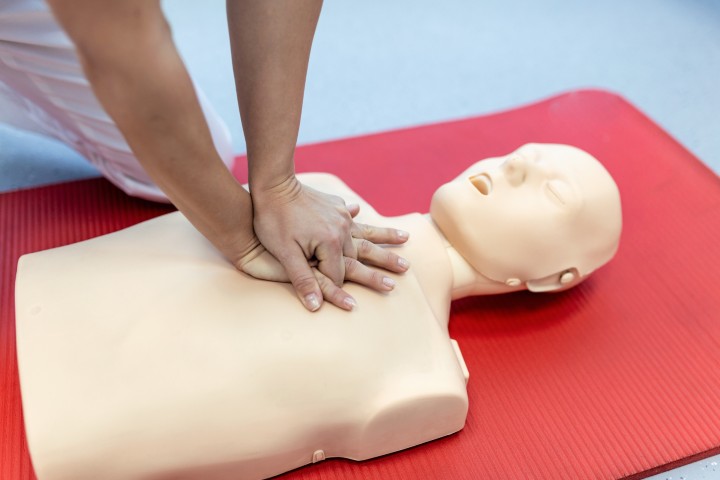
CPR instructor teaching chest compressions on a training manikin

Why CPR Training Matters

Cardiac arrest often happens unexpectedly and usually occurs outside of hospitals. That means the first person able to help is often a coworker, family member, coach, teacher, or bystander nearby.

When someone knows how to perform CPR, they can take action in those critical first minutes. Learning CPR gives people the confidence and skills to respond quickly during an emergency.

Fast action matters. CPR started immediately can make the difference between life and death while waiting for EMS to arrive.

Making CPR Easier to Learn

The American Heart Association (AHA) encourages the public to learn CPR so more people are prepared to respond during emergencies.

Mollie Bowman, nurse and owner of In-Pulse CPR, understands why some people hesitate to take a class. Many students leave older CPR courses feeling overwhelmed, unsure they would remember every step during a real emergency.

With more than 25 years of healthcare experience, Bowman built In-Pulse CPR around a simple goal: make CPR training simple, practical, and hands-on.

“When something makes sense, people feel more confident using it.”

Today, In-Pulse CPR provides American Heart Association certification classes across multiple states, helping thousands of students gain lifesaving skills each year.

How CPR Has Evolved Over Time

The science of resuscitation has developed over centuries.

In the 1700s, early attempts to revive people included unusual techniques such as forcing air into the lungs with fireplace bellows or rolling a patient over a barrel.

Modern CPR began to take shape in the 1950s when Dr. James Elam and Dr. Peter Safar demonstrated the effectiveness of mouth-to-mouth breathing. Soon afterward, chest compressions were added. This combination became known as Cardiopulmonary Resuscitation (CPR).

Originally taught only to medical professionals, CPR training eventually expanded to the general public through organizations like the American Heart Association and the American Red Cross.
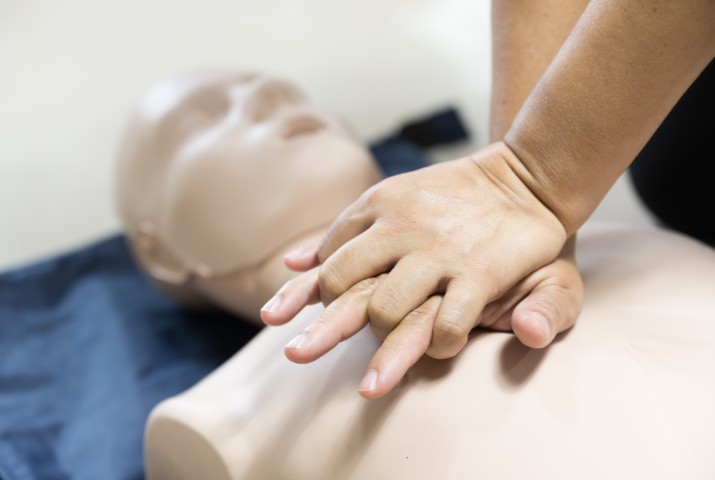
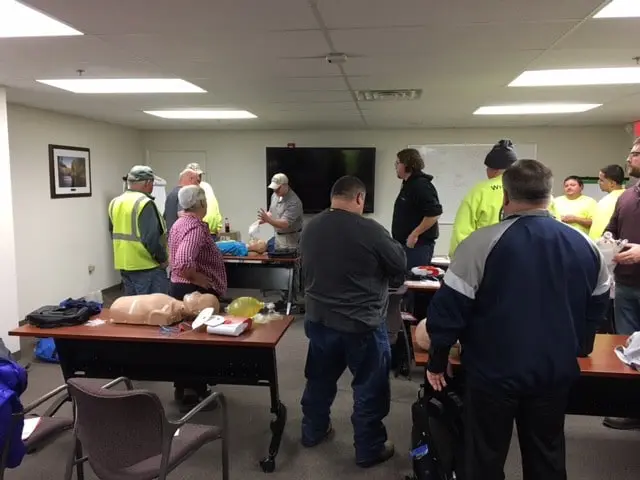
Students learning CPR and AED skills in a hands-on classroom

What CPR Looks Like Today

Modern CPR guidelines focus heavily on strong, consistent chest compressions.

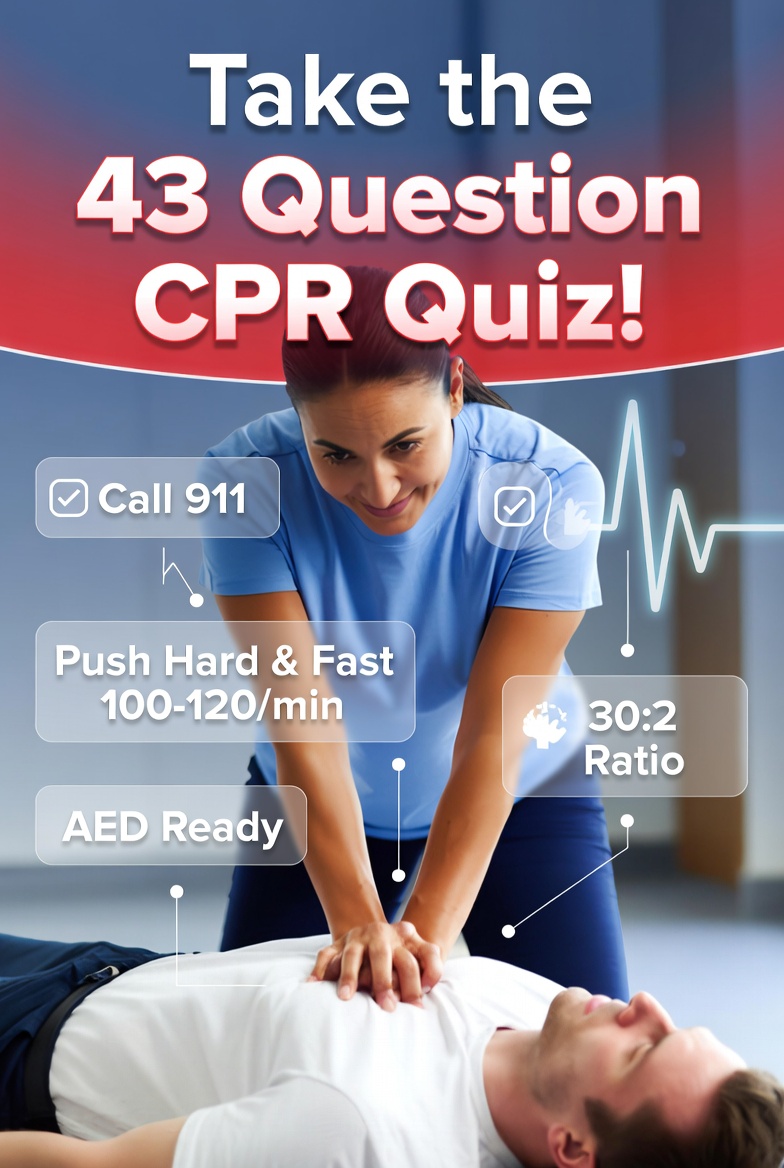
  • Compression rate: 100 to 120 compressions per minute
  • Compression ratio: 30 compressions to 2 breaths
  • Technique: Push hard and fast in the center of the chest

For untrained bystanders, Hands-Only CPR is recommended. This means calling 911 and performing continuous chest compressions until help arrives.

Because compressions keep blood circulating to the brain and heart, immediate CPR can significantly improve survival chances.

What You Learn in a CPR Class

A typical CPR certification course teaches students how to respond to several life-threatening emergencies.

  • Recognizing cardiac arrest
  • Identifying symptoms of heart attack and stroke
  • Performing CPR on adults, children, and infants
  • Helping a choking victim
  • Using an Automated External Defibrillator (AED)

Students practice skills using CPR manikins so they leave class with hands-on experience and confidence.

“You always hope you never need to use CPR, but if the moment comes, you’ll know exactly what to do.”

AEDs and Technology Save More Lives

Many workplaces, schools, gyms, and airports now have Automated External Defibrillators (AEDs) available.

AEDs analyze the heart’s rhythm and can deliver a shock that helps restart the heart during cardiac arrest. CPR keeps blood circulating until an AED or emergency responders arrive.

When CPR and AED use happen quickly, survival chances increase dramatically.

Good Samaritan Laws Protect Bystanders

A common concern people have is whether they could be sued for helping someone during an emergency.

Fortunately, Good Samaritan laws exist in most states. These laws protect individuals who attempt to provide reasonable emergency assistance.

If a victim becomes unconscious, the law assumes implied consent, meaning lifesaving care can begin until medical professionals arrive.

Anyone Can Learn CPR

One of the biggest misconceptions about CPR is that it is difficult to learn. In reality, most students can learn the basics in just a few hours.

CPR does not require special equipment or medical training. Sometimes, the only thing needed is a pair of hands and the willingness to act.

And that simple action could save someone’s life.

CPR Certification Classes Near You

In-Pulse CPR offers American Heart Association CPR, BLS, and First Aid classes across multiple regions, including:

  • Minneapolis–St. Paul, Minnesota
  • Harrisburg, Pennsylvania
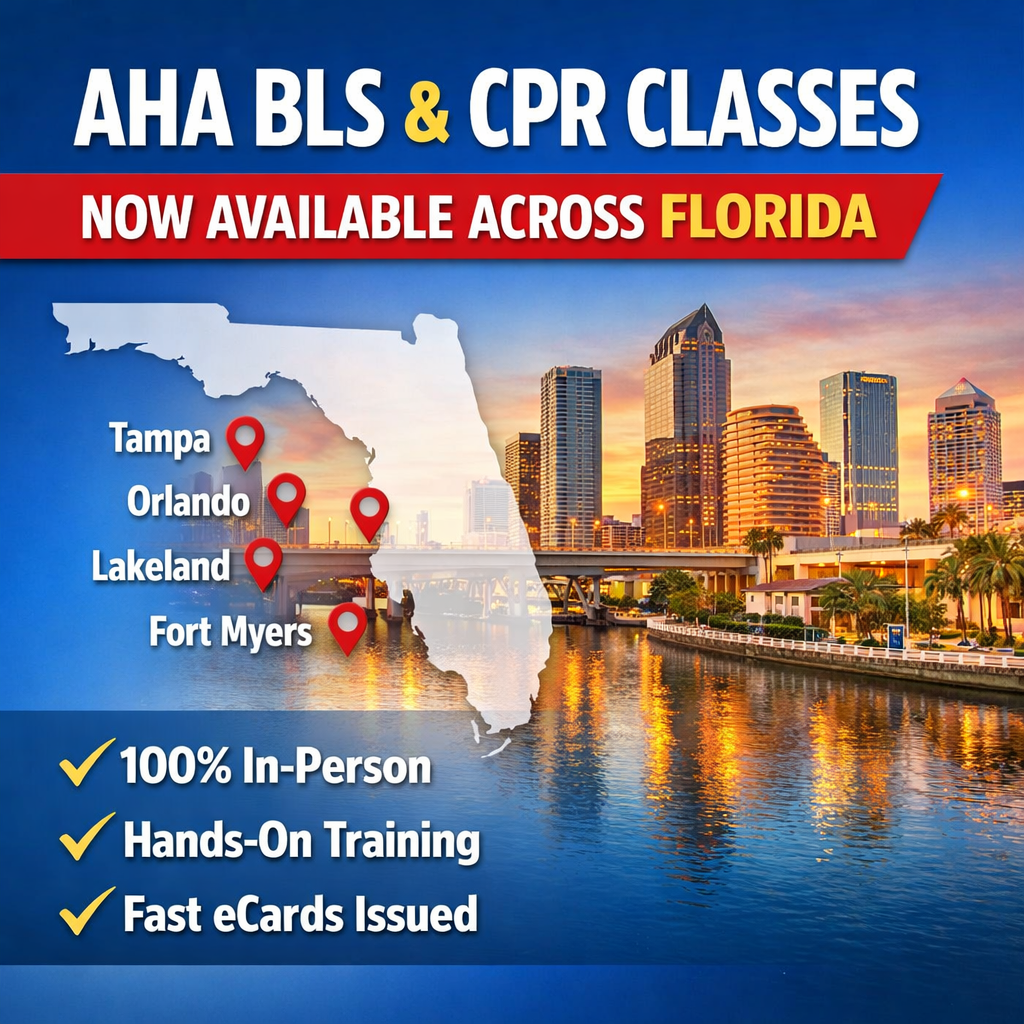
  • Tampa Bay, Florida
  • Cookeville and Central Tennessee

Classes are 100% in-person and hands-on, with certification cards issued the same day.

View Upcoming CPR Classes

Frequently Asked Questions About CPR

How long does CPR certification last?

Most American Heart Association CPR certifications are valid for two years.

How long does a CPR class take?

Most CPR classes take 2 to 4 hours depending on the course type. Healthcare provider BLS courses may take slightly longer.

Do I need to give mouth-to-mouth during CPR?

If you are trained, CPR includes breaths using a 30 compressions to 2 breaths ratio. Untrained rescuers can perform Hands-Only CPR.

Can CPR really save a life?

Yes. Immediate CPR can double or triple survival chances during sudden cardiac arrest.

Where can I take a CPR class near me?

You can find CPR classes through certified training centers such as In-Pulse CPR.

About In-Pulse CPR

In-Pulse CPR provides American Heart Association CPR, BLS, and First Aid certification classes for healthcare providers, businesses, and the general public.

Training is available across Minneapolis and St. Paul, Minnesota, Harrisburg, Pennsylvania, Tampa Bay, Florida, and Cookeville, Tennessee.

Please follow the links on our website to view the public class calendar for your area.

Where can I find AHA CPR classes in my local area? In-Pulse CPR provides local, hands-on training in several key regions. We offer regularly scheduled public classes in:

  • Minnesota: Minneapolis & St. Paul metro areas.
  • Pennsylvania: Harrisburg and surrounding communities.
  • Florida: The greater Tampa Bay area.
  • Tennessee: Cookeville and Central Tennessee.

How long does CPR certification last in these states? Regardless of your location, American Heart Association (AHA) certifications are valid for two years. We recommend renewing 30 days before expiration to ensure your skills stay sharp.

Are these classes valid for Pennsylvania or Florida workplace requirements? Yes. Because we provide official AHA certification, our classes meet the stringent requirements for healthcare providers, childcare workers, and industrial safety officers in PA, FL, MN, and TN.

Is there a difference between “Hands-Only” and “Full” CPR? “Hands-only” is great for untrained bystanders. However, for certification (especially for jobs in healthcare or education), you must learn the full 30:2 ratio of compressions to breaths.
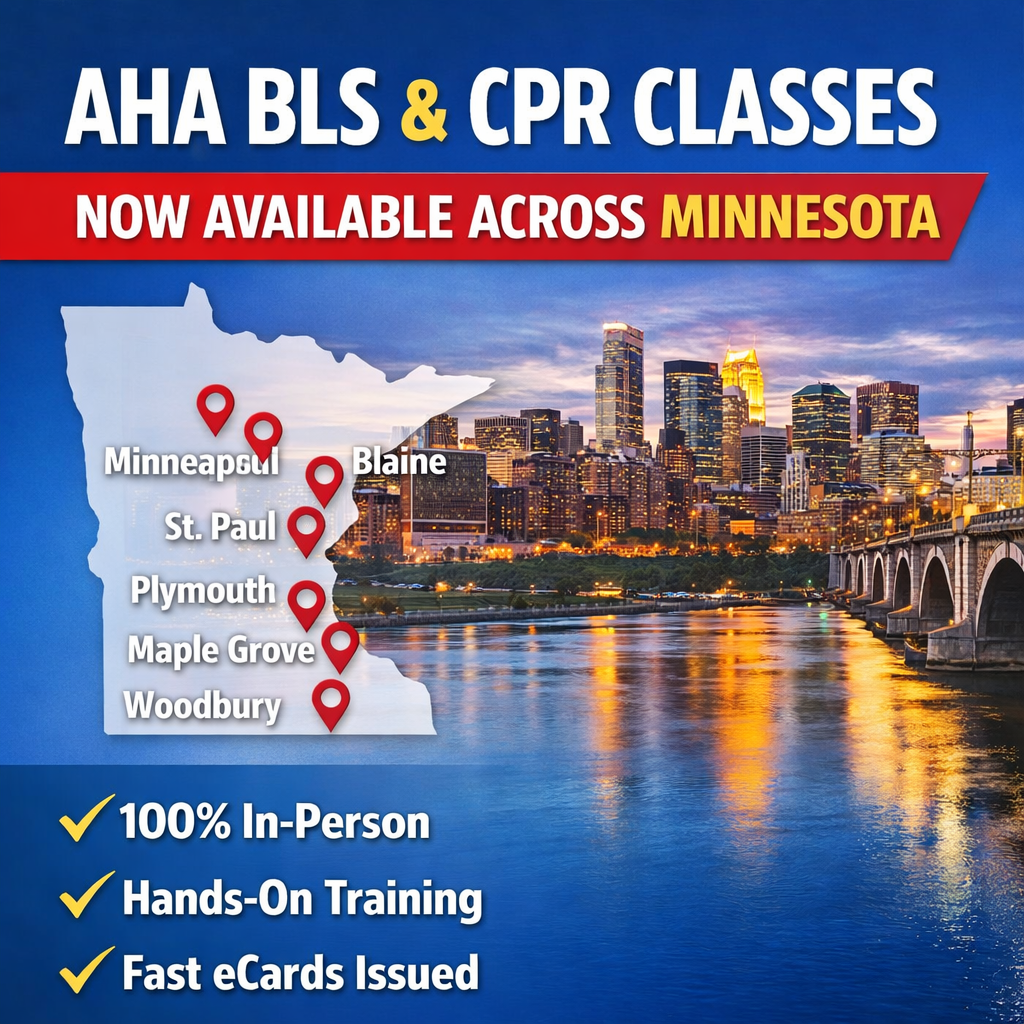
The Minnesota Student Guide to Clinical CPR Compliance

CPR Certification for Hennepin Tech, NHCC, and Twin Cities Healthcare Programs

If you’re heading into a nursing, dental, or healthcare program in Minnesota, your CPR card isn’t just another requirement. It’s one of the first things that can hold you up if you don’t have it ready.

We see this every semester. Students are accepted, ready to go, and then realize their CPR certification doesn’t meet the requirement. That usually means scrambling to fix it fast.

At In-Pulse CPR, we provide the American Heart Association (AHA) BLS certification that Minnesota programs and clinical sites expect.


What Your School Is Actually Looking For

Most programs across the Twin Cities follow similar guidelines, but each school has its own way of spelling it out.

Hennepin Technical College (HTC)
HTC nursing and dental programs typically require an AHA BLS for Healthcare Providers certification (sometimes listed as EMSV1020 or equivalent).

Some students assume they need to take the full college course. In reality, a single BLS class usually checks the box in just a few hours.

North Hennepin Community College (NHCC)
NHCC is very clear. You need an American Heart Association CPR card.

Orientation often happens well before clinicals start, so it’s smart to get this done early. Waiting too long can limit your options.

University of Minnesota
For BSN and medical programs, the AHA BLS Provider card is the standard.

This matters even more because students rotate through major systems like M Health Fairview. They expect professional-level BLS. Heartsaver won’t cut it.

Century College and St. Paul Programs
Some programs look at certifications as part of the application itself. Having your BLS card ahead of time can actually give you an edge.


Why AHA BLS Matters

This is where a lot of students get tripped up.

There are cheaper CPR classes out there, but many clinical sites in Minnesota only accept American Heart Association certification. Hospitals like Mayo, Allina, and Fairview all align with AHA standards.

We regularly meet students who took a different course and have to retake it. That’s time and money they didn’t plan on spending.

If your program says “BLS for Healthcare Providers,” it means AHA.


What Else You’ll Need for Clinicals

Your CPR card is just one piece. Most programs and clinical sites require a few key items before you can start:

  • AHA BLS certification (valid through the semester)
  • TB test (two-step or blood test depending on the program)
  • Minnesota DHS background study

If one of these is missing, it can delay your start date. That’s why many students try to get everything lined up early.


About In-Pulse CPR

In-Pulse CPR is an American Heart Association Training Center. Since 2009, we’ve trained over 150,000 students, including thousands of nursing and healthcare students across Minnesota.


In-Pulse CPR has trained over 150,000 students since 2009


Common Questions from Students

Does this meet Minnesota Board of Nursing requirements?
Yes. The Board requires a healthcare provider-level CPR certification with a hands-on component. Our BLS classes meet those standards.

How close are your classes to Hennepin Tech?
We have locations in Maple Grove and Plymouth, both a short drive from Brooklyn Park and surrounding campuses.

Can I use this for my CNA certification?
Yes. If you’re on the Minnesota Department of Health registry, BLS is the level you need to maintain.

How fast do I get my card?
We issue AHA eCards the next business day. You can download it and upload it to your student portal right away.

Tips for your First Automated External Defibrillator Purchase

Updated 2026 by Val

Tips for Your First AED Purchase

Written by Carin Mangimeli

Thinking about adding an AED to your workplace, school, or facility? It’s one of those decisions you hope you never have to rely on, but when it’s needed, it matters more than almost anything else in the room.

An AED (Automated External Defibrillator) is designed to help someone in sudden cardiac arrest by delivering a shock if needed. When it’s used quickly alongside CPR, survival rates go up significantly.

If you’re looking at purchasing your first AED, here are a few things worth thinking through before you decide.

Start with a Brand You Can Trust

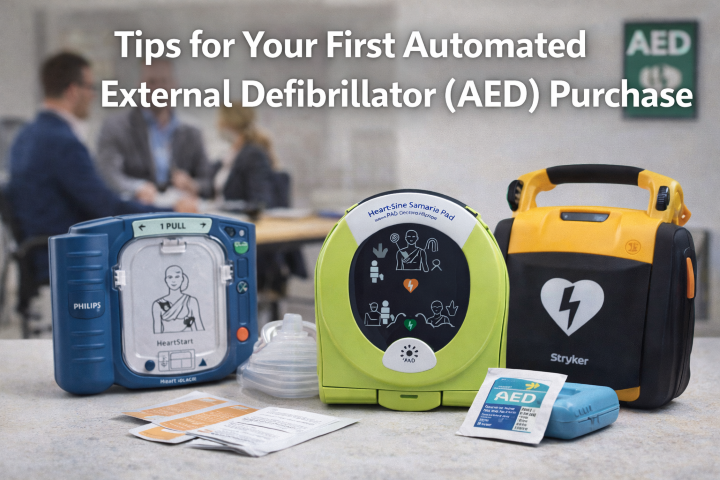
There are several solid AED manufacturers out there, but a handful have built strong reputations over time for reliability and ease of use. In an emergency, simple matters. Clear voice prompts matter. A device that just works without hesitation matters.

Some of the most commonly used brands include:

  • Philips (HeartStart series)
  • Stryker / Physio-Control (LIFEPAK series)
  • ZOLL Medical
  • HeartSine (Samaritan PAD series)

These are widely used by emergency responders and are designed to walk someone through the process step by step.

Ask Your Local Fire or EMS Team

Before you buy, it’s worth a quick call to your local fire department or EMS provider. They’ve seen these devices used in real situations, not just in product demos.

In some cases, they may recommend a specific model they see most often. That familiarity can help when seconds count and responders arrive on scene.

Training Changes Everything

AEDs are built to be used by everyday people, but training makes a big difference. It takes away hesitation and replaces it with action.

In most of our classes, students start a little unsure. By the end, they’re running through scenarios confidently and working as a team without overthinking it.

If you’re adding an AED, pairing it with CPR and AED training is one of the best decisions you can make.

Contact In-Pulse CPR to attend a local CPR and AED training class near you.

Think About Who You Serve

Most AEDs can be used for both adults and children, but some require pediatric pads or a setting adjustment. If you’re in a school, daycare, or youth program, that’s something you’ll want to have ready.

Also consider your environment. A busy gym or large facility may need a more robust setup, while a smaller office may just need a unit that’s easy to maintain and always ready.

Don’t Forget Maintenance

AEDs don’t require a lot of upkeep, but they do need attention. Pads expire. Batteries need to be checked. The unit should always be accessible and clearly marked.

Most newer models run self-checks and will show a clear indicator when everything is good to go. Still, someone should own the responsibility of keeping an eye on it.

Look Into Local Requirements

Depending on your state, there may be guidelines around AED programs. This can include training expectations, maintenance tracking, or registering the device with local emergency services.

There are also occasional grants or funding opportunities, especially for schools and community organizations, so it’s worth checking into that before purchasing.

Why This Matters

Cardiac arrest doesn’t wait for the perfect setting. It can happen at work, during a practice, in a hallway, or out in the parking lot.

Having an AED nearby, along with people who know how to use it, turns a bystander into someone who can actually help.

That’s really what this comes down to.

https://inpulsecpr.com/category/why-do-we-need-aed-training

43 Interactive Questions from An American Heart CPR/BLS Class

Interactive CPR & First Aid Guide

Master Life-Saving Skills: The Interactive CPR Lab

Seconds count. Are you ready? Static manuals can’t build muscle memory. Whether you’re prepping for an AHA certification or just want to protect your family, our interactive suite turns theory into action. Move from bystander to lifesaver by testing your instincts in real-time.

SYSTEM READY: KNOWLEDGE GAUNTLET

Interactive CPR Quiz

Stop reading. Start reacting.

Can you make the split-second decisions required to save a life?
Challenge yourself with the CPR gauntlet — high-quality CPR, AED use, infant choking & more.

43Critical Questions
80%Target Score
A+Unlock Certificate
BEGIN THE CHALLENGE

⚡ The Training Suite

🛡️ Confidence Builder: Match emergency scenarios to the right techniques and prep your mind for high-pressure situations.

⏱️ Rhythm & Reaction: Master the 100–120 BPM compression tempo and test your emergency response speed.

🧠 Recognition Lab: Play the Recognition Game or use the Timeline Slider to spot the exact moment to act.

🏆 The 43-Question Gauntlet: Take our ultimate True or False challenge and see if you can earn an ‘A’.

👉 Test your knowledge, challenge common misconceptions, and see how prepared you really are.


⬇️ Start the Interactive Quiz Below


Interactive CPR & First Aid Learning Hub

Interactive CPR & First Aid Learning Hub

Explore real-world emergencies, test your instincts, and build confidence with hands-on style interactive learning.

1. What Would You Do? Decision Path

A person suddenly collapses in front of you and is not responding. Choose your next move.

2. Reaction Time Test

Click start. Wait for the box to turn red, then click as fast as you can.

Wait for red…

3. CPR Rhythm Trainer

Try tapping along with the ideal chest compression rhythm: 100 to 120 beats per minute.

Ready to tap?

4. Is This Breathing Normal?

Pick the description that sounds most like an emergency.

Regular rise and fall of the chest, steady breathing
Occasional gasps, strange snorting sounds, barely moving air
Sleeping quietly with normal rhythm
No normal breathing, only irregular gasping

5. Emergency Recognition Game

Read the scenario and choose the most likely emergency type.

Click “New Scenario” to begin.

6. Match the Emergency

Match each symptom to the most likely emergency.

7. Adult vs Child vs Infant CPR Toggle

Select the age group to see how care changes.

Adult Child Infant

8. Special Situations

Click a card to learn what changes and what stays the same.

Pregnant
Special body positioning concerns
Overweight
Compression confidence matters
Infant
Different choking and CPR technique
Elderly
Fragility does not cancel urgency

9. Emergency Timeline Slider

Slide the timeline to see how fast oxygen loss and damage risk can build in a cardiac arrest emergency.

10. Confidence Builder Self-Check

Answer honestly. This is not a test. It is a pulse-check on your readiness.

Would you know how to recognize cardiac arrest?
Would you feel confident starting CPR?
Do you know where the nearest AED might be?
Would you know the difference between choking and cardiac arrest?

11. Find an AED Near You

Click where you think an AED is most commonly found.

Schools
Airports
Gyms
Office buildings
Shopping centers
All of the above

12. Start CPR in 5 Steps

Tap each step to reveal the details.

1. Check responsiveness
Tap and shout. Look for any response. If there is no response, move quickly to the next step.
2. Call 911 or direct someone to call
If others are nearby, point to a specific person and tell them to call 911 and bring an AED.
3. Check for normal breathing
Look for normal chest rise. Gasping is not normal breathing.
4. Start compressions
Push hard and fast in the center of the chest. Let the chest fully rise between compressions.
5. Use an AED as soon as it arrives
Turn it on, follow prompts, and continue CPR when instructed.

You just practiced the thinking behind lifesaving action.

Reading is helpful. Practicing hands-on is better.

Find a Class Near You
CPR True or False Quiz – 31 Questions to go

❤️ CPR True or False Quiz

Only 31 Questions to go • Come on, You can do it!


🏁 Summary: Your Path to Readiness

Mastering CPR is about more than just facts; it’s about muscle memory, hands-on practice, and the confidence to act when seconds matter. By completing these interactive modules—from the Rhythm Trainer to the 43-Question Gauntlet—you’ve moved beyond passive reading into active preparation.

Key Takeaways:

  • Speed & Depth: High-quality compressions at 100–120 BPM are your most powerful tool.
  • Early Defibrillation: Using an AED alongside CPR significantly increases survival rates.
  • Decisive Action: You don’t have to be perfect; you just have to be ready.

CPR is more than knowledge—it’s hands-on practice that builds real confidence.

Ready to get certified? Your next step is a full, in-person CPR class with an AHA instructor, where you’ll turn these digital skills into real-world, life-saving action.

CPR Requirements for Nursing and Dental Programs in Florida

A Student’s Guide to Clinical Compliance

If you’re heading into a nursing or dental program in Florida, your CPR certification isn’t optional. It’s one of the first things your school will check before you’re cleared for clinicals.

We see it all the time. Students are accepted into great programs, then get held up because their CPR card doesn’t meet the exact requirement. It’s a small detail that can turn into a big delay.

At In-Pulse CPR, we provide the American Heart Association (AHA) BLS certification that Florida programs and clinical sites expect.

You can view our upcoming CPR classes on our calendar. We have multiple locations across Florida, so there’s usually one close by.


What Florida Schools Actually Require

One of the biggest surprises for students is that CPR requirements aren’t the same across every school. Some are flexible. Others are very specific.

Here’s how it typically looks across the Tampa Bay and Orlando areas.

Tampa Bay and St. Petersburg

At University of South Florida, nursing and health programs typically require AHA BLS. Red Cross and other certifications are often not accepted when you upload documents into their clinical systems.

At St. Petersburg College, programs require a two-year CPR certification that covers adults, children, and infants with AED. While some departments may accept Red Cross, most students choose AHA to avoid any issues with clinical sites.

Hillsborough Community College also expects BLS for Healthcare Providers before you begin clinical courses like Nursing Fundamentals.

Orlando and Central Florida

Students at University of Central Florida need to maintain an active AHA BLS card throughout their program. If it expires, you can be pulled from clinicals.

Valencia College is even more strict. Their nursing and dental hygiene programs require AHA BLS only, and documentation usually needs to be submitted well before your start date.


Why Online-Only CPR Doesn’t Work

This is another area where students run into trouble.

Florida licensing boards, along with hospitals and clinical sites, require a hands-on skills check. That means fully online CPR courses without an in-person evaluation are almost always rejected.

Even if the course looks legitimate, it won’t count without that physical skills test.

At In-Pulse CPR, all of our options include the required hands-on component, whether you choose a fully in-person class or a blended format.


eCard the next business day you complete your class so you can upload it to your portal instantly.


Timing Matters More Than You Think

Florida programs tend to be strict about deadlines. You’re often required to upload your CPR certification into systems like CastleBranch or Complio before clinicals begin.

Miss that deadline, and you’re not starting on time.

That’s why students usually try to get their certification done early, not the week before everything is due.

We issue AHA eCards the next business day, so you can upload it right away and move on to the next requirement.

Florida Clinical Checklist

Before stepping into a clinical setting, most students will need:

  • AHA BLS Provider card (make sure it’s the healthcare provider level)
  • Florida Level 2 background check
  • Upload completed through CastleBranch or Complio
  • A certification provider that delivers your card quickly

If one piece is missing, it can hold everything up.


Common Questions from Florida Students

Does USF accept Red Cross CPR?
In most cases, no. USF Health programs typically require AHA BLS. It’s always best to double-check your program handbook, but AHA is the safest choice.

Where are your classes located in Florida?
We offer multiple locations across Central Florida and the Tampa Bay area, making it easy for students at UCF, Valencia, SPC, and USF to find a nearby class.

Do I need First Aid too?
Most nursing and dental programs only require BLS. Some students in EMT programs or childcare roles may need First Aid as well.

How fast do I get my card?
We issue your AHA eCard the next business day so you can upload it to your clinical portal without delay.

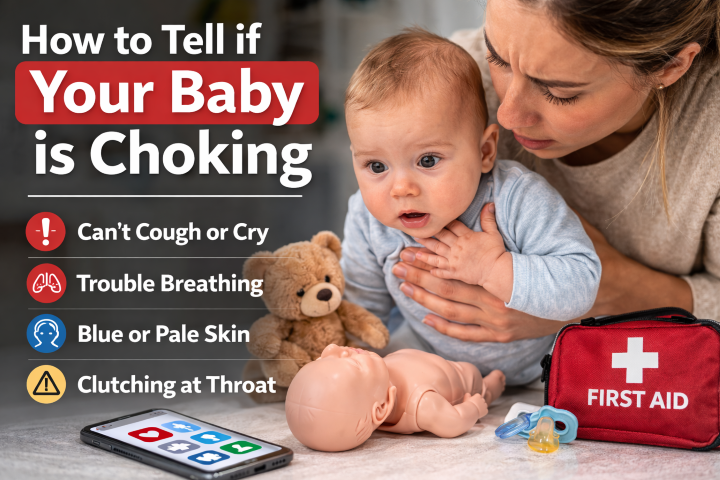
How to Tell if Your Baby is Choking

Essential Guide: Recognizing the Warning Signs of Infant Choking

As your baby starts trying solid foods and grabbing anything within reach, choking becomes a real concern. One of the most important things you can learn is the difference between gagging and choking. Gagging is usually loud and part of how babies protect themselves. Choking is often quiet and requires immediate action.

Knowing the signs of a blocked airway, like not being able to cry, silent coughing, or a bluish color around the lips, helps you respond quickly. Just as important, learning infant CPR and choking rescue ahead of time gives you the confidence to act if it ever happens.

How to Tell if Your Baby is Choking

If you are the parent or caregiver of an infant, you spend a great deal of time making sure they are safe and well cared for. Feeding, nurturing, routine doctor visits, and vaccinations are all important parts of keeping your baby healthy. But how prepared are you for unexpected emergencies?

One situation many parents do not think about until it happens is infant choking. As babies begin transitioning to solid foods and exploring objects with their mouths, the risk of choking increases. Knowing the warning signs of choking can help you act quickly during an emergency.

Gagging vs. Choking

It is important to understand the difference between gagging and choking. Gagging is a normal reflex that helps prevent choking and often sounds loud and dramatic. A gagging baby may cough, make noise, or spit out food.

Choking, however, is far more serious. When a baby is choking, their airway may be blocked and they may not be able to breathe, cry, or cough effectively.

Signs Your Baby May Be Choking

Watch for the following warning signs that may indicate your baby is choking:

  • Difficulty breathing or weak breathing sounds
  • Inability to cry or make normal sounds
  • Persistent coughing or gagging that does not clear the airway
  • Blue or pale skin color, especially around the lips or face
  • Clutching at the throat or sudden distress
  • Loss of consciousness

If your baby cannot breathe, cough, or cry, immediate action is required and emergency services should be contacted.

Reducing the Risk of Infant Choking

While choking emergencies can happen suddenly, there are steps parents can take to reduce the risk:

  • Provide foods that are soft and cut into small pieces
  • Avoid common choking hazards such as whole grapes, nuts, popcorn, and hard candies
  • Always supervise babies while they are eating
  • Keep small household objects out of reach

Learn Infant CPR and First Aid

One of the most important things parents and caregivers can do is learn infant CPR and choking rescue techniques. Proper training teaches you how to respond if an infant’s airway becomes blocked and how to provide lifesaving care until emergency responders arrive.

Infant CPR and First Aid classes are designed to give parents, grandparents, babysitters, and childcare providers the confidence to act quickly in an emergency.

Many local infant CPR classes are available. Visit In-Pulse CPR to find a class near you.

Prepared Parents Are Safer Parents

Parents work hard to keep their children safe every day. Learning how to recognize choking and knowing what to do in an emergency is another important way to protect your child.

With proper training in CPR and First Aid, you can be prepared to respond quickly and confidently if a choking emergency occurs.

FAQ: Local Significance & Emergency Training

Where can I find infant-specific CPR and choking classes in my area? Standard CPR classes often focus on adults, so it is important to choose a course specifically covering Pediatric BLS (Basic Life Support). Organizations like In-Pulse CPR offer local, hands-on certification throughout the region, ensuring parents and babysitters practice techniques on infant-sized manikins for real-world readiness.

How do local emergency response times impact my need for training? In a total airway obstruction, brain damage can begin in as little as four minutes. While local EMS teams are highly skilled, the care you provide in the seconds before they arrive is the most critical link in the “Chain of Survival.” Having the confidence to act immediately is the best way to protect your baby.

Does my local daycare require staff to be certified in infant choking rescue? Most state regulations require licensed childcare providers to maintain current Pediatric First Aid and CPR certifications. However, it is always a good idea to ask your local provider for their specific credentials and to ensure their training is refreshed every two years. Babysitters too need this training.


Here are some more blogs discussing this topic:

Recommended Resources for Parents and Caregivers

5 People Who Aren’t Required To Be CPR Certified, But Should Be Certified Anyway

5 People Who Aren’t Required to Be CPR Certified — But Should Be

Updated 2026

Most professions are not required to maintain CPR certification. In fact, the majority of workplaces do not mandate CPR or First Aid training at all. However, when a medical emergency happens, the person standing closest is often the one who makes the biggest difference.

At In-Pulse CPR, we regularly hear powerful stories from students who used their training to help someone during a cardiac arrest, choking emergency, or serious injury. When someone knows how to perform CPR while waiting for emergency responders, they are buying valuable time — time that keeps oxygen flowing to the brain and may ultimately save a life.

Below are five groups of people who may not be required to have CPR certification but would benefit greatly from having it.

1. Teachers

Teachers spend hours each day supervising children in classrooms, hallways, playgrounds, and school activities. While their primary job is education, teachers are also responsible for the safety and well-being of their students.

Emergencies can happen quickly — from choking incidents in the cafeteria to medical events during recess or sports activities. CPR and First Aid training gives teachers the knowledge and confidence to assess the situation and provide lifesaving care until school nurses or emergency responders arrive.

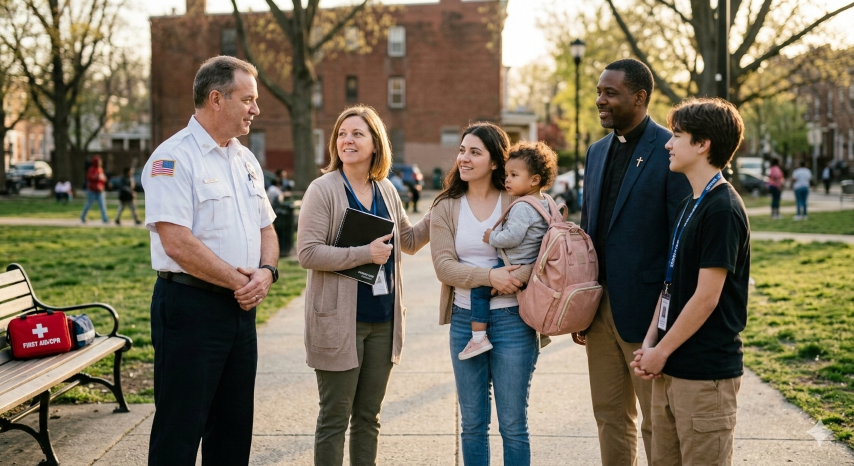
2. Clergy

Clergy members regularly care for people in their communities during vulnerable moments — visiting hospitals, assisting elderly congregants, and supporting families during times of illness.

Because religious gatherings often include large groups of people, medical emergencies can occur unexpectedly. CPR certification allows clergy members to extend their role of care by being prepared to respond to cardiac arrest, choking, or other medical emergencies.

3. Event Staff and Security

Concerts, sporting events, conferences, and community gatherings bring together large numbers of people. The larger the crowd, the greater the likelihood that someone may experience a medical emergency.

While some events have EMTs or paramedics on-site, the first person to notice a problem is often a member of the event staff or security team. CPR and First Aid training prepares these workers to act immediately and assist until medical professionals arrive.

4. Parents

Parents work hard to keep their children safe, but emergencies such as choking, breathing problems, or sudden illness can happen quickly — especially with infants and toddlers.

Learning infant and child CPR gives parents the skills needed to respond during these frightening moments. Many families even turn CPR training into a “date night” activity, taking a class together and gaining peace of mind knowing they are better prepared to protect their child.

5. Just About Everyone

The truth is that emergencies can happen anywhere — at home, at work, in a store, at the gym, or at a public event. When cardiac arrest occurs, immediate CPR can dramatically improve survival chances until professional help arrives.

Anyone can learn CPR, and the training only takes a few hours. Knowing these lifesaving skills means you could be the person who steps in when someone else needs help the most.

Get CPR Certified with In-Pulse CPR

If you are ready to learn CPR and First Aid, consider signing up for a class with In-Pulse CPR. Our American Heart Association training programs provide hands-on instruction designed to help you respond confidently in an emergency.

Classes are available throughout Minnesota, Florida, Pennsylvania, and Tennessee, with convenient public sessions and private group training options for businesses and organizations.

View our upcoming CPR class schedule and reserve your seat today.

Be the Difference in an Emergency

Cardiac arrest doesn’t wait for a convenient time or a specific location. Whether you are a teacher in a classroom, a parent at home, or simply a bystander in a crowded theater, your ability to act can be the bridge between a tragedy and a recovery. Taking a few hours to learn CPR is more than just adding a skill to your resume; it is a commitment to the safety of your community and the well-being of those you love. By choosing to get certified, you ensure that if the unthinkable happens, you won’t have to stand by helplessly—you will have the tools, the heart, and the confidence to save a life.


FAQ: Local Significance and Certification

Why is CPR certification important for residents in my area? In many regions across Minnesota, Florida, Pennsylvania, and Tennessee, emergency response times can vary based on traffic or rural geography. Being trained locally means you can provide “high-quality CPR” immediately, which the American Heart Association (AHA) notes can double or triple a victim’s chance of survival before professional help arrives.

Does Florida or Pennsylvania have specific “Good Samaritan” laws? Yes. Most states, including Florida and Pennsylvania, have Good Samaritan laws designed to protect individuals who provide reasonable assistance to those who are injured or in peril. These laws are intended to reduce bystanders’ hesitation to assist in life-threatening situations like cardiac arrest.

How long does a standard CPR certification last? Generally, an AHA CPR certification is valid for two years. Because medical guidelines and techniques are updated periodically to improve survival rates, regular renewal ensures your skills remain sharp and compliant with the latest 2026 standards.

Are there local classes available for groups or businesses? Absolutely. Many organizations choose to host private training sessions on-site. This is particularly beneficial for event staff or religious organizations who want to ensure their entire team is prepared to handle a medical emergency within their specific facility.

Is infant CPR different from adult CPR? Yes. The techniques for hand placement and rescue breath pressure differ significantly between adults, children, and infants. Taking a comprehensive course ensures you understand these nuances, which is vital for parents and educators.

The Big Picture–RTS Medical Missions

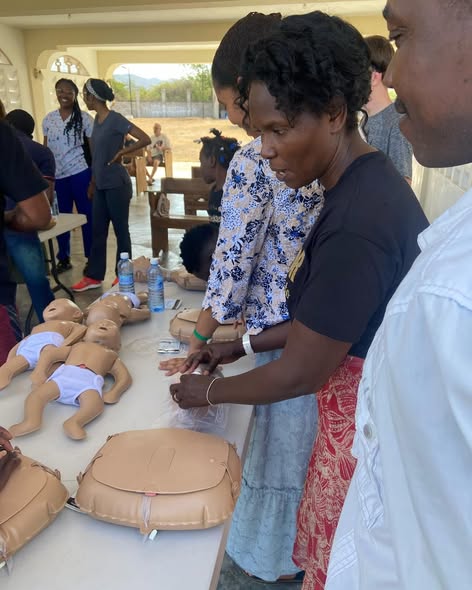
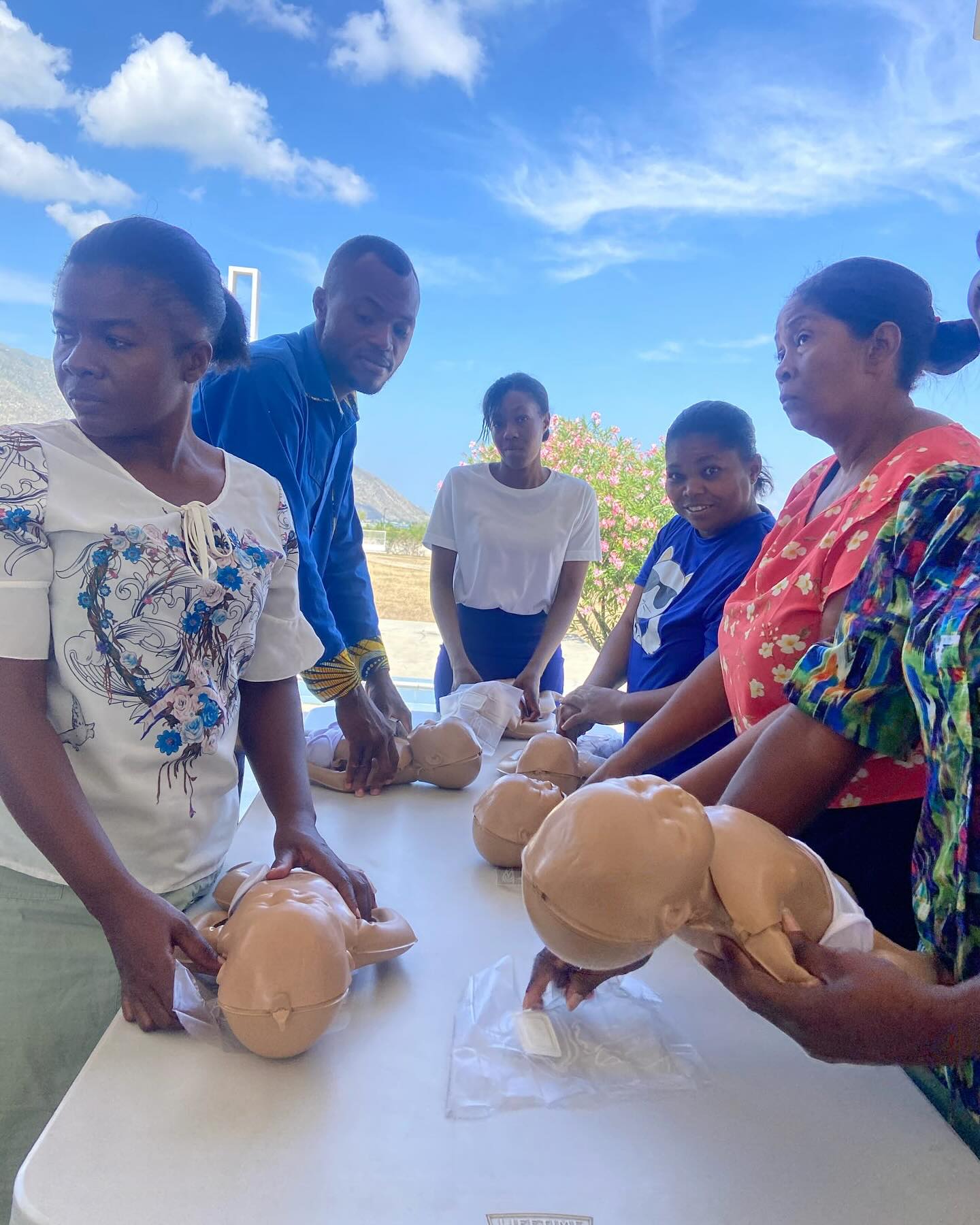
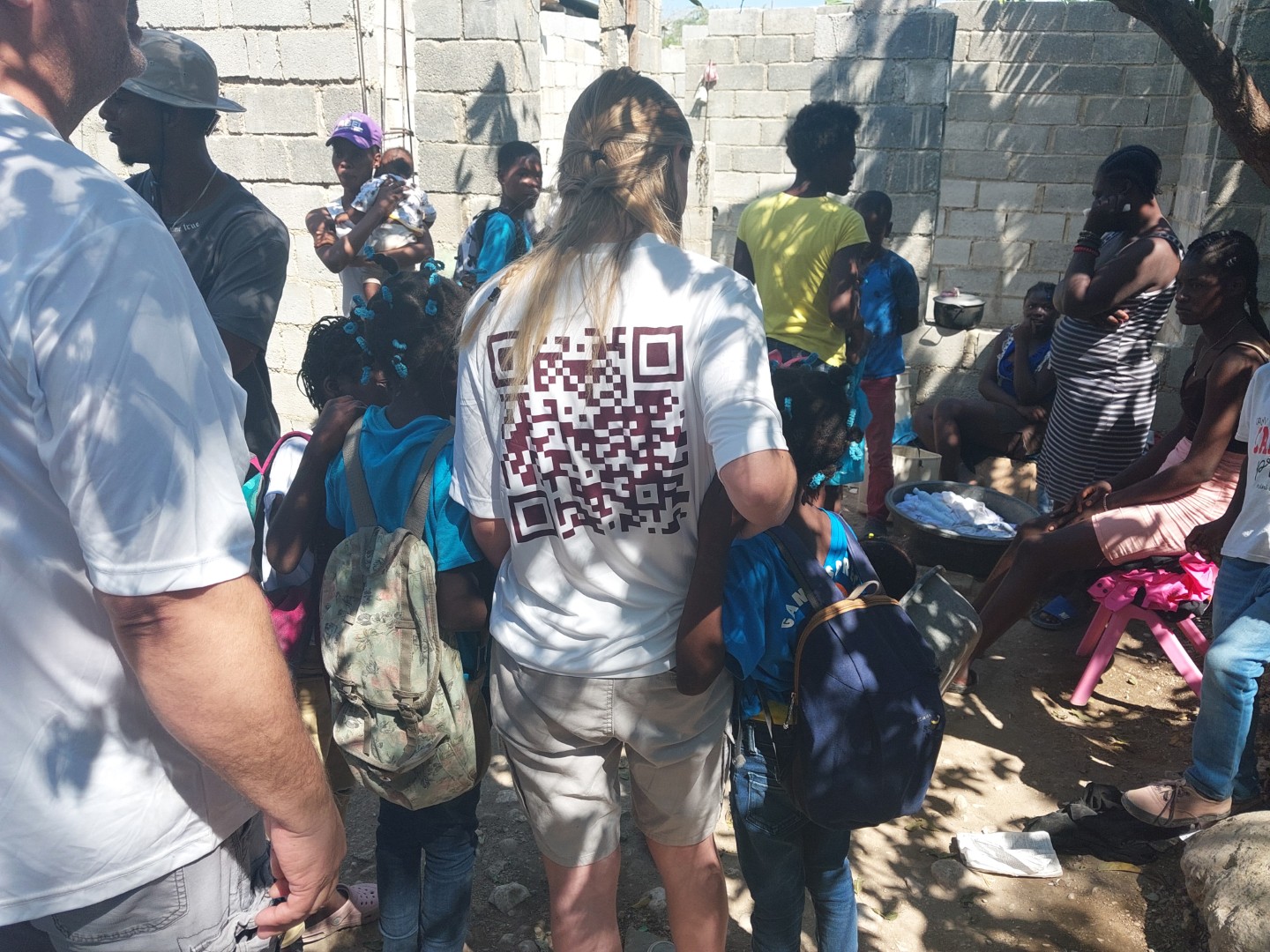
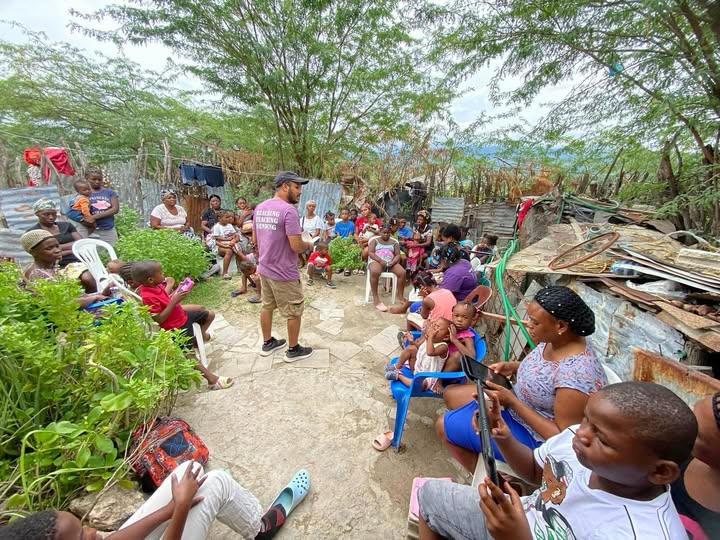
In March 2024, In-Pulse CPR partnered with others to bring lifesaving CPR and First Aid training to Jimaní, Dominican Republic, a small town located just four minutes from the Haitian border.

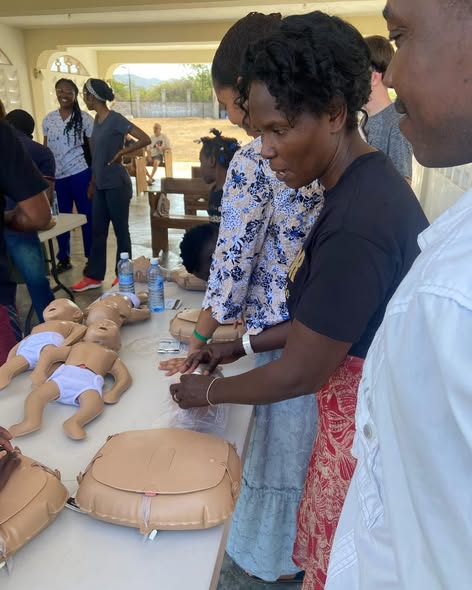
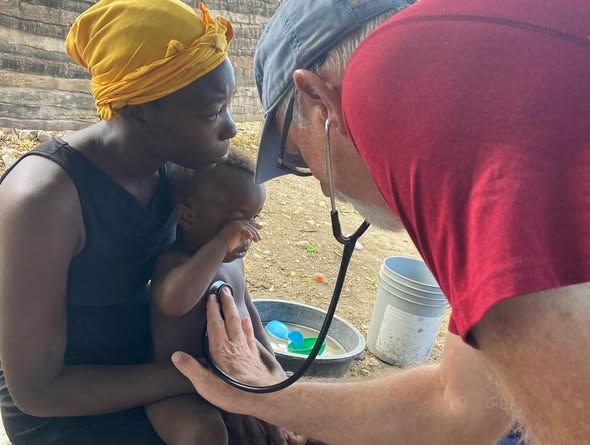
With donated manikins from the American Heart Association, the In-Pulse CPR team trained approximately 30 staff members from RTS Missions, a highly active mission organization serving the people of Jimaní. RTS Missions provides tutoring, medical care, meals, and spiritual support to the community, especially to those fleeing the violence and hardship in Haiti. Many arrive hungry, injured, and alone. RTS goes far beyond meeting physical needs by building caring relationships with people who have endured unimaginable circumstances.

In addition, In-Pulse staff trained approximately 30 church leaders in CPR. Although Jimaní has a 911-type emergency system, it is often unreliable, and many people are denied timely medical care. Because of this, equipping community members to respond in an emergency is vitally important.

Along with the donated manikins, the American Heart Association also provided blood pressure devices for the RTS clinic and the surrounding community. We are deeply grateful for the way the AHA came alongside this meaningful effort. In-Pulse CPR plans to continue supporting RTS by providing ongoing training for its medical staff.

Edited 3.19.2026 TB

Digital Lifelines: How Your Smartphone Can Save a Life

Updated 2026 by Val

In a medical emergency, every second counts, and the device in your pocket could be your most valuable first-aid tool. From built-in medical ID features that provide first responders with instant access to your allergies and medications to top-rated first aid apps offering step-by-step CPR guidance, mobile technology is transforming emergency preparedness. Whether you are navigating a sudden injury at home or a critical situation while traveling, understanding how to leverage your smartphone’s safety features can ensure faster, more accurate care when it matters most.

Smartphones are Critical Safety Tools: Beyond communication, modern mobile devices serve as immediate repositories for lifesaving medical data and step-by-step emergency guidance.

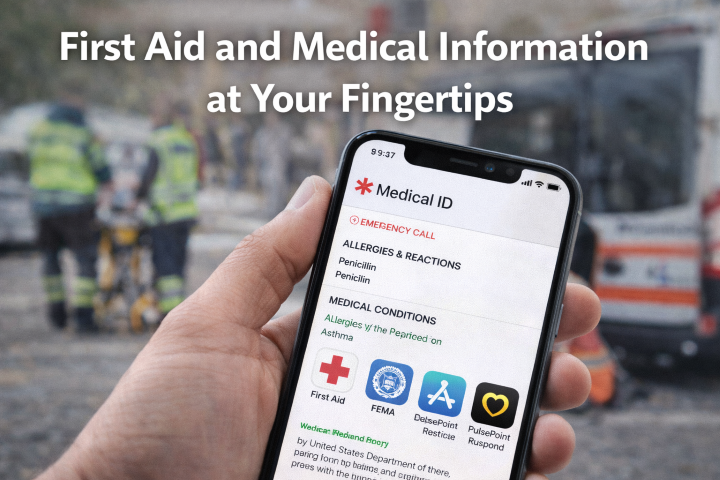
First Aid and Medical Information at Your Fingertips

Written by Carin Mangimeli

Important medical information and lifesaving first aid techniques are now available instantly through smartphones and mobile devices. Modern phones can store critical health information that may help first responders provide faster and more accurate care during an emergency.

Most smartphones today include built-in emergency medical ID features that allow users to store important details such as allergies, medications, pre-existing conditions, emergency contacts, and more. This information can often be accessed from the lock screen by emergency responders without needing to unlock the device.

Medical Information on Your Phone

Digital medical information stored on a phone can be extremely valuable during an emergency. First responders may be able to quickly review medical conditions, medication lists, allergies, and emergency contacts before providing treatment.

Many people still wear medical alert bracelets, which are helpful, but smartphones allow far more detailed information to be stored and updated whenever health conditions change.

In addition to personal health data, smartphones can also store:

  • Emergency contact information
  • Primary care doctor and specialist contact details
  • Insurance information
  • Hospital or clinic locations
  • Family medical information for children or dependents

First Aid and CPR Apps

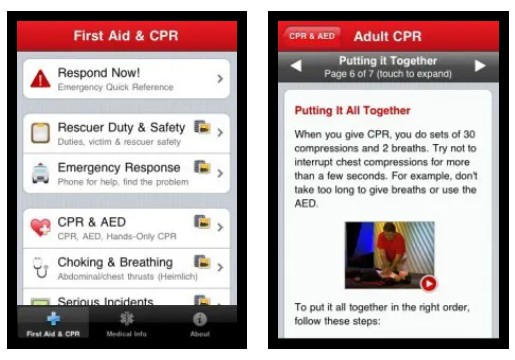
Many organizations now offer mobile apps that provide step-by-step instructions for responding to common medical emergencies. These apps may include videos, illustrations, emergency alerts, CPR guidance, and preparedness tools to help users respond until professional help arrives.

First aid apps can provide guidance for situations such as:

  • CPR and use of an AED
  • Choking emergencies
  • Severe bleeding
  • Burn treatment
  • Broken bones and splinting
  • Seizures or diabetic emergencies
  • Animal bites or insect stings
  • Stroke recognition
  • Natural disasters and weather emergencies

Many of these resources can be downloaded directly to your device so they are available even when you do not have cell service, which can be especially helpful while traveling, hiking, or camping.

Top Emergency & First Aid Apps for Your Smartphone

Below are several widely used emergency and first aid apps, along with built-in phone safety tools, that can help you access medical information, emergency alerts, and lifesaving guidance right from your device.

App Name Developer / Organization Platform What It Does
American Red Cross First Aid American Red Cross Android & iPhone Provides step-by-step first aid instructions, videos, and emergency guidance for common injuries and illnesses.
American Red Cross Emergency American Red Cross Android & iPhone Offers weather alerts, shelter information, emergency checklists, and disaster preparedness resources.
AHA Knowledge Booster American Heart Association Android & iPhone Reinforces CPR, ECC, and first aid knowledge with AHA-based learning modules and quizzes.
FEMA App Federal Emergency Management Agency Android & iPhone Delivers real-time weather alerts, disaster resources, and emergency preparedness information.
PulsePoint Respond PulsePoint Foundation Android & iPhone Alerts nearby responders to possible cardiac arrest events and can help users locate nearby AEDs where supported.
Medical ID Apple Health iPhone Stores allergies, medications, conditions, and emergency contacts that can be accessed from the lock screen.
Personal Safety Google Android Offers Emergency SOS tools, location sharing, safety check features, and emergency assistance on supported devices.
Samsung Health Samsung Android & iPhone Helps users manage health data and, on supported setups, view health records and medical information.
Citizen Citizen Android & iPhone Provides nearby safety alerts, incident notifications, and emergency awareness tools.
Life360 Life360 Android & iPhone Focuses on family safety, location sharing, check-ins, and emergency coordination features.

Technology Supporting Emergency Care

Mobile technology makes emergency information easier to access than ever before, but apps and digital tools should always be viewed as a supplement to proper training, not a replacement.

Learning CPR, AED use, and basic first aid through certified training courses gives people the knowledge and confidence needed to act quickly when a real emergency occurs.

Consider enrolling in a CPR and First Aid class so you can be better prepared to help when it matters most.

Instant Access via Lock Screen: One of the most vital features is the Medical ID, which allows first responders to see allergies, medications, and emergency contacts without needing to unlock your phone.

Digital Advantage over Physical Alerts: While medical alert bracelets remain useful, digital profiles allow for more detailed information that can be updated instantly as health conditions change.

Offline Reliability: Many first aid and emergency apps (like those from the Red Cross or AHA) can be downloaded for offline use, ensuring instructions are available during travel, hiking, or network outages.

Technology is a Supplement, Not a Substitute: While apps provide excellent guidance, they are meant to support—not replace—certified CPR and First Aid training, which provides the hands-on confidence needed during a real crisis.

Clinical Readiness Under Pressure: Maintaining Focus and Performance During Emergencies and CPR

In hospital settings, emergency response is governed by standards, protocols, and measurable outcomes. Registered nurses play a central role in early recognition of patient deterioration, initiation of CPR, and coordination of interdisciplinary code response. Maintaining clinical focus during high-acuity events is essential not only for patient survival, but also for compliance with institutional policies and national safety expectations.

Effective emergency response depends on preparedness, communication discipline, and ongoing skills validation, particularly in environments where rapid escalation is required.


Environmental Readiness and Equipment Familiarity

Regulatory and accreditation bodies emphasize the importance of immediate access to functioning emergency equipment. Nurses are expected to maintain awareness of the location and readiness of:

  • Code carts and emergency medication trays

  • Defibrillators and AEDs

  • Oxygen delivery systems and manual resuscitation devices

  • Suction equipment

Routine code cart checks and unit-based equipment audits support compliance and reduce delays during resuscitation. Familiarity with cart layout and medication placement improves response time and reduces cognitive load during codes.


Preparation as a Patient Safety Strategy

Disorganization during emergencies increases the risk of error. Preparation supports adherence to resuscitation protocols and improves team efficiency.

Best practices include:

  • Reviewing emergency medication dosing and algorithms

  • Verifying equipment functionality at the start of shifts

  • Maintaining awareness of unit-specific emergency workflows

Prepared clinicians demonstrate improved situational awareness and more consistent adherence to resuscitation standards.


Early Escalation and Activation of Emergency Response

Hospital policies uniformly support early activation of emergency response systems when patients exhibit signs of acute deterioration. Delayed escalation is a known contributor to adverse outcomes.

Early activation:

  • Mobilizes appropriate clinical resources

  • Supports timely airway management, medication administration, and defibrillation

  • Aligns with rapid response and patient safety initiatives

Clinical improvement following activation does not negate the appropriateness of the decision. Documentation should reflect clinical indicators present at the time of escalation.


Rapid Assessment and CPR Initiation

Standardized primary assessment remains foundational during suspected cardiac emergencies:

  • Responsiveness

  • Breathing status

  • Presence of a pulse

Absent or abnormal findings require immediate initiation of high-quality CPR in accordance with current resuscitation guidelines. Early compressions and early defibrillation remain key determinants of survival and are core performance metrics in hospital resuscitation review.


Defibrillation Proficiency and Equipment Confidence

Defibrillation is a time-sensitive intervention in ventricular fibrillation and pulseless ventricular tachycardia. Competency requires routine exposure and familiarity with equipment.

Ongoing practice improves:

  • Speed of rhythm recognition

  • Accuracy of pad placement

  • Proper energy selection and safety checks

Hospitals should support regular hands-on practice to maintain proficiency and reduce hesitation during live events.


Role Clarity and Team-Based Response

Effective code response depends on clear role assignment and task delegation. Nurses should function within defined roles that align with unit policy and individual competencies, including:

  • Medication preparation and administration

  • Documentation and time tracking

  • Airway and compression support

  • Equipment setup and troubleshooting

Clear role execution reduces duplication, improves workflow, and supports compliance with resuscitation documentation standards.


Closed-Loop Communication as a Safety Requirement

Closed-loop communication is a recognized patient safety practice during emergencies. It ensures clarity, accountability, and task completion in high-acuity environments.

Explicit task acknowledgment:

  • Confirms responsibility

  • Reduces miscommunication

  • Supports team situational awareness

This communication standard is particularly critical during codes involving multiple disciplines and rapid task transitions.


Ongoing Competency Validation and Simulation

Maintaining emergency readiness requires more than initial certification. Hospitals should support ongoing competency through:

  • BLS and ACLS recertification

  • Mock codes and interdisciplinary simulations

  • Unit-based emergency drills

  • Post-event skills review

In-Pulse CPR provides hands-on resuscitation training that supports healthcare organizations in maintaining staff competency and compliance with current resuscitation standards.


Questioning Assumptions and Verifying Actions

High-stress environments increase the risk of assumption-based errors. Nurses should actively verify task completion, medication administration, and patient response during emergencies.

Clarifying questions support patient safety and align with just culture principles. Verification is a professional responsibility and a compliance safeguard.


Post-Code Debriefing and Quality Improvement

Structured debriefing following resuscitation events is a recognized best practice. Debriefings support:

  • Identification of process gaps

  • Evaluation of communication effectiveness

  • Reinforcement of best practices

  • Continuous quality improvement

Documented debriefings contribute to organizational learning and improved future performance.


Conclusion: Clinical Readiness as a Compliance Standard

Emergency response competence is both a clinical expectation and a compliance requirement. Hospitals depend on nurses who can remain focused, decisive, and aligned with protocols during high-risk events.

Preparation, repetition, disciplined communication, and current resuscitation training are essential to maintaining patient safety, regulatory compliance, and high-quality outcomes.

Sugar Intake Linked to Obesity

Updated 2026 by Val

Sugar Intake Linked to Obesity

Written by Carin Mangimeli

You might want to think twice before adding extra sugar to your coffee or reaching for a sugary drink. The American Heart Association (AHA) recommends limiting the amount of added sugar in our daily diets because excessive sugar consumption is strongly linked to obesity and related health problems.

Obesity increases the risk of several serious conditions including heart disease, type 2 diabetes, and high blood pressure. Because of these risks, the American Heart Association encourages adults and children to reduce their intake of added sugars—the sugars that are added to foods and beverages during processing or preparation.

How Much Sugar Is Too Much?

According to current American Heart Association guidelines, the recommended daily limits for added sugar are:

  • Women: No more than 6 teaspoons (about 100 calories) of added sugar per day
  • Men: No more than 9 teaspoons (about 150 calories) of added sugar per day
  • Children: Ideally less than 6 teaspoons (about 100 calories) per day

These recommendations refer specifically to added sugars, not the naturally occurring sugars found in fruits, vegetables, and dairy products.

Where Does Added Sugar Come From?

Many people are surprised to learn how much sugar is hidden in everyday foods and beverages. The average person consumes far more added sugar than recommended each day.

Common sources of added sugar include:

  • Sugar-sweetened beverages such as soda, energy drinks, and sweetened teas
  • Flavored coffees and specialty coffee drinks
  • Breakfast cereals and granola
  • Desserts such as cakes, cookies, candy, and ice cream
  • Sweetened yogurt and snack foods

For example, a single can of regular soda can contain more than 35 grams of sugar, which exceeds the recommended daily limit for many people.

Reducing Sugar Intake

Cutting back on sugar does not have to happen all at once. Many nutrition experts recommend gradually reducing added sugars over time. Simple changes can make a big difference.

  • Replace sugary drinks with water or unsweetened beverages
  • Choose whole grains instead of sugary cereals
  • Reduce the amount of sugar added to coffee or tea
  • Limit desserts and processed snack foods
  • Read nutrition labels to identify hidden sugars

Small daily improvements in diet can significantly reduce the long-term risk of obesity and heart disease.

Healthier Habits for Long-Term Health

Making healthier food choices is one of the most effective ways to protect your heart and overall health. By reducing added sugars and choosing more natural, nutrient-rich foods, individuals and families can lower their risk of obesity and related chronic diseases.

Understanding nutrition and healthy lifestyle habits is an important part of overall wellness, just as learning lifesaving skills like CPR and First Aid can help protect the people around us.

  • The Importance of Healthy Exercise for seniors March 17, 2015Robin JohnsonExercise and physical activity can be essential for helping to you to stay more energetic, independent and healthy as you grow older. Most adults over the age of sixty-five spend around ten hours or more either lying or sitting down every day. This establishes them as the most sedentary group. However, they can pay a …
  • Staying Safe during Cardiovascular Exercise March 5, 2015Robin JohnsonEngaging in physical activity does not have to be a strenuous task in order for you to experience the health benefits that you’re looking for. Cardiovascular exercise helps individuals to maintain muscles, healthy bones, and joints, as well as aiding in the control of a recommended weight and reducing body fat. Before you can get …
  • How to Start Exercising if you’re Overweight February 26, 2015Robin JohnsonMost of us know how important healthy living is, however that doesn’t mean that it’s always going to be easy. For some people, the prospect of getting fit, engaging in regular exercise and eating right will come naturally. However, for those who are already overweight, or large enough that doing the exercises thinner people do …

Safer Construction Sites Start with CPR and AED Training

Construction sites are among the most hazardous workplaces in America. According to the Occupational Safety and Health Administration (OSHA), approximately one in five workplace fatalities occurs in construction. While heavy equipment and fall hazards often receive the most attention, sudden medical emergencies remain a serious and often overlooked risk.

Cardiac arrest, heart attack, stroke, electrocution, crush injuries, severe bleeding, fractures, and heat-related illness can occur without warning on active job sites.

When emergencies happen, coworkers are often the first line of response.

Proper CPR, AED, and First Aid training can mean the difference between life and death.


Why CPR and AED Training Is Critical on Construction Sites

Construction crews face unique workplace risks:

  • Electrical shock and electrocution

  • Falls from height

  • Blunt force trauma

  • Severe bleeding injuries

  • Heat stress and dehydration

  • Sudden cardiac arrest

Sudden cardiac arrest can happen to anyone, even individuals who appear healthy. Without immediate CPR and defibrillation, survival decreases dramatically with each passing minute.

Training workers in CPR and AED use ensures someone on-site can:

  • Recognize cardiac arrest quickly

  • Begin high-quality chest compressions immediately

  • Use an automated external defibrillator (AED) safely

  • Control bleeding and stabilize injuries until EMS arrives

Rapid response improves survival outcomes and demonstrates a proactive safety culture.


OSHA and Workplace Emergency Preparedness

While OSHA does not mandate universal CPR certification for every worker, employers are responsible for providing a safe workplace and ensuring adequate emergency response measures are in place.

For remote or high-risk job sites where emergency medical services may be delayed, CPR and First Aid training becomes even more critical.

Providing CPR and AED certification:

  • Strengthens OSHA compliance readiness

  • Reduces liability exposure

  • Supports safety program documentation

  • Demonstrates duty-of-care commitment

Safety begins long before an incident occurs.


Construction Workers Need Hands-On CPR Training

High-quality CPR requires:

  • Proper compression depth and rate

  • Complete chest recoil

  • Minimal interruptions

  • Effective AED operation

Hands-on training ensures workers build the muscle memory and confidence needed to respond effectively under pressure.

Instructor-led classes provide:

  • Realistic scenario-based practice

  • Adult CPR and AED training

  • First Aid for bleeding, fractures, and shock

  • Bloodborne Pathogens awareness

  • OSHA-aligned workplace safety training

When seconds matter, preparation matters.


Heartsaver® CPR and First Aid for Construction Teams

The American Heart Association Heartsaver® CPR/AED and First Aid course is designed for non-medical professionals, including construction crews, supervisors, and safety officers.

This comprehensive program teaches participants how to:

  • Perform adult CPR

  • Use an AED

  • Provide basic First Aid

  • Respond to bleeding and trauma

  • Understand Bloodborne Pathogens safety practices

Training can be delivered on-site at your construction facility, warehouse, or project location to minimize operational disruption.


Building a Culture of Safety

The strongest construction companies invest in prevention. CPR and AED certification programs:

  • Improve emergency readiness

  • Increase worker confidence

  • Strengthen safety leadership

  • Protect human life

  • Reduce financial risk

A safer job site is not built only with steel and concrete.
It is built with preparation, training, and leadership.


Schedule On-Site CPR Training for Your Construction Team

In-Pulse CPR is an American Heart Association Training Center providing instructor-led CPR, AED, and First Aid certification for businesses.

On-site group training options are available to meet OSHA-aligned safety goals while minimizing downtime.

Contact us online or call

877-226-7311    ->Online Request

to schedule CPR and AED training for your construction crew.

Camping Injury Concerns

Camping Injury Concerns

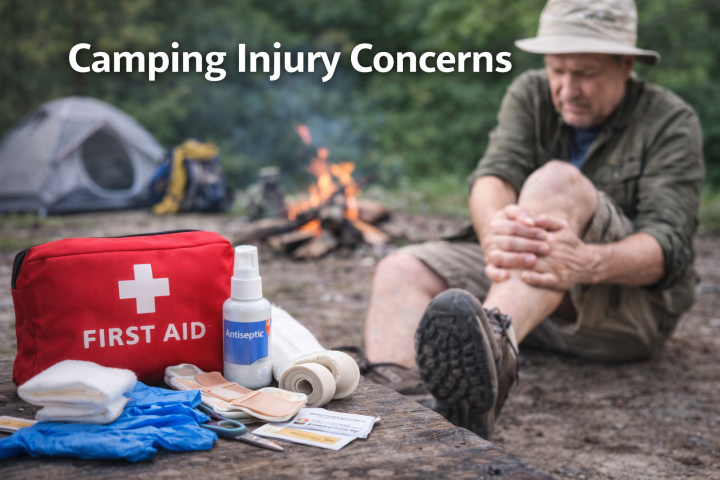
Camping trips have become increasingly popular as people leave the city behind to enjoy the outdoors. Spending time in nature offers a welcome break from everyday routines and provides opportunities to connect with family and friends. Activities such as hiking, kayaking, canoeing, fishing, and swimming make camping both exciting and rewarding.

However, outdoor environments also present risks that many people do not encounter in daily life. When you are miles away from medical care, even a minor injury can become serious if you are unprepared. That is why having basic first aid knowledge and a well-stocked first aid kit is essential when camping or hiking in remote areas.

Common Camping Injuries

Outdoor activities can expose campers to hazards such as sharp rocks, insects, extreme temperatures, and uneven terrain. Some of the most common camping injuries include:

  • Cuts, scrapes, and scratches from tools, rocks, or brush
  • Burns from campfires or cooking equipment
  • Sprains or fractures from slips and falls
  • Insect bites and stings
  • Heat-related illnesses such as dehydration or heat exhaustion
  • Cold-related injuries such as hypothermia or frostbite

Being prepared with proper supplies and knowledge can make a significant difference in how these situations are handled.

Essential Camping First Aid Kit

A well-stocked first aid kit is one of the most important safety items you can bring on a camping trip. Your kit should include:

  • Adhesive bandages and sterile gauze
  • Antiseptic wipes or ointment
  • Medical tape and scissors
  • Pain relievers
  • Antihistamines for allergic reactions
  • Burn dressings
  • Elastic bandages for sprains
  • Tick removal tool or tweezers

Check your first aid kit before every trip to make sure supplies are not expired and that used items have been replaced.

Dehydration

Cause: Dehydration occurs when the body loses more fluids than it takes in, often due to heat, physical activity, or insufficient water intake.

Symptoms:

  • Thirst
  • Fatigue
  • Dizziness
  • Dry skin
  • Rapid breathing

Treatment:

  • Rest in a shaded or cool area
  • Drink water or electrolyte fluids
  • Loosen or remove excess clothing

Heat Exhaustion

Symptoms:

  • Heavy sweating
  • Pale, clammy skin
  • Headache
  • Nausea or vomiting
  • Fatigue or weakness

Treatment:

  • Move to a cool shaded area
  • Remove unnecessary clothing
  • Cool the body with damp cloths
  • Provide water if the person is alert

Heat Stroke

Heat stroke is a life-threatening emergency that occurs when the body can no longer regulate its temperature.

Symptoms:

  • Hot, dry skin
  • Confusion or altered mental state
  • Vomiting
  • Seizures or collapse

Treatment:

  • Call emergency services immediately
  • Move the person to a cooler area
  • Cool the body using water, wet cloths, or ice packs

Hypothermia

Hypothermia occurs when the body’s core temperature drops below normal due to prolonged exposure to cold conditions.

Symptoms:

  • Shivering
  • Confusion
  • Fatigue
  • Slurred speech

Treatment:

  • Move the person to a warm shelter
  • Remove wet clothing
  • Wrap in dry blankets or clothing
  • Provide warm beverages if conscious

Fractures and Sprains

Falls and uneven terrain can lead to fractures or sprains during outdoor activities.

Treatment:

  • Immobilize the injured limb
  • Apply a splint if available
  • Apply ice or cold compress
  • Seek medical help when possible

Bleeding

Treatment:

  • Apply firm direct pressure using a clean cloth or bandage
  • If bleeding continues, apply additional dressings
  • Elevate the injured area if possible
  • Seek medical attention for severe bleeding

Burns

Burns may occur from campfires, cooking equipment, or hot surfaces.

Treatment:

  • Cool the burn with clean running water for at least 10 minutes
  • Remove jewelry or tight clothing near the burn
  • Cover with a sterile non-stick dressing

Seek medical care if:

  • The burn covers a large area
  • The burn affects the face, hands, feet, or genitals
  • The burn appears deep or charred

Snake and Spider Bites

Treatment:

  • Remain calm and limit movement
  • Immobilize the affected limb
  • Call emergency services or seek medical help
  • Do not attempt to capture the animal

Insect Bites and Stings

Most insect bites cause minor swelling and itching, but severe allergic reactions can occur.

Treatment:

  • Remove the stinger if present
  • Apply a cold compress
  • Use antihistamines if available
  • Seek medical help if breathing difficulty occurs

Ticks

Ticks are commonly found in wooded or grassy areas. Check your body carefully after spending time outdoors, especially around the scalp, groin, and armpits.

Removal:

  • Use fine-tipped tweezers
  • Grasp the tick close to the skin
  • Pull upward slowly and steadily
  • Clean the area with antiseptic

Leeches

Leeches may be found near streams, ponds, and damp forest areas.

Removal:

  • Use salt or gently slide the leech off
  • Clean the area thoroughly
  • Apply a bandage if bleeding continues

Be Prepared for Outdoor Emergencies

Preparation does not guarantee that injuries will never happen, but being equipped with the right knowledge and supplies can help you respond quickly and effectively. Learning basic first aid skills can make a significant difference when accidents occur far from medical assistance.

If you spend time hiking, camping, or enjoying outdoor recreation, consider enrolling in a First Aid training class so you can confidently respond to emergencies when they arise.

Why not schedule a First Aid Training today? Contact In-Pulse CPR at 763-262-4776.

Disclaimer: The information provided here is for educational purposes only and is intended to supplement formal first aid training, not replace professional medical advice or emergency care.

  • 12 Essential Hiking Safety Tips for Tennessee Trails May 3, 2012Jennifer C From the rolling hills of Middle Tennessee to the rugged beauty of the Great Smoky Mountains, Tennessee offers some of the most scenic hiking in the Southeast. Families explore waterfall trails near Chattanooga, weekend hikers head to Fall Creek Falls, and adventure seekers climb high-elevation routes in the Smokies. But Tennessee’s natural beauty comes with real …
  • The Best Way To Stay Safe On A Cruise Ship February 8, 2012Judith KolbergCruise ships have the best safety record in the travel industry, but despite international maritime rules and regulations, U.S. Coast Guard guidelines, and stringent international laws, cruise ship accidents or incidents still occur. If your cruise ship captain steers too close to the shore, hits a rock, is distracted by a 25 year old blond …
  • Winter Play Safety Tips for Children January 4, 2012Sarah Klauda  Snow is one of nature’s greatest toys for all ages. You can mold it, build with it, slide on it, throw it, and so much more. No matter how old you are, it is important to be safe when playing outside in the fresh powder. These six simple guidelines can help everyone make the most …
  • Hiking Preparedness December 20, 2011Susan PattersonWritten by Susan Patterson Without proper planning, a hike can quickly turn into a nightmare. Avoiding unnecessary accidents and incidents is possible with adequate preparation. Remember, it is equally vital to prepare for a day hike, as it is to prepare for a longer journey. Know your route well and always take a friend along. Hiking alone is dangerous and …
  • First Aid Camping Tips July 12, 2011Carin MangimeliHiking, biking, walking and camping are just a few of the many activities pursued during the summer months. However, due to these activities, as well as the increased actions of people during these months, it is the time of the year when one is at the greatest risk for injury.
  • Avoid Swimming Pool Accidents March 3, 2011Pamela ArsenaEven though most of the time spent at the pool will be fun and safe one most consider the risk of pool related injuries. Are you prepared to

Updated: Why CPR Training for Your Employees Makes Sense

cpr for office employees

Have you considered CPR training for your employees? While some professions require CPR certification, every business benefits from having trained responders on site. Sudden cardiac arrest and choking emergencies do not wait for paramedics. They happen in offices, warehouses, schools, churches, and retail spaces every day.

When someone collapses, every minute without CPR reduces the chance of survival by about 10 percent. The national average ambulance response time is 8 to 12 minutes, but brain injury can begin in as little as 4 to 6 minutes without oxygen. CPR keeps blood flowing to the brain and heart until professional help arrives, making it one of the most powerful tools a workplace can have.


Is CPR Training Difficult?

Many people assume learning CPR is complicated. In reality, it is one of the easiest and most practical medical skills you can learn.

Most CPR certification classes take just a few hours to complete and are designed for people with no medical background. You will practice on training manikins, learn how to recognize emergencies, and build the confidence needed to act quickly when it matters most.

When choosing a CPR training provider, it is important to make sure:

• You receive hands-on practice
• You are tested on the material
• There are enough manikins for everyone to participate
• Instructors are certified and experienced
• The training organization has strong reviews and a good reputation

These factors ensure your team walks away prepared, not just certified.


Which CPR Course Do You Need?

There are two primary types of CPR training:

Heartsaver CPR and AED

This course is designed for the general public and most workplaces. It covers:

• Adult, child, and infant CPR
• Choking response
• AED (Automated External Defibrillator) use
• Basic emergency response

This is the right choice for offices, schools, factories, churches, fitness centers, and most non-medical workplaces.

BLS for Healthcare Providers

This is the professional-level course required for:

• Nurses
• Dental and medical staff
• EMTs
• Clinical students
• Healthcare providers

BLS includes everything in Heartsaver plus:

• Two-rescuer CPR
• Advanced airway techniques
• Team-based response
• A comprehensive skills and written evaluation

Both certifications are valid for two years.


Be Ready Before an Emergency Happens

Cardiac arrest and choking emergencies can happen to anyone, anywhere. CPR training gives your employees the ability to step in, act quickly, and potentially save a life while help is on the way.

In-Pulse CPR provides American Heart Association–certified CPR and AED training across Florida, Minnesota, and Pennsylvania, with both on-site workplace classes and open-enrollment options.


Request CPR Training for Your Team

Protect your employees, your customers, and your workplace.

Request information and pricing today to schedule CPR and AED training for your staff with In-Pulse CPR.

Updated by Troy Bowman

Heartsaver Bloodborne Pathogens

Workplace Bloodborne Pathogens Training

Written by Carin Mangimeli

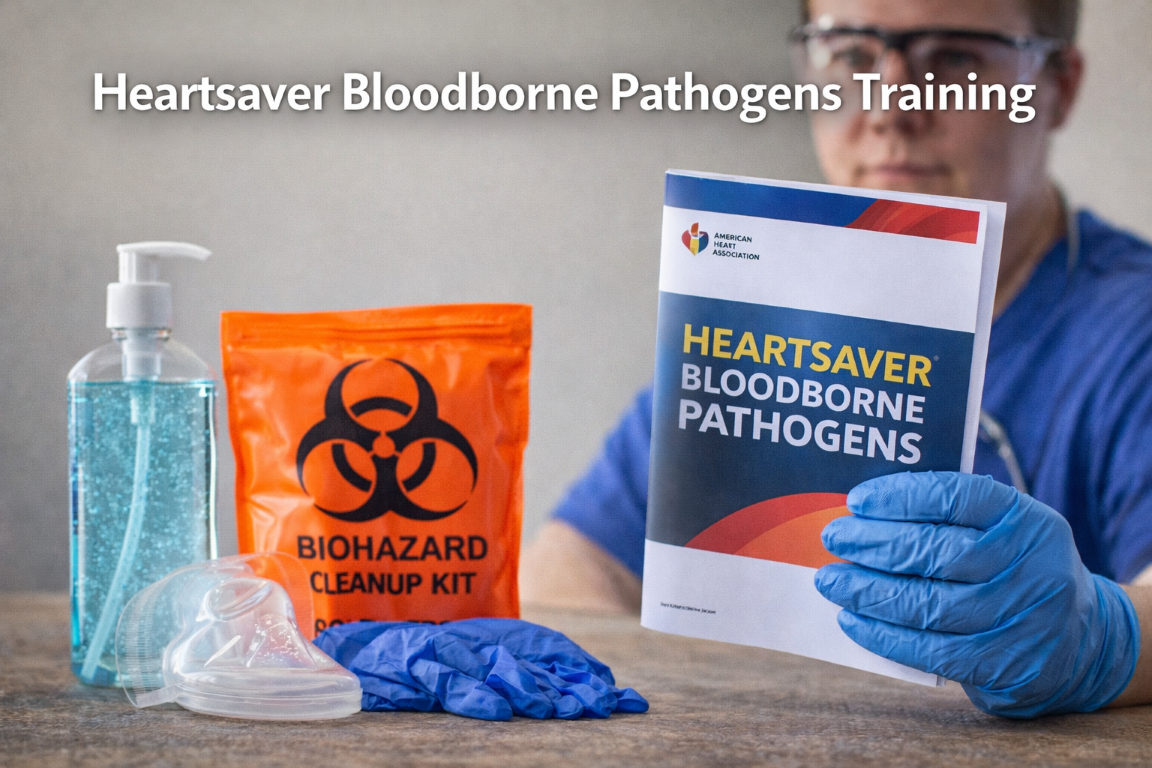
Bloodborne pathogens training has become increasingly important as workplaces recognize the risks associated with exposure to blood and other potentially infectious materials. To help reduce these risks, the American Heart Association (AHA) offers Bloodborne Pathogens training designed to teach employees how to recognize exposure hazards and respond safely if exposure occurs.

According to the AHA, these courses are intended for workers who may reasonably anticipate contact with blood or other biohazardous materials as part of their job duties. Many industries require this type of training in order to comply with workplace safety regulations established by the Occupational Safety and Health Administration (OSHA).

Who Needs Bloodborne Pathogens Training?

Workers in many different industries may be at risk of exposure. Bloodborne pathogens training is commonly recommended or required for employees in workplace environments such as:

  • Childcare workers and school personnel
  • Health and fitness staff
  • Corrections and security workers
  • Tattoo and piercing artists
  • Hospitality and housekeeping staff
  • Maintenance and custodial workers

In these environments, employees may encounter blood or bodily fluids unexpectedly and need to understand how to respond safely while protecting themselves and others.

Course Overview

Bloodborne Pathogens training courses are typically short, often lasting about one hour, and can be taught to groups of employees at one time. The course content focuses on how bloodborne diseases spread, how exposure can occur in the workplace, and the proper steps to take if exposure happens.

Training materials may include instructional videos, visual presentations, and workplace posters designed to reinforce safety procedures. Many courses are also available in Spanish and other languages to help ensure employees fully understand the information being presented.

The American Heart Association structures its training around a simple framework designed to help students remember the key safety steps. This approach is known as the PACT method.

The PACT Method

  • P – Protect yourself from exposure
  • A – Act quickly if exposure occurs
  • C – Clean yourself and the affected area
  • T – Tell or report the exposure to the appropriate supervisor

This straightforward approach helps workers remember how to respond in situations where exposure to blood or other potentially infectious materials may occur.

OSHA Training Requirements

OSHA requires employers to provide bloodborne pathogens training to employees who may reasonably anticipate occupational exposure. This training must be provided at the time of initial assignment and repeated annually to ensure workers remain informed about current safety practices and workplace procedures.

Bloodborne Pathogens courses can be used both as an initial training program and as the annual refresher training required by OSHA regulations.

Important Note for Healthcare Workers

While Bloodborne Pathogens training is valuable for many industries, it is important to note that this course is generally intended for workers outside of healthcare and emergency response professions. Healthcare providers and emergency medical personnel typically require more extensive training that addresses additional occupational risks and clinical procedures.

Employers should always ensure that the training they provide meets OSHA standards and is appropriate for the level of exposure risk associated with their employees’ job duties.

Updated by Val, 2026